Oracle

Oracles are essential infrastructure components that feed real-time, off-chain data (such as price feeds, weather, or sports results) into blockchain smart contracts. Without decentralized oracles like Chainlink and Pyth, DeFi could not function. In 2026, oracles have evolved to support verifiable randomness and cross-chain data synchronization. This tag covers the technical evolution of data availability, tamper-proof price feeds, and the critical role oracles play in ensuring the deterministic execution of complex decentralized applications.

5116 Articles
Created: 2026/02/02 18:52
Updated: 2026/02/02 18:52

MoreMarkets Taps Flare to Power New “XRP Earn Account” for On-Chain Yield

MoreMarkets Taps Flare to Power New “XRP Earn Account” for On-Chain Yield

MoreMarkets partners with Flare to launch the XRP Earn Account, a non-custodial, on-chain solution that mints FXRP and uses liquid staking to deliver XRP yield.

Author: Blockchainreporter
Bitwise Seeks SEC Nod for Spot Chainlink ETF

Bitwise Seeks SEC Nod for Spot Chainlink ETF

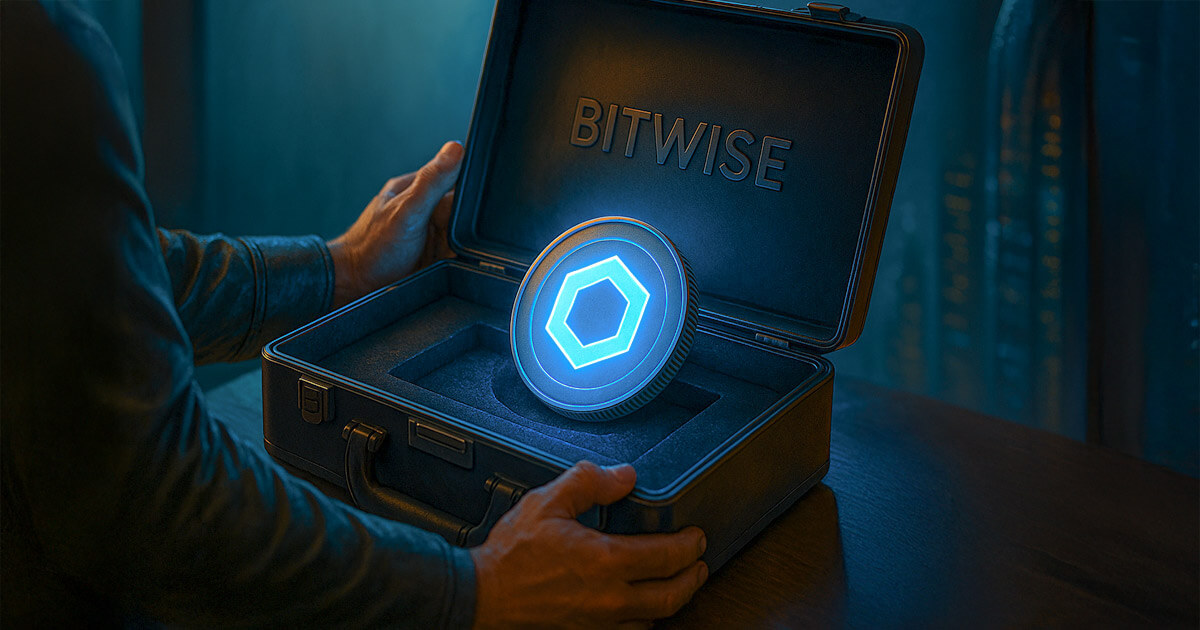
The post Bitwise Seeks SEC Nod for Spot Chainlink ETF appeared on BitcoinEthereumNews.com. Bitwise Asset Management has submitted an S-1 registration statement seeking approval for a spot exchange-traded fund that would hold Chainlink’s LINK token. Bitwise Asset Management has submitted an S-1 registration statement to the U.S. Securities and Exchange Commission seeking approval for a spot exchange-traded fund that would hold Chainlink’s LINK token. If cleared, the product would be among the first U.S. ETFs offering direct exposure to the blockchain oracle network’s native asset. The filing arrives amid renewed momentum in the token. LINK has climbed roughly 42% over the past week, buoyed by an announced integration with Intercontinental Exchange’s New York Stock Exchange platform and the rollout of on-chain reserves aimed at improving transparency. Trading volumes and large-holder activity have also accelerated, according to market-data trackers. This is an AI-generated article powered by DeepNewz, curated by The Defiant. For more information, including article sources, visit DeepNewz. Source: https://thedefiant.io/news/tradfi-and-fintech/bitwise-seeks-sec-nod-spot-chainlink-etf-bfe51149

Author: BitcoinEthereumNews
Bitwise aims to debut first US Chainlink ETF

Bitwise aims to debut first US Chainlink ETF

The post Bitwise aims to debut first US Chainlink ETF appeared on BitcoinEthereumNews.com. Asset manager Bitwise has applied to launch a spot Chainlink exchange-traded fund (ETF) in the United States, according to an Aug. 26 filing with the Securities and Exchange Commission (SEC). The proposed fund, called the Bitwise Chainlink ETF, would issue shares representing fractional interests in Chainlink held by the trust. These shares are expected to be listed on a national securities exchange, although the filing does not yet specify the ticker. If approved, the product would mark the first US ETF designed to offer direct exposure to the digital asset. Chainlink ETF Chainlink has grown into one of the most widely used decentralized oracle networks, supplying off-chain data to smart contracts across Ethereum and other blockchain networks. The LINK token, which is the 11th-largest digital asset by market cap, underpins this activity, compensating node operators for retrieving external information and performing computations. Over time, Chainlink has also extended its reach into traditional finance, forging partnerships with financial institutions like Swift, Visa, Mastercard, and JPMorgan. Due to this, there has been significant institutional demand for the digital asset. Considering this, Bitwise said the ETF’s objective is to mirror the value of Chainlink’s LINK token held in custody, after accounting for fees and expenses. According to the filing: “The Trust is passively managed and does not pursue active management investment strategies, and the Sponsor does not actively manage the Chainlink held by the Trust. This means that the Sponsor does not sell Chainlink at times when its price is high or acquire Chainlink at low prices in the expectation of future price increases. It also means that the Sponsor does not make use of any of the hedging techniques available to professional Chainlink investors to attempt to reduce the risks of losses resulting from price decreases.” The firm added that the fund’s…

Author: BitcoinEthereumNews
JUST IN: Bitwise Files for First-Ever Chainlink Spot ETF

JUST IN: Bitwise Files for First-Ever Chainlink Spot ETF

The post JUST IN: Bitwise Files for First-Ever Chainlink Spot ETF appeared first on Coinpedia Fintech News Bitwise Asset Management has taken a bold step to widen the U.S. crypto ETF market.  The firm filed an S-1 with the U.S. Securities and Exchange Commission (SEC) today, seeking approval to launch the Bitwise Chainlink ETF, a fund designed to track the spot price of LINK. If approved, it would be one of the …

Author: CoinPedia
Bitwise files S-1 for Chainlink LINK ETF, first in US

Bitwise files S-1 for Chainlink LINK ETF, first in US

The post Bitwise files S-1 for Chainlink LINK ETF, first in US appeared on BitcoinEthereumNews.com. Key Takeaways Bitwise has filed an S-1 to launch a Chainlink ETF that would provide US investors regulated exposure to the LINK token. The ETF, if approved, would be among the first US funds focused on an oracle network token, directly holding LINK and tracking the CME CF Chainlink-Dollar Reference Rate. American fund manager Bitwise Asset Management is seeking approval from the US SEC to offer a new exchange-traded product that would track the price of Chainlink (LINK), the token powering the decentralized oracle network. According to a preliminary prospectus filed with the SEC today, the proposed fund, the Bitwise Chainlink ETF, will hold LINK directly in custody with Coinbase Custody Trust Company and track the CME CF Chainlink-Dollar Reference Rate. If approved, the fund would expand Bitwise’s growing lineup of single-token crypto ETFs and represent one of the first US ETFs focused on an oracle network’s native token, following the SEC’s recent approvals of spot Bitcoin and Ethereum ETFs. Bitwise is awaiting the SEC decision on several crypto ETF offerings, including those tied to XRP, Solana, Dogecoin, and Aptos. Launched in 2019, Chainlink is a decentralized oracle network that connects blockchains with real-world data. It enables smart contracts to securely integrate and interact with external inputs, such as financial market data. The protocol has grown to support thousands of projects and underpins key functions in DeFi, NFTs, gaming, and cross-chain interoperability. Chainlink’s services now include decentralized data feeds, verifiable randomness for gaming, automated contract execution, and tools for linking assets across blockchains. Its role as infrastructure for reliable, tamper-resistant data has made LINK, the network’s native token, one of the leading digital assets by market capitalization. LINK stands as the 13th biggest crypto asset, trading close to $23 in recent sessions, CoinGecko data shows. Source: https://cryptobriefing.com/chainlink-link-etf-bitwise-filing/

Author: BitcoinEthereumNews
Chainlink ETF: Bitwise Files Crucial S-1 Application with SEC

Chainlink ETF: Bitwise Files Crucial S-1 Application with SEC

BitcoinWorld Chainlink ETF: Bitwise Files Crucial S-1 Application with SEC The cryptocurrency world is buzzing with significant news as Bitwise, a prominent crypto asset manager, has officially filed an S-1 application for a Chainlink ETF with the U.S. Securities and Exchange Commission (SEC). This pivotal development, initially reported by BWE News, marks a crucial step in the ongoing mainstream integration of digital assets. For many in the crypto community, this move signifies growing institutional interest and potential new avenues for investors to gain exposure to the Chainlink network. What Does This Chainlink ETF Filing Mean? When Bitwise filed its S-1 application, it signaled a formal intent to launch a Chainlink ETF. An S-1 is essentially a registration statement required by the SEC for U.S. companies planning to offer securities to the public. In this context, it details the structure, investment objectives, risks, and operational procedures of the proposed exchange-traded fund. Bitwise’s Role: As a well-respected crypto asset manager, Bitwise has a history of pioneering digital asset investment products. Their move to introduce a Chainlink ETF highlights their belief in Chainlink’s long-term potential. Chainlink (LINK): Chainlink is a decentralized oracle network that connects smart contracts with real-world data and off-chain computations. Its LINK token is vital for paying for these oracle services. ETF Structure: A Chainlink ETF would allow traditional investors to gain exposure to LINK’s price movements without directly buying and holding the cryptocurrency. This simplifies access and often provides a regulated investment vehicle. Why is a Chainlink ETF So Significant? The potential approval of a Chainlink ETF carries immense significance for the broader crypto market and Chainlink specifically. It represents a bridge between traditional finance and the decentralized world, opening doors for a new wave of capital. Here’s why this development is attracting so much attention: Increased Institutional Access: ETFs are familiar investment vehicles for institutional investors, pension funds, and wealth managers. A Chainlink ETF would provide a regulated, liquid, and easily accessible way for these entities to invest in LINK. Market Legitimacy and Trust: SEC approval would lend significant credibility to Chainlink as an asset class. It suggests that regulators are becoming more comfortable with digital assets, potentially paving the way for further crypto product approvals. Potential Price Impact: Increased demand from institutional investors could positively impact LINK’s price. As more capital flows into the market through an ETF, the underlying asset often sees appreciation. Simplified Investment: Retail investors who might be hesitant to navigate crypto exchanges can invest in a Chainlink ETF through their traditional brokerage accounts, making participation much simpler. Navigating the Regulatory Path for a Chainlink ETF While the filing is a positive step, the path to a fully approved Chainlink ETF is not without its challenges. The SEC has historically been cautious regarding cryptocurrency-related investment products, citing concerns about market manipulation, investor protection, and custody. The SEC’s review process is rigorous and involves several stages: Initial Review: The SEC staff examines the S-1 application for completeness and compliance with securities laws. Public Comment Period: The public, including industry experts and concerned citizens, can submit comments on the proposed ETF. Amendments and Resubmissions: Bitwise may need to amend its S-1 multiple times based on SEC feedback and market developments. Final Decision: The SEC will ultimately approve, disapprove, or delay the application. Previous Bitcoin spot ETF applications faced numerous rejections before recent approvals, indicating the SEC’s meticulous approach. This history underscores the importance of a well-structured application and ongoing dialogue with regulators for a Chainlink ETF. What Happens After a Chainlink ETF Filing? The filing of the S-1 application is just the beginning of a potentially lengthy process. Investors and market observers will now closely watch the SEC’s response and any subsequent updates from Bitwise. Key things to look out for include: SEC Communications: The SEC will issue notices regarding the application’s status, including requests for public comments or amendments. Market Reaction: The crypto market, particularly LINK holders, will likely react to each stage of the approval process. Competitive Landscape: Other asset managers might also consider filing for a Chainlink ETF or similar products, intensifying the race for first-mover advantage. Broader Crypto Sentiment: The outcome could influence the regulatory landscape for other altcoin ETFs, setting a precedent for future digital asset products. Bitwise’s S-1 filing for a Chainlink ETF represents a significant milestone in the evolution of cryptocurrency investment. While the journey to approval is complex and subject to regulatory scrutiny, this move highlights the increasing maturity and institutional acceptance of digital assets. It offers a tantalizing glimpse into a future where accessing innovative blockchain projects like Chainlink becomes as straightforward as investing in traditional stocks, potentially unlocking massive capital flows and solidifying crypto’s place in mainstream finance. The coming months will be crucial in determining the fate of this groundbreaking proposal. Frequently Asked Questions (FAQs) 1. What is an S-1 application in the context of a Chainlink ETF? An S-1 application is a registration statement required by the U.S. SEC for new securities offerings. For a Chainlink ETF, it details the fund’s structure, investment strategy, risks, and operational aspects, providing transparency for potential investors. 2. What is Chainlink (LINK) and why is it important? Chainlink is a decentralized oracle network that securely connects smart contracts on various blockchains with real-world data, events, and off-chain computations. Its importance lies in enabling smart contracts to interact with external data, making them more powerful and useful for real-world applications. 3. How does a Chainlink ETF benefit investors? A Chainlink ETF offers investors exposure to LINK’s price movements without the complexities of direct cryptocurrency ownership, such as setting up wallets or managing private keys. It provides a regulated and accessible investment vehicle through traditional brokerage accounts. 4. What are the next steps after Bitwise files for a Chainlink ETF? After filing, the SEC will review the S-1 application. This process involves staff evaluations, potential public comment periods, and requests for amendments from Bitwise. The SEC will eventually issue a decision to approve, deny, or delay the Chainlink ETF. 5. Has the SEC approved other crypto ETFs? Yes, the SEC has approved several Bitcoin futures ETFs and, more recently, a spot Bitcoin ETF. These approvals set precedents and indicate a potential shift in the SEC’s approach to cryptocurrency-related investment products, which could bode well for a Chainlink ETF. 6. What are the main challenges for a Chainlink ETF to get approved? Key challenges include addressing SEC concerns about market manipulation, ensuring adequate investor protection, and establishing robust custody solutions for the underlying LINK assets. The SEC’s historical caution with crypto products means thorough scrutiny is expected. If you found this article insightful, please share it with your network! Your support helps us bring more crucial crypto news and analysis to a wider audience. Join the conversation and spread the word about this significant development for the Chainlink ETF. To learn more about the latest crypto market trends, explore our article on key developments shaping Chainlink institutional adoption. This post Chainlink ETF: Bitwise Files Crucial S-1 Application with SEC first appeared on BitcoinWorld and is written by Editorial Team

Author: Coinstats
Bug Bounty Dex223

Bug Bounty Dex223

A new player has appeared in the DeFi segment — Dex223. A DEX platform focused on the ERC-223 fungible token standard. The developers led by the anonymous security expert Dexaran are promoting ERC-223 as a safe replacement for ERC-20. It was recently announced that the DEX core is ready, with internal and external audits conducted. Dex223 announces the final stage before the official launch — the Bug Bounty program. Dex223 invites researchers, blockchain engineers, and dApp developers to contribute to the security of the platform by receiving rewards for discovered vulnerabilities and errors. Scope of Research Not all Dex223 modules are covered by the Bug Bounty program, only the core, ready to enter the market. What Bug Bounty participants can work on: Smart contracts: all Dex223 contracts in the Ethereum mainnet and test networks (Dex223-contracts). Web application: https://test-app.dex223.io. Exchange interface: https://test-app.dex223.io/en/swap. API: public and authenticated endpoints (including fiat money in/out). Infrastructure: cloud services and deployment pipelines. What is not included in the Bug Bounty scope: MarginModule — margin trading module. PriceOracle — price oracles required for margin trading. Known issues: Pool creation: Error when one token is ERC-20 Origin and the other is ERC-223 Origin with no existing ERC-20 wrapper. Auto-conversion: No auto-conversion of ERC-20 wrapper tokens to ERC-223 Origin in pools that have only ERC-20-side liquidity for an ERC-20/223 pair. Third-party services not owned by Dex223. DDoS attacks. Physical security assessment. Social engineering. A report can be submitted to the GitHub repository “dex223-bug-bounty”: Click New Issue. Choose a template: Bug Report, Feature Request, or Question. Fill in what you found, where it is, and how to reproduce it. Submit. Error Levels and Rewards Dex223 has differentiated 4 levels of problem severity and corresponding rewards: Critical — 30M D223. A vulnerability that can completely disrupt the workflow of contracts. High — 7M D223. A serious problem with serious consequences, but not affecting the entire platform. Medium — 3M D223. May lead to loss of funds under certain conditions. Information — 1M D223. Best practices, documentation improvements, low-impact issues. Rewards are paid primarily in the platform’s native token D223. But there are exceptions for the possibility of payment in another cryptocurrency or bank transfer. It is also worth noting that Dex223 is considering the possibility of long-term partnership within special programs. The detailed structure of rewards, payment periods, and conditions can be read on GitHub Bug Bounty. A Good Opportunity Not every day does a new player appear in the DeFi sector with innovations different from the existing market. Dex223 has two unique features: support for both ERC-223 and ERC-20 token standards; hybrid liquidity pools capable of operating without splitting into separate pools, which in itself positively affects the platform’s liquidity and slippage in trading operations. Dex223 also implements one of the safest types of margin trading — encapsulated. It is all the more interesting for researchers and dApp engineers to participate in Bug Bounty Dex223. In addition to financial benefits, there is an opportunity to work on ERC-223 and dApps based on it, thereby increasing one’s qualifications and gaining recognition in the community, and with the significant spread of ERC-223, possibly being among the first on the crest of the wave. Useful links: Problem report submission page “dex223-bug-bounty/issues”. Contact with developers: Telegram or Discord. Official blog of Dex223. Bug Bounty Dex223 was originally published in Coinmonks on Medium, where people are continuing the conversation by highlighting and responding to this story

Author: Medium
Is Chainlink Replacing XRP In SBI’s Strategy? Pundit Breaks It Down

Is Chainlink Replacing XRP In SBI’s Strategy? Pundit Breaks It Down

SBI Group’s new tie-up with Chainlink has ignited a debate inside the XRP community: is Ripple’s long-standing beachhead in Japan at risk, or is SBI building a broader stack that still leans on XRP for settlement? The partnership, announced over the weekend, will see Chainlink’s interoperability and data infrastructure deployed for financial-market use cases in […]

Author: Bitcoinist
Japan’s $200B SBI Group Partners With Chainlink to Advance Tokenized Assets, Cross-Border Payments, and Stablecoin Infrastructure

Japan’s $200B SBI Group Partners With Chainlink to Advance Tokenized Assets, Cross-Border Payments, and Stablecoin Infrastructure

The post Japan’s $200B SBI Group Partners With Chainlink to Advance Tokenized Assets, Cross-Border Payments, and Stablecoin Infrastructure appeared on BitcoinEthereumNews.com. Japan’s SBI Group, one of the country’s largest financial conglomerates with over $200 billion in total assets, has formed a strategic partnership with blockchain oracle provider Chainlink to accelerate institutional adoption of digital assets globally Japan’s SBI Group, one of the country’s largest financial conglomerates with over $200 billion in total assets, has formed a strategic partnership with blockchain oracle provider Chainlink to accelerate institutional adoption of digital assets globally. The collaboration focuses on enabling tokenized real-world assets (RWAs) such as real estate and bonds, as well as advancing cross-border payments and stablecoin infrastructure. SBI Group and Chainlink will utilize Chainlink’s Cross-Chain Interoperability Protocol (CCIP), SmartData (NAV), and Proof of Reserve technologies to enhance transparency, compliance, and reliability in digital asset transactions. The partnership aims to support Asia’s financial institutions, starting with Japan, by integrating blockchain tools for tokenized securities, stablecoin audits, and cross-border settlement systems. SBI Holdings’ Chairman and CEO Yoshitaka Kitao emphasized the complementary strengths of the two companies in driving compliant cross-border transactions and widespread digital asset adoption in the region. This initiative aligns with growing interest among Japanese banks, with 76% reportedly eyeing tokenized securities. The partnership is seen as a key development in institutional blockchain infrastructure and digital asset growth in Asia’s financial sector. This is an AI-generated article powered by DeepNewz, curated by The Defiant. For more information, including article sources, visit DeepNewz. Source: https://thedefiant.io/news/tradfi-and-fintech/japans-200b-sbi-group-partners-chainlink-to-advance-tokenized-assets-cross-52384350

Author: BitcoinEthereumNews
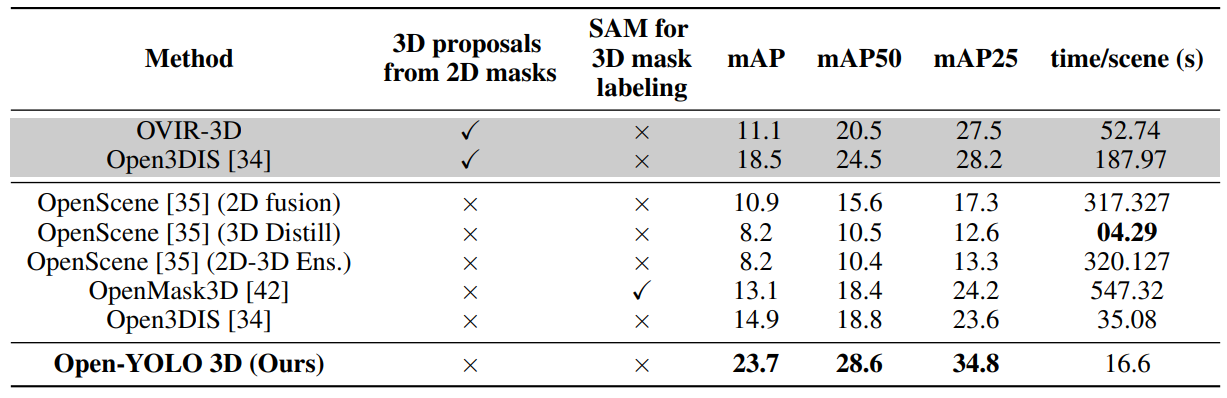
A New Approach to 3D Scene Understanding: Replacing Heavy Segmentation Models for a 16x Speedup

A New Approach to 3D Scene Understanding: Replacing Heavy Segmentation Models for a 16x Speedup

This research introduces Open-YOLO 3D, a novel method using 2D object detectors for high-speed, open-vocabulary 3D instance segmentation.

Author: Hackernoon