Oracle

Oracles are essential infrastructure components that feed real-time, off-chain data (such as price feeds, weather, or sports results) into blockchain smart contracts. Without decentralized oracles like Chainlink and Pyth, DeFi could not function. In 2026, oracles have evolved to support verifiable randomness and cross-chain data synchronization. This tag covers the technical evolution of data availability, tamper-proof price feeds, and the critical role oracles play in ensuring the deterministic execution of complex decentralized applications.

5217 Articles
Created: 2026/02/02 18:52
Updated: 2026/02/02 18:52
Chainlink Integrates with Canton’s Institutional Blockchain

Chainlink Integrates with Canton’s Institutional Blockchain

The post Chainlink Integrates with Canton’s Institutional Blockchain appeared on BitcoinEthereumNews.com. Chainlink has integrated with the Canton Network, an institutional blockchain backed by global banks and technology firms, in a move aimed at strengthening institutional adoption of blockchain technology. The partnership, announced Wednesday, brings Chainlink’s data service, including its data streams, smartdata (proof of reserve and NAVLink) and the crosschain interoperability protocol (CCIP) onto the Canton Network. The network has also joined the Chainlink Scale program, which helps cover oracle operating costs. As part of the agreement, Chainlink Labs will become a Canton Network “super validator.” A super validator is a combined node that runs a domain validator and a Canton synchronizer node. It participates in the Global Synchronizer to order and finalize cross-domain transactions, providing consensus and interoperability across the network. Yuval Rooz, CEO of Canton Network developer Digital Asset, said, “Chainlink not only strengthens our governance and resilience, but also broadens the opportunities for innovators across traditional and decentralized finance.” Chainlink co-founder Sergey Nazarov said that he expects the collaboration to enable “large-scale real-world use cases” that combine traditional and decentralized capital markets. Launched in May 2023, the Canton Network was designed as an institutional blockchain to support tokenization and large-scale financial activity. It was developed with the backing of tech behemoth Microsoft, finance heavyweights Goldman Sachs, BNP Paribas and Cboe Global Markets, and crypto natives Digital Asset and Paxos. The network’s governing body, formerly known as the Global Synchronizer Foundation, recently rebranded as the Canton Foundation. The foundation includes major validators such as Chainlink. “This is a change in name only, designed to better reflect our purpose and help the community connect the Foundation’s work more directly with the Canton Network.“ Source: Canton Network Related: HSBC, BNP Paribas back Canton Foundation in institutional tokenization push Growing institutional blockchain adoption With its long list of influential partners, the Canton…

Author: BitcoinEthereumNews
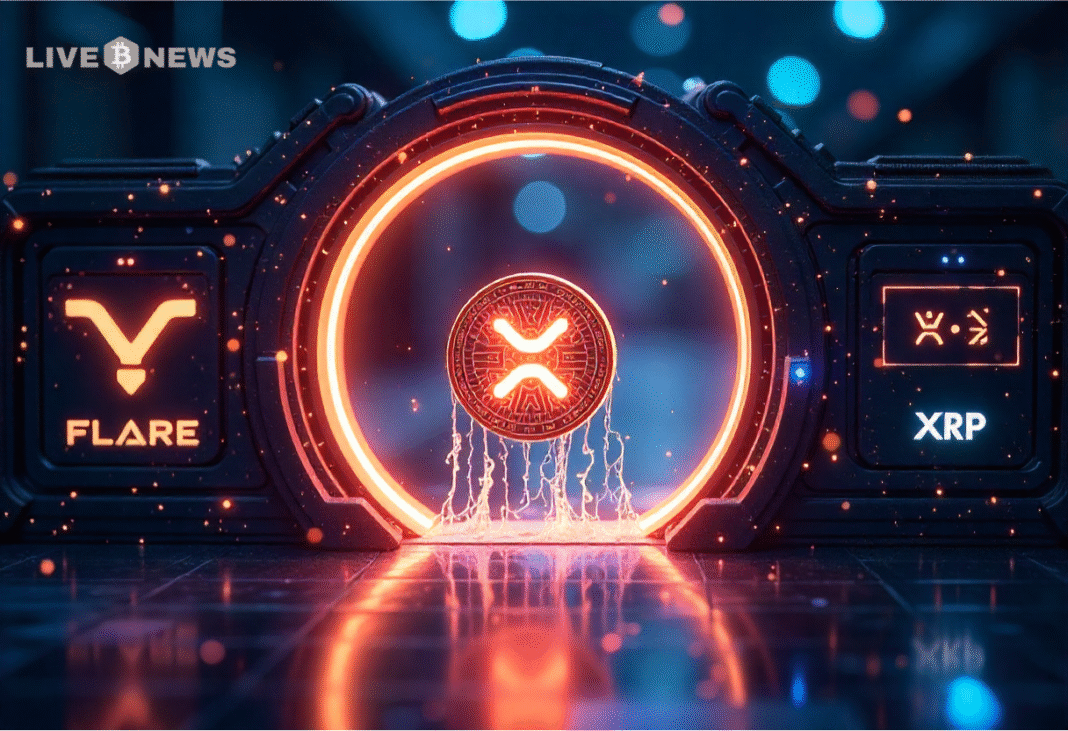
Good News for Ripple? Flare Launches First FAssets for XRP on Mainnet

Good News for Ripple? Flare Launches First FAssets for XRP on Mainnet

Flare says other protocols can integrate FXRP directly in their native building blocks, eliminating the need for special technicalities.

Author: CryptoPotato
4 Upcoming Presale Cryptos in 2025 Every Early Buyer Should Keep an Eye On – Lyno AI Tops the List

4 Upcoming Presale Cryptos in 2025 Every Early Buyer Should Keep an Eye On – Lyno AI Tops the List

4 Future Presale Cryptos in 2025 Every Early Adopter Should Have an Eye On can determine the future of blockchain investment. Early interest in such projects provides exclusive opportunities until mainstream. The most promising with good fundamentals and growth opportunities includes Lyno AI among them. Why Bitcoin Hyper and Snorter Token Matter Now The most […] The post 4 Upcoming Presale Cryptos in 2025 Every Early Buyer Should Keep an Eye On – Lyno AI Tops the List appeared first on Live Bitcoin News.

Author: LiveBitcoinNews
Flare Launches FXRP, Opening DeFi Access to XRP Holders

Flare Launches FXRP, Opening DeFi Access to XRP Holders

Flare launches FXRP, a 1:1 XRP-backed token enabling lending, trading, and DeFi access, expanding XRP’s utility in decentralized finance. Flare Network has taken a major step in bringing XRP into decentralized finance. The blockchain platform launched FXRP, a wrapped XRP that enables holders to utilise the token in lending, trading, and liquidity in DeFi applications. […] The post Flare Launches FXRP, Opening DeFi Access to XRP Holders appeared first on Live Bitcoin News.

Author: LiveBitcoinNews
$100 billion OpenAI deal is structured in cash, primarily to lease Nvidia hardware

$100 billion OpenAI deal is structured in cash, primarily to lease Nvidia hardware

The post $100 billion OpenAI deal is structured in cash, primarily to lease Nvidia hardware appeared on BitcoinEthereumNews.com. OpenAI isn’t spending $100 billion to buy chips, it’s paying cash to lease them. The whole deal with Nvidia is built on spreading costs over time, and not dropping billions upfront. The artificial intelligence company wants to access Nvidia’s top-tier GPUs, but instead of buying them outright, it’s locking into long-term lease agreements. That way, the money goes out slowly, and the risk shifts to Nvidia.The arrangement is simple. As each new AI data center goes live, OpenAI gets access to more GPUs.The first center, being built in Abilene, Texas, is expected to go online in the second half of 2026. That’s when the cash starts flowing. The exact price of each center is still unknown, but OpenAI isn’t taking ownership of the hardware. It’s renting the compute. Every GPU deployed will be leased, with payments spread across their useful life, around five years. OpenAI delays costs by leasing Nvidia chips instead of buying Jensen Huang, the CEO of Nvidia, described the deal as “monumental in size.” He said building a single gigawatt AI data center could cost about $50 billion. Out of that, around $35 billion goes straight to Nvidia for its chips. The remaining is for everything else. But OpenAI isn’t paying that up front. By leasing the GPUs instead, the company avoids taking a financial hit all at once. OpenAI will get an initial $10 billion from the deal soon. That money helps kick off the first wave of deployment. And while some of the funds will be used for hiring, operations, and other expenses, the majority of it will go straight to compute. More specifically, to Nvidia’s processors. These GPUs are the engines behind AI training, powering models like ChatGPT and everything that runs on them. Sarah Friar, OpenAI’s chief financial officer, said in Abilene that…

Author: BitcoinEthereumNews
OpenAI’s $100 billion deal with Nvidia is structured as cash payments

OpenAI’s $100 billion deal with Nvidia is structured as cash payments

OpenAI isn’t spending $100 billion to buy chips, it’s paying cash to lease them. The whole deal with Nvidia is built on spreading costs over time, and not dropping billions upfront. The artificial intelligence company wants to access Nvidia’s top-tier GPUs, but instead of buying them outright, it’s locking into long-term lease agreements. That way, […]

Author: Cryptopolitan
Chainlink Joins Canton Network Backed by Global Banks and $6 Trillion in Assets

Chainlink Joins Canton Network Backed by Global Banks and $6 Trillion in Assets

Chainlink has officially joined the Canton Network, an institutional blockchain backed by leading global banks and technology giants. This move gives Canton access to Chainlink’s trusted oracle services, including data feeds, proof-of-reserve tools, NAV reporting, and CCIP interoperability. Chainlink as a Super Validator As part of the integration, Chainlink will serve as a super validator, […]

Author: Coinstats
Chainlink Taps Into Canton Network Backed by Global Banks

Chainlink Taps Into Canton Network Backed by Global Banks

The post Chainlink Taps Into Canton Network Backed by Global Banks appeared on BitcoinEthereumNews.com. BlockchainFintech 25 September 2025 | 03:00 Chainlink has become the newest major participant in the Canton Network, an institutional blockchain built with support from global banks and tech firms. Through the integration, Canton will gain access to Chainlink’s data feeds, proof-of-reserve tools, NAV reporting, and CCIP interoperability protocol. The network has also joined Chainlink’s Scale program to help subsidize oracle costs as usage expands. In addition, Chainlink will act as a “super validator,” combining transaction validation with a role in Canton’s Global Synchronizer — the system that finalizes cross-domain transactions and keeps different applications in sync. Launched in 2023, Canton has quickly grown into one of the largest institutional blockchain projects. Backed by Microsoft, Goldman Sachs, BNP Paribas, Cboe Global Markets, Digital Asset, and Paxos, the network already supports more than $6 trillion in tokenized assets and processes about $280 billion in repo trades daily. Over 500 validators secure the system, including more than 30 super validators. Recent months have seen new members join, with P2P.org becoming a validator and global banks like HSBC and BNP Paribas backing the Canton Foundation, which oversees governance. Chainlink now joins that group as one of its key validators. Industry leaders believe the collaboration will accelerate real-world use cases for tokenization and settlement. Digital Asset’s Yuval Rooz said it strengthens Canton’s resilience and governance, while Chainlink’s Sergey Nazarov argued it could open the door to large-scale financial applications bridging traditional markets with DeFi. The announcement comes during a wave of institutional blockchain initiatives. Ripple and Securitize have launched new tokenized fund settlement options for firms including BlackRock and VanEck, London-based Fnality has secured $136 million from major banks, and Kazakhstan’s central bank has begun testing a stablecoin on Solana with Mastercard. Source The information provided in this article is for educational purposes only and…

Author: BitcoinEthereumNews
Canton Network integrates Chainlink to bolster adoption

Canton Network integrates Chainlink to bolster adoption

The post Canton Network integrates Chainlink to bolster adoption appeared on BitcoinEthereumNews.com. Canton Network has integrated with Chainlink, tapping into the oracle platform’s solutions to accelerate institutional adoption. Summary Canton Network has integrated Chainlink to leverage solutions like Data Streams and Cross-Chain Interoperability Protocol to accelerate adoption. The strategic partnership also sees Chainlink Labs join Canton Network as a super validator. Chainlink’s total value secured recently hit $100 billion. Canton, a permissionless blockchain for institutional finance, is joining forces with Chainlink amid a strategic partnership that will see it adopt Chainlink’s Data Streams, SmartData and cross-chain interoperability protocol, as well as join the Chainlink Scale program.  The platform’s integration of data streams and CCIP among other solutions will help bolster overall adoption of the Canton Network by institutions, the team said in a blog post. Chainlink (LINK)’s footprint in the decentralized finance market has seen its total value secured surpass $100 billion, while its network has powered over $25 trillion in transaction value. Canton Network’s move to join the Chainlink Scale program enables it to bring the oracle network’s services to institutions, with key benefits including cost-efficient and secure integration. As for expansion, Cantom says it includes leveraging Chainlink to advance adoption of tokenized assets, stablecoins, payments, and digital identity on the Canton Network. “By bringing its community and solutions to Canton, Chainlink not only strengthens our governance and resilience, but also broadens the opportunities for innovators across traditional and decentralized finance,” said Yuval Rooz, chief executive officer of Digital Asset. Adoption by large banks and financial institutions Canton Network counts major banks and financial heavyweights among its participants, including BNP Paribas, HSBC, Bank of America, Bank of China, Banco Santander, Morgan Stanley, SBI Digital Asset Holdings, and Nasdaq. The blockchain processes roughly $280 billion in daily repos and runs on an ecosystem of more than 500 validators, including 30 designated super…

Author: BitcoinEthereumNews
Chainlink Proof of Reserve adopted by Crypto Finance for asset verification

Chainlink Proof of Reserve adopted by Crypto Finance for asset verification

The post Chainlink Proof of Reserve adopted by Crypto Finance for asset verification appeared on BitcoinEthereumNews.com. Key Takeaways Crypto Finance, owned by Deutsche Börse, integrated Chainlink Proof of Reserve for transparent on-chain verification of assets. The solution allows real-time, public reserve data for nxtAssets’ physically backed Ethereum and Bitcoin ETPs on Arbitrum via Chainlink oracles. Crypto Finance, a Frankfurt-based digital asset solutions provider owned by Deutsche Börse, today integrated Chainlink Proof of Reserve to enable on-chain verification of custodied assets for exchange-traded products. The integration allows nxtAssets’ physically backed Ethereum and Bitcoin ETPs to display reserve data publicly through Chainlink’s oracle network on Arbitrum. The system uses Chainlink Runtime Environment to publish real-time custody information accessible to issuers, custodians and exchanges. Source: https://cryptobriefing.com/chainlink-proof-of-reserve-crypto-finance-asset-verification/

Author: BitcoinEthereumNews