Bitcoin has revolutionized finance since its creation, reaching record highs above $123,000 in 2025. As the world's first cryptocurrency, Bitcoin continues reshaping how we think about money andBitcoin has revolutionized finance since its creation, reaching record highs above $123,000 in 2025. As the world's first cryptocurrency, Bitcoin continues reshaping how we think about money and
新手学院/区块链百科/热门概念/What is Bit...r Beginners

What is Bitcoin (BTC)? The Ultimate BTC Investment Guide for Beginners

初阶
Dec 3, 2025
0m
BTC
BTC$90,221.97+2.56%
THINK
THINK$0.0006987+32.40%
BLOCK
BLOCK$0.01179+5.72%
LAYER
LAYER$0.1402+2.56%
LIKE
LIKE$0.002469-2.29%
Bitcoin has revolutionized finance since its creation, reaching record highs above $123,000 in 2025. As the world's first cryptocurrency, Bitcoin continues reshaping how we think about money and financial sovereignty. This comprehensive guide covers everything from Bitcoin's fundamental technology to investment strategies, helping you navigate the Bitcoin ecosystem confidently whether you're a beginner or experienced investor.

Key Takeaways
  1. Bitcoin reached new all-time highs above $123,000 in 2025, driven by institutional adoption and Bitcoin ETF approval in January 2024.
  2. The cryptocurrency operates on a fixed supply of 21 million coins with current mining rewards at 3.125 BTC per block following the April 2024 halving.
  3. Strategy (formerly MicroStrategy) alone holds over 650,000 BTC as of December 2025
  4. Bitcoin ETFs have attracted record-breaking inflows, making the cryptocurrency accessible through traditional brokerage accounts.
  5. Layer 2 solutions like Lightning Network are expanding Bitcoin’s utility beyond store of value to enable fast, low-cost payments and micropayments.

What is Bitcoin?

Bitcoin is a decentralized digital currency operating without banks or governments. Created in 2008 by Satoshi Nakamoto, it solved the double-spending problem through peer-to-peer technology. Bitcoin runs on a distributed network of computers called nodes, with transactions verified through mining. Its revolutionary blockchain technology creates a public, immutable ledger recording every transaction. This transparency combined with cryptographic security enables direct transactions without intermediaries, fundamentally changing how we transfer value globally.
  1. Curious about the acronym? Learn what BTC stands for and its various meanings
  2. Explore Bitcoin's complete journey from 2008 whitepaper to global phenomenon.
  3. Learn about Satoshi's mysterious holdings worth over $100 billion today.


Key Features of Bitcoin

1. Fixed Supply and Scarcity

Bitcoin has a hard cap of 21 million coins, making it inherently scarce and deflationary. Unlike fiat currencies that central banks can print indefinitely, this mathematical scarcity creates digital gold properties. Current circulating supply approaches 19.8 million, with new coins released through mining until approximately 2140.

Learn what happens when all Bitcoin is mined and its impact on the network.


2. Decentralization and Network Security

No single entity controls Bitcoin. Thousands of nodes worldwide maintain the network, ensuring resilience against censorship and single points of failure. This distributed architecture makes Bitcoin virtually impossible to shut down or manipulate by any government or organization.


3. Pseudonymity and Privacy

Bitcoin transactions are public on the blockchain, but users are identified only by wallet addresses, not personal information. While not completely anonymous, Bitcoin offers pseudonymous transactions that balance transparency with privacy, making it suitable for legitimate financial activities.

For maximum privacy, learn how to buy Bitcoin anonymously.


4. Global Accessibility and Borderless Payments

Bitcoin operates 24/7 globally, enabling instant transfers anywhere regardless of banking hours or international borders. Anyone with internet access can send or receive Bitcoin, providing financial inclusion to the unbanked and underbanked populations worldwide.


How Bitcoin Works

Understanding Bitcoin Blockchain Technology

Bitcoin's blockchain functions as a digital ledger copied across thousands of computers worldwide. Each new block builds upon previous ones, creating an unchangeable historical record. This distributed architecture ensures no single point of failure while maintaining complete transaction transparency.

For a deeper technical explanation, see our complete guide on how Bitcoin works.


The Bitcoin Mining Process

Bitcoin mining creates new bitcoins and verifies transactions. Miners use powerful computers to solve complex mathematical puzzles, with the first successful miner adding a new block and earning rewards. Currently, miners receive 3.125 BTC per block following the April 2024 halving event.

Get the complete mining breakdown including equipment, costs, and setup in our Bitcoin mining guide.


Transaction Verification and Confirmations

When sending Bitcoin, your transaction broadcasts to the network for verification. Miners verify digital signatures and sufficient funds before bundling transactions into blocks. The network processes blocks approximately every 10 minutes. Most services consider transactions final after six confirmations, typically taking one hour.


Proof-of-Work Consensus Mechanism

Bitcoin's proof-of-work system ensures security by making attacks extremely expensive. Mining difficulty automatically adjusts every 2,016 blocks to maintain the 10-minute average block time regardless of network hash rate, ensuring consistent block production.


Current Bitcoin Market Performance in 2025

Bitcoin reached new all-time highs above $123,000 in 2025, driven by institutional adoption and regulatory clarity. Major corporations like Strategy hold over 650,000 bitcoins as treasury assets. Bitcoin ETF approval in January 2024 brought massive institutional inflows, making cryptocurrency accessible through traditional brokerage accounts.

Understand the key factors driving Bitcoin price increases in our detailed analysis.


Understanding Bitcoin's Four-Year Cycles

Historically, Bitcoin follows four-year cycles tied to halving events: accumulation phase during price declines, growth phase with increasing interest, euphoria phase reaching new highs, and correction phase beginning new cycles. However, 2025 may break traditional patterns as ETF approval front-ran typical post-halving price discovery.
  1. When corrections happen, understand the factors behind price drops.
  2. During corrections, explore recovery factors and market outlook.


Bitcoin Price Predictions and Expert Forecasts

Conservative technical analysis suggests key support and resistance levels throughout 2025. Optimistic projections predict significant upward potential by year-end. Long-term forecasts toward 2030 range from $145,000 to $500,000, though these require skepticism given market volatility and unpredictable macro factors.
  1. Worried about downside risk? Read our expert crash scenario analysis.
  2. Explore mathematical price models: Bitcoin Power Law predictions to 2030.


How to Buy Bitcoin: Step-by-Step Guide

  1. Visit MEXC official website and create your account using email or phone number
  2. Verify your contact method by entering the 6-digit verification code sent to you
  3. Enable two-factor authentication (2FA) via Google Authenticator or SMS for enhanced security
  4. Navigate to "Buy Crypto" section and choose your preferred purchase method
  5. Select Bitcoin (BTC) and enter your desired purchase amount in local currency or BTC
  6. Review transaction details including fees and exchange rate, then confirm your order
  7. Complete payment using your selected method - cards process instantly, bank transfers take 1-3 days
  8. Once confirmed, Bitcoin credits to your MEXC spot wallet, ready for trading or withdrawal
  9. Consider transferring to a personal hardware wallet for maximum long-term security


For Indian investors, see our specific guide: How to Buy Bitcoin in India.


What is Bitcoin Wallets

Proper Bitcoin storage is crucial for security. The cryptocurrency community emphasizes "not your keys, not your coins," highlighting the importance of controlling your private keys rather than leaving Bitcoin on exchanges. Hot wallets are internet-connected software wallets offering convenience for frequent transactions, including mobile apps like BlueWallet or desktop software like Electrum. Cold wallets provide offline storage solutions offering maximum security for long-term holdings, with popular hardware wallets like Ledger or Trezor. Paper wallets are physical documents containing Bitcoin addresses and private keys, offering air-gapped security but requiring careful handling. Multi-signature wallets require multiple signatures to authorize transactions, ideal for businesses or high-value holdings requiring additional security layers and shared control.
  1. First, understand the basics: What is a Bitcoin Wallet Address?
  2. Learn how to safely transfer: How to Send Bitcoin to Another Wallet.


What is Bitcoin Mining

Bitcoin mining serves two critical functions: securing the network through computational work and distributing new bitcoins into circulation. Mining involves using specialized computers to solve complex mathematical puzzles, with miners competing to find solutions first. Winners earn the right to add new blocks to the blockchain and receive block rewards. This process requires significant computational power and electricity, creating real-world costs that secure the network. Mining difficulty automatically adjusts every 2,016 blocks (approximately two weeks) to maintain 10-minute block times regardless of total network power. Modern mining has evolved into a sophisticated industry dominated by professional operations with access to cheap electricity and specialized ASIC hardware. The industry increasingly focuses on renewable energy sources including solar, wind, and hydroelectric power, addressing environmental concerns while maintaining network security.
  1. Wondering about timeframes? See how long it takes to mine 1 Bitcoin.
  2. Is mining worth it? Calculate potential returns in our profitability analysis.

Bitcoin Use Cases and Real-World Applications


1. Store of Value and Digital Gold

Many investors view Bitcoin as "digital gold"—a hedge against inflation and currency debasement. This perspective is supported by mathematical scarcity (21 million cap), superior portability compared to physical gold, infinite divisibility into satoshis, and absolute durability when properly stored.
  1. Dive deeper into Bitcoin's value proposition and what makes it valuable.
  2. See our detailed comparison: Bitcoin vs Gold - which is the better store of value?


2Corporate Treasury Adoption

Forward-thinking companies add Bitcoin to balance sheets as treasury assets. Strategy holds over 650,000 bitcoins, demonstrating corporate confidence. Tesla and Block (formerly Square) have experimented with Bitcoin payments and treasury holdings. Metaplanet actively acquires Bitcoin for corporate reserves.

Curious about Elon's holdings? Read Does Elon Musk Own Bitcoin.


3. Cross-Border Payments and Remittances

Bitcoin enables fast, cost-effective international transfers. Transactions settle within hours compared to days for traditional banking. Network fees often beat traditional remittance services. Bitcoin provides financial access to anyone with internet, regardless of banking infrastructure, with complete transaction transparency.


4. Micropayments and Lightning Network

Layer 2 solutions like Lightning Network enable instant, low-cost micropayments previously impossible with traditional Bitcoin transactions. This unlocks new use cases including content creator payments, streaming services, gaming economies, and machine-to-machine payments for IoT applications.


Bitcoin vs ETH, SOL, XRP, ADA

Bitcoin vs Ethereum (ETH)

Bitcoin focuses on being digital money and store of value, while Ethereum operates as a programmable blockchain platform. Bitcoin processes approximately 7 transactions per second using Proof-of-Work, while Ethereum handles 15 TPS with Proof-of-Stake consensus. Bitcoin excels as a store of value; Ethereum powers DeFi and NFTs.

In-depth analysis: Bitcoin vs Ethereum - which cryptocurrency is right for you?


Bitcoin vs Solana (SOL)

Solana positions itself as high-performance blockchain processing 3,000+ transactions per second. Bitcoin uses Proof-of-Work; Solana uses Proof-of-History consensus. Bitcoin maintains higher decentralization prioritizing security, while Solana prioritizes speed and scalability. Bitcoin has 15+ years of perfect uptime; Solana has experienced network outages.


Bitcoin vs Ripple (XRP)

XRP was designed specifically for cross-border payments and banking institutions. Bitcoin serves as digital gold; XRP targets banking and remittances. Bitcoin capped at 21 million; XRP has 100 billion total supply. Bitcoin transaction fees vary ($1-50); XRP fees consistently low (~$0.0002). Bitcoin fully decentralized; XRP faces centralization concerns.


Bitcoin vs Cardano (ADA)

Cardano emphasizes academic research and peer-reviewed development. Bitcoin prioritizes security and proven technology; Cardano focuses on research-driven development. Bitcoin has limited programmability; Cardano offers advanced smart contracts. Bitcoin has informal governance; Cardano features structured on-chain governance. Bitcoin prioritizes energy security; Cardano designed for sustainability.


Comparative Overview Table

Feature
Bitcoin (BTC)
Ethereum (ETH)
Solana (SOL)
XRP
Primary Purpose
Digital Gold
Smart Contracts
High-Speed DeFi
Banking Payments
Consensus
Proof-of-Work
Proof-of-Stake
Proof-of-History
Federated
Transaction Speed
~7 TPS
~15 TPS
~3,000+ TPS
~1,500 TPS
Max Supply
21 Million
Unlimited
Unlimited
100 Billion
Decentralization
Highest
High
Medium
Low

Understand Bitcoin's market position through our dominance analysis.


What is Bitcoin ETFs

Bitcoin ETFs are investment funds tracking Bitcoin's price without requiring investors to directly hold cryptocurrency. These funds purchase and custody Bitcoin on behalf of shareholders, offering several advantages. ETFs operate under established financial regulations with professional custody eliminating the need to manage private keys. They may offer more favorable tax treatment compared to direct ownership and are accessible through standard brokerage accounts without specialized cryptocurrency exchanges. Major providers include BlackRock (IBIT), Fidelity (FBTC), Grayscale (GBTC), and VanEck (HODL). Since launching in January 2024, Bitcoin ETFs demonstrated remarkable success with massive inflows, record weeks seeing over $2.9 billion in net inflows. ETF demand contributed significantly to Bitcoin's 2025 price appreciation, enabling traditional financial advisors to recommend Bitcoin exposure to clients and helping legitimize Bitcoin as an institutional asset class.

See exactly how much Bitcoin BlackRock holds through their iShares ETF.


Bitcoin Charts and Technical Analysis

Bitcoin chart analysis helps investors make informed decisions and identify trading opportunities. Essential patterns include support and resistance levels where Bitcoin finds buying or selling pressure, trend lines connecting price highs or lows indicating market direction, moving averages smoothing price data to identify trends and reversals, and volume analysis confirming price movements and trend strength. Popular technical indicators include Relative Strength Index (RSI) measuring overbought or oversold conditions, Moving Average Convergence Divergence (MACD) identifying trend changes and momentum shifts, Bollinger Bands showing price volatility and potential breakouts, and the Fear and Greed Index indicating market sentiment extremes. Bitcoin-specific metrics provide unique insights into network health and adoption, including hash rate measuring total computational power securing the network, network difficulty indicating mining complexity, active addresses showing unique Bitcoin addresses used daily, and exchange inflows/outflows indicating whether investors are accumulating or distributing.

Visual analysis tool: Bitcoin Rainbow Chart for cycle timing and entry points.


Future of Bitcoin

Lightning Network represents Bitcoin's primary scaling solution, fundamentally changing transaction volume handling and costs. This second-layer technology creates payment channels allowing multiple transactions between parties without blockchain confirmation for each transfer. Lightning enables previously impossible use cases, particularly streaming micropayments for digital content and services. Despite Ethereum's DeFi dominance, Bitcoin increasingly integrates into Web3 applications through innovative bridging technologies. Wrapped Bitcoin (WBTC) and similar protocols allow Bitcoin holders to participate in Ethereum-based DeFi protocols, unlocking liquidity and yield opportunities. Cross-chain bridges enable Bitcoin interaction with multiple blockchain networks. The Bitcoin mining industry undergoes significant transformation toward environmental responsibility. Mining operations worldwide transition to renewable energy sources including solar, wind, and hydroelectric power. Innovative projects utilize waste heat from mining operations for greenhouse agriculture and residential heating systems. Major mining companies commit to carbon-neutral operations.

Bitcoin Investment Strategies and Risk Management

Dollar-Cost Averaging Strategy

Dollar-cost averaging (DCA) involves purchasing fixed dollar amounts of Bitcoin at regular intervals regardless of current price. This strategy reduces volatility impact by spreading purchases over time, eliminating need to time market perfectly. DCA removes emotional decision-making, avoiding common pitfalls of buying during euphoria or panic-selling during downturns.

Evaluate market conditions: Is now a good time to buy Bitcoin?


HODLing Versus Active Trading Approaches

HODLing represents long-term strategy focused on Bitcoin's multi-year appreciation potential, requiring minimal trading activity and reducing fees and tax complications. Active trading attempts profiting from short-term price movements through frequent buying and selling. Most retail traders underperform buy-and-hold strategies due to transaction costs and timing difficulty.

Think you missed the boat? See why it may not be too late.


Essential Risk Management Principles

Position sizing ensures Bitcoin investments never exceed amounts investors can afford to lose completely. Diversification maintains Bitcoin as only a portion of well-balanced investment strategy. Security measures require proper wallet security protocols and backup procedures protecting against theft or loss. Tax planning helps investors understand transaction implications in their jurisdiction.


Global Bitcoin Adoption and Cryptocurrency Regulation

Global Bitcoin adoption and legal status vary significantly across jurisdictions. El Salvador became the first country adopting Bitcoin as legal tender in 2021, followed by Central African Republic in 2022. The United States developed increasingly supportive regulatory environment, highlighted by Bitcoin ETF approval in January 2024 and growing institutional adoption. Germany treats long-term Bitcoin holdings as tax-free after one year, creating favorable conditions for investors. Switzerland established itself as global "Crypto Valley," attracting blockchain companies with comprehensive regulatory frameworks balancing innovation and consumer protection. Discussions about strategic Bitcoin reserves gain momentum among governments considering adding Bitcoin to national treasuries. Many central banks develop Central Bank Digital Currencies (CBDCs), creating interesting dynamics with decentralized cryptocurrencies like Bitcoin. The relationship between CBDCs and Bitcoin appears likely to be coexistence rather than direct competition, with government digital currencies competing for certain use cases while Bitcoin offers financial sovereignty and censorship resistance.
  1. Discover El Salvador's Bitcoin experiment and its real-world impact.
  2. See the U.S. policy shift: How Much Bitcoin Does Trump Own and his crypto stance.

Conclusion

Bitcoin has fundamentally transformed how we think about money, financial sovereignty, and digital ownership. From experimental beginnings to globally recognized store of value, Bitcoin challenges traditional financial systems with its fixed supply, decentralized nature, and transparent blockchain technology. As institutional adoption accelerates and regulatory clarity improves, Bitcoin continues building foundations for more open, inclusive financial future. Whether viewed as digital gold, payment network, or revolutionary technology, Bitcoin has proven resilience over more than a decade. Understanding the technology, risks, and investment strategies remains essential for investors considering exposure to this transformative asset.


Important Disclaimer: This article is for educational purposes only and does not constitute financial advice. Bitcoin investing involves significant risk, including potential loss of principal. Always conduct your own research and consult qualified financial advisors before making investment decisions.
市场机遇
null 图标
null实时价格 (null)
--
----
USD
null (null) 实时价格图表

热门文章

Binance 上线 TSLA?为什么“聪明钱”其实早就在 MEXC 了

Binance 上线 TSLA?为什么“聪明钱”其实早就在 MEXC 了

今天的加密市场头条异常热闹:Binance 宣布上线特斯拉(TSLA)永续合约。这条消息无疑再次验证了一个正在成型的行业趋势——传统股票与加密流动性的融合。但对长期活跃在 MEXC 的资深交易者来说,这更像是一条“早就预料到”的新闻,甚至还会让人会心一笑。原因很简单:当很多人刚刚走进会场时,MEXC 用户早已在里面交易 TSLA 了。如果你是因为 Binance 的消息而开始关注 TSLA 的“加

PIPPIN 代币为何暴涨?解析 Solana 链上的“独角兽”现象

PIPPIN 代币为何暴涨?解析 Solana 链上的“独角兽”现象

在加密市场这个高度拥挤的赛道中,大多数 Meme 代币往往只是短暂的价格波动——迅速拉升、快速回落,随后被市场遗忘。但 PIPPIN 显然打破了这一常见路径。近期,PIPPIN 在 MEXC 涨幅榜(Top Gainers) 上持续走强,形成了一轮与整体市场节奏明显脱钩的突破行情。问题在于:为什么是 PIPPIN?为什么在大量 Meme 资产停滞的背景下,它能够被资金持续定价?答案并不仅仅来自情绪

黄金突破 $5,200:如何在历史新高价位交易

黄金突破 $5,200:如何在历史新高价位交易

黄金(XAU)已经正式进入“无人区”。在果断突破 $5,000 这一关键心理关口后,价格迅速加速至 $5,200,市场也随之从常规的上升趋势,转入一个被称为“价格发现(Price Discovery)”的阶段。 对于在 MEXC 上进行交易的投资者而言,这可能是最具挑战性的市场环境之一。当资产在历史新高附近运行、上方不存在任何历史阻力位时,传统技术分析工具往往会失效。市场规则已经发生变化,理解这轮

为什么 PUMP 今天暴涨?——“庄家永远赢”的逻辑

为什么 PUMP 今天暴涨?——“庄家永远赢”的逻辑

如果说昨天 HYPE 的上涨,更像是 DeFi 基本面玩家的一次阶段性兑现,那么今天 PUMP 的突然拉升,则明显带着另一种熟悉的味道——那种属于 Degen 的情绪,又一次回到了市场中心。 从盘面看,PUMP 的走势非常凌厉,不少人第一反应都是怀疑自己是不是又踏空了。但如果把视角从 K 线移开,去看一眼链上资金结构,就会发现这并不是一场情绪失控的随机拉升,而是一次有逻辑、有预期的重新定价。 在

热门加密动态

查看更多
MEMES 交易平台选择简介

MEMES 交易平台选择简介

为MEMES选择合适的交易平台是一个关键决策,可能会显著影响您的交易成功和安全性。随着MEMES在加密货币市场中持续获得动力,投资者需要一个提供安全性和可用性的可靠MEMES交易所。您选择的MEMES交易平台不仅决定了您购买MEMES、出售MEMES和交易MEMES的便捷程度,还决定了您的资产免受潜在安全威胁的安全程度。 在评估MEMES交易平台时,几个关键因素应该指导您的决策过程。安全功能,如双

MEXC翻牌乐活动深度解析:如何瓜分500万USDT奖池?2026最新交易盛宴

MEXC翻牌乐活动深度解析:如何瓜分500万USDT奖池?2026最新交易盛宴

MEXC翻牌乐活动正式上线!500万USDT奖池等你瓜分,仅需交易5000 USDT即可参与。本文深度解读活动规则、参与策略及MEXC平台优势,助你最大化收益。活动时间:2026年1月16日-2月9日。 Key Takeaways 超高奖池:500万USDT总奖池,行业罕见的S级活动规模 低门槛参与:仅需完成5000 USDT交易量即可获得瓜分资格 创新玩法:翻牌机制结合交易竞赛,增加趣味性和参与

MEXC 爆仓补贴活动深度解析:$500,000 奖池护航,新老用户首单最高 100U 包赔(2026 年 1 月最新)

MEXC 爆仓补贴活动深度解析:$500,000 奖池护航,新老用户首单最高 100U 包赔(2026 年 1 月最新)

MEXC 推出 $500,000 爆仓补贴活动,新老用户首单亏损即享包赔,最高可获 100U 补偿。本文深度解析活动规则、参与方式及 MEXC 交易优势,助你在加密货币合约交易中降低风险,把握市场机会。 Key Takeaways 活动时间:2026 年 1 月 15 日至 1 月 30 日 参与对象:MEXC 新老用户均可报名 补贴金额:新用户首单最高 100 USDT,老用户最高 50 USD

Bitcoin (BTC) 7 日价格变动

Bitcoin (BTC) 7 日价格变动

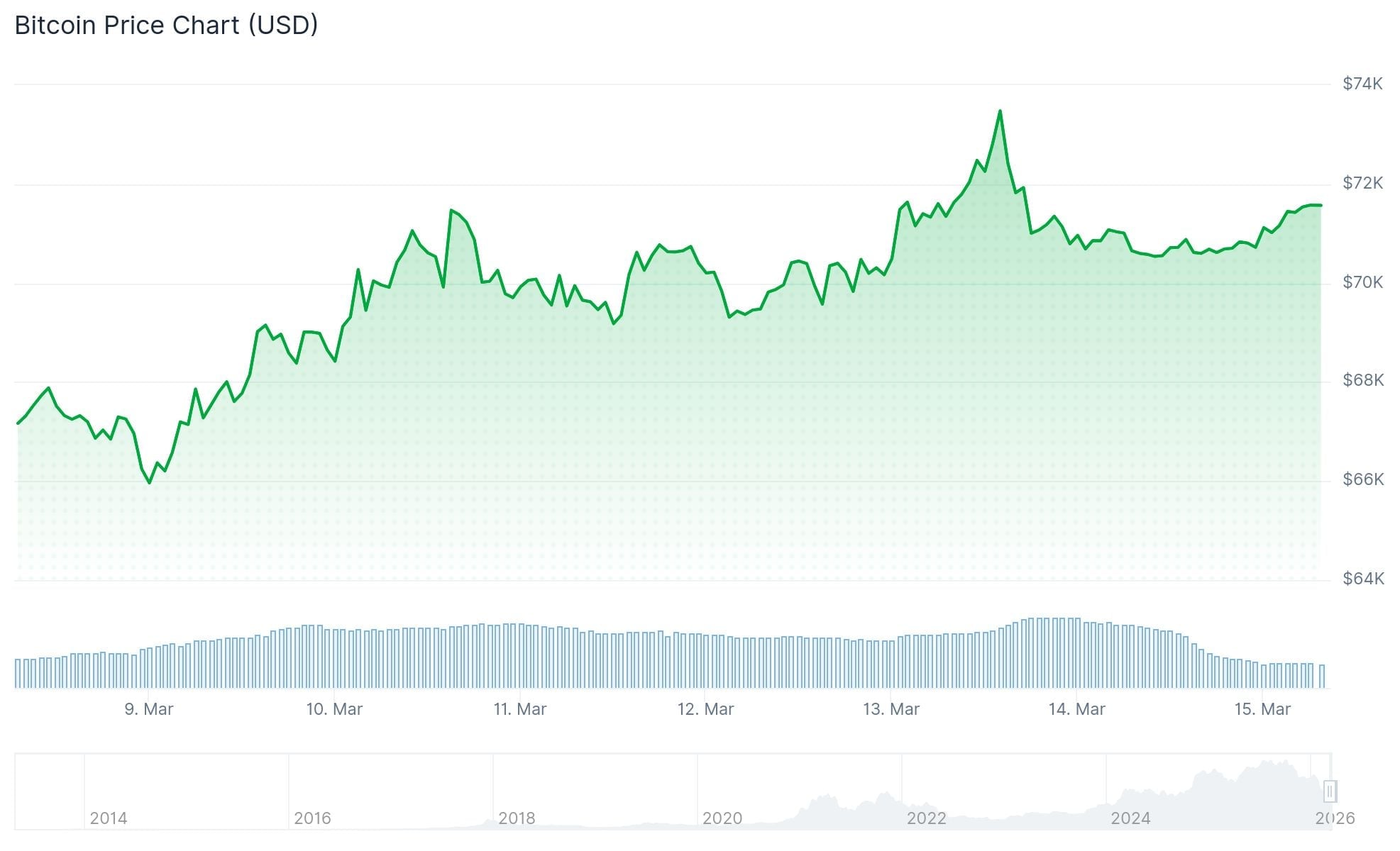
Bitcoin (BTC) 今日当前价格 截至 2026 年 1 月 19 日,Bitcoin 的交易价格为 $92,687.01,24 小时变化约为 0.00%[1]。其市值约为 $1.83 万亿,在加密货币中排名 #1[6]。当前的 Bitcoin 价格反映了加密货币市场在应对不断变化的情绪时的盘整期。 Bitcoin 7 天价格表现 在过去 7 天内,Bitcoin 经历了横盘波动,虽然短暂

相关文章

Binance 上线 TSLA?为什么“聪明钱”其实早就在 MEXC 了

Binance 上线 TSLA?为什么“聪明钱”其实早就在 MEXC 了

今天的加密市场头条异常热闹:Binance 宣布上线特斯拉(TSLA)永续合约。这条消息无疑再次验证了一个正在成型的行业趋势——传统股票与加密流动性的融合。但对长期活跃在 MEXC 的资深交易者来说,这更像是一条“早就预料到”的新闻,甚至还会让人会心一笑。原因很简单:当很多人刚刚走进会场时,MEXC 用户早已在里面交易 TSLA 了。如果你是因为 Binance 的消息而开始关注 TSLA 的“加

PIPPIN 代币为何暴涨?解析 Solana 链上的“独角兽”现象

PIPPIN 代币为何暴涨?解析 Solana 链上的“独角兽”现象

在加密市场这个高度拥挤的赛道中,大多数 Meme 代币往往只是短暂的价格波动——迅速拉升、快速回落,随后被市场遗忘。但 PIPPIN 显然打破了这一常见路径。近期,PIPPIN 在 MEXC 涨幅榜(Top Gainers) 上持续走强,形成了一轮与整体市场节奏明显脱钩的突破行情。问题在于:为什么是 PIPPIN?为什么在大量 Meme 资产停滞的背景下,它能够被资金持续定价?答案并不仅仅来自情绪

黄金突破 $5,200:如何在历史新高价位交易

黄金突破 $5,200:如何在历史新高价位交易

黄金(XAU)已经正式进入“无人区”。在果断突破 $5,000 这一关键心理关口后,价格迅速加速至 $5,200,市场也随之从常规的上升趋势,转入一个被称为“价格发现(Price Discovery)”的阶段。 对于在 MEXC 上进行交易的投资者而言,这可能是最具挑战性的市场环境之一。当资产在历史新高附近运行、上方不存在任何历史阻力位时,传统技术分析工具往往会失效。市场规则已经发生变化,理解这轮

为什么 PUMP 今天暴涨?——“庄家永远赢”的逻辑

为什么 PUMP 今天暴涨?——“庄家永远赢”的逻辑

如果说昨天 HYPE 的上涨,更像是 DeFi 基本面玩家的一次阶段性兑现,那么今天 PUMP 的突然拉升,则明显带着另一种熟悉的味道——那种属于 Degen 的情绪,又一次回到了市场中心。 从盘面看,PUMP 的走势非常凌厉,不少人第一反应都是怀疑自己是不是又踏空了。但如果把视角从 K 线移开,去看一眼链上资金结构,就会发现这并不是一场情绪失控的随机拉升,而是一次有逻辑、有预期的重新定价。 在

注册MEXC账号
注册 & 获得高达10,000 USDT奖金