Slop: The Alarming AI Word of 2025 That’s Flooding Our Digital World
BitcoinWorld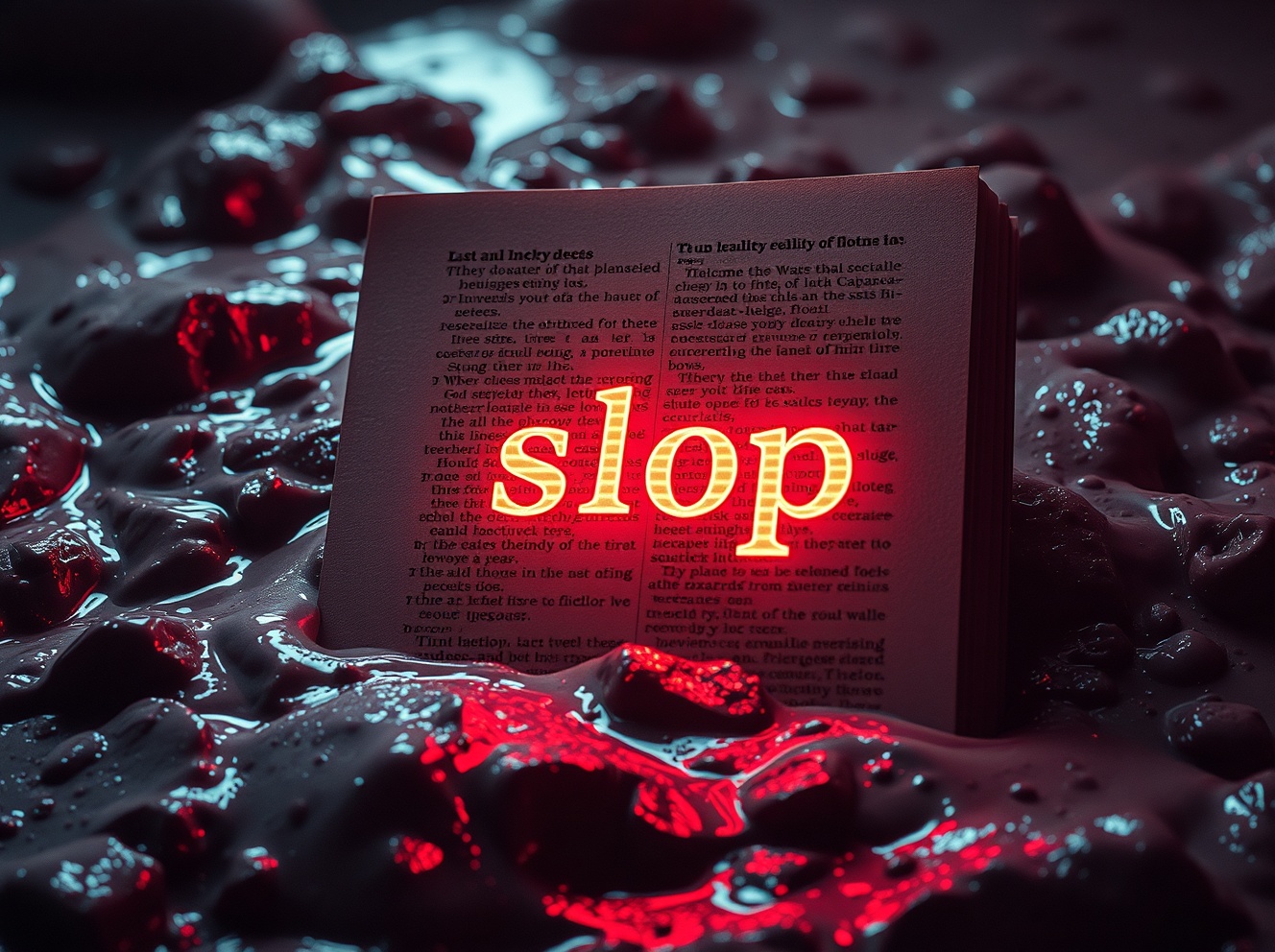
Slop: The Alarming AI Word of 2025 That’s Flooding Our Digital World
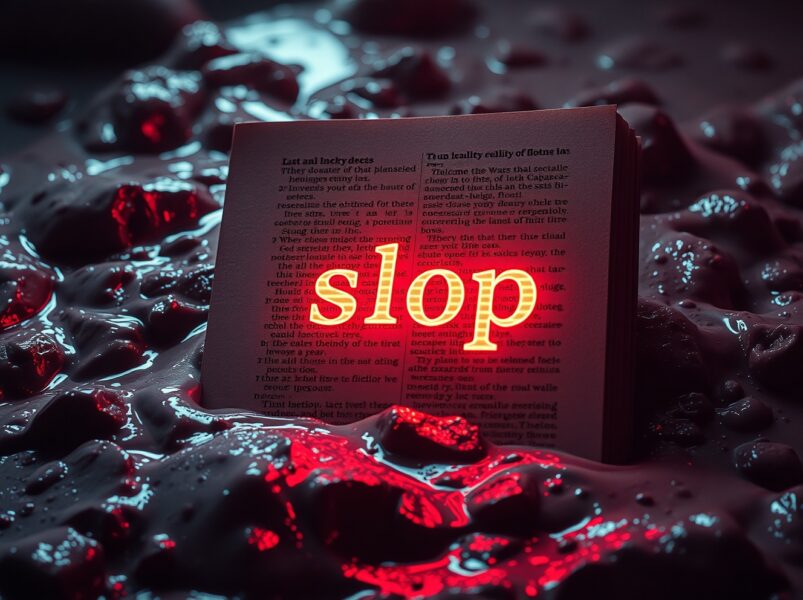
Imagine scrolling through your social media feed and encountering content that feels off—slightly unnatural, mass-produced, and lacking substance. This phenomenon now has an official name: slop. Merriam-Webster has declared ‘slop’ its 2025 Word of the Year, capturing the pervasive reality of AI-generated content that’s transforming our digital landscape. For cryptocurrency enthusiasts who value authenticity and quality information, understanding this trend is crucial as AI begins to influence everything from news articles to market analysis.
What Exactly Is AI Slop?
Merriam-Webster defines slop as “digital content of low quality that is produced usually in quantity by means of artificial intelligence.” The dictionary’s description is intentionally visceral: “Like slime, sludge, and muck, slop has the wet sound of something you don’t want to touch. Slop oozes into everything.” This isn’t just academic terminology—it’s a cultural response to the flood of AI-generated material that has become increasingly unavoidable.
Greg Barlow, Merriam-Webster’s president, told The Associated Press: “It’s such an illustrative word. It’s part of a transformative technology, AI, and it’s something that people have found fascinating, annoying, and a little bit ridiculous.” The choice reflects a shift in public sentiment from awe to critique regarding artificial intelligence’s output.
Why Slop Became Merriam-Webster’s Word of the Year
The selection process for Word of the Year considers several factors:
- Frequency of use: How often the word appears in searches and publications
- Sustained interest: Whether the word maintains relevance over time
- Cultural significance: How well the word captures a societal moment
‘Slop’ met all these criteria spectacularly. Throughout 2025, journalists and commentators increasingly used the term to describe content created by platforms like OpenAI’s Sora and Google Gemini’s Veo. These tools have enabled the creation of AI-generated books, podcasts, pop songs, TV commercials, and even entire movies at unprecedented scale.
A May 2025 study revealed a startling statistic: nearly 75% of all new web content from the previous month involved some form of AI. This explosion of automated content creation has fundamentally changed the digital ecosystem.
The Slop Economy: How AI-Generated Content Creates Value
The proliferation of AI tools has given rise to what analysts call the “slop economy.” This system operates on a simple principle: produce massive quantities of content with minimal human effort, then monetize through advertising and platform algorithms.
| Platform | AI Tool | Content Type |
|---|---|---|
| OpenAI | Sora | Video generation |
| Gemini Veo | Multimedia content | |
| Various | Text generators | Articles, blogs, social posts |
This economy creates several concerning dynamics:
- Quality erosion: As algorithms prioritize engagement over accuracy, factual content becomes harder to find
- Information inequality: Those who can afford paywalled, human-created content access better information
- Economic displacement: Human creators struggle to compete with free or cheap AI-generated alternatives
Beyond Social Media: Slop’s Unexpected Impact Areas
While much discussion focuses on entertainment and social media, AI slop has infiltrated more serious domains:
- Cybersecurity reports: Automated threat analyses that miss nuanced patterns
- Legal briefings: AI-generated legal documents with hidden inaccuracies
- Academic writing: The college essay has been particularly affected
- Financial analysis: Automated market reports that lack human insight
This broad infiltration demonstrates that no field is immune to the slop phenomenon. The consequences range from minor annoyances to serious professional and safety risks.
Global Recognition: How Other Dictionaries Responded
Merriam-Webster wasn’t alone in recognizing technology’s linguistic impact. Other major dictionaries selected related terms:
| Dictionary | 2025 Word of the Year | Focus |
|---|---|---|
| Macquarie Dictionary | “AI slop” | Direct acknowledgment of the phenomenon |
| Oxford Dictionary | “Ragebait” | Content designed to provoke anger |
| Collins Dictionary | “Vibe coding” | Programming based on intuitive feel |
This convergence suggests a global recognition that artificial intelligence is reshaping not just technology, but language itself. The terms reflect different aspects of our evolving relationship with digital tools.
The Future of Content: Navigating the Age of AI Slop
As AI-generated content becomes more prevalent, several trends are emerging:
- Authentication systems: Technologies to verify human-created content
- Quality curation: Services that filter out low-value AI content
- Hybrid creation: Human-AI collaboration that maintains quality standards
- Regulatory responses: Potential legislation around AI content disclosure
For cryptocurrency and technology communities, these developments have particular relevance. Trust and accuracy are paramount in financial and technical information, making the slop problem especially concerning.
FAQs About AI Slop and Merriam-Webster’s Decision
What companies are most associated with AI slop creation?
Major technology companies developing AI content tools include OpenAI (creators of Sora) and Google (developers of Gemini Veo). These platforms have made advanced content generation accessible to millions.
Who at Merriam-Webster explained the slop selection?
Greg Barlow, the dictionary’s president, provided insights to The Associated Press about why ‘slop’ was chosen as Word of the Year.
How does AI slop affect cryptocurrency information?
The cryptocurrency space is particularly vulnerable to AI-generated misinformation, as complex technical concepts can be poorly explained by AI, leading to investor confusion and poor decision-making.
What percentage of web content involves AI?
According to a May 2025 study cited in the article, approximately 75% of new web content involved some form of AI assistance or generation.
Conclusion: The Word That Defined Our Digital Moment
The selection of ‘slop’ as Merriam-Webster’s 2025 Word of the Year represents more than linguistic curiosity—it captures a fundamental shift in how we create and consume digital content. As artificial intelligence becomes increasingly capable of generating text, images, and video, we face new challenges in distinguishing quality information from automated output. For those in technology and cryptocurrency communities, this development underscores the growing importance of critical evaluation and source verification. The age of AI slop is here, and our ability to navigate it will determine the quality of our digital future.
To learn more about the latest artificial intelligence trends and their impact on digital content, explore our articles on key developments shaping AI content creation and verification systems.
This post Slop: The Alarming AI Word of 2025 That’s Flooding Our Digital World first appeared on BitcoinWorld.
Ayrıca Şunları da Beğenebilirsiniz

Is Putnam Global Technology A (PGTAX) a strong mutual fund pick right now?

‘Love Island Games’ Season 2 Release Schedule—When Do New Episodes Come Out?