The post Is the DeFi Giant Aave Protocol In Trouble and a Price Crash Looms? appeared on BitcoinEthereumNews.com. The largest decentralized finance (DeFi) lendingThe post Is the DeFi Giant Aave Protocol In Trouble and a Price Crash Looms? appeared on BitcoinEthereumNews.com. The largest decentralized finance (DeFi) lending

Is the DeFi Giant Aave Protocol In Trouble and a Price Crash Looms?

2025/12/15 19:16

The largest decentralized finance (DeFi) lending protocol Aave is facing an internal governance conflict over swap fee diversion worth millions to Aave Labs instead of Aave DAO treasury. The debate centered on concerns over privatization and potential losses to AAVE holders following a recent integration with CoW Swap, which changed how revenue is distributed.

Aave DAO Members Question Revenue Diversion to Aave Labs

Aave Labs, a company by Aave protocol founder Stani Kulechov, announced a partnership with CoW Swap for an improved swap experience, including offering better prices and protection against MEV attacks.

However, an Aave DAO delegate revealed that swap fees are moving to a private address controlled by Aave Labs rather than to the DAO treasury. It means over $10 million in potential annual revenue to Aave DAO, which community members argue belongs to token holders.

Notably, Aave earlier used ParaSwap swap adapters and surplus revenue flowed to the DAO treasury without charging user fees. However, users pay 15-25 bps fees when using CoW Swap, with fees flowing to Aave Labs.

Marc Zeller, founder of the Aave Chan Initiative, quoted the situation as “extremely concerning,” describing it as “stealth privatization” of 10% of the Aave DAO’s revenue. Zeller argued that whether Aave Labs will also take revenue from features Vaults, Horizon, and the V4 liquidation engine.

Founder Stani Kulechov Shares Some Clarifications

Stani Kulechov rejected claims of any stolen revenue by Aave Labs. He claimed that prior ParaSwap fees were a “discretionary surplus” voluntarily donated to the DAO. He emphasized on the Aave protocol governed by the DAO and the Aave frontend maintained and funded by Aave Labs.

Also, he argued that since Aave Labs bears the costs of engineering and security for the website, it is reasonable for the company to monetize its own products.

Aave Labs accepted poor communication with the community about the changes, but defended its stance on the decision. It cited better execution prices and stronger protection against MEV as the primary motivations for switching to CoW Swap.

However, the debate raises questions as Aave maintains its dominance among DeFi lending protocols, with nearly $140 million in annualized revenue. The key questions include who owns the Aave revenue, whether DAO-funded service providers have fiduciary duties to token holders, and the line between DAO-governed protocols and company-controlled products.

Can AAVE Price Crash?

The community believes the debate will resolve key doubts, but DeFi will ultimately win. Marc Zeller also confirmed an official response to Aave Labs and Kulechov’s claims and the impact of fee diversion on the DAO and AAVE holders.

Moreover, the protocol plans v4 upgrade with a primary focus on the liquidation engine to change DeFi lending fundamentally. All liquidity will flow through Liquidity Hubs, which boost use and unlocks better rates for both suppliers and borrowers.

AAVE price has jumped more than 0.5% in the past 24 hours despite the conflict, extending the monthly rally to over 30%. The price currently trades at $195.95, with a 24-hour low and high of $187.29 and $196.27, respectively. Moreover, a 40% increase in trading volume over the last 24 hours further supports the price jump.

Source: https://coingape.com/is-the-defi-giant-aave-protocol-in-trouble-and-a-price-crash-looms/

Piyasa Fırsatı
DeFi Logosu
DeFi Fiyatı(DEFI)
$0.000576
$0.000576$0.000576
-2.04%
USD
DeFi (DEFI) Canlı Fiyat Grafiği
Sorumluluk Reddi: Bu sitede yeniden yayınlanan makaleler, halka açık platformlardan alınmıştır ve yalnızca bilgilendirme amaçlıdır. MEXC'nin görüşlerini yansıtmayabilir. Tüm hakları telif sahiplerine aittir. Herhangi bir içeriğin üçüncü taraf haklarını ihlal ettiğini düşünüyorsanız, kaldırılması için lütfen service@support.mexc.com ile iletişime geçin. MEXC, içeriğin doğruluğu, eksiksizliği veya güncelliği konusunda hiçbir garanti vermez ve sağlanan bilgilere dayalı olarak alınan herhangi bir eylemden sorumlu değildir. İçerik, finansal, yasal veya diğer profesyonel tavsiye niteliğinde değildir ve MEXC tarafından bir tavsiye veya onay olarak değerlendirilmemelidir.

Ayrıca Şunları da Beğenebilirsiniz

The Channel Factories We’ve Been Waiting For

The Channel Factories We’ve Been Waiting For

The post The Channel Factories We’ve Been Waiting For appeared on BitcoinEthereumNews.com. Visions of future technology are often prescient about the broad strokes while flubbing the details. The tablets in “2001: A Space Odyssey” do indeed look like iPads, but you never see the astronauts paying for subscriptions or wasting hours on Candy Crush.  Channel factories are one vision that arose early in the history of the Lightning Network to address some challenges that Lightning has faced from the beginning. Despite having grown to become Bitcoin’s most successful layer-2 scaling solution, with instant and low-fee payments, Lightning’s scale is limited by its reliance on payment channels. Although Lightning shifts most transactions off-chain, each payment channel still requires an on-chain transaction to open and (usually) another to close. As adoption grows, pressure on the blockchain grows with it. The need for a more scalable approach to managing channels is clear. Channel factories were supposed to meet this need, but where are they? In 2025, subnetworks are emerging that revive the impetus of channel factories with some new details that vastly increase their potential. They are natively interoperable with Lightning and achieve greater scale by allowing a group of participants to open a shared multisig UTXO and create multiple bilateral channels, which reduces the number of on-chain transactions and improves capital efficiency. Achieving greater scale by reducing complexity, Ark and Spark perform the same function as traditional channel factories with new designs and additional capabilities based on shared UTXOs.  Channel Factories 101 Channel factories have been around since the inception of Lightning. A factory is a multiparty contract where multiple users (not just two, as in a Dryja-Poon channel) cooperatively lock funds in a single multisig UTXO. They can open, close and update channels off-chain without updating the blockchain for each operation. Only when participants leave or the factory dissolves is an on-chain transaction…
Paylaş
BitcoinEthereumNews2025/09/18 00:09
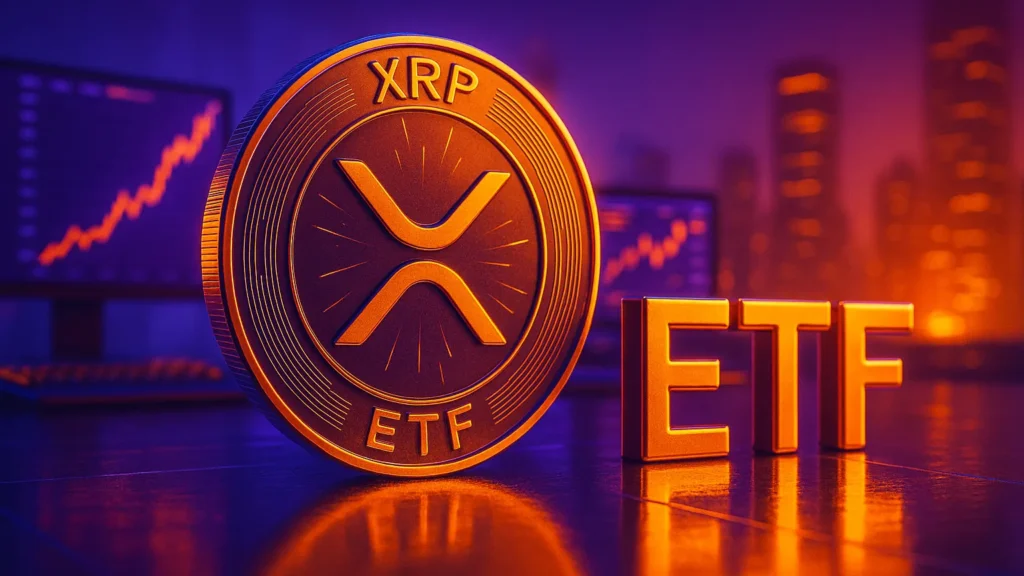
XRP ETF’s bereiken belangrijke mijlpaal: $1 miljard aan netto instroom

XRP ETF’s bereiken belangrijke mijlpaal: $1 miljard aan netto instroom

De markt voor crypto-exchange-traded funds (ETF’s) heeft opnieuw een belangrijke mijlpaal bereikt. XRP ETF’s hebben gezamenlijk meer dan 1 miljard dollar aan netto
Paylaş
Coinstats2025/12/16 21:01
XSGD And XUSD Launch On Solana’s Blazing Network In 2025

XSGD And XUSD Launch On Solana’s Blazing Network In 2025

The post XSGD And XUSD Launch On Solana’s Blazing Network In 2025 appeared on BitcoinEthereumNews.com. StraitsX Stablecoins Unleash Power: XSGD And XUSD Launch
Paylaş
BitcoinEthereumNews2025/12/16 20:59