

Venom Integrates x402 Protocol, Paving the Way for AI-to-AI Microtransactions


The Venom Foundation, the organization behind the high-performance Venom blockchain, has announced it will integrate the x402 protocol, an open-source standard that lets machines pay machines, positioning Venom as one of the first major Layer-1 platforms to support autonomous payments between AI agents and decentralized services. The foundation says the rollout is planned for the first quarter of 2026 and promises to make programmable microtransactions a core part of how services on Venom interact.
At its heart, x402 revives the long-dormant HTTP 402 “Payment Required” status code and defines a way for API endpoints, web services, and agents to negotiate and execute payments directly over ordinary HTTP. Instead of routing charges through traditional merchant systems, x402 lets clients, whether human users or automated agents, satisfy payment requests on the fly using on-chain transfers, typically denominated in stablecoins. Proponents argue this approach reduces friction for micropayments and makes pay-per-use interactions frictionless for developers and businesses.
Venom’s announcement frames x402 as more than a developer convenience: it is billed as a new economic plumbing for an “agent economy.” According to the foundation, once live on Venom, AI assistants, dApps, and autonomous programs will be able to pay for API calls, compute cycles, data feeds, and other digital services without the need for traditional accounts, credit cards, or human sign-off. The technical design embeds payment requests directly into HTTP responses and client requests, allowing instant, protocol-level settlement.
The timing of the x402 launch on Venom is not accidental. The foundation points to its own research in the Asia-Pacific region, which found that a large share of people see slow and costly cross-border transfers as a primary problem blockchain should solve. Venom’s study showed 68 percent of respondents singled out transfers taking two to five days and fees of six to seven percent as key pain points. With roughly $700 billion in annual cross-border flows across Asia, the foundation calculates fees alone may total between $42 billion and $49 billion a year, framing x402’s instant, low-fee settlements as a practical answer to a tangible economic drag.
Technically, Venom says the integration will lean on its dynamic sharding architecture to keep fees “well below” 0.1 percent and to deliver transaction finality measured in fractions of a second. The foundation is also building a developer SDK that supports JavaScript, Python, Rust and Go, and plans native wallet integrations so users can set policies, spending limits, whitelists and budgets, for autonomous agents using programmable wallets. Stablecoins such as USDC and USDT are expected to be the primary settlement media, giving businesses and operators predictable price exposure.
“The future of the internet is not just data decentralization, but the delegation of complete autonomy to programmed digital agents,” comments Christopher Louis Tsu, CEO of Venom Foundation. “Today, AI assistants can recommend goods or services to us, but tomorrow they will be able to purchase them on our behalf using programmable wallets with pre-established security rules. The x402 protocol makes this possible at the internet protocol level. By integrating it into Venom, we are giving developers a simple tool for creating a new generation of autonomous economic applications.”
Major Web3 Milestone
Beyond the foundation’s own claims, x402 is already becoming a broader industry play. Major infrastructure and payments players have signaled support: Cloudflare has been active in developing agentic payment tooling and announced a NET Dollar stablecoin tied to agentic commerce initiatives, while Google has published its own Agent Payments Protocol to coordinate how agents interact with merchants and financial rails.
Visa has also introduced a Trusted Agent framework intended to verify and manage agent-initiated transactions, and Coinbase has published documentation and reference implementations to guide developers integrating x402 into agent workflows. The result is a rapidly coalescing ecosystem that pairs web-scale routing (CDNs and API gateways) with on-chain settlement rails and institutional payments rules.
What this means in practice ranges from autonomous DeFi strategies that pay for oracle data and execution gas, to content micropayments where readers or their assistants pay per article or API call, to machines, cars, drones, IoT sensors, settling small bills for services and data without human steps. For Venom, which bills itself as a scalable Layer-0/Layer-1 network designed for high throughput, x402 is both an opportunity to attract agentic commerce use cases and a way to showcase low-fee, near-instant settlement at scale.
The move is not without questions. Regulators, custodians and enterprises will be watching how identity, dispute resolution and liability are handled when autonomous agents transact on behalf of humans or organizations. Venom’s timeline gives industry players time to build supporting tooling and guardrails, and if the early consortium around x402 continues to grow, the protocol could be a focal point for those conversations as much as for payments themselves.
If Venom meets its Q1 2026 target and the ecosystem coalesces around the standard, the next year could see the first large-scale experiments in agentic commerce move from pilots to real-world usage, reshaping small payments in Web3 and beyond.
Ayrıca Şunları da Beğenebilirsiniz

BitGo expands its presence in Europe
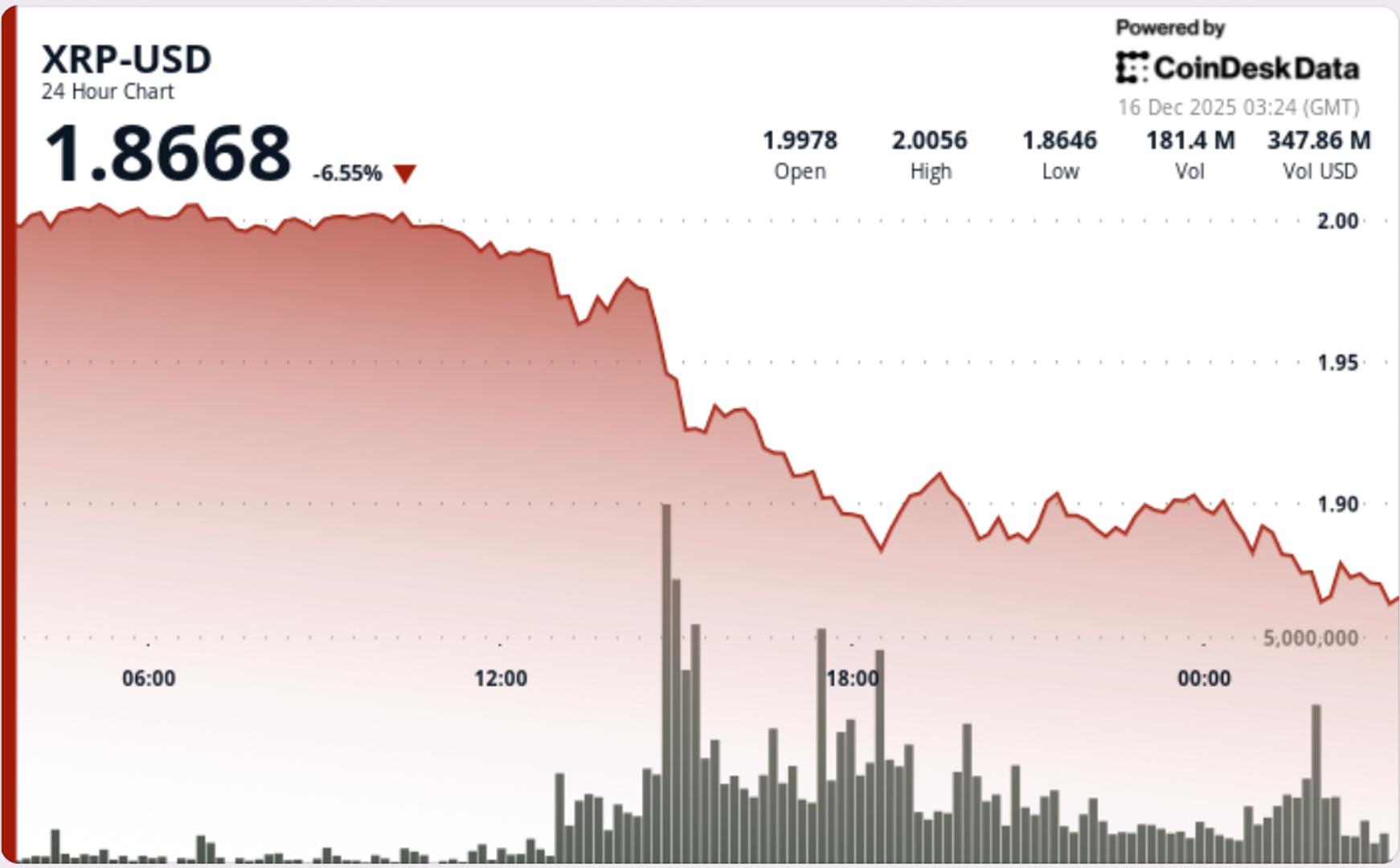
XRP price weakens at critical level, raising risk of deeper pullback
Copy linkX (Twitter)LinkedInFacebookEmail
