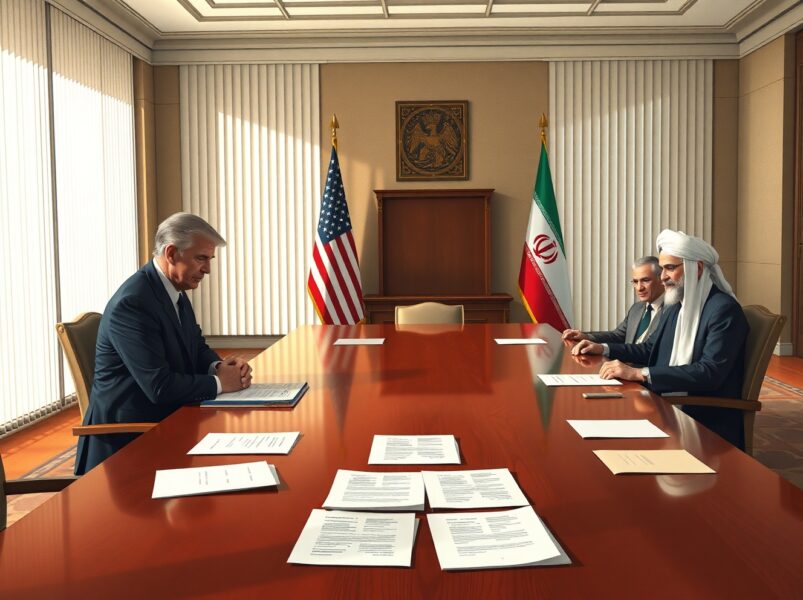
‘There Will Be No Backing’: Top Economist Shuts Down XRP Reserve Theory
The post ‘There Will Be No Backing’: Top Economist Shuts Down XRP Reserve Theory appeared first on Coinpedia Fintech News
The idea has been building quietly inside the XRP community for years. Ripple and its native digital asset XRP, the argument goes, are not just another crypto project. They are positioning to replace the US dollar as the world’s reserve currency settlement mechanism, allowing governments and financial institutions to settle transactions with full sovereignty while still coexisting with the dollar in other countries.
It is a big claim. So an expert put it directly to Martin Armstrong, an economic forecaster, and asked him what he thought.
His answer was not what XRP supporters were hoping for.
“There Will Be No Backing”
Armstrong’s first and most fundamental point was simple. Any asset that tries to replace or rival the dollar as a global reserve currency would need to be backed by something. And the moment you back something, you limit the ability to create more of it. That limitation, he argued, is precisely what destroyed Bretton Woods.
“You fixed gold to $35 but you did not limit the amount of dollars you were printing,” he said. “A three-year-old with a pocket calculator could figure out sooner or later it was going to go bust.”
His view is that no government on earth will voluntarily surrender its ability to create money, because that ability is the foundation of political power. Governments do not give that up for a private digital asset, no matter how well-designed.
The Real Problem Is Political, Not Technical
Armstrong’s deeper argument is that the global debt crisis everyone is worried about is not primarily a mathematical problem. It is a political one. Debt can keep rolling forward indefinitely as long as there are enough buyers willing to purchase new debt to pay off the old. It is, in his words, a Ponzi scheme that works perfectly fine until confidence disappears.
What is accelerating that loss of confidence right now, according to Armstrong, is geopolitics. China dumped $53 billion in US treasuries in the first quarter alone. The more the US government threatens and alienates foreign nations, the smaller the pool of willing buyers for American debt becomes. And when there are no buyers left for new debt, the default arrives.
“You have divided the world economy,” he said. “You have BRICS versus the SWIFT system. And these people are not willing to surrender their sovereignty and their power.”
What This Means for XRP
Armstrong did not attack XRP or Ripple directly. His skepticism is not about technology. It is about human nature and the history of power. Governments across centuries, from ancient Greek city states borrowing from the Temple of Apollo in the 4th century BC to modern sovereign nations, have consistently chosen to protect their ability to control money above almost everything else.
Whether Armstrong is right or whether the XRP community’s vision ultimately prevails may depend less on technology and more on how willing the world’s governments are to reimagine what money and sovereignty actually mean in a digital age.
You May Also Like

Markets await Fed’s first 2025 cut, experts bet “this bull market is not even close to over”
Walmart Recession Signal points to 'sharp economic downtown': Wall Street insider