

Trump’s Daunting Quest: Why a New Iran Nuclear Deal Remains Elusive Despite Renewed Push
BitcoinWorld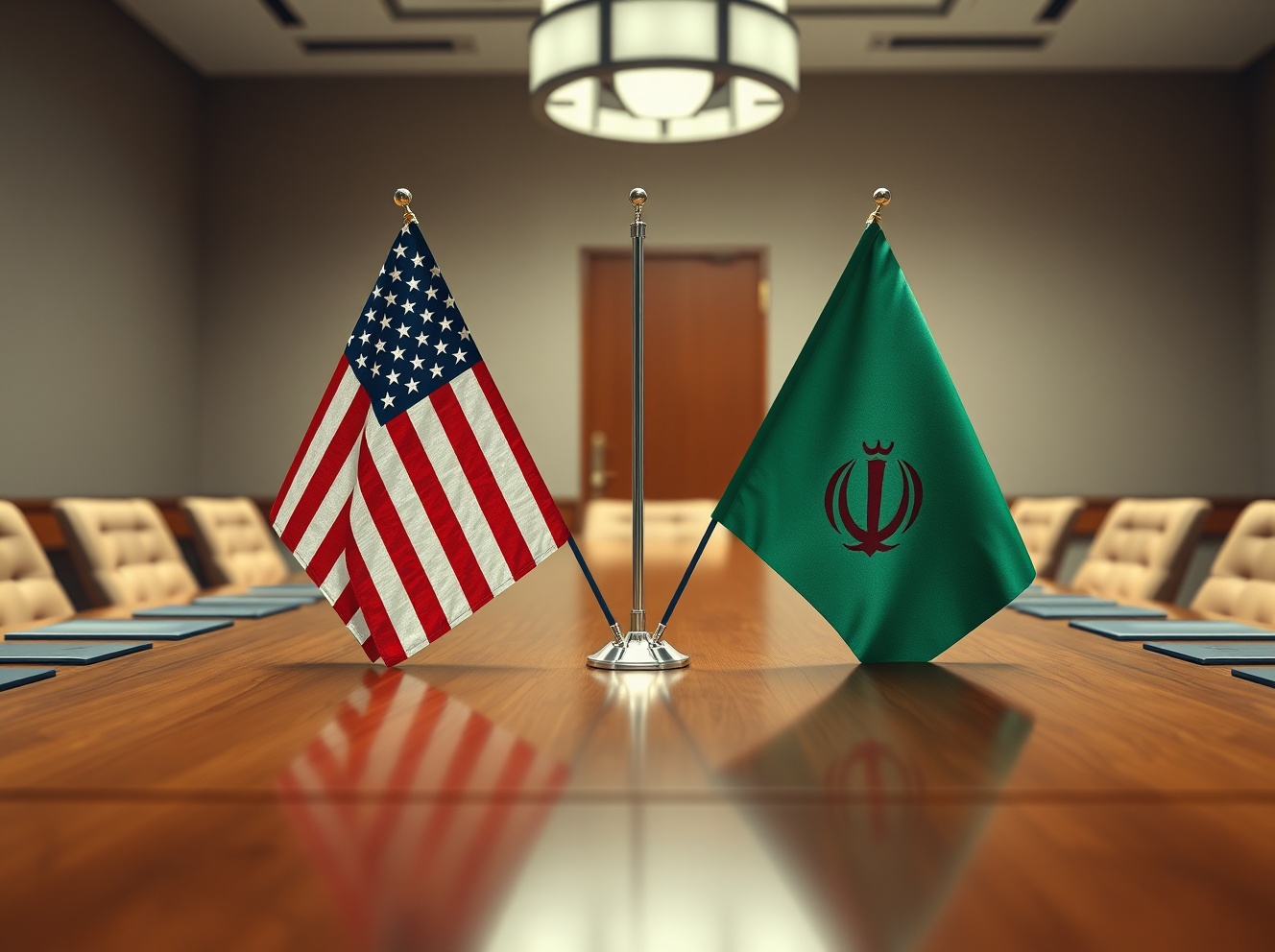
Trump’s Daunting Quest: Why a New Iran Nuclear Deal Remains Elusive Despite Renewed Push
WASHINGTON, D.C. – March 2025: President Donald Trump’s administration has publicly reaffirmed its desire to secure a comprehensive nuclear agreement with Iran, marking a significant diplomatic objective for his second term. However, a confluence of entrenched geopolitical positions, domestic political constraints, and deep-seated mutual distrust renders the likelihood of a successful deal profoundly low, according to regional analysts and former negotiators.
Trump’s Renewed Push for an Iran Nuclear Deal
Senior administration officials confirmed this week that securing a new, more stringent agreement with Tehran remains a top foreign policy priority. This announcement revives a complex diplomatic file that has defined U.S.-Iran relations for over a decade. The 2015 Joint Comprehensive Plan of Action (JCPOA), negotiated by the Obama administration, was famously abandoned by President Trump in 2018. He subsequently instituted a campaign of “maximum pressure” through severe economic sanctions. Now, the administration frames its renewed outreach not as a return to the JCPOA, but as an effort to craft a “bigger and better” accord. Officials argue that Iran’s expanding nuclear capabilities and regional activities necessitate a more robust and enduring solution. Consequently, they have opened backchannel communications through intermediaries in Oman and Switzerland.
The Formidable Obstacles to Any Agreement
Despite this stated intent, the path to any agreement is fraught with seemingly insurmountable barriers. Firstly, the foundational trust required for such negotiations is virtually absent. Iran continues to demand the full and verifiable lifting of all U.S. sanctions as a precondition for talks, a step the current administration has explicitly rejected. Secondly, the regional security landscape has deteriorated significantly since 2018. Iran’s network of proxy militias across the Middle East has expanded, and its uranium enrichment levels have reached near-weapons-grade thresholds. Furthermore, key regional allies of the United States, particularly Israel and Saudi Arabia, remain vehemently opposed to any deal they perceive as offering sanctions relief without ironclad restrictions on Iran’s ballistic missile program and regional influence. These allies advocate for maintaining maximum pressure.
Expert Analysis on the Negotiating Dynamics
Dr. Anahita Nassiri, a senior fellow at the Center for Strategic and International Studies and a former advisor to European negotiators, provides critical context. “The conditions that enabled the 2015 deal have evaporated,” Nassiri explains. “The Iranian political landscape is more hardline, its nuclear program is more advanced, and the geopolitical alignment of regional powers is more confrontational. The Biden administration’s attempts to re-engage failed to restore the original parameters. Now, the Trump administration seeks even stricter terms from a position of diminished leverage, as Iran has adapted economically to sanctions.” This analysis underscores the structural challenges. Additionally, domestic politics in both capitals create rigid red lines. In Washington, a potential deal would face intense scrutiny from a skeptical Congress. In Tehran, the conservative establishment views comprehensive negotiations with the “Great Satan” as a strategic vulnerability rather than an opportunity.
The Stakes and Potential Consequences of Failure
The implications of continued diplomatic stalemate are severe and far-reaching. A failure to establish a new diplomatic framework risks accelerating a latent nuclear arms race in the Middle East. It also increases the probability of direct military confrontation, either through miscalculation or a deliberate strike on nuclear facilities. The economic impacts persist, with global oil markets remaining sensitive to tensions in the Strait of Hormuz. The human cost of sanctions on the Iranian populace also continues to be a point of international humanitarian concern. The table below outlines the core divergences between the U.S. and Iranian positions:
Key Divergences in U.S. and Iranian Positions
- Sanctions Relief: Iran demands full, upfront lifting. U.S. offers phased relief contingent on verified compliance.
- Nuclear Program Scope: U.S. seeks permanent caps on enrichment and closure of key facilities. Iran insists on its right to peaceful nuclear energy under the NPT.
- Regional Activities: U.S. demands constraints on proxy militias. Iran rejects discussing its regional defense posture.
- Sunset Clauses: U.S. wants no expiration for key terms. Iran cites the JCPOA’s original time-limited provisions.
- Verification: U.S. requires “anytime, anywhere” inspections. Iran calls this a violation of sovereignty.
Conclusion
While the Trump administration’s stated desire for a new Iran nuclear deal introduces a renewed diplomatic chapter, the probability of a successful outcome remains minimal. The convergence of technical complexity, profound mutual distrust, and adversarial regional politics creates a diplomatic quagmire. The window for a grand bargain appears closed for the foreseeable future. Therefore, managing escalation and preventing conflict may become the primary, albeit unstated, objective of both sides, rather than achieving the comprehensive nuclear deal that President Trump seeks. The world continues to watch this high-stakes standoff, aware that the alternative to diplomacy could be catastrophic.
FAQs
Q1: What is the JCPOA?
The Joint Comprehensive Plan of Action (JCPOA) is the 2015 multinational agreement that placed strict limits on Iran’s nuclear program in exchange for sanctions relief. The U.S. withdrew from it in 2018.
Q2: Why did President Trump originally withdraw from the Iran deal?
The administration cited the deal’s temporary nature, its failure to address Iran’s ballistic missile program, and its perceived lack of stringent enough verification measures as primary reasons for withdrawal.
Q3: What are Iran’s current nuclear capabilities?
As of early 2025, Iran has enriched uranium up to 60% purity, possesses a larger stockpile of enriched material, and has advanced its centrifuge technology, significantly shortening its potential “breakout” time to produce a nuclear weapon.
Q4: How have “maximum pressure” sanctions affected Iran?
The sanctions have crippled Iran’s oil exports and access to the global financial system, causing severe economic hardship. However, they have also pushed Iran to develop greater economic self-sufficiency and deepen trade ties with China and Russia.
Q5: What role do other countries play in these negotiations?
European powers (E3), Russia, and China remain parties to the original JCPOA. They have consistently urged both the U.S. and Iran to return to compliance and often act as intermediaries, but their influence to bridge the core U.S.-Iran divide is limited.
This post Trump’s Daunting Quest: Why a New Iran Nuclear Deal Remains Elusive Despite Renewed Push first appeared on BitcoinWorld.
You May Also Like

Wormhole launches reserve tying protocol revenue to token

