Founded by former Cultbike.fit marketing lead Mohit Ahuja, Ampli5 unifies creator networks, newsletters, podcasts, programmatic advertising and Answer Engine OptimisationFounded by former Cultbike.fit marketing lead Mohit Ahuja, Ampli5 unifies creator networks, newsletters, podcasts, programmatic advertising and Answer Engine Optimisation

Ampli5 Launches as the Distribution Infrastructure Layer for the AI Search Era

2026/03/12 19:14
5 min read
For feedback or concerns regarding this content, please contact us at crypto.news@mexc.com

Founded by former Cultbike.fit marketing lead Mohit Ahuja, Ampli5 unifies creator networks, newsletters, podcasts, programmatic advertising and Answer Engine Optimisation into a single growth platform, powered by Atlas, a real-time intelligence system that maps where a brand’s audience actually lives online.

Discovery is changing in ways most marketing teams have not yet built for.

Ampli5 Launches as the Distribution Infrastructure Layer for the AI Search Era

An increasing share of consumer and B2B research now takes place inside AI-generated responses from systems such as ChatGPT, Perplexity and Gemini rather than through traditional search results. According to Gartner, conventional search engine volume could decline meaningfully over the coming years as AI assistants absorb a growing portion of informational queries. In this environment, visibility depends less on page position and more on whether a brand is cited, referenced and contextually understood by the models generating those answers.

Most companies are not.

Ampli5 has launched to address this transition directly. The Singapore-based SaaS platform combines multi-channel distribution with Answer Engine Optimisation, the discipline focused on making brands discoverable and referenceable inside AI-generated responses.

“We are at the same inflection point that SEO represented in 2005,” said Mohit Ahuja, Founder and CEO of Ampli5. “Brands that understood early that Google was changing discovery built lasting advantages. ChatGPT, Perplexity and Gemini are reshaping discovery again. The window to become the referenceable brand in your category is open now, but it will not remain open indefinitely. AEO is not a feature we added to Ampli5. It is the reason we built it.”

What Is Answer Engine Optimisation and Why It Matters

Answer Engine Optimisation, or AEO, is the practice of building a brand’s content, authority signals and third-party presence so that AI language models surface it in response to relevant queries.

Unlike traditional SEO, which targets ranked links, AEO targets synthesised answers. When a user asks an AI system which growth platform to use for multi-channel distribution, the response is shaped by patterns of citation, contextual clarity and cross-platform presence. It reflects which brands have been written about consistently, discussed across credible communities and positioned with definitional clarity over time.

Brands absent from that authority landscape are not ranking lower. They are omitted entirely.

Ampli5 integrates AEO principles into its distribution engine. Creator activations, newsletter placements and podcast features are structured not only for reach but for the kind of durable, cross-domain signals that influence how AI systems understand and reference a brand. A detailed breakdown of how this works in practice is available in Ampli5’s AEO and LLM marketing overview.

“With Ampli5, we reduced our go-to-market timeline by two weeks. That acceleration translated directly into growth impact,” said Rajat, CMO at Stader Labs.

Atlas: A Real-Time Map of Where Your Audience Lives Online

Central to Ampli5 is Atlas, a data layer built to answer a simple but often ignored question: where does your audience actually spend time online?

Most brands choose distribution channels based on habit or industry convention. Atlas starts with behaviour.

Before a campaign begins, Atlas maps which creators the target audience consistently engages with, which newsletters shape their opinions, which communities influence their decisions, which publications they trust and which AI tools they use when researching products in a category.

This matters because reach without relevance is noise. If an audience forms opinions inside three specific newsletters and two creator ecosystems, distribution outside those clusters does not move the needle. Atlas identifies those clusters before the budget is deployed.

For AEO, this intelligence becomes even more important. AI systems surface brands that are repeatedly associated with a category across credible, independent sources. Atlas identifies which sources in a given category carry the most weight in AI-generated answers, and where a brand is currently underrepresented across them. That allows AEO strategy to move from theory to execution: not chasing coverage broadly, but strengthening presence in the specific ecosystems that shape both human perception and AI interpretation.

How the Platform Works

Rather than managing separate relationships with influencer agencies, newsletter brokers, podcast networks, advertising platforms and AEO specialists, brands connect to Ampli5 as a single growth layer.

The platform coordinates distribution across YouTube and short-form creator networks, X communities, newsletter and podcast placements, Reddit ecosystems, programmatic advertising and authority-building initiatives aligned with AEO strategy.

Brands define the objective, whether reach, recall, direct response or AI search visibility. Atlas intelligence informs how resources are allocated across channels to strengthen both human engagement and AI reference signals simultaneously.

Ampli5 positions this model as infrastructure rather than agency. The emphasis is on building durable signals, not managing one-off campaigns.

Background

Mohit Ahuja previously led marketing for Cultbike.fit, where he oversaw a campaign featuring comedian Atul Khatri that was covered by The Economic Times and afaqs. The campaign demonstrated how distribution architecture determines whether creative work travels beyond its paid footprint.

In a subsequent senior marketing role at DaMENSCH, his influencer programme consistently delivered over one million monthly views. Across both organisations, Ahuja observed the same constraint recurring: creative output scaled. Distribution coordination did not.

The emergence of AI-generated search responses intensified that gap. Brand mentions inside AI answers began driving measurable traffic and lead quality, yet no platform had been built to generate those signals systematically. Ampli5 was designed to close that gap.

About Ampli5

Ampli5 is a growth infrastructure SaaS platform built for the AI search era. It unifies multi-channel content distribution with Answer Engine Optimisation, enabling brands to become discoverable and referenceable inside AI-generated responses from systems such as ChatGPT, Perplexity and Gemini. Its Atlas intelligence layer provides real-time data on where audiences live online and which sources influence AI-mediated discovery. Founded in 2024 by Mohit Ahuja, Ampli5 is headquartered in Singapore.

Comments
Market Opportunity
ERA Logo
ERA Price(ERA)
$0.1372
$0.1372$0.1372
+1.10%
USD
ERA (ERA) Live Price Chart
Disclaimer: The articles reposted on this site are sourced from public platforms and are provided for informational purposes only. They do not necessarily reflect the views of MEXC. All rights remain with the original authors. If you believe any content infringes on third-party rights, please contact crypto.news@mexc.com for removal. MEXC makes no guarantees regarding the accuracy, completeness, or timeliness of the content and is not responsible for any actions taken based on the information provided. The content does not constitute financial, legal, or other professional advice, nor should it be considered a recommendation or endorsement by MEXC.
Tags:

You May Also Like

Tether Backs Ark Labs’ $5.2 Million Bet on Bitcoin’s Stablecoin Revival

Tether Backs Ark Labs’ $5.2 Million Bet on Bitcoin’s Stablecoin Revival

The post Tether Backs Ark Labs’ $5.2 Million Bet on Bitcoin’s Stablecoin Revival appeared on BitcoinEthereumNews.com. In brief Ark Labs secured backing from Tether
Share
BitcoinEthereumNews2026/03/12 21:44
MySQL Single Leader Replication with Node.js and Docker

MySQL Single Leader Replication with Node.js and Docker

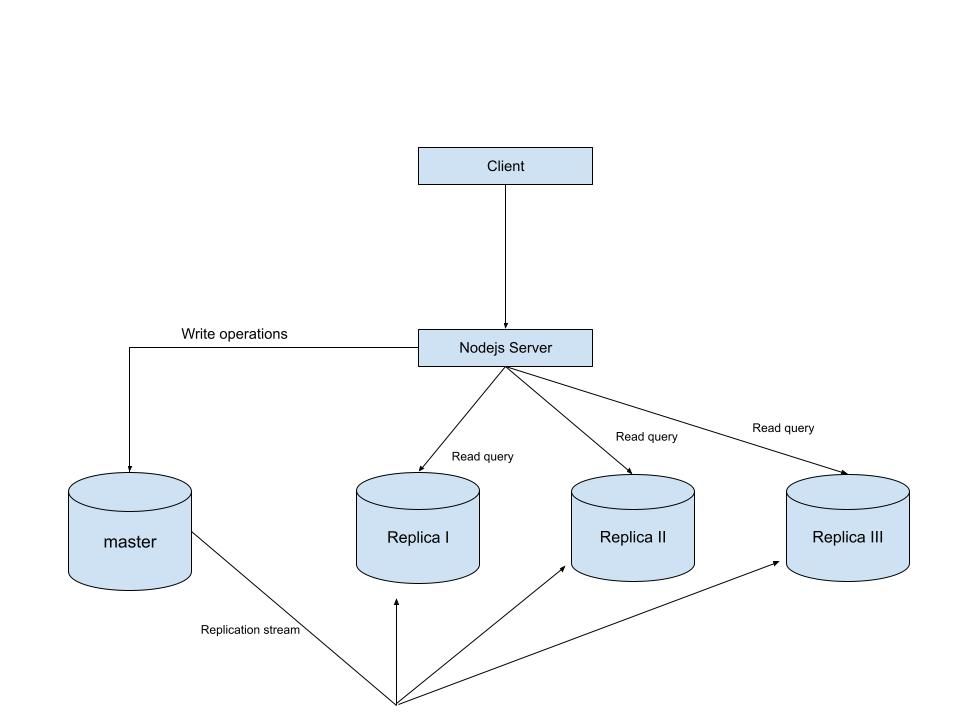
Modern applications demand high availability and the ability to scale reads without compromising performance. One of the most common strategies to achieve this is Replication. In this setup, we configured a single database to act as the leader (master) and handle all write operations, while three replicas handle read operations. In this article, we’ll walk through how to set up MySQL single-leader replication on your local machine using Docker. Once the replication is working, we’ll connect it to a Node.js application using Sequelize ORM, so that reads are routed to the replica and writes go to the master. By the end, you’ll have a working environment where you can see replication in real time Prerequisites knowledge of database replication Background knowledge of docker and docker compose Background knowledge of Nodejs and how to run a NodeJS server An Overview of what we are building Setup Setup our database servers on docker compose in the root of our project directory, create a file named docker-compose.yml with the following content to setup our mysql primary and replica databases. \ \ name: "learn-replica" volumes: mysqlMasterDatabase: mysqlSlaveDatabase: mysqlSlaveDatabaseII: mysqlSlaveDatabaseIII: networks: mysql-replication-network: services: mysql-master: image: mysql:latest container_name: mysql-master command: --server-id=1 --log-bin=ON environment: MYSQL_ROOT_PASSWORD: master MYSQL_DATABASE: replicaDb ports: - "3306:3306" volumes: - mysqlMasterDatabase:/var/lib/mysql networks: - mysql-replication-network mysql-slave: image: mysql:latest container_name: mysql-slave command: --server-id=2 --log-bin=ON environment: MYSQL_ROOT_PASSWORD: slave MYSQL_DATABASE: replicaDb MYSQL_ROOT_HOST: "%" ports: - "3307:3306" volumes: - mysqlSlaveDatabase:/var/lib/mysql depends_on: - mysql-master networks: - mysql-replication-network mysql-slaveII: image: mysql:latest container_name: mysql-slaveII command: --server-id=2 --log-bin=ON environment: MYSQL_ROOT_PASSWORD: slave MYSQL_DATABASE: replicaDb MYSQL_ROOT_HOST: "%" ports: - "3308:3306" volumes: - mysqlSlaveDatabaseII:/var/lib/mysql depends_on: - mysql-master networks: - mysql-replication-network mysql-slaveIII: image: mysql:latest container_name: mysql-slaveIII command: --server-id=3 --log-bin=ON environment: MYSQL_ROOT_PASSWORD: slave MYSQL_DATABASE: replicaDb MYSQL_ROOT_HOST: "%" ports: - "3309:3306" volumes: - mysqlSlaveDatabaseIII:/var/lib/mysql depends_on: - mysql-master networks: - mysql-replication-network In this setup, I’m creating a master database container called mysql-master and 3 replica containers called mysql-slave, mysql-slaveII and mysql-slaveIII. I won’t go too deep into the docker-compose.yml file since it’s just a basic setup, but I do want to walk you through the command line instructions used in all four services because that’s where things get interesting.
command: --server-id=1 --log-bin=ON The --server-id option gives each MySQL server in your replication setup its own name tag. Each one has to be unique and without it, replication won’t work at all. Another cool option not included here is binlog_format=ROW. This tells MySQL how to keep track of changes before passing them along to the replicas. By default, MySQL already uses row-based replication, but you can explicitly set it to ROW to be sure or switch it to STATEMENT if you’d rather log the actual SQL statements instead of row-by-row changes. \ Run our containers on docker Now, in the terminal, we can run the following command to spin up our database containers: docker-compose up -d \ Setting Up Our Master (Primary) Server To configure our master server, we would have to first access the running instance on docker using the following command docker exec -it mysql-master bash This command opens an interactive Bash shell inside the running Docker container named mysql-master, allowing us to run commands directly inside that container. \ Now that we’re inside the container, we can access the MySQL server and start running commands. type: mysql -uroot -p This will log you into MySQL as the root user. You’ll be prompted to enter the password you set in your docker-compose.yml file. \ Next, we need to create a special user that our replicas will use to connect to the master server and pull data. Inside the MySQL prompt, run the following commands: \ CREATE USER 'repl_user'@'%' IDENTIFIED BY 'replication_pass'; GRANT REPLICATION SLAVE ON . TO 'repl_user'@'%'; FLUSH PRIVILEGES; Here’s what’s happening: CREATE USER makes a new MySQL user called repl_user with the password replication_pass. GRANT REPLICATION SLAVE gives this user permission to act as a replication client. FLUSH PRIVILEGES tells MySQL to reload the user permissions so they take effect immediately. \ Time to Configure the Replica (Secondary) Servers a. First, let’s access the replica containers the same way we did with the master. Run this command in your terminal for each of the replica containers: \ docker exec -it <replica_container_name> bash mysql -uroot -p <replica_container_name> should be replace with the name of the replica container you are trying to setup b. Now it’s time to tell our replica where to get its data from. While inside the replica’s MySQL shell, run the following command to configure replication using the master’s details: CHANGE REPLICATION SOURCE TO SOURCE_HOST='mysql-master', SOURCE_USER='repl_user', SOURCE_PASSWORD='replication_pass', GET_SOURCE_PUBLIC_KEY=1; With the replication settings in place, let’s fire up the replica and get it syncing with the master. Still inside the MySQL shell on the replica, run: START REPLICA; This starts the replication process. To make sure everything is working, check the replica’s status with:
SHOW REPLICA STATUS\G; Look for Replica_IO_Running and Replica_SQL_Running — if both say Yes, congratulations! 🎉 Your replica is now successfully connected to the master and replicating data in real time.
Testing Our Replication Setup from the Node.js App Now that our replication is successfully set up, we can configure our Node.js server to observe the real-time effect of data being replicated from the master server to the replica server whenever we write to it. We start by installing the following dependencies:
npm i express mysql2 sequelize \ Now create a folder called src in the root directory and add the following files inside that folder connection.js, index.js and model.js. Our current directory should look like this We can now set up our connections to our master and replica server in the connection.js file as shown below
const Sequelize = require("sequelize"); const sequelize = new Sequelize({ dialect: "mysql", replication: { write: { host: "127.0.0.1", username: "root", password: "master", database: "replicaDb", }, read: [ { host: "127.0.0.1", username: "root", password: "slave", database: "replicaDb", port: 3307 }, { host: "127.0.0.1", username: "root", password: "slave", database: "replicaDb", port: 3308 }, { host: "127.0.0.1", username: "root", password: "slave", database: "replicaDb", port: 3309 }, ], }, }); async function connectdb() { try { await sequelize.authenticate(); } catch (error) { console.error("❌ unable to connect to the follower database", error); } } connectdb(); module.exports = { sequelize, }; \ We can now create a User table in the model.js file
const {DataTypes} = require("sequelize"); const { sequelize } = require("./connection"); const User = sequelize.define("User", { name: { type: DataTypes.STRING, allowNull: false, }, email: { type: DataTypes.STRING, unique: true, allowNull: false, }, }); module.exports = User \ and finally in our index.js file we can start our server and listen for connections on port 3000. from the code sample below, all inserts or updates will be routed by sequelize to the master server. while all read queries will be routed to the read replicas.
const express = require("express"); const { sequelize } = require("./connection"); const User = require("./model"); const app = express(); app.use(express.json()); async function main() { await sequelize.sync({ alter: true }); app.get("/", (req, res) => { res.status(200).json({ message: "first step to setting server up", }); }); app.post("/user", async (req, res) => { const { email, name } = req.body; let newUser = await User.build({ name, email, }); // This INSERT will go to the write (master) connection newUser = newUser.save({ returning: false }); res.status(201).json({ message: "User successfully created", }); }); app.get("/user", async (req, res) => { // This SELECT query will go to one of the read replicas const users = await User.findAll(); res.status(200).json(users); }); app.listen(3000, () => { console.log("server has connected"); }); } main(); When you make a POST request to the /users endpoint, take a moment to check both the master and replica servers to observe how data is replicated in real time. Right now, we are relying on Sequelize to automatically route requests, which works for development but isn’t robust enough for a production environment. In particular, if the master node goes down, Sequelize cannot automatically redirect requests to a newly elected leader. In the next part of this series, we’ll explore strategies to handle these challenges
Share
Hackernoon2025/09/18 14:44
Nvidia shares fall 3%

Nvidia shares fall 3%

The post Nvidia shares fall 3% appeared on BitcoinEthereumNews.com. Home » AI » Nvidia shares fall 3% Chipmaker extends decline as investors continue to take profits from recent highs. Photo: Budrul Chukrut/SOPA Images/LightRocket via Getty Images Key Takeaways Nvidia’s stock decreased by 3% today. The decline extends Nvidia’s recent losing streak. Nvidia shares fell 3% today, extending the chipmaker’s recent decline. The stock dropped further during trading as the artificial intelligence chip leader continued its pullback from recent highs. Disclaimer Source: https://cryptobriefing.com/nvidia-shares-fall-2-8/
Share
BitcoinEthereumNews2025/09/18 03:13