BlackRock Chief Investment Officer Rick Rieder signaled a significant AI rotation ahead that could reshape how capital flows across crypto, as CoinDesk reportedBlackRock Chief Investment Officer Rick Rieder signaled a significant AI rotation ahead that could reshape how capital flows across crypto, as CoinDesk reported

Best Crypto to Buy Now as BlackRock Signals AI Rotation: Pepeto’s Exchange Token Model Outperforms Every Narrative While NEAR and KITE Ride the Wave

2026/03/12 01:45
5 min read
For feedback or concerns regarding this content, please contact us at crypto.news@mexc.com

BlackRock Chief Investment Officer Rick Rieder signaled a significant AI rotation ahead that could reshape how capital flows across crypto, as CoinDesk reported. CoinMarketCap shows Near Protocol surged 51% from $0.94 to $1.42 and Kite jumped 71% in five days as money pours into AI narratives. 

When capital rotates this aggressively into a single sector, the best crypto to buy now is not the token riding the current wave but the one that earns from every wave, because exchange tokens process the volume regardless of which narrative wins.

Best Crypto to Buy Now: Pepeto’s Exchange Earns From Every Rotation While NEAR and KITE Depend on One Narrative Staying Hot

BNB went from a simple presale to a $90 billion market cap. Every exchange token that launched at the right stage delivered the kind of multiples that individual narratives like AI, DeFi, and NFTs produced only once before fading. Pepeto carries that same exchange token structure except at presale pricing, which is the stage where every winning exchange token in history generated its largest returns for the people who entered earliest.

The exchange connects Ethereum, BNB Chain, and Solana through a zero cost bridge, charges zero fees on every trade, and uses AI screening to verify every token before it lists. A former Binance executive engineered the infrastructure, and presale wallets earn from every transaction the platform processes permanently, proportional to the size of each position. The more someone committed at presale, the larger their share of lifetime exchange revenue. That structural income is why exchange tokens outperform narrative tokens over full cycles, because narratives rotate but volume compounds.

Nearly $8 million raised during the worst fear conditions since 2022 confirms the wallets entering this presale understand the difference between chasing a rotation and owning the infrastructure that processes all rotations. The cofounder built the original Pepe to $7 billion with pure community energy, and SolidProof verified every contract before the presale opened. The community keeps growing because holders who entered early return to increase their positions as every development update proves the team delivers on schedule, and that organic growth is the reason the best crypto to buy now is not the AI token that spiked last week but the exchange token that compounds through every cycle. 

The best crypto to buy now is the exchange presale that wins no matter which story the market tells next, and the stages keep filling because the people inside keep coming back to add more with every update that proves this team is building exactly what they promised.

Near Protocol

Near Protocol surged 51% on the AI rotation narrative and currently sits as the second largest AI coin by market cap at roughly $1.20. 

The performance is strong, but NEAR depends on the AI narrative sustaining momentum, and history shows that every previous sector rotation in crypto eventually cooled and retraced, leaving tokens without structural revenue to find new reasons for demand.

Kite

Kite jumped 71% in five days during the AI wave, climbing from $0.185 to $0.317 even as Bitcoin retreated. 

The short term move is impressive, but Kite remains a smaller AI token with limited infrastructure and no revenue generating model, and the best crypto to buy now for sustained returns requires more than a five day narrative spike.

Conclusion

The moment the exchange goes live and the first trades start flowing, the presale price stops existing and the market decides what this token is worth based on the volume running through it, and that number will not look anything like what it costs right now. 

Exchange tokens explode after launch because the infrastructure finally has a price tag the market can see, and every trade that processes through the bridge and the platform adds to the demand that pushes the token higher. 

Every green candle after listing day will be a reminder that this presale existed at this price, and the people who entered before that first candle are the ones who captured the full distance between presale and market value. Visit the Pepeto official website now, because once the first green candle prints on listing day, the price this presale offered becomes the number that haunts every wallet that waited.

Click To Visit Pepeto Website To Enter The Presale

FAQs

What is the best crypto to buy now during the AI rotation?

The best crypto to buy now is Pepeto, because exchange tokens earn from trading volume across every narrative rotation, and Pepeto is still at presale pricing with a former Binance executive behind the infrastructure.

How does Pepeto compare to NEAR and KITE?

NEAR and KITE depend on the AI narrative continuing, while Pepeto earns from every trade regardless of which sector leads, making it the best crypto to buy now for full cycle returns. Visit the Pepeto official website.

DISCLAIMER: CAPTAINALTCOIN DOES NOT ENDORSE INVESTING IN ANY PROJECT MENTIONED IN SPONSORED ARTICLES. EXERCISE CAUTION AND DO THOROUGH RESEARCH BEFORE INVESTING YOUR MONEY. CaptainAltcoin takes no responsibility for its accuracy or quality. This content was not written by CaptainAltcoin’s team. We strongly advise readers to do their own thorough research before interacting with any featured companies. The information provided is not financial or legal advice. Neither CaptainAltcoin nor any third party recommends buying or selling any financial products. Investing in crypto assets is high-risk; consider the potential for loss. Any investment decisions made based on this content are at the sole risk of the readCaptainAltcoin is not liable for any damages or losses from using or relying on this content.

The post Best Crypto to Buy Now as BlackRock Signals AI Rotation: Pepeto’s Exchange Token Model Outperforms Every Narrative While NEAR and KITE Ride the Wave appeared first on CaptainAltcoin.

Market Opportunity
NEAR Logo
NEAR Price(NEAR)
$1.3369
$1.3369$1.3369
+3.24%
USD
NEAR (NEAR) Live Price Chart
Disclaimer: The articles reposted on this site are sourced from public platforms and are provided for informational purposes only. They do not necessarily reflect the views of MEXC. All rights remain with the original authors. If you believe any content infringes on third-party rights, please contact crypto.news@mexc.com for removal. MEXC makes no guarantees regarding the accuracy, completeness, or timeliness of the content and is not responsible for any actions taken based on the information provided. The content does not constitute financial, legal, or other professional advice, nor should it be considered a recommendation or endorsement by MEXC.

You May Also Like

UNI Price Prediction: Testing $4.17 Upper Band Resistance, Targets $4.50 by April 2026
UNI Price Prediction: Testing $4.17 Upper Band Resistance, Targets $4.50 by April 2026

Uniswap trades at $3.88 with neutral RSI at 51.98. Technical analysis suggests potential breakout to $4.17 upper Bollinger Band, with bullish targets reaching $
Share
BlockChain News2026/03/12 17:21
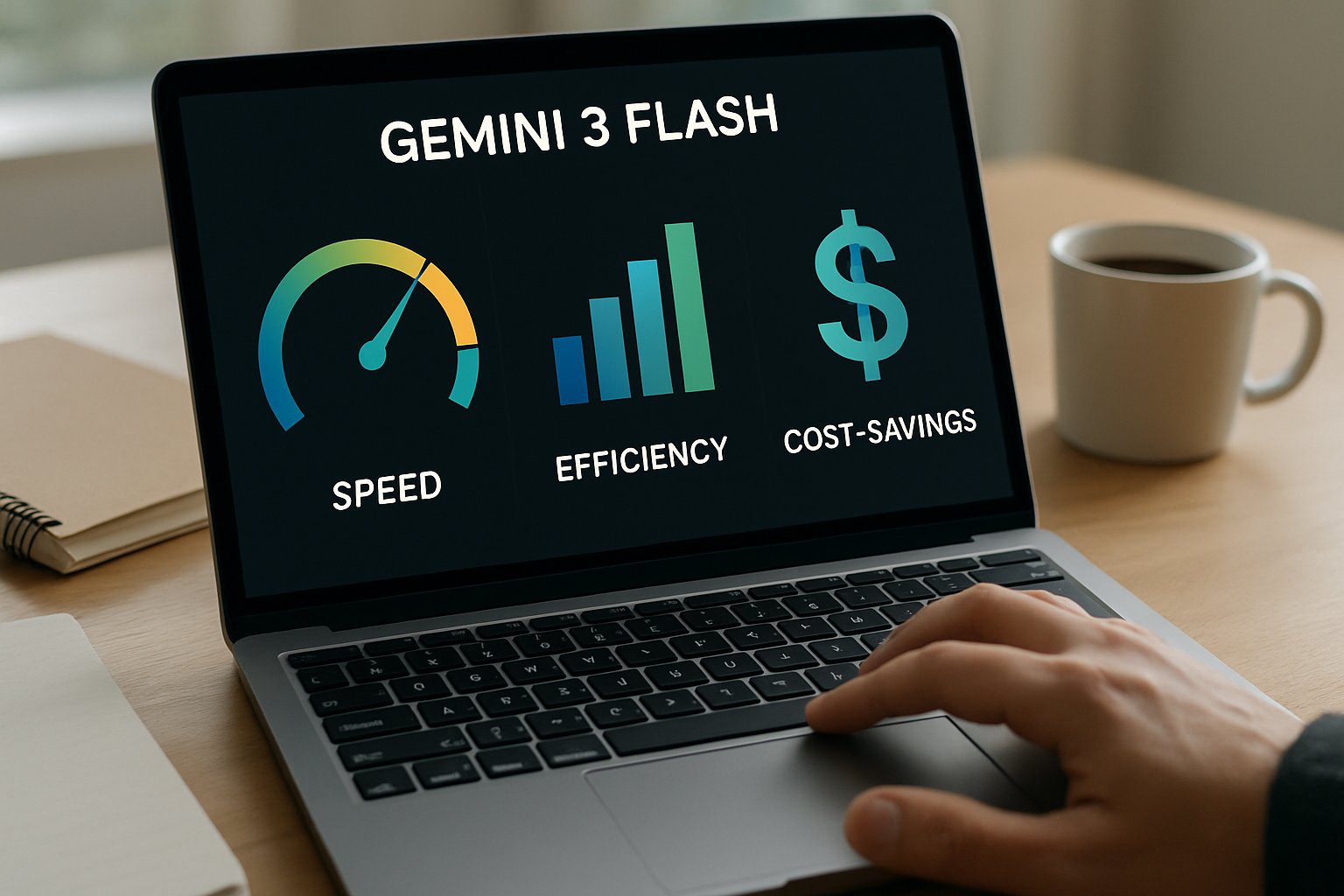
Speed, Cost, and Intelligence: How Kie.ai’s Gemini 3 Flash API Balances Performance and Budget for Developers

Speed, Cost, and Intelligence: How Kie.ai’s Gemini 3 Flash API Balances Performance and Budget for Developers

Integrating AI into applications is a balancing act between performance, cost, and intelligence. Traditionally, high-performance AI models come with steep costs
Share
Techbullion2026/03/12 16:55
Cash Flow Valuation HyperLiquid: Could $HYPE Reach $385 in Five Years?

Cash Flow Valuation HyperLiquid: Could $HYPE Reach $385 in Five Years?

Author: G3ronimo Compiled by: TechFlow HyperLiquid has grown into a mature crypto-native exchange, with the majority of its net fees programmatically distributed directly to token holders through an "Assistance Fund" (AF). This design makes $HYPE one of the few tokens capable of being valued based on cash flow. To date, most valuations of HyperLiquid have relied on traditional multiples, comparing it to established financial platforms like Coinbase and Robinhood, using EBITDA or revenue multiples as a reference. Unlike traditional corporate stocks, where management typically retains and reinvests earnings at their discretion, HyperLiquid systematically returns 93% of transaction fees directly to token holders through a support fund. This model creates predictable and quantifiable cash flows, making it well-suited for detailed discounted cash flow (DCF) analysis rather than static multiple comparisons. Our methodology begins by determining $HYPE's cost of capital. We then invert the current market price to determine the market-implied future earnings. Finally, we apply growth projections to these earnings streams and compare the resulting intrinsic value to today's market price, revealing the valuation gap between current pricing and fundamental value. Why choose discounted cash flow (DCF) over a multiple? While other valuation methods compare HyperLiquid to Coinbase and Robinhood via EBITDA multiples, these methods have the following limitations: The difference between the corporate and token structures: Coinbase and Robinhood are corporate stocks, whose capital allocation is guided by the board of directors, and profits are retained and reinvested by management; while HyperLiquid systematically returns 93% of trading fees directly to token holders through a relief fund. Direct Cash Flow: HyperLiquid's design generates predictable cash flows that are well-suited to DCF models, rather than static multiples. Growth and risk characteristics: DCFs are able to explicitly model different growth scenarios and risk adjustments, whereas multiples may not adequately capture growth and risk dynamics. Determining an appropriate discount rate To determine our cost of equity, we start with reference data from the public market and adjust for cryptocurrency-specific risks: Cost of equity (r) ≈ Risk-free rate + β × Market risk premium + Crypto/illiquidity premium Beta Analysis Based on regression analysis with the S&P 500: Robinhood (HOOD): Beta of 2.5, implied cost of equity of 15.6%; Coinbase (COIN): Beta of 2.0, implied cost of equity of 13.6%; HyperLiquid (HYPE): Beta is 1.38 and the implied cost of equity is 10.5%. At first glance, $HYPE appears to have a lower beta, and therefore a lower cost of equity than Robinhood and Coinbase. However, the R² value reveals an important limitation: HOOD: The S&P 500 explains 50% of its returns; COIN: The S&P 500 explains 34% of its return; HYPE: The S&P 500 only explains 5% of its returns. $HYPE’s low R² suggests that traditional stock market factors are insufficient to explain its price fluctuations, and crypto-native risk factors need to be considered. risk assessment Despite $HYPE’s lower beta, we still adjust its discount rate from 10.5% to 13% (which is more conservative compared to COIN’s 13.6% and HOOD’s 15.6%) for the following reasons: Lower governance risk: Direct programmatic distribution of 93% of fees reduces concerns about corporate governance. In contrast, COIN and HOOD do not return any earnings to shareholders, and their capital allocation is determined by management. Higher Market Risk: $HYPE is a crypto-native asset and is subject to additional regulatory and technological uncertainties. Liquidity considerations: Token markets are generally less liquid than established stock markets. Get the Market Implied Price (MIP) Using our 13% discount rate, we can reverse engineer the market’s implied earnings expectations at the current $HYPE token price of approximately $54: Current market expectations: 2025: Total revenue of $700 million 2026: Total revenue of $1.4 billion Terminal growth: 3% annual growth thereafter These assumptions yield an intrinsic value of approximately $54, which is consistent with current market prices. This suggests that the market is pricing in modest growth based on current fee levels. At this point we need to ask a question: Does the market-implied price (MIP) reflect future cash flows? Alternative growth scenarios @Keisan_Crypto presents an attractive 2-year and 5-year bull market scenario. Original tweet link: Click here Two-year bull market forecast According to @Keisan_Crypto’s analysis, if HyperLiquid achieves the following goals: Annualized fees: $3.6 billion Aid fund income: $3.35 billion (93% of fees) Result: HYPE's intrinsic value is $128 (140% undervalued at current price) Related links Five-year bull market scenario Under a five-year bull market scenario (link), he predicts that transaction fees will reach $10 billion annually, with $9.3 billion accruing to $HYPE. He assumes HyperLiquid's global market share will grow from its current 5% to 50% by 2030. Even if it doesn't reach 50% market share, these figures are still achievable with a smaller market share as global trading volumes continue to grow. Five-year bull market forecast Annualized fees: $10 billion Aid fund income: $9.3 billion Result: HYPE's intrinsic value is $385 (600% undervalued at current price) Related links While this valuation is lower than Keisan's $1,000 target, the difference stems from our assumption of normalized earnings growth at 3% annually thereafter, while Keisan's model uses a cash flow multiple. We believe using cash flow multiples to project long-term value is problematic, as market multiples are volatile and can vary significantly over time. Furthermore, the multiples themselves incorporate earnings growth assumptions, while using the same cash flow multiple five years from now as one or two years later implies that growth levels from 2030 onward will be consistent with those in 2026/2027. Therefore, the multiples are more appropriate for short-term asset pricing. However, regardless of which model is used, $HYPE remains undervalued; this is a subtle difference. Additional Value Driver: USDH Under the Native Market model, USDH will use 50% of its stablecoin revenue for buybacks similar to a bailout fund. As a result, $HYPE can increase its free cash flow by $100 million (50% of $200 million) annually. Looking ahead five years, if USDH's market capitalization reaches $25 billion (currently still one-third of USDC's, and an even smaller portion of the total stablecoin market five years from now), its annual revenue could reach $1 billion. Following the same 50% distribution model, this would generate an additional $500 million in free cash flow per year for the aid fund. This would value each token at over $400. Excluding Value Drivers: HIP-3 and HyperEVM This DCF analysis intentionally excludes two important potential value drivers that are not amenable to cash flow modeling. Clearly, these would provide additional incremental value and could therefore be evaluated separately using different valuation methodologies and then added to this valuation. Summarize Our DCF analysis indicates that if HyperLiquid can maintain its growth trajectory and market position, the $HYPE token is significantly undervalued. The token's unique feature of programmatic fee distribution makes it particularly suitable for cash flow-based valuation methodologies. Methodological Notes This analysis builds on research by @Keisan_Crypto and @GLC_Research. The DCF model is open source and can be modified at the following link: https://valypto.xyz/project/hyperliquid/oNQraQIg Market data and forecasts are subject to change, and models should be updated promptly based on the latest information.
Share
PANews2025/09/19 08:00
