When XRP was first introduced, its main selling point was to serve as the digital rail for banks, replacing SWIFT in cross-border settlements. However, over a decade later, global financial giants remain cautious. They are exploring central bank digital currencies (CBDCs) and internal payment rails instead of fully adopting XRP. Some analysts, particularly those from the Chainlink community, have called this a defeat for XRP. However, XRP has alternative use cases that secure its relevance and growth, even without Wall Street’s full embrace. XRP Can Pivot to the People’s Rail One of the strongest niches for XRP remains retail remittances. In markets such as Mexico, the Philippines, Nigeria, and India, millions of people depend on fast and affordable cross-border transfers. Fintechs serving migrant workers and families can adopt XRP, where every second saved and every fee cut directly improves lives. As The Crypto Basic reported in 2023, Michael Brooks, CEO of the freelance platform goLance, confirmed that the company uses XRP to pay freelancers quickly and cost-effectively. Brooks explained that goLance targets underserved markets where traditional banking systems cause delays and high fees. By leveraging RippleNet and the XRP Ledger, goLance enables instant payments with minimal fees, even on weekends. He highlighted that for freelancers in regions like the Philippines, where $50 a week is a common wage, waiting days or losing up to 10% in bank fees is unsustainable. XRP solves this by enabling fast, low-cost cross-border payments. With the global remittance market worth nearly $860 billion a year, this “people’s rail” narrative could become the backbone of XRP’s value proposition beyond its original bank rail pitch. Corporate Payments Beyond Banking Systems Meanwhile, small and mid-sized enterprises are also ripe for XRP adoption. These firms don’t need a full-scale replacement of banking rails—they just need cheaper and faster ways to manage supplier payments, payroll, and foreign exchange. For example, cross-border payroll solutions in the gig economy, or payments across Asia’s dense supplier networks, could benefit from XRP’s low-cost settlement. This use case drives steady adoption without having to wait for traditional banks to move. Indeed, in 2023, SBI Japan launched an XRP-based international remittance service targeting bank accounts in the Philippines, Vietnam, and Indonesia—regions with high remittance volumes. Using XRP as a bridge currency, the system allows SBI VC Trade to send XRP upon a remittance request, which is then converted into local currency for the recipient. Powering the Internet Economy Beyond traditional payments, XRP could become a crucial enabler of the internet economy. Micropayments for streaming, gaming, IoT devices, or even automated API calls require fast, inexpensive transactions. While Bitcoin’s Lightning Network and stablecoins have captured much of this space, XRP’s low fees and high throughput position it as a natural contender. The XRPL Ecosystem Advantage Furthermore, the XRP Ledger (XRPL) itself offers fertile ground for innovation. Decentralized exchanges, automated market makers, tokenized assets, and even compliance-friendly NFTs are emerging within the XRPL ecosystem. With stablecoin issuers already leveraging the network, XRP’s role as a native bridge asset becomes even stronger. In other words, even without banks, ecosystem activity could drive demand for XRP as collateral and liquidity fuel. Reserve-Like Asset in a CBDC World Finally, XRP may evolve as a diversification asset. As transaction fees gradually burn XRP supply, its scarcity could attract investors seeking a hedge in a world dominated by CBDCs. It wouldn’t need to replace the dollar or euro to thrive. It would merely act as an alternative for portfolio allocation, supporting long-term value. In Sum The idea that XRP’s future rests entirely on bank adoption may no longer hold true. Instead, XRP’s path to success could emerge from a variety of use cases, from migrant remittances and gig economy payments to IoT transactions and tokenized markets. Each use case may be smaller than the original “bank rail” vision, but together, they create a diversified foundation that makes XRP resilient. Ultimately, even if banks say no, XRP still has plenty of ways to win.When XRP was first introduced, its main selling point was to serve as the digital rail for banks, replacing SWIFT in cross-border settlements. However, over a decade later, global financial giants remain cautious. They are exploring central bank digital currencies (CBDCs) and internal payment rails instead of fully adopting XRP. Some analysts, particularly those from the Chainlink community, have called this a defeat for XRP. However, XRP has alternative use cases that secure its relevance and growth, even without Wall Street’s full embrace. XRP Can Pivot to the People’s Rail One of the strongest niches for XRP remains retail remittances. In markets such as Mexico, the Philippines, Nigeria, and India, millions of people depend on fast and affordable cross-border transfers. Fintechs serving migrant workers and families can adopt XRP, where every second saved and every fee cut directly improves lives. As The Crypto Basic reported in 2023, Michael Brooks, CEO of the freelance platform goLance, confirmed that the company uses XRP to pay freelancers quickly and cost-effectively. Brooks explained that goLance targets underserved markets where traditional banking systems cause delays and high fees. By leveraging RippleNet and the XRP Ledger, goLance enables instant payments with minimal fees, even on weekends. He highlighted that for freelancers in regions like the Philippines, where $50 a week is a common wage, waiting days or losing up to 10% in bank fees is unsustainable. XRP solves this by enabling fast, low-cost cross-border payments. With the global remittance market worth nearly $860 billion a year, this “people’s rail” narrative could become the backbone of XRP’s value proposition beyond its original bank rail pitch. Corporate Payments Beyond Banking Systems Meanwhile, small and mid-sized enterprises are also ripe for XRP adoption. These firms don’t need a full-scale replacement of banking rails—they just need cheaper and faster ways to manage supplier payments, payroll, and foreign exchange. For example, cross-border payroll solutions in the gig economy, or payments across Asia’s dense supplier networks, could benefit from XRP’s low-cost settlement. This use case drives steady adoption without having to wait for traditional banks to move. Indeed, in 2023, SBI Japan launched an XRP-based international remittance service targeting bank accounts in the Philippines, Vietnam, and Indonesia—regions with high remittance volumes. Using XRP as a bridge currency, the system allows SBI VC Trade to send XRP upon a remittance request, which is then converted into local currency for the recipient. Powering the Internet Economy Beyond traditional payments, XRP could become a crucial enabler of the internet economy. Micropayments for streaming, gaming, IoT devices, or even automated API calls require fast, inexpensive transactions. While Bitcoin’s Lightning Network and stablecoins have captured much of this space, XRP’s low fees and high throughput position it as a natural contender. The XRPL Ecosystem Advantage Furthermore, the XRP Ledger (XRPL) itself offers fertile ground for innovation. Decentralized exchanges, automated market makers, tokenized assets, and even compliance-friendly NFTs are emerging within the XRPL ecosystem. With stablecoin issuers already leveraging the network, XRP’s role as a native bridge asset becomes even stronger. In other words, even without banks, ecosystem activity could drive demand for XRP as collateral and liquidity fuel. Reserve-Like Asset in a CBDC World Finally, XRP may evolve as a diversification asset. As transaction fees gradually burn XRP supply, its scarcity could attract investors seeking a hedge in a world dominated by CBDCs. It wouldn’t need to replace the dollar or euro to thrive. It would merely act as an alternative for portfolio allocation, supporting long-term value. In Sum The idea that XRP’s future rests entirely on bank adoption may no longer hold true. Instead, XRP’s path to success could emerge from a variety of use cases, from migrant remittances and gig economy payments to IoT transactions and tokenized markets. Each use case may be smaller than the original “bank rail” vision, but together, they create a diversified foundation that makes XRP resilient. Ultimately, even if banks say no, XRP still has plenty of ways to win.

What If Banks Say No to XRP, Here’s Why XRP Still Wins Without Wall Street

When XRP was first introduced, its main selling point was to serve as the digital rail for banks, replacing SWIFT in cross-border settlements. However, over a decade later, global financial giants remain cautious. They are exploring central bank digital currencies (CBDCs) and internal payment rails instead of fully adopting XRP. Some analysts, particularly those from the Chainlink community, have called this a defeat for XRP. However, XRP has alternative use cases that secure its relevance and growth, even without Wall Street’s full embrace. XRP Can Pivot to the People’s Rail One of the strongest niches for XRP remains retail remittances. In markets such as Mexico, the Philippines, Nigeria, and India, millions of people depend on fast and affordable cross-border transfers. Fintechs serving migrant workers and families can adopt XRP, where every second saved and every fee cut directly improves lives. As The Crypto Basic reported in 2023, Michael Brooks, CEO of the freelance platform goLance, confirmed that the company uses XRP to pay freelancers quickly and cost-effectively. Brooks explained that goLance targets underserved markets where traditional banking systems cause delays and high fees. By leveraging RippleNet and the XRP Ledger, goLance enables instant payments with minimal fees, even on weekends. He highlighted that for freelancers in regions like the Philippines, where $50 a week is a common wage, waiting days or losing up to 10% in bank fees is unsustainable. XRP solves this by enabling fast, low-cost cross-border payments. With the global remittance market worth nearly $860 billion a year, this “people’s rail” narrative could become the backbone of XRP’s value proposition beyond its original bank rail pitch. Corporate Payments Beyond Banking Systems Meanwhile, small and mid-sized enterprises are also ripe for XRP adoption. These firms don’t need a full-scale replacement of banking rails—they just need cheaper and faster ways to manage supplier payments, payroll, and foreign exchange. For example, cross-border payroll solutions in the gig economy, or payments across Asia’s dense supplier networks, could benefit from XRP’s low-cost settlement. This use case drives steady adoption without having to wait for traditional banks to move. Indeed, in 2023, SBI Japan launched an XRP-based international remittance service targeting bank accounts in the Philippines, Vietnam, and Indonesia—regions with high remittance volumes. Using XRP as a bridge currency, the system allows SBI VC Trade to send XRP upon a remittance request, which is then converted into local currency for the recipient. Powering the Internet Economy Beyond traditional payments, XRP could become a crucial enabler of the internet economy. Micropayments for streaming, gaming, IoT devices, or even automated API calls require fast, inexpensive transactions. While Bitcoin’s Lightning Network and stablecoins have captured much of this space, XRP’s low fees and high throughput position it as a natural contender. The XRPL Ecosystem Advantage Furthermore, the XRP Ledger (XRPL) itself offers fertile ground for innovation. Decentralized exchanges, automated market makers, tokenized assets, and even compliance-friendly NFTs are emerging within the XRPL ecosystem. With stablecoin issuers already leveraging the network, XRP’s role as a native bridge asset becomes even stronger. In other words, even without banks, ecosystem activity could drive demand for XRP as collateral and liquidity fuel. Reserve-Like Asset in a CBDC World Finally, XRP may evolve as a diversification asset. As transaction fees gradually burn XRP supply, its scarcity could attract investors seeking a hedge in a world dominated by CBDCs. It wouldn’t need to replace the dollar or euro to thrive. It would merely act as an alternative for portfolio allocation, supporting long-term value. In Sum The idea that XRP’s future rests entirely on bank adoption may no longer hold true. Instead, XRP’s path to success could emerge from a variety of use cases, from migrant remittances and gig economy payments to IoT transactions and tokenized markets. Each use case may be smaller than the original “bank rail” vision, but together, they create a diversified foundation that makes XRP resilient. Ultimately, even if banks say no, XRP still has plenty of ways to win.

Market Opportunity
Threshold Logo
Threshold Price(T)
$0.006946
$0.006946$0.006946
+1.10%
USD
Threshold (T) Live Price Chart
Disclaimer: The articles reposted on this site are sourced from public platforms and are provided for informational purposes only. They do not necessarily reflect the views of MEXC. All rights remain with the original authors. If you believe any content infringes on third-party rights, please contact service@support.mexc.com for removal. MEXC makes no guarantees regarding the accuracy, completeness, or timeliness of the content and is not responsible for any actions taken based on the information provided. The content does not constitute financial, legal, or other professional advice, nor should it be considered a recommendation or endorsement by MEXC.

You May Also Like

Hadron Labs Launches Bitcoin Summer on Neutron, Offering 5–10% BTC Yield
Hadron Labs Launches Bitcoin Summer on Neutron, Offering 5–10% BTC Yield

Hadron Labs launches 'Bitcoin Summer' on Neutron, BTC vaults for WBTC, eBTC, solvBTC, uniBTC and USDC. Earn 5–10% BTC via maxBTC, with up to 10x looping.
Share
Blockchainreporter2025/09/18 02:00
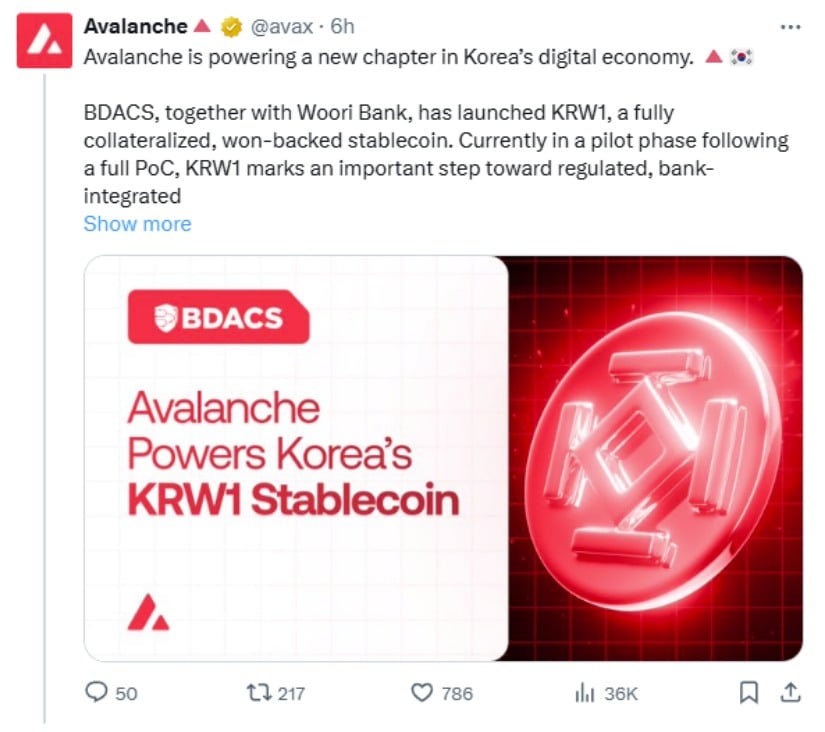
South Korea Launches First Won-Backed Stablecoin KRW1 on Avalanche

South Korea Launches First Won-Backed Stablecoin KRW1 on Avalanche

South Korea made history this week by launching its first Korean won-backed stablecoin.
Share
Brave Newcoin2025/09/19 03:15
Curve Finance votes on revenue-sharing model for CRV holders

Curve Finance votes on revenue-sharing model for CRV holders

The post Curve Finance votes on revenue-sharing model for CRV holders appeared on BitcoinEthereumNews.com. Curve Finance has proposed a new protocol called Yield Basis that would share revenue directly with CRV holders, marking a shift from one-off incentives to sustainable income. Summary Curve Finance has put forward a revenue-sharing protocol to give CRV holders sustainable income beyond emissions and fees. The plan would mint $60M in crvUSD to seed three Bitcoin liquidity pools (WBTC, cbBTC, tBTC), with 35–65% of revenue distributed to veCRV stakers. The DAO vote runs from up to Sept. 24, with the proposal seen as a major step to strengthen CRV tokenomics after past liquidity and governance challenges. Curve Finance founder Michael Egorov has introduced a proposal to give CRV token holders a more direct way to earn income, launching a system called Yield Basis that aims to turn the governance token into a sustainable, yield-bearing asset.  The proposal has been published on the Curve DAO (CRV) governance forum, with voting open until Sept. 24. A new model for CRV rewards Yield Basis is designed to distribute transparent and consistent returns to CRV holders who lock their tokens for veCRV governance rights. Unlike past incentive programs, which relied heavily on airdrops and emissions, the protocol channels income from Bitcoin-focused liquidity pools directly back to token holders. To start, Curve would mint $60 million worth of crvUSD, its over-collateralized stablecoin, with proceeds allocated across three pools — WBTC, cbBTC, and tBTC — each capped at $10 million. 25% of Yield Basis tokens would be reserved for the Curve ecosystem, and between 35% and 65% of Yield Basis’s revenue would be given to veCRV holders. By emphasizing Bitcoin (BTC) liquidity and offering yields without the short-term loss risks associated with automated market makers, the protocol hopes to draw in professional traders and institutions. Context and potential impact on Curve Finance The proposal comes as Curve continues to modify…
Share
BitcoinEthereumNews2025/09/18 14:37