BitcoinWorld Alarming NFT Floor Price Drops: What’s Behind the Double-Digit Declines? The world of digital collectibles is buzzing, but not in a good way. Recent data reveals significant NFT floor price drops across some of the most prominent collections. If you own a Pudgy Penguin or a Bored Ape, you might have noticed your digital assets taking a hit. This downturn has caught many investors by surprise, prompting questions about the stability of the NFT market. What’s Driving the Recent NFT Floor Price Drops? Major NFT collections, including the highly sought-after Pudgy Penguins, Bored Ape Yacht Club (BAYC), and Doodles, have recently experienced double-digit declines in their floor prices. This means the lowest price at which an NFT from a specific collection is available for sale has significantly decreased. According to a report by Cointelegraph, data from DeFiLlama clearly illustrates this trend. For instance, the floor price for Pudgy Penguins saw a drop of approximately 17.3%. Similarly, the iconic Bored Ape Yacht Club (BAYC) experienced a 14.7% decline. Doodles, a popular series known for its vibrant art, faced an even steeper fall, losing 18.9% of its floor value. These figures highlight a challenging period for the digital art and collectible space. What is the primary culprit behind these notable NFT floor price drops? Many market analysts, including Cointelegraph, point directly to the short-term weakness observed in Ethereum (ETH). Ethereum is the foundational blockchain for most of these high-value NFTs. Therefore, when ETH experiences volatility or a decline, it often has a ripple effect on the value of NFTs built upon it. This particular downturn follows a period where Ethereum had recently achieved an all-time high, suggesting a market correction. How Do NFT Floor Price Drops Impact the Wider Crypto Market? The impact of these declines extends beyond individual collections. The overall NFT market capitalization has also felt the pinch. Data from NFTPriceFloor indicates that the total market cap for NFTs has decreased by about 5% over the past seven days, settling at approximately $7.7 billion. This broader market contraction signals a cautious sentiment among investors. When the underlying asset, like Ethereum, faces pressure, it naturally affects the perceived value and liquidity of associated digital assets. Investors often view NFTs as higher-risk, speculative assets. Therefore, during periods of broader market uncertainty or when a major cryptocurrency like ETH dips, capital tends to flow out of these riskier ventures first. This creates downward pressure on NFT floor price drops and overall market volume. Understanding this interconnectedness is crucial for anyone involved in the crypto space. The health of Ethereum directly influences the vibrancy and valuation of the NFT ecosystem. While some might see this as a temporary setback, it underscores the inherent volatility of digital markets. Navigating Volatility: Strategies for NFT Holders During Floor Price Drops For current NFT holders, experiencing these NFT floor price drops can be concerning. However, it’s important to approach such market movements with a strategic mindset. Here are a few considerations: Assess Your Holdings: Evaluate the long-term potential and community strength of your specific NFT collections. Strong communities and established roadmaps often weather market storms better. Understand the Macro Environment: Keep an eye on the performance of foundational cryptocurrencies like Ethereum. Their health is often a leading indicator for the NFT market. Avoid Panic Selling: While tempting, making impulsive decisions during a downturn can lead to losses. Consider your initial investment thesis and whether it still holds true. Look for Opportunities: For some, market corrections can present opportunities to acquire desirable NFTs at lower prices. Always conduct thorough research before investing. The current market conditions serve as a powerful reminder that the NFT space, while exciting, is still relatively young and subject to significant fluctuations. Diligence and a clear strategy are paramount. Conclusion: The recent double-digit NFT floor price drops for major collections like Pudgy Penguins, BAYC, and Doodles are a direct reflection of broader market dynamics, particularly the short-term weakness in Ethereum. While the overall NFT market capitalization has also shrunk, this period of correction offers valuable insights into the interconnectedness of the crypto ecosystem. For investors, understanding these drivers and adopting a strategic approach to volatility is key to navigating the evolving landscape of digital collectibles. The journey of NFTs continues, marked by both exhilarating highs and challenging dips. Frequently Asked Questions (FAQs) 1. What caused the recent NFT floor price drops? The primary cause for the recent declines is attributed to the short-term weakness in Ethereum (ETH), which is the underlying blockchain for most major NFT collections. When ETH’s value dips, it often affects the value of associated NFTs. 2. Which major NFT collections were affected by these drops? Prominent collections like Pudgy Penguins, Bored Ape Yacht Club (BAYC), and Doodles all experienced double-digit percentage drops in their floor prices over the past seven days. 3. How does Ethereum’s performance relate to NFT values? Since most high-value NFTs are built on the Ethereum blockchain, the performance of ETH significantly influences their value. A decline in ETH can lead to a decrease in the perceived and actual value of NFTs. 4. Is the NFT market in a bear cycle? While the market has seen significant NFT floor price drops and a decrease in total market capitalization, whether it’s a full bear cycle depends on broader market trends and duration. It certainly indicates a period of correction and cautious investor sentiment. 5. What should NFT holders do during a market downturn? During a downturn, it’s advisable to assess your holdings, understand the macro environment, avoid panic selling, and potentially look for strategic buying opportunities if you have a long-term investment horizon. 6. Where can I find reliable data on NFT floor prices? Reliable data on NFT floor prices can be found on platforms like DeFiLlama and NFTPriceFloor, which track various collections and market statistics. If you found this analysis helpful, please share it with your friends and fellow crypto enthusiasts on social media! Your insights and discussions help us all navigate the dynamic world of NFTs. To learn more about the latest NFT market trends, explore our article on key developments shaping Ethereum price action. This post Alarming NFT Floor Price Drops: What’s Behind the Double-Digit Declines? first appeared on BitcoinWorld and is written by Editorial TeamBitcoinWorld Alarming NFT Floor Price Drops: What’s Behind the Double-Digit Declines? The world of digital collectibles is buzzing, but not in a good way. Recent data reveals significant NFT floor price drops across some of the most prominent collections. If you own a Pudgy Penguin or a Bored Ape, you might have noticed your digital assets taking a hit. This downturn has caught many investors by surprise, prompting questions about the stability of the NFT market. What’s Driving the Recent NFT Floor Price Drops? Major NFT collections, including the highly sought-after Pudgy Penguins, Bored Ape Yacht Club (BAYC), and Doodles, have recently experienced double-digit declines in their floor prices. This means the lowest price at which an NFT from a specific collection is available for sale has significantly decreased. According to a report by Cointelegraph, data from DeFiLlama clearly illustrates this trend. For instance, the floor price for Pudgy Penguins saw a drop of approximately 17.3%. Similarly, the iconic Bored Ape Yacht Club (BAYC) experienced a 14.7% decline. Doodles, a popular series known for its vibrant art, faced an even steeper fall, losing 18.9% of its floor value. These figures highlight a challenging period for the digital art and collectible space. What is the primary culprit behind these notable NFT floor price drops? Many market analysts, including Cointelegraph, point directly to the short-term weakness observed in Ethereum (ETH). Ethereum is the foundational blockchain for most of these high-value NFTs. Therefore, when ETH experiences volatility or a decline, it often has a ripple effect on the value of NFTs built upon it. This particular downturn follows a period where Ethereum had recently achieved an all-time high, suggesting a market correction. How Do NFT Floor Price Drops Impact the Wider Crypto Market? The impact of these declines extends beyond individual collections. The overall NFT market capitalization has also felt the pinch. Data from NFTPriceFloor indicates that the total market cap for NFTs has decreased by about 5% over the past seven days, settling at approximately $7.7 billion. This broader market contraction signals a cautious sentiment among investors. When the underlying asset, like Ethereum, faces pressure, it naturally affects the perceived value and liquidity of associated digital assets. Investors often view NFTs as higher-risk, speculative assets. Therefore, during periods of broader market uncertainty or when a major cryptocurrency like ETH dips, capital tends to flow out of these riskier ventures first. This creates downward pressure on NFT floor price drops and overall market volume. Understanding this interconnectedness is crucial for anyone involved in the crypto space. The health of Ethereum directly influences the vibrancy and valuation of the NFT ecosystem. While some might see this as a temporary setback, it underscores the inherent volatility of digital markets. Navigating Volatility: Strategies for NFT Holders During Floor Price Drops For current NFT holders, experiencing these NFT floor price drops can be concerning. However, it’s important to approach such market movements with a strategic mindset. Here are a few considerations: Assess Your Holdings: Evaluate the long-term potential and community strength of your specific NFT collections. Strong communities and established roadmaps often weather market storms better. Understand the Macro Environment: Keep an eye on the performance of foundational cryptocurrencies like Ethereum. Their health is often a leading indicator for the NFT market. Avoid Panic Selling: While tempting, making impulsive decisions during a downturn can lead to losses. Consider your initial investment thesis and whether it still holds true. Look for Opportunities: For some, market corrections can present opportunities to acquire desirable NFTs at lower prices. Always conduct thorough research before investing. The current market conditions serve as a powerful reminder that the NFT space, while exciting, is still relatively young and subject to significant fluctuations. Diligence and a clear strategy are paramount. Conclusion: The recent double-digit NFT floor price drops for major collections like Pudgy Penguins, BAYC, and Doodles are a direct reflection of broader market dynamics, particularly the short-term weakness in Ethereum. While the overall NFT market capitalization has also shrunk, this period of correction offers valuable insights into the interconnectedness of the crypto ecosystem. For investors, understanding these drivers and adopting a strategic approach to volatility is key to navigating the evolving landscape of digital collectibles. The journey of NFTs continues, marked by both exhilarating highs and challenging dips. Frequently Asked Questions (FAQs) 1. What caused the recent NFT floor price drops? The primary cause for the recent declines is attributed to the short-term weakness in Ethereum (ETH), which is the underlying blockchain for most major NFT collections. When ETH’s value dips, it often affects the value of associated NFTs. 2. Which major NFT collections were affected by these drops? Prominent collections like Pudgy Penguins, Bored Ape Yacht Club (BAYC), and Doodles all experienced double-digit percentage drops in their floor prices over the past seven days. 3. How does Ethereum’s performance relate to NFT values? Since most high-value NFTs are built on the Ethereum blockchain, the performance of ETH significantly influences their value. A decline in ETH can lead to a decrease in the perceived and actual value of NFTs. 4. Is the NFT market in a bear cycle? While the market has seen significant NFT floor price drops and a decrease in total market capitalization, whether it’s a full bear cycle depends on broader market trends and duration. It certainly indicates a period of correction and cautious investor sentiment. 5. What should NFT holders do during a market downturn? During a downturn, it’s advisable to assess your holdings, understand the macro environment, avoid panic selling, and potentially look for strategic buying opportunities if you have a long-term investment horizon. 6. Where can I find reliable data on NFT floor prices? Reliable data on NFT floor prices can be found on platforms like DeFiLlama and NFTPriceFloor, which track various collections and market statistics. If you found this analysis helpful, please share it with your friends and fellow crypto enthusiasts on social media! Your insights and discussions help us all navigate the dynamic world of NFTs. To learn more about the latest NFT market trends, explore our article on key developments shaping Ethereum price action. This post Alarming NFT Floor Price Drops: What’s Behind the Double-Digit Declines? first appeared on BitcoinWorld and is written by Editorial Team

Alarming NFT Floor Price Drops: What’s Behind the Double-Digit Declines?

2025/08/26 18:10
6 min read

BitcoinWorld

Alarming NFT Floor Price Drops: What’s Behind the Double-Digit Declines?

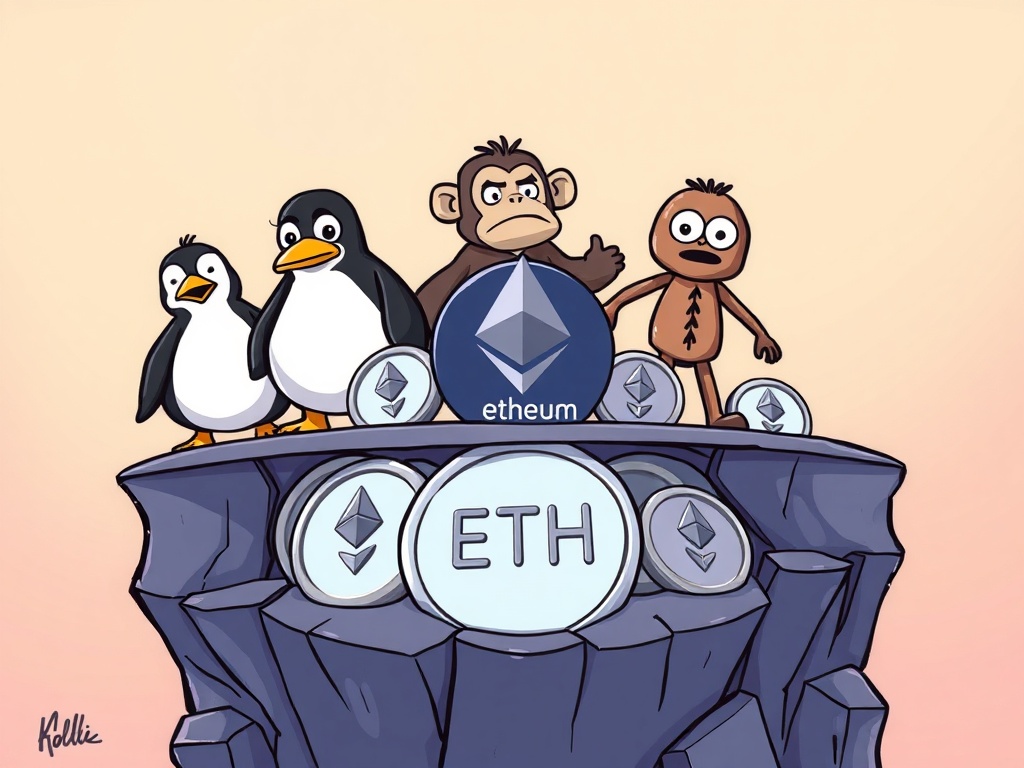
The world of digital collectibles is buzzing, but not in a good way. Recent data reveals significant NFT floor price drops across some of the most prominent collections. If you own a Pudgy Penguin or a Bored Ape, you might have noticed your digital assets taking a hit. This downturn has caught many investors by surprise, prompting questions about the stability of the NFT market.

What’s Driving the Recent NFT Floor Price Drops?

Major NFT collections, including the highly sought-after Pudgy Penguins, Bored Ape Yacht Club (BAYC), and Doodles, have recently experienced double-digit declines in their floor prices. This means the lowest price at which an NFT from a specific collection is available for sale has significantly decreased. According to a report by Cointelegraph, data from DeFiLlama clearly illustrates this trend.

For instance, the floor price for Pudgy Penguins saw a drop of approximately 17.3%. Similarly, the iconic Bored Ape Yacht Club (BAYC) experienced a 14.7% decline. Doodles, a popular series known for its vibrant art, faced an even steeper fall, losing 18.9% of its floor value. These figures highlight a challenging period for the digital art and collectible space.

What is the primary culprit behind these notable NFT floor price drops? Many market analysts, including Cointelegraph, point directly to the short-term weakness observed in Ethereum (ETH). Ethereum is the foundational blockchain for most of these high-value NFTs. Therefore, when ETH experiences volatility or a decline, it often has a ripple effect on the value of NFTs built upon it. This particular downturn follows a period where Ethereum had recently achieved an all-time high, suggesting a market correction.

How Do NFT Floor Price Drops Impact the Wider Crypto Market?

The impact of these declines extends beyond individual collections. The overall NFT market capitalization has also felt the pinch. Data from NFTPriceFloor indicates that the total market cap for NFTs has decreased by about 5% over the past seven days, settling at approximately $7.7 billion. This broader market contraction signals a cautious sentiment among investors.

When the underlying asset, like Ethereum, faces pressure, it naturally affects the perceived value and liquidity of associated digital assets. Investors often view NFTs as higher-risk, speculative assets. Therefore, during periods of broader market uncertainty or when a major cryptocurrency like ETH dips, capital tends to flow out of these riskier ventures first. This creates downward pressure on NFT floor price drops and overall market volume.

Understanding this interconnectedness is crucial for anyone involved in the crypto space. The health of Ethereum directly influences the vibrancy and valuation of the NFT ecosystem. While some might see this as a temporary setback, it underscores the inherent volatility of digital markets.

For current NFT holders, experiencing these NFT floor price drops can be concerning. However, it’s important to approach such market movements with a strategic mindset. Here are a few considerations:

  • Assess Your Holdings: Evaluate the long-term potential and community strength of your specific NFT collections. Strong communities and established roadmaps often weather market storms better.
  • Understand the Macro Environment: Keep an eye on the performance of foundational cryptocurrencies like Ethereum. Their health is often a leading indicator for the NFT market.
  • Avoid Panic Selling: While tempting, making impulsive decisions during a downturn can lead to losses. Consider your initial investment thesis and whether it still holds true.
  • Look for Opportunities: For some, market corrections can present opportunities to acquire desirable NFTs at lower prices. Always conduct thorough research before investing.

The current market conditions serve as a powerful reminder that the NFT space, while exciting, is still relatively young and subject to significant fluctuations. Diligence and a clear strategy are paramount.

Conclusion:

The recent double-digit NFT floor price drops for major collections like Pudgy Penguins, BAYC, and Doodles are a direct reflection of broader market dynamics, particularly the short-term weakness in Ethereum. While the overall NFT market capitalization has also shrunk, this period of correction offers valuable insights into the interconnectedness of the crypto ecosystem. For investors, understanding these drivers and adopting a strategic approach to volatility is key to navigating the evolving landscape of digital collectibles. The journey of NFTs continues, marked by both exhilarating highs and challenging dips.

Frequently Asked Questions (FAQs)

1. What caused the recent NFT floor price drops?
The primary cause for the recent declines is attributed to the short-term weakness in Ethereum (ETH), which is the underlying blockchain for most major NFT collections. When ETH’s value dips, it often affects the value of associated NFTs.

2. Which major NFT collections were affected by these drops?
Prominent collections like Pudgy Penguins, Bored Ape Yacht Club (BAYC), and Doodles all experienced double-digit percentage drops in their floor prices over the past seven days.

3. How does Ethereum’s performance relate to NFT values?
Since most high-value NFTs are built on the Ethereum blockchain, the performance of ETH significantly influences their value. A decline in ETH can lead to a decrease in the perceived and actual value of NFTs.

4. Is the NFT market in a bear cycle?
While the market has seen significant NFT floor price drops and a decrease in total market capitalization, whether it’s a full bear cycle depends on broader market trends and duration. It certainly indicates a period of correction and cautious investor sentiment.

5. What should NFT holders do during a market downturn?
During a downturn, it’s advisable to assess your holdings, understand the macro environment, avoid panic selling, and potentially look for strategic buying opportunities if you have a long-term investment horizon.

6. Where can I find reliable data on NFT floor prices?
Reliable data on NFT floor prices can be found on platforms like DeFiLlama and NFTPriceFloor, which track various collections and market statistics.

If you found this analysis helpful, please share it with your friends and fellow crypto enthusiasts on social media! Your insights and discussions help us all navigate the dynamic world of NFTs.

To learn more about the latest NFT market trends, explore our article on key developments shaping Ethereum price action.

This post Alarming NFT Floor Price Drops: What’s Behind the Double-Digit Declines? first appeared on BitcoinWorld and is written by Editorial Team

Market Opportunity
Brainedge Logo
Brainedge Price(LEARN)
$0.006793
$0.006793$0.006793
+15.31%
USD
Brainedge (LEARN) Live Price Chart
Disclaimer: The articles reposted on this site are sourced from public platforms and are provided for informational purposes only. They do not necessarily reflect the views of MEXC. All rights remain with the original authors. If you believe any content infringes on third-party rights, please contact service@support.mexc.com for removal. MEXC makes no guarantees regarding the accuracy, completeness, or timeliness of the content and is not responsible for any actions taken based on the information provided. The content does not constitute financial, legal, or other professional advice, nor should it be considered a recommendation or endorsement by MEXC.

You May Also Like

The Channel Factories We’ve Been Waiting For

The Channel Factories We’ve Been Waiting For

The post The Channel Factories We’ve Been Waiting For appeared on BitcoinEthereumNews.com. Visions of future technology are often prescient about the broad strokes while flubbing the details. The tablets in “2001: A Space Odyssey” do indeed look like iPads, but you never see the astronauts paying for subscriptions or wasting hours on Candy Crush.  Channel factories are one vision that arose early in the history of the Lightning Network to address some challenges that Lightning has faced from the beginning. Despite having grown to become Bitcoin’s most successful layer-2 scaling solution, with instant and low-fee payments, Lightning’s scale is limited by its reliance on payment channels. Although Lightning shifts most transactions off-chain, each payment channel still requires an on-chain transaction to open and (usually) another to close. As adoption grows, pressure on the blockchain grows with it. The need for a more scalable approach to managing channels is clear. Channel factories were supposed to meet this need, but where are they? In 2025, subnetworks are emerging that revive the impetus of channel factories with some new details that vastly increase their potential. They are natively interoperable with Lightning and achieve greater scale by allowing a group of participants to open a shared multisig UTXO and create multiple bilateral channels, which reduces the number of on-chain transactions and improves capital efficiency. Achieving greater scale by reducing complexity, Ark and Spark perform the same function as traditional channel factories with new designs and additional capabilities based on shared UTXOs.  Channel Factories 101 Channel factories have been around since the inception of Lightning. A factory is a multiparty contract where multiple users (not just two, as in a Dryja-Poon channel) cooperatively lock funds in a single multisig UTXO. They can open, close and update channels off-chain without updating the blockchain for each operation. Only when participants leave or the factory dissolves is an on-chain transaction…
Share
BitcoinEthereumNews2025/09/18 00:09
Polygon Tops RWA Rankings With $1.1B in Tokenized Assets

Polygon Tops RWA Rankings With $1.1B in Tokenized Assets

The post Polygon Tops RWA Rankings With $1.1B in Tokenized Assets appeared on BitcoinEthereumNews.com. Key Notes A new report from Dune and RWA.xyz highlights Polygon’s role in the growing RWA sector. Polygon PoS currently holds $1.13 billion in RWA Total Value Locked (TVL) across 269 assets. The network holds a 62% market share of tokenized global bonds, driven by European money market funds. The Polygon POL $0.25 24h volatility: 1.4% Market cap: $2.64 B Vol. 24h: $106.17 M network is securing a significant position in the rapidly growing tokenization space, now holding over $1.13 billion in total value locked (TVL) from Real World Assets (RWAs). This development comes as the network continues to evolve, recently deploying its major “Rio” upgrade on the Amoy testnet to enhance future scaling capabilities. This information comes from a new joint report on the state of the RWA market published on Sept. 17 by blockchain analytics firm Dune and data platform RWA.xyz. The focus on RWAs is intensifying across the industry, coinciding with events like the ongoing Real-World Asset Summit in New York. Sandeep Nailwal, CEO of the Polygon Foundation, highlighted the findings via a post on X, noting that the TVL is spread across 269 assets and 2,900 holders on the Polygon PoS chain. The Dune and https://t.co/W6WSFlHoQF report on RWA is out and it shows that RWA is happening on Polygon. Here are a few highlights: – Leading in Global Bonds: Polygon holds 62% share of tokenized global bonds (driven by Spiko’s euro MMF and Cashlink euro issues) – Spiko U.S.… — Sandeep | CEO, Polygon Foundation (※,※) (@sandeepnailwal) September 17, 2025 Key Trends From the 2025 RWA Report The joint publication, titled “RWA REPORT 2025,” offers a comprehensive look into the tokenized asset landscape, which it states has grown 224% since the start of 2024. The report identifies several key trends driving this expansion. According to…
Share
BitcoinEthereumNews2025/09/18 00:40
Explosive 25% Penalty On Nations Trading With Tehran

Explosive 25% Penalty On Nations Trading With Tehran

The post Explosive 25% Penalty On Nations Trading With Tehran appeared on BitcoinEthereumNews.com. Trump Iran Tariffs: Explosive 25% Penalty On Nations Trading
Share
BitcoinEthereumNews2026/02/07 08:10