Aave is looking beyond traditional crypto lending as it explores a long-term strategy focused on financing solar energy and other real-world infrastructure.  TheAave is looking beyond traditional crypto lending as it explores a long-term strategy focused on financing solar energy and other real-world infrastructure.  The

Aave sets sight on solar financing in long-term DeFi strategy

2026/02/16 12:02
3 min read

Aave is looking beyond traditional crypto lending as it explores a long-term strategy focused on financing solar energy and other real-world infrastructure. 

Summary
  • Aave founder Stani Kulechov says tokenized solar assets could unlock faster, cheaper funding for clean energy.
  • Aave plans to use solar-backed tokens as collateral to improve liquidity and capital recycling.
  • The move targets long-term growth beyond traditional crypto-based lending.

The shift was outlined in a recent post by founder Stani Kulechov, who argued that decentralized finance can play a major role in funding the global energy transition.

Kulechov said on-chain lending has already proven its technical strength with digital assets. The next step, in his view, is to bring productive, real-world assets such as solar farms into DeFi and turn them into usable collateral.

Turning solar projects into liquid assets

According to Kulechov, one of the main problems in solar and infrastructure financing is illiquidity. Most projects rely on long-term contracts that can last 20 years or more. Investors often accept lower flexibility in exchange for stable returns, but this also limits the amount of capital that can enter the sector.

Tokenization could change that. By turning solar projects into digital assets, investors would be able to trade and transfer their positions more easily. These tokenized assets could also be used as collateral on Aave (AAVE), allowing developers and financiers to borrow funds quickly instead of waiting months for traditional loans.

Kulechov said this could lower required returns and make projects more attractive. A solar asset that needs a 10% return in private markets might only need 6% if it becomes liquid and tradable. Over time, this could help recycle capital faster, letting the same money fund multiple projects instead of being locked up for decades.

He also pointed to the potential impact on stablecoins. Because solar farms are spread across many countries, their debt could be issued in different currencies. This could create new demand for euro- and pound-backed stablecoins, giving users more options beyond U.S. dollar lending.

Building a new model for DeFi growth

Lending against major cryptocurrencies has grown crowded and fiercely competitive, as per Kulechov. Similar products are currently offered by many DeFi platforms, which has decreased long-term growth potential and pushed down margins. 

He argues that solar-backed lending presents an alternative. Aave might fund initiatives that produce actual cash flows and long-term value rather than depending on speculative assets. This would give depositors access to “green yield” while helping fund clean energy development.

He also stressed that most retail investors currently have limited access to solar investments. High minimums and complex structures keep many people out. On-chain products have the potential to reduce these obstacles and increase accessibility to infrastructure financing.

He believes that this strategy reflects a drastic change in the way that capital ought to be distributed. DeFi platforms should support assets that are productive and future-proof rather than concentrating on government debt or struggling industries.

Kulechov described this as an “opinionated” strategy. Users who choose solar-backed products are not just looking for returns, he said. They are choosing to fund creation over extraction and long-term growth over short-term fixes.

If the model works, it might result in a parallel financial system with real infrastructure and revenue supporting lending products and stablecoins. 

“Aave Will Win,” Kulechov concluded, framing the shift as both a business strategy and a statement about the future of DeFI.

Market Opportunity
AaveToken Logo
AaveToken Price(AAVE)
$126.91
$126.91$126.91
+0.25%
USD
AaveToken (AAVE) Live Price Chart
Disclaimer: The articles reposted on this site are sourced from public platforms and are provided for informational purposes only. They do not necessarily reflect the views of MEXC. All rights remain with the original authors. If you believe any content infringes on third-party rights, please contact service@support.mexc.com for removal. MEXC makes no guarantees regarding the accuracy, completeness, or timeliness of the content and is not responsible for any actions taken based on the information provided. The content does not constitute financial, legal, or other professional advice, nor should it be considered a recommendation or endorsement by MEXC.

You May Also Like

Ex-Alipay UK Chief Eva Zhang to Lead Blockscout Into AI-Driven Growth

Ex-Alipay UK Chief Eva Zhang to Lead Blockscout Into AI-Driven Growth

Blockscout, the leading open-source block explorer for EVM chains, has appointed Eva Zhang, former CEO of Alipay UK, as its new chief executive officer.
Share
Blockchainreporter2025/09/18 19:00
Gold price in Malaysia: Rates on February 16
Gold price in Malaysia: Rates on February 16

The post Gold price in Malaysia: Rates on February 16 appeared on BitcoinEthereumNews.com. Gold prices fell in Malaysia on Monday, according to data compiled by
Share
BitcoinEthereumNews2026/02/16 13:21
U.S. Treasury Seeks Public Input on Game-Changing Stablecoin Regulations

U.S. Treasury Seeks Public Input on Game-Changing Stablecoin Regulations

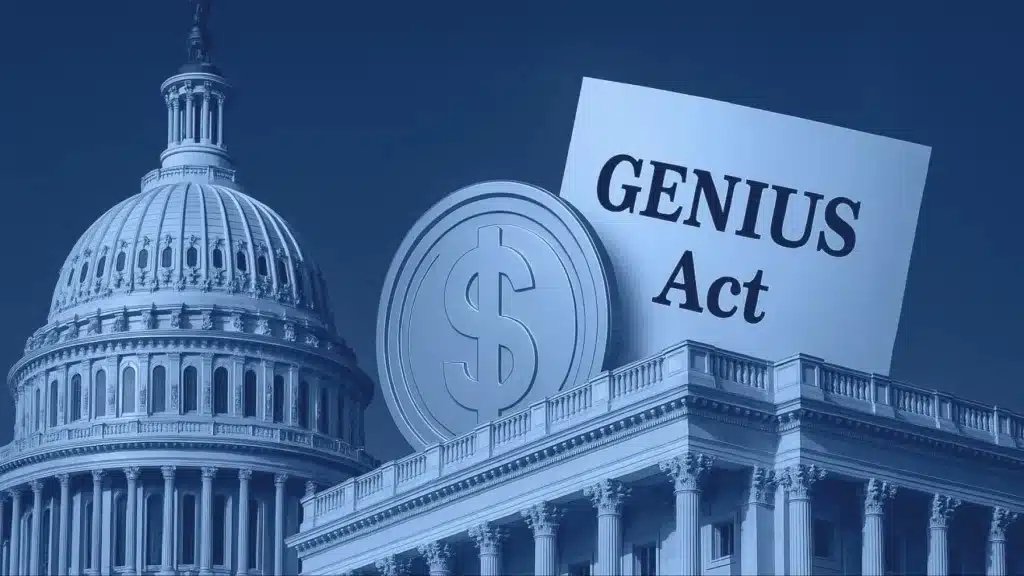
U.S. Treasury invites feedback on groundbreaking stablecoin regulations under GENIUS. Key questions around stablecoin tax treatment and foreign issuer rules. Treasury explores marketing restrictions, oversight balance, and AML enforcement options. The U.S. Treasury Department is now inviting public feedback on the implementation of the groundbreaking GENIUS Act, the first piece of crypto-specific legislation passed in the U.S. this summer. The new law is a milestone in terms of regulation of stablecoins, as the Treasury is aiming to balance the need to innovate and the aim of protecting consumers and monetary stability. According to Treasury officials, the GENIUS Act is designed to stimulate the growth of payment stablecoins while addressing potential risks related to illicit financial activities and maintaining overall economic stability. The department especially shows interest in the acquisition of data that could assist in refining the regulatory guidelines as it proceeds with the writing of its formal proposal. The commenting is active through the October 20 deadline, which gives both opponents and players in the industry time to express their views. One of the most pressing questions under consideration is how the IRS will handle the federal income tax treatment of stablecoins. The GENIUS Act does not directly cover this, and there is room to interpret and make decisions by regulation in the future. Also unclear is when and how foreign issuers can be allowed to offer stablecoins in the U.S., and it does not look like there is a timeline involved in making any changes. Also Read: Ripple Partners with DZ BANK to Launch Institutional Digital Asset Custody Solution Key Areas Under Scrutiny as Treasury Prepares Stablecoin Regulations Several key issues are currently up for discussion as part of the Treasury’s review of the GENIUS Act’s implementation. These include whether stablecoins should have certain marketing limitations, whether it should be at the state or federal level, and how the current anti-money laundering (AML) and sanctions policies will relate to digital assets. Moreover, the Treasury is analyzing how the current regulations, such as the Bank Secrecy Act (BSA), are capable of mitigating the risks of digital assets. This is after it was earlier sought to seek the views of people on the detection of illicit use in the digital asset markets. As the Treasury moves toward finalizing the regulations, it is clear that the department aims to craft a robust and flexible framework that can adapt to the evolving landscape of digital currencies. The outcome will have lasting implications for the future of stablecoin regulation in the U.S., shaping the path forward for both domestic and international players in the crypto space. Also Read: Shiba Inu Faces Major Selling Pressure as 157 Billion SHIB Floods Exchanges! The post U.S. Treasury Seeks Public Input on Game-Changing Stablecoin Regulations appeared first on 36Crypto.
Share
Coinstats2025/09/20 17:22