

Warren vs Trump’s SEC: U.S. Senate Clash Over Crypto Policy
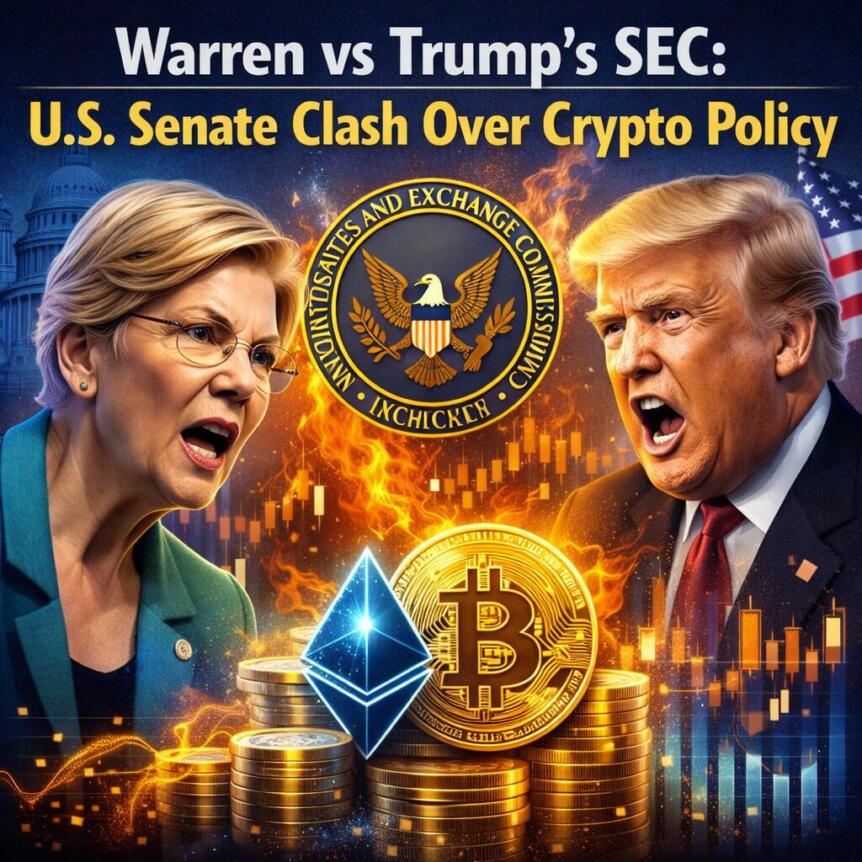
Key Insights
- Warren questions SEC case dismissals, warning politics may be shaping crypto enforcement and investor protection.
- SEC Chair Atkins defends a shift away from lawsuits, prioritizing fraud prevention and clearer regulatory guidance.
- Senate clash highlights divide: clearer crypto laws vs stricter enforcement to protect markets and innovation.
Senate Hearing Turn Into a Crypto Flashpoint
A heated Capitol Hill hearing on February 12 thrust US crypto regulation into the spotlight as Senator Elizabeth Warren challenged Securities and Exchange Commission (SEC) Chair Paul Atkins over the agency’s recent enforcement decisions.
Warren directly questioned why several investigations into major crypto firms were dropped, particularly those connected to companies that financially supported Donald Trump’s inauguration. She argued the timing raised serious concerns about political influence and investor protection.
Atkins rejected the allegations, saying the SEC is moving away from “regulation by enforcement” and back toward its core mandate: preventing fraud, protecting investors, and maintaining fair markets. He insisted previous leadership relied too heavily on lawsuits instead of clear guidance.
Is SEC Enforcement Really Declining?
Warren cited public statistics suggesting enforcement has slowed:
- Securities offering cases fell 10.64% from 2024 to 2025
- Investment adviser actions dropped 23.71%
- Broker-dealer cases declined 29.51%
Independent research also reported fewer settlements in fiscal 2025. However, Atkins countered that final annual data has not yet been released and argued the agency is prioritizing fraud over technical registration violations.
Supporters say the shift corrects regulatory overreach seen under former Chair Gary Gensler. Critics warn fewer actions could weaken accountability in the digital asset market.
Registration Violations or Innovation Barriers?
Central to the debate is whether unregistered token offerings automatically constitute misconduct. Crypto companies have long argued unclear securities definitions made compliance difficult.
Atkins supports legislation similar to the Digital Asset Market Clarity Act, which would divide oversight between the SEC and the Commodity Futures Trading Commission. He compared the past environment to innovators stuck between two competing regulators.
Warren disagreed, warning reduced oversight could usher in a “golden age of fraud.”
Could Politics Be Influencing Crypto Policy?
Warren highlighted dismissed cases involving major exchanges including Kraken, Coinbase, Gemini, and Binance, noting their financial ties to inauguration events. She also questioned dropped actions tied to executives who later received presidential clemency.
Atkins maintained pardons do not erase civil liability and emphasized that fraud investigations continue regardless of industry.
Conclusion
The battle discloses a larger policy divide: is a more explicit legislation more crucial in fostering innovativeness or is weaker enforcement more likely to hurt investors. The future of the United States regulation of digital assets may be determined by the final effect of Congress discussing crypto-market-structure legislation.
This article was originally published as Warren vs Trump’s SEC: U.S. Senate Clash Over Crypto Policy on Crypto Breaking News – your trusted source for crypto news, Bitcoin news, and blockchain updates.
You May Also Like

VanEck Targets Stablecoins & Next-Gen ICOs

Kaspa Price Prediction 2030: Can KAS Reach $1 or Will Traders Chase This 100x Crypto Presale Instead?
