The post Crypto Lobby Pushes Back Against Bank Effort to Rewrite U.S. Stablecoin Law appeared on BitcoinEthereumNews.com. The crypto industry is mounting a counteroffensive against Wall Street bankers’ bid to rewrite the U.S.’ new stablecoin law, arguing that attempts to roll back core provisions of the Guiding and Establishing National Innovation for U.S. Stablecoins (GENIUS) Act would tilt the field toward traditional banks. In a letter to Senate Banking Committee leaders dated Aug. 19, the Crypto Council for Innovation and the Blockchain Association urged lawmakers to reject proposals from the American Bankers Association, Bank Policy Institute and state banking groups that called for stripping out Section 16(d) of the law and banning yield programs offered by affiliates of stablecoin issuers. Section 16(d) allows subsidiaries of state-chartered institutions to conduct money transmission across state lines in support of stablecoin issuer activities, ensuring holders can redeem their tokens nationwide without needing separate state licenses. Banking groups warned earlier this month that allowing state-chartered, uninsured institutions to issue stablecoins and operate nationwide would amount to regulatory arbitrage, bypassing state licensing regimes, CoinDesk reported earlier. They also argued that the law contains a loophole by banning issuers themselves from offering interest but not preventing affiliates or exchanges from doing so, which they say could drain as much as $6.6 trillion in deposits from the U.S. banking system. The crypto groups’ Aug. 19 letter dismissed those fears as unsupported by observed data. Citing a July 2025 study by Charles River Associates, the groups said there is no statistically significant link between stablecoin adoption and community bank deposit outflows. Instead, they pointed out, most stablecoin reserves remain inside the financial system in commercial banks and Treasury securities, continuing to support lending. They also argued that allowing affiliates to share rewards with stablecoin users ensures fair competition, especially for underbanked consumers who are underserved by traditional banks. At present, the average U.S. checking account… The post Crypto Lobby Pushes Back Against Bank Effort to Rewrite U.S. Stablecoin Law appeared on BitcoinEthereumNews.com. The crypto industry is mounting a counteroffensive against Wall Street bankers’ bid to rewrite the U.S.’ new stablecoin law, arguing that attempts to roll back core provisions of the Guiding and Establishing National Innovation for U.S. Stablecoins (GENIUS) Act would tilt the field toward traditional banks. In a letter to Senate Banking Committee leaders dated Aug. 19, the Crypto Council for Innovation and the Blockchain Association urged lawmakers to reject proposals from the American Bankers Association, Bank Policy Institute and state banking groups that called for stripping out Section 16(d) of the law and banning yield programs offered by affiliates of stablecoin issuers. Section 16(d) allows subsidiaries of state-chartered institutions to conduct money transmission across state lines in support of stablecoin issuer activities, ensuring holders can redeem their tokens nationwide without needing separate state licenses. Banking groups warned earlier this month that allowing state-chartered, uninsured institutions to issue stablecoins and operate nationwide would amount to regulatory arbitrage, bypassing state licensing regimes, CoinDesk reported earlier. They also argued that the law contains a loophole by banning issuers themselves from offering interest but not preventing affiliates or exchanges from doing so, which they say could drain as much as $6.6 trillion in deposits from the U.S. banking system. The crypto groups’ Aug. 19 letter dismissed those fears as unsupported by observed data. Citing a July 2025 study by Charles River Associates, the groups said there is no statistically significant link between stablecoin adoption and community bank deposit outflows. Instead, they pointed out, most stablecoin reserves remain inside the financial system in commercial banks and Treasury securities, continuing to support lending. They also argued that allowing affiliates to share rewards with stablecoin users ensures fair competition, especially for underbanked consumers who are underserved by traditional banks. At present, the average U.S. checking account…

Crypto Lobby Pushes Back Against Bank Effort to Rewrite U.S. Stablecoin Law

3 min read

The crypto industry is mounting a counteroffensive against Wall Street bankers’ bid to rewrite the U.S.’ new stablecoin law, arguing that attempts to roll back core provisions of the Guiding and Establishing National Innovation for U.S. Stablecoins (GENIUS) Act would tilt the field toward traditional banks.

In a letter to Senate Banking Committee leaders dated Aug. 19, the Crypto Council for Innovation and the Blockchain Association urged lawmakers to reject proposals from the American Bankers Association, Bank Policy Institute and state banking groups that called for stripping out Section 16(d) of the law and banning yield programs offered by affiliates of stablecoin issuers.

Section 16(d) allows subsidiaries of state-chartered institutions to conduct money transmission across state lines in support of stablecoin issuer activities, ensuring holders can redeem their tokens nationwide without needing separate state licenses.

Banking groups warned earlier this month that allowing state-chartered, uninsured institutions to issue stablecoins and operate nationwide would amount to regulatory arbitrage, bypassing state licensing regimes, CoinDesk reported earlier.

They also argued that the law contains a loophole by banning issuers themselves from offering interest but not preventing affiliates or exchanges from doing so, which they say could drain as much as $6.6 trillion in deposits from the U.S. banking system.

The crypto groups’ Aug. 19 letter dismissed those fears as unsupported by observed data. Citing a July 2025 study by Charles River Associates, the groups said there is no statistically significant link between stablecoin adoption and community bank deposit outflows.

Instead, they pointed out, most stablecoin reserves remain inside the financial system in commercial banks and Treasury securities, continuing to support lending.

They also argued that allowing affiliates to share rewards with stablecoin users ensures fair competition, especially for underbanked consumers who are underserved by traditional banks.

At present, the average U.S. checking account pays just 0.07% APY, far below inflation, while the Federal Reserve’s benchmark interest rate stands at 4.25%-4.50%.

“Eliminating these features for stablecoin users, while allowing them in the banking sector, would tilt the playing field in favor of legacy institutions,” the groups wrote.

The GENIUS Act is law, but the Digital Asset Market Clarity Act, a broader crypto markets framework already passed by the House and currently in the Senate, could still reshape stablecoin policy before regulators draft implementing rules.

Bankers have seized on that process to push their agenda, while crypto groups are lobbying to keep the law intact.

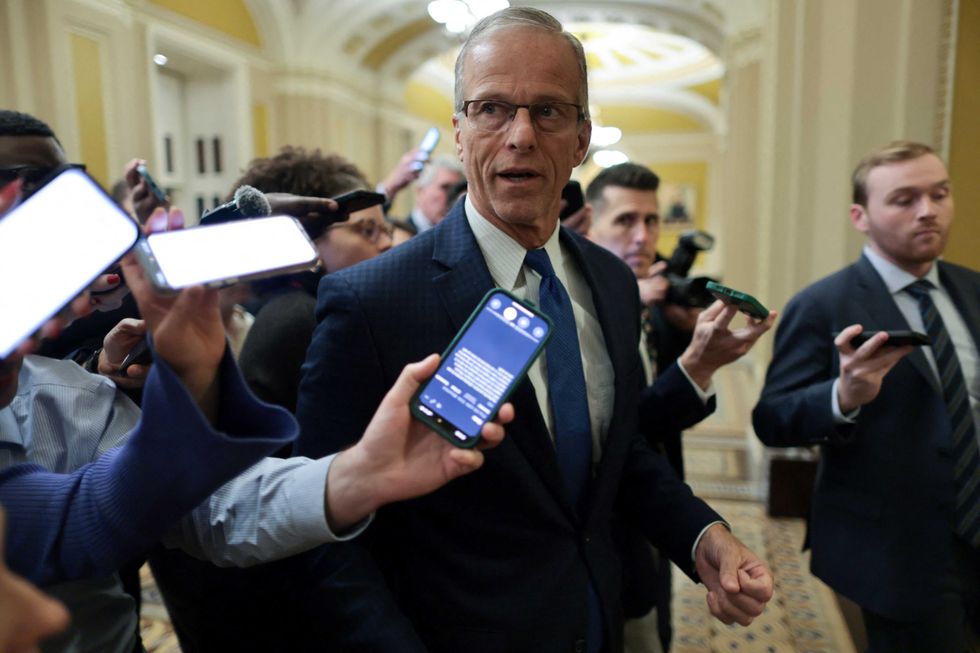
Republican Tim Scott of South Carolina, the Senate Banking chairman, said this week he expects the bill to be finalized by the end of September and believes as many as 18 Democrats may vote for it. However, he acknowledged the possibility of resistance from Sen. Elizabeth Warren, a Democrat from Massachusetts, and her allies.

Whatever version emerges will need to be reconciled with the House’s Digital Asset Market Clarity Act and could provide the opening bankers want to revise stablecoin provisions before regulators begin writing rules.

Source: https://www.coindesk.com/policy/2025/08/20/crypto-lobby-pushes-back-against-bank-effort-to-rewrite-stablecoin-law

Market Opportunity
DAR Open Network Logo
DAR Open Network Price(D)
$0.01199
$0.01199$0.01199
+1.52%
USD
DAR Open Network (D) Live Price Chart
Disclaimer: The articles reposted on this site are sourced from public platforms and are provided for informational purposes only. They do not necessarily reflect the views of MEXC. All rights remain with the original authors. If you believe any content infringes on third-party rights, please contact service@support.mexc.com for removal. MEXC makes no guarantees regarding the accuracy, completeness, or timeliness of the content and is not responsible for any actions taken based on the information provided. The content does not constitute financial, legal, or other professional advice, nor should it be considered a recommendation or endorsement by MEXC.

You May Also Like

XRP Enters ‘Washout Zone,’ Then Targets $30, Crypto Analyst Says

XRP Enters ‘Washout Zone,’ Then Targets $30, Crypto Analyst Says

XRP has entered what Korean Certified Elliott Wave Analyst XForceGlobal (@XForceGlobal) calls a “washout” phase inside a broader Elliott Wave corrective structure
Share
NewsBTC2026/02/05 08:00
Republicans are 'very concerned about Texas' turning blue: GOP senator

Republicans are 'very concerned about Texas' turning blue: GOP senator

While Republicans in the U.S. House of Representatives have a razor-thin with just a four-seat advantage, their six-seat advantage in the U.S. Senate is seen as
Share
Alternet2026/02/05 08:38
Headwind Helps Best Wallet Token

Headwind Helps Best Wallet Token

The post Headwind Helps Best Wallet Token appeared on BitcoinEthereumNews.com. Google has announced the launch of a new open-source protocol called Agent Payments Protocol (AP2) in partnership with Coinbase, the Ethereum Foundation, and 60 other organizations. This allows AI agents to make payments on behalf of users using various methods such as real-time bank transfers, credit and debit cards, and, most importantly, stablecoins. Let’s explore in detail what this could mean for the broader cryptocurrency markets, and also highlight a presale crypto (Best Wallet Token) that could explode as a result of this development. Google’s Push for Stablecoins Agent Payments Protocol (AP2) uses digital contracts known as ‘Intent Mandates’ and ‘Verifiable Credentials’ to ensure that AI agents undertake only those payments authorized by the user. Mandates, by the way, are cryptographically signed, tamper-proof digital contracts that act as verifiable proof of a user’s instruction. For example, let’s say you instruct an AI agent to never spend more than $200 in a single transaction. This instruction is written into an Intent Mandate, which serves as a digital contract. Now, whenever the AI agent tries to make a payment, it must present this mandate as proof of authorization, which will then be verified via the AP2 protocol. Alongside this, Google has also launched the A2A x402 extension to accelerate support for the Web3 ecosystem. This production-ready solution enables agent-based crypto payments and will help reshape the growth of cryptocurrency integration within the AP2 protocol. Google’s inclusion of stablecoins in AP2 is a massive vote of confidence in dollar-pegged cryptocurrencies and a huge step toward making them a mainstream payment option. This widens stablecoin usage beyond trading and speculation, positioning them at the center of the consumption economy. The recent enactment of the GENIUS Act in the U.S. gives stablecoins more structure and legal support. Imagine paying for things like data crawls, per-task…
Share
BitcoinEthereumNews2025/09/18 01:27