BitcoinWorld Crypto Fear & Greed Index Plunges to 17: Navigating the Depths of Extreme Market Fear Global cryptocurrency markets, as of early 2025, remain grippedBitcoinWorld Crypto Fear & Greed Index Plunges to 17: Navigating the Depths of Extreme Market Fear Global cryptocurrency markets, as of early 2025, remain gripped

Crypto Fear & Greed Index Plunges to 17: Navigating the Depths of Extreme Market Fear
2026/02/03 08:55
7 min read
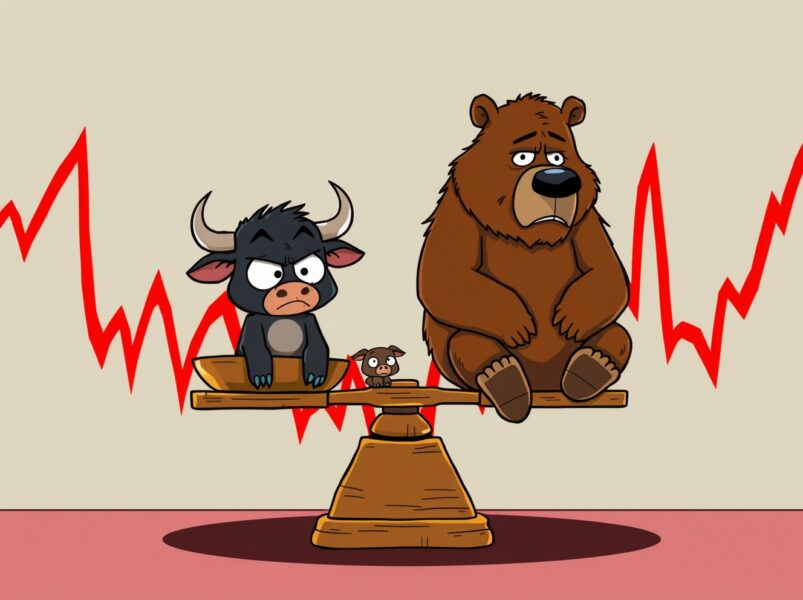
Visual metaphor for the Crypto Fear & Greed Index indicating a state of extreme market fear and caution.

BitcoinWorld

Crypto Fear & Greed Index Plunges to 17: Navigating the Depths of Extreme Market Fear

Global cryptocurrency markets, as of early 2025, remain gripped by a powerful wave of investor anxiety, with the widely watched Crypto Fear & Greed Index registering a reading of just 17. This figure, reported by data provider Alternative.me, represents a state of ‘Extreme Fear’ and underscores the persistent caution dominating digital asset trading floors worldwide. Consequently, understanding this critical sentiment gauge becomes essential for any market participant navigating the current landscape.

Decoding the Crypto Fear & Greed Index

The Crypto Fear & Greed Index serves as a daily barometer for investor psychology within the digital asset space. Fundamentally, it quantifies the emotional temperature of the market on a scale from 0 to 100. A score approaching 0 signals ‘Extreme Fear,’ often correlating with potential buying opportunities from a contrarian perspective. Conversely, a score nearing 100 indicates ‘Extreme Greed,’ which can precede market corrections. The index’s current position at 17, a mere three-point rise from previous lows, clearly signals that fear remains the dominant market force.

This metric is not a simple survey; it is a composite index derived from multiple data-driven sources. The algorithm synthesizes these inputs to produce a single, digestible figure. The specific weightings, as defined by Alternative.me, provide a transparent view of its construction:

Data SourceWeightingWhat It Measures
Market Volatility25%Price swings and stability of major assets like Bitcoin.
Market Volume & Momentum25%Trading activity and the strength of price movements.
Social Media Sentiment15%Buzz and tone across platforms like Twitter and Reddit.
Surveys15%Direct polling of community sentiment.
Bitcoin Dominance10%Bitcoin’s market share relative to all other cryptocurrencies.
Trends & Search Volume10%Public interest via Google search trends for crypto topics.

Therefore, the current ‘Extreme Fear’ reading reflects a confluence of factors: likely elevated volatility, subdued trading volumes, negative social media chatter, and reduced public search interest. This multi-faceted approach helps validate the sentiment reading beyond any single metric.

Historical Context of Extreme Fear Readings

Placing the current 17 reading in historical context reveals its significance. Historically, prolonged periods in the ‘Extreme Fear’ zone (typically below 25) have coincided with major market capitulation events. For instance, the index touched single digits during the bear market troughs following the 2018 bubble and the 2022 market collapse triggered by macroeconomic tightening and industry failures.

However, these periods of peak fear have also often marked cyclical bottoms. Analysts frequently observe that sustained ‘Extreme Fear’ can indicate a washing out of weak hands and excessive leverage, potentially setting the stage for a more stable foundation. It is crucial to note that while the index is a powerful sentiment tool, it is not a direct timing indicator for a market reversal. Markets can remain fearful or greedy for extended periods, as seen in the prolonged bullish sentiment of late 2020 and early 2021.

Expert Analysis on the Current Sentiment Climate

Market strategists point to several converging factors sustaining the fearful climate in early 2025. Firstly, regulatory developments across major economies continue to create uncertainty, impacting institutional adoption timelines. Secondly, the broader macroeconomic environment, particularly interest rate trajectories and global liquidity conditions, remains a primary driver for risk assets like cryptocurrency. Finally, the memory of recent industry insolvencies still influences investor behavior, promoting a ‘wait-and-see’ attitude.

“The Fear & Greed Index is flashing a classic contrarian signal,” notes a veteran market analyst from a major financial data firm. “While it reflects real pain and caution, historically, such uniform pessimism has not been a permanent state. The key for investors is to differentiate between cyclical fear driven by price action and structural fear driven by broken fundamentals. The current data suggests more of the former.” This analysis underscores the importance of using the index as one component of a broader research framework.

Impact on Bitcoin and Altcoin Markets

The pervasive fear sentiment exerts a tangible influence across different segments of the crypto market. Typically, in ‘Extreme Fear’ environments, investors exhibit distinct behavioral patterns. Bitcoin, often perceived as a relative ‘safe haven’ within the asset class, may see its market dominance index rise as capital flees higher-risk altcoins. This flight to perceived quality can suppress trading volumes and innovation in the altcoin space, as funding and attention dwindle.

Furthermore, market mechanics are affected. Funding rates in perpetual swap markets often turn deeply negative, indicating that traders are paying to hold short positions. Additionally, exchange reserves may be scrutinized, as fearful holders might move assets to self-custody, a phenomenon colloquially known as ‘withdrawing to cold storage.’ These on-chain and derivatives metrics provide corroborating evidence for the sentiment captured by the Fear & Greed Index.

Practical Implications for Investors and Traders

For market participants, an ‘Extreme Fear’ reading should inform strategy rather than dictate it. Prudent investors might view this as a period for disciplined due diligence and potential dollar-cost averaging into fundamentally sound projects, acknowledging the high risk and potential for further downside. Traders, conversely, may adjust their strategies for a high-volatility, low-momentum environment, often characterized by sharp but unsustainable rallies (“dead cat bounces”) within a broader downtrend.

Risk management becomes paramount. Key considerations include:

  • Position Sizing: Reducing exposure to align with elevated uncertainty.
  • Portfolio Rebalancing: Reviewing asset allocations that may have drifted due to asymmetric price movements.
  • Scenario Planning: Preparing for both a prolonged fear phase and a potential sentiment shift based on new catalysts.

Ultimately, the index is a measure of crowd psychology. Successful navigation often involves understanding this psychology while maintaining a focus on long-term technological adoption trends, network fundamentals, and macroeconomic drivers.

Conclusion

The Crypto Fear & Greed Index reading of 17 offers a clear, quantitative snapshot of the prevailing ‘Extreme Fear’ in cryptocurrency markets. This sentiment stems from a composite of volatility, volume, social, and survey data, reflecting real investor trepidation. While historically such depths of fear have preceded market recoveries, they offer no guarantee of immediate reversal. For informed participants, this indicator serves as a crucial piece of contextual data—a gauge of market emotion that, when combined with fundamental and technical analysis, can guide more nuanced decision-making. As the market evolves through 2025, monitoring shifts in this index will remain essential for assessing changes in the collective market psyche.

FAQs

Q1: What does a Crypto Fear & Greed Index score of 17 mean?
A score of 17 falls into the ‘Extreme Fear’ classification (0-25). It indicates that current market data from volatility, volume, social media, and surveys reflects overwhelming pessimism and risk aversion among cryptocurrency investors.

Q2: Is the Fear & Greed Index a good buy signal?
While not a precise timing tool, historically, sustained periods in the ‘Extreme Fear’ zone have often coincided with market bottoms. Many contrarian investors use it as one factor to identify potential long-term buying opportunities, but it should never be used in isolation.

Q3: How often is the Crypto Fear & Greed Index updated?
The index is updated daily by its provider, Alternative.me. The website and various data aggregators typically display the most recent value, along with a short-term historical chart.

Q4: Does ‘Extreme Fear’ only apply to Bitcoin?
While the index incorporates Bitcoin-specific metrics like dominance, it is designed to reflect sentiment across the broader cryptocurrency market. The data sources, especially social media and surveys, encompass discussion about major altcoins as well.

Q5: What usually causes the index to move out of ‘Extreme Fear’?
A sustained shift requires a change in the underlying data: decreasing volatility, increasing trading volume with positive momentum, improving social media sentiment, or a major positive catalyst (e.g., clear regulatory progress, a significant institutional adoption announcement) that alters market psychology.

This post Crypto Fear & Greed Index Plunges to 17: Navigating the Depths of Extreme Market Fear first appeared on BitcoinWorld.

Disclaimer: The articles reposted on this site are sourced from public platforms and are provided for informational purposes only. They do not necessarily reflect the views of MEXC. All rights remain with the original authors. If you believe any content infringes on third-party rights, please contact service@support.mexc.com for removal. MEXC makes no guarantees regarding the accuracy, completeness, or timeliness of the content and is not responsible for any actions taken based on the information provided. The content does not constitute financial, legal, or other professional advice, nor should it be considered a recommendation or endorsement by MEXC.

You May Also Like

China Blocks Nvidia’s RTX Pro 6000D as Local Chips Rise

China Blocks Nvidia’s RTX Pro 6000D as Local Chips Rise

The post China Blocks Nvidia’s RTX Pro 6000D as Local Chips Rise appeared on BitcoinEthereumNews.com. China Blocks Nvidia’s RTX Pro 6000D as Local Chips Rise China’s internet regulator has ordered the country’s biggest technology firms, including Alibaba and ByteDance, to stop purchasing Nvidia’s RTX Pro 6000D GPUs. According to the Financial Times, the move shuts down the last major channel for mass supplies of American chips to the Chinese market. Why Beijing Halted Nvidia Purchases Chinese companies had planned to buy tens of thousands of RTX Pro 6000D accelerators and had already begun testing them in servers. But regulators intervened, halting the purchases and signaling stricter controls than earlier measures placed on Nvidia’s H20 chip. Image: Nvidia An audit compared Huawei and Cambricon processors, along with chips developed by Alibaba and Baidu, against Nvidia’s export-approved products. Regulators concluded that Chinese chips had reached performance levels comparable to the restricted U.S. models. This assessment pushed authorities to advise firms to rely more heavily on domestic processors, further tightening Nvidia’s already limited position in China. China’s Drive Toward Tech Independence The decision highlights Beijing’s focus on import substitution — developing self-sufficient chip production to reduce reliance on U.S. supplies. “The signal is now clear: all attention is focused on building a domestic ecosystem,” said a representative of a leading Chinese tech company. Nvidia had unveiled the RTX Pro 6000D in July 2025 during CEO Jensen Huang’s visit to Beijing, in an attempt to keep a foothold in China after Washington restricted exports of its most advanced chips. But momentum is shifting. Industry sources told the Financial Times that Chinese manufacturers plan to triple AI chip production next year to meet growing demand. They believe “domestic supply will now be sufficient without Nvidia.” What It Means for the Future With Huawei, Cambricon, Alibaba, and Baidu stepping up, China is positioning itself for long-term technological independence. Nvidia, meanwhile, faces…
Share
BitcoinEthereumNews2025/09/18 01:37
Over 260,000 Chrome users hit by 30 fake AI extensions stealing browsing & email data

Over 260,000 Chrome users hit by 30 fake AI extensions stealing browsing & email data

Tens of thousands of people have downloaded what they believed were useful AI tools for their browsers, only to give hackers a direct path into their most private
Share
Cryptopolitan2026/02/13 03:20
Unlocking Massive Value: Curve Finance Revenue Sharing Proposal for CRV Holders

Unlocking Massive Value: Curve Finance Revenue Sharing Proposal for CRV Holders

BitcoinWorld Unlocking Massive Value: Curve Finance Revenue Sharing Proposal for CRV Holders The dynamic world of decentralized finance (DeFi) is constantly evolving, bringing forth new opportunities and innovations. A significant development is currently unfolding at Curve Finance, a leading decentralized exchange (DEX). Its founder, Michael Egorov, has put forth an exciting proposal designed to offer a more direct path for token holders to earn revenue. This initiative, centered around a new Curve Finance revenue sharing model, aims to bolster the value for those actively participating in the protocol’s governance. What is the “Yield Basis” Proposal and How Does it Work? At the core of this forward-thinking initiative is a new protocol dubbed Yield Basis. Michael Egorov introduced this concept on the CurveDAO governance forum, outlining a mechanism to distribute sustainable profits directly to CRV holders. Specifically, it targets those who stake their CRV tokens to gain veCRV, which are essential for governance participation within the Curve ecosystem. Let’s break down the initial steps of this innovative proposal: crvUSD Issuance: Before the Yield Basis protocol goes live, $60 million in crvUSD will be issued. Strategic Fund Allocation: The funds generated from the sale of these crvUSD tokens will be strategically deployed into three distinct Bitcoin-based liquidity pools: WBTC, cbBTC, and tBTC. Pool Capping: To ensure balanced risk and diversified exposure, each of these pools will be capped at $10 million. This carefully designed structure aims to establish a robust and consistent income stream, forming the bedrock of a sustainable Curve Finance revenue sharing mechanism. Why is This Curve Finance Revenue Sharing Significant for CRV Holders? This proposal marks a pivotal moment for CRV holders, particularly those dedicated to the long-term health and governance of Curve Finance. Historically, generating revenue for token holders in the DeFi space can often be complex. The Yield Basis proposal simplifies this by offering a more direct and transparent pathway to earnings. By staking CRV for veCRV, holders are not merely engaging in governance; they are now directly positioned to benefit from the protocol’s overall success. The significance of this development is multifaceted: Direct Profit Distribution: veCRV holders are set to receive a substantial share of the profits generated by the Yield Basis protocol. Incentivized Governance: This direct financial incentive encourages more users to stake their CRV, which in turn strengthens the protocol’s decentralized governance structure. Enhanced Value Proposition: The promise of sustainable revenue sharing could significantly boost the inherent value of holding and staking CRV tokens. Ultimately, this move underscores Curve Finance’s dedication to rewarding its committed community and ensuring the long-term vitality of its ecosystem through effective Curve Finance revenue sharing. Understanding the Mechanics: Profit Distribution and Ecosystem Support The distribution model for Yield Basis has been thoughtfully crafted to strike a balance between rewarding veCRV holders and supporting the wider Curve ecosystem. Under the terms of the proposal, a substantial portion of the value generated by Yield Basis will flow back to those who contribute to the protocol’s governance. Returns for veCRV Holders: A significant share, specifically between 35% and 65% of the value generated by Yield Basis, will be distributed to veCRV holders. This flexible range allows for dynamic adjustments based on market conditions and the protocol’s performance. Ecosystem Reserve: Crucially, 25% of the Yield Basis tokens will be reserved exclusively for the Curve ecosystem. This allocation can be utilized for various strategic purposes, such as funding ongoing development, issuing grants, or further incentivizing liquidity providers. This ensures the continuous growth and innovation of the platform. The proposal is currently undergoing a democratic vote on the CurveDAO governance forum, giving the community a direct voice in shaping the future of Curve Finance revenue sharing. The voting period is scheduled to conclude on September 24th. What’s Next for Curve Finance and CRV Holders? The proposed Yield Basis protocol represents a pioneering approach to sustainable revenue generation and community incentivization within the DeFi landscape. If approved by the community, this Curve Finance revenue sharing model has the potential to establish a new benchmark for how decentralized exchanges reward their most dedicated participants. It aims to foster a more robust and engaged community by directly linking governance participation with tangible financial benefits. This strategic move by Michael Egorov and the Curve Finance team highlights a strong commitment to innovation and strengthening the decentralized nature of the protocol. For CRV holders, a thorough understanding of this proposal is crucial for making informed decisions regarding their staking strategies and overall engagement with one of DeFi’s foundational platforms. FAQs about Curve Finance Revenue Sharing Q1: What is the main goal of the Yield Basis proposal? A1: The primary goal is to establish a more direct and sustainable way for CRV token holders who stake their tokens (receiving veCRV) to earn revenue from the Curve Finance protocol. Q2: How will funds be generated for the Yield Basis protocol? A2: Initially, $60 million in crvUSD will be issued and sold. The funds from this sale will then be allocated to three Bitcoin-based pools (WBTC, cbBTC, and tBTC), with each pool capped at $10 million, to generate profits. Q3: Who benefits from the Yield Basis revenue sharing? A3: The proposal states that between 35% and 65% of the value generated by Yield Basis will be returned to veCRV holders, who are CRV stakers participating in governance. Q4: What is the purpose of the 25% reserve for the Curve ecosystem? A4: This 25% reserve of Yield Basis tokens is intended to support the broader Curve ecosystem, potentially funding development, grants, or other initiatives that contribute to the platform’s growth and sustainability. Q5: When is the vote on the Yield Basis proposal? A5: A vote on the proposal is currently underway on the CurveDAO governance forum and is scheduled to run until September 24th. If you found this article insightful and valuable, please consider sharing it with your friends, colleagues, and followers on social media! Your support helps us continue to deliver important DeFi insights and analysis to a wider audience. To learn more about the latest DeFi market trends, explore our article on key developments shaping decentralized finance institutional adoption. This post Unlocking Massive Value: Curve Finance Revenue Sharing Proposal for CRV Holders first appeared on BitcoinWorld.
Share
Coinstats2025/09/18 00:35