This week’s sharp Bitcoin drop, driven by thin liquidity, forced liquidations, and waning institutional confidence, turned $80K from a support level into a key This week’s sharp Bitcoin drop, driven by thin liquidity, forced liquidations, and waning institutional confidence, turned $80K from a support level into a key

February Opens In Crypto With Liquidity Stress And Heavy Selling

2026/02/02 22:00
6 min read
February Opens In Crypto With Liquidity Stress And Heavy Selling

Instead of a Santa rally we got a Santa rug, and it’s almost impressive how quickly the market moved from “new ATH above 126k when?” to “okay, how far below 80?” That’s the energy of this week: not a tidy correction, not a healthy reset, but a blunt reminder that when liquidity thins and leverage stacks up, Bitcoin doesn’t drift — it drops.

Alt text: BlackRock’s iShares Bitcoin Trust investor returns turn negative, reinforcing the perception that institutional Bitcoin exposure is no longer sitting on comfortable profits.

The chart told the story in big, unfriendly blocks. Ninety thousand failed, then the market lost its grip on the mid-80s, and once $80K stopped behaving like support, price started acting like it had unfinished business lower. What made it feel nastier than a normal pullback was how little negotiation there was on the way down — you didn’t get many “okay, buyers defended it” candles. You got steps, and each step came with that familiar sensation of the bid disappearing for a moment.

That backdrop matters, because the headlines this week weren’t random. They lined up neatly with the same theme: risk appetite was already shaky, and then the news flow kept taking bites out of confidence.

One of the clearest examples was the ETF/flow narrative turning from “institutional adoption story” into “institutional pain story.” Reports that BlackRock iShares Bitcoin Trust (IBIT) investor returns had flipped back into the red landed like a mood shift. Whether you personally trade ETFs or you don’t care about them at all, that headline does something psychologically: it tells the market that the “serious money” isn’t sitting on comfy profits anymore. When that happens, the reflexive dip-buying gets weaker, because the imagined safety net becomes less certain — not gone, just less dependable.

Donald Trump announces Kevin Warsh as his Federal Reserve chair nominee, giving markets a clear macro headline to justify renewed risk-off positioning.

At the same time, the macro layer delivered a clean catalyst for risk-off positioning. The week’s sharp weekend move was tied in coverage to Trump nominating Kevin Warsh to replace Jerome Powell at the Federal Reserve. Again, the important thing isn’t whether you think this “should” move Bitcoin. The important thing is that the market used it as a reason to reprice. In fragile conditions, traders don’t need a perfect macro thesis — they need a headline that justifies de-risking while liquidity is thin, and that one did the job.

Then came the mechanical part: liquidation-driven selling. We had coverage describing multi-billion dollar market-wide liquidations during the drop below the mid-$70Ks, and you could see the same thing in the structure of the candles — fast downside, shallow rebounds, more follow-through than you’d expect if it was purely discretionary selling. This kind of price action is rarely about “investors changing their mind”; it’s about positions being forced out, and once that process starts, price can fall farther than anyone thinks is reasonable.

The Bitcoin-to-gold ratio breaks down as capital rotates toward traditional safe havens during heightened market stress.

While Bitcoin was doing that, the broader market narrative was basically screaming “capital is going elsewhere.” You had a steady drumbeat of stories about gold and silver outperforming, and the idea that traditional hedges were stealing the spotlight while crypto was stuck bleeding. It’s not that Bitcoin has stopped being “a hedge” in the long-term ideological sense — it’s that, this week, the market treated it like a risk asset that needed to be cut.

And if you looked past BTC, the ecosystem headlines added more weight. There was the reported exploit involving CrossCurve (about $3M), which is exactly the kind of story that makes people flinch when risk appetite is already low. Then there was the Step Finance treasury wallet breach narrative and the associated token crash, another reminder that even “infrastructure-adjacent” names can turn into a trapdoor event when operational security fails. In a strong market, these are isolated fires. In a weak market, they feel like confirmation that the whole sector is still structurally fragile.

Derivatives positioning also leaned into the gloom. We saw analysis saying options markets were turning more bearish with odds skewing toward a move below $80K, and that matters because $80K isn’t just a chart level — it’s a psychological line for a huge chunk of participants. When the options crowd starts paying up for downside protection or leaning into bearish structures, spot traders feel that pressure too, even if they can’t explain it in one sentence. It becomes “why fight this?” energy.

At the same time, there were a couple of counterpoints that kept this week from being pure doom. One was the contrarian sentiment angle — Santiment leaning into the idea that lingering “extreme fear” can be a bullish sign. That’s not hopium, it’s just a positioning observation: when everyone is publicly miserable, the market sometimes becomes primed for violent reflex rallies because shorts pile in and liquidity gets thin both ways. Another was the “big players still buy” storyline — Strategy and Michael Saylor signaling buying interest around the dip below their cost basis. That doesn’t stop drawdowns, but it does matter for how people frame the next bounce: “there are still entities willing to absorb size down here.”

So where does that leave the week, practically? It leaves it with one ugly but useful takeaway: $80K has stopped being a comfort level and started being a risk marker. The mid-$75Ks is the area the market is currently stress-testing, and any bounce that can’t reclaim and hold $80K is just relief until proven otherwise. Getting back above the old broken support zone in the mid-$80s would be the first sign the market is regaining structure — until then, traders are going to keep asking the same annoying question: “are we done, or is this just a pause before the next leg?”

And that’s why this week felt “special.” Not because it introduced a brand-new narrative, but because it stripped away the old one. The Santa rally never arrived. Instead, the market got a clean reminder that in risk-off conditions, Bitcoin doesn’t care what month it is — it cares who’s overextended, who needs to de-risk, and how much liquidity is actually sitting under the price when everyone runs for the same exit.

The post February Opens In Crypto With Liquidity Stress And Heavy Selling appeared first on Metaverse Post.

Disclaimer: The articles reposted on this site are sourced from public platforms and are provided for informational purposes only. They do not necessarily reflect the views of MEXC. All rights remain with the original authors. If you believe any content infringes on third-party rights, please contact service@support.mexc.com for removal. MEXC makes no guarantees regarding the accuracy, completeness, or timeliness of the content and is not responsible for any actions taken based on the information provided. The content does not constitute financial, legal, or other professional advice, nor should it be considered a recommendation or endorsement by MEXC.

You May Also Like

Cashing In On University Patents Means Giving Up On Our Innovation Future

Cashing In On University Patents Means Giving Up On Our Innovation Future

The post Cashing In On University Patents Means Giving Up On Our Innovation Future appeared on BitcoinEthereumNews.com. “It’s a raid on American innovation that would deliver pennies to the Treasury while kneecapping the very engine of our economic and medical progress,” writes Pipes. Getty Images Washington is addicted to taxing success. Now, Commerce Secretary Howard Lutnick is floating a plan to skim half the patent earnings from inventions developed at universities with federal funding. It’s being sold as a way to shore up programs like Social Security. In reality, it’s a raid on American innovation that would deliver pennies to the Treasury while kneecapping the very engine of our economic and medical progress. Yes, taxpayer dollars support early-stage research. But the real payoff comes later—in the jobs created, cures discovered, and industries launched when universities and private industry turn those discoveries into real products. By comparison, the sums at stake in patent licensing are trivial. Universities collectively earn only about $3.6 billion annually in patent income—less than the federal government spends on Social Security in a single day. Even confiscating half would barely register against a $6 trillion federal budget. And yet the damage from such a policy would be anything but trivial. The true return on taxpayer investment isn’t in licensing checks sent to Washington, but in the downstream economic activity that federally supported research unleashes. Thanks to the bipartisan Bayh-Dole Act of 1980, universities and private industry have powerful incentives to translate early-stage discoveries into real-world products. Before Bayh-Dole, the government hoarded patents from federally funded research, and fewer than 5% were ever licensed. Once universities could own and license their own inventions, innovation exploded. The result has been one of the best returns on investment in government history. Since 1996, university research has added nearly $2 trillion to U.S. industrial output, supported 6.5 million jobs, and launched more than 19,000 startups. Those companies pay…
Share
BitcoinEthereumNews2025/09/18 03:26
China Blocks Nvidia’s RTX Pro 6000D as Local Chips Rise
China Blocks Nvidia’s RTX Pro 6000D as Local Chips Rise

The post China Blocks Nvidia’s RTX Pro 6000D as Local Chips Rise appeared on BitcoinEthereumNews.com. China Blocks Nvidia’s RTX Pro 6000D as Local Chips Rise China’s internet regulator has ordered the country’s biggest technology firms, including Alibaba and ByteDance, to stop purchasing Nvidia’s RTX Pro 6000D GPUs. According to the Financial Times, the move shuts down the last major channel for mass supplies of American chips to the Chinese market. Why Beijing Halted Nvidia Purchases Chinese companies had planned to buy tens of thousands of RTX Pro 6000D accelerators and had already begun testing them in servers. But regulators intervened, halting the purchases and signaling stricter controls than earlier measures placed on Nvidia’s H20 chip. Image: Nvidia An audit compared Huawei and Cambricon processors, along with chips developed by Alibaba and Baidu, against Nvidia’s export-approved products. Regulators concluded that Chinese chips had reached performance levels comparable to the restricted U.S. models. This assessment pushed authorities to advise firms to rely more heavily on domestic processors, further tightening Nvidia’s already limited position in China. China’s Drive Toward Tech Independence The decision highlights Beijing’s focus on import substitution — developing self-sufficient chip production to reduce reliance on U.S. supplies. “The signal is now clear: all attention is focused on building a domestic ecosystem,” said a representative of a leading Chinese tech company. Nvidia had unveiled the RTX Pro 6000D in July 2025 during CEO Jensen Huang’s visit to Beijing, in an attempt to keep a foothold in China after Washington restricted exports of its most advanced chips. But momentum is shifting. Industry sources told the Financial Times that Chinese manufacturers plan to triple AI chip production next year to meet growing demand. They believe “domestic supply will now be sufficient without Nvidia.” What It Means for the Future With Huawei, Cambricon, Alibaba, and Baidu stepping up, China is positioning itself for long-term technological independence. Nvidia, meanwhile, faces…
Share
BitcoinEthereumNews2025/09/18 01:37
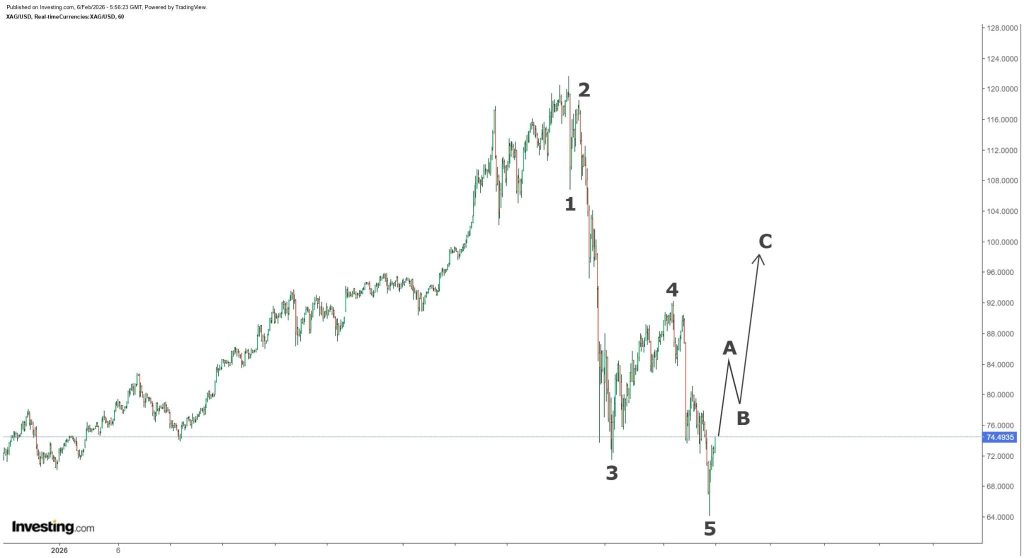
Silver Price Crash Is Over “For Real This Time,” Analyst Predicts a Surge Back Above $90

Silver Price Crash Is Over “For Real This Time,” Analyst Predicts a Surge Back Above $90

Silver has been taking a beating lately, and the Silver price hasn’t exactly been acting like a safe haven. After running up into the highs, the whole move reversed
Share
Captainaltcoin2026/02/07 03:15