Crypto Fear & Greed Index Plummets to 14, Signaling Prolonged Market Anxiety
BitcoinWorld
Crypto Fear & Greed Index Plummets to 14, Signaling Prolonged Market Anxiety
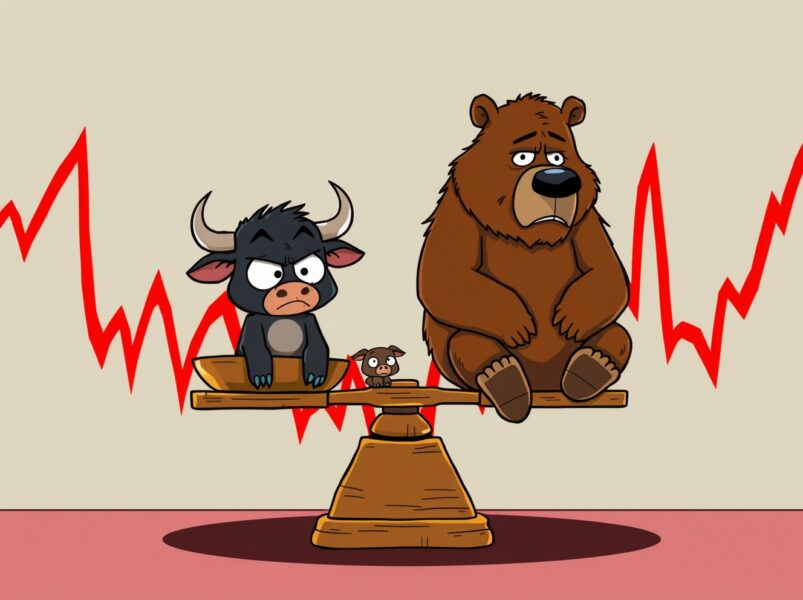
Global cryptocurrency markets continue to exhibit profound caution as the widely monitored Crypto Fear & Greed Index holds firmly at a mere 14, a level analysts classify as ‘extreme fear.’ This critical sentiment gauge, published by Alternative, has remained unchanged, reflecting sustained investor anxiety and a risk-averse climate across digital asset exchanges worldwide. The persistent low reading signals a market grappling with volatility, regulatory scrutiny, and macroeconomic pressures, creating a complex environment for traders and long-term holders alike.
Decoding the Crypto Fear & Greed Index at 14
The Crypto Fear & Greed Index provides a quantifiable snapshot of market psychology. It operates on a scale from 0 to 100, where 0 represents maximum fear and 100 indicates extreme greed. A reading of 14, therefore, sits deep within the ‘extreme fear’ territory. This metric is not a simple survey; it is a composite index derived from multiple data sources designed to capture the market’s emotional temperature objectively.
Market analysts emphasize that the index’s calculation methodology lends it significant credibility. The formula incorporates six weighted factors:
- Volatility (25%): Measures current price swings against historical averages. High volatility often correlates with fear.
- Market Momentum/Volume (25%): Analyzes trading volume and price momentum. Unusual volume during downturns can indicate panic selling.
- Social Media (15%): Scans platforms like Twitter and Reddit for sentiment and discussion volume.
- Surveys (15%): Polls market participants directly for their outlook.
- Dominance (10%): Tracks Bitcoin’s share of the total crypto market cap. Rising dominance can signal a ‘flight to safety.’
- Trends (10%): Analyzes Google search volume for Bitcoin-related queries.
Consequently, the current score of 14 results from a confluence of negative signals across most, if not all, of these data points. The stagnation at this level suggests these fear-driven conditions are becoming entrenched rather than representing a momentary spike.
Historical Context and Market Impact of Extreme Fear
To understand the gravity of a ’14’ reading, historical comparison is essential. The index has visited similar depths during major market crises. For instance, it plunged to single digits during the COVID-19 market crash of March 2020 and again following the collapse of the Terra-Luna ecosystem in May 2022. However, seasoned investors often view such periods of extreme fear through a contrarian lens.
| Period | Index Low | Subsequent Market Action (6 Months Later) |
|---|---|---|
| March 2020 | 8 | Bitcoin price increased over 300% |
| May 2022 | 8 | Market continued decline before stabilizing |
| November 2022 (FTX Collapse) | 20 | Gradual recovery began in early 2023 |
This pattern highlights a critical market axiom: periods of maximum fear can sometimes precede significant buying opportunities, although timing remains exceptionally difficult. The immediate impact of sustained extreme fear is palpable. Trading volumes often contract in spot markets, while derivatives markets may see elevated funding rates or changes in open interest as leverage unwinds. Furthermore, development activity on major blockchain networks can sometimes increase during these periods, as builders focus on fundamentals absent speculative frenzy.
Expert Analysis on Sustained Low Sentiment
Financial psychologists and behavioral economists point to several reinforcing mechanisms at play. The ‘availability heuristic’ causes investors to overweight recent negative news, such as exchange issues or regulatory actions, making fear feel more prevalent than it might be statistically. Additionally, ‘herding behavior’ can amplify selling pressure as participants see others exit the market. Market structure experts also note the role of large, institutional holders. Their risk management protocols can trigger automated selling at certain volatility thresholds, mechanically driving the index lower irrespective of retail sentiment.
From a fundamental perspective, analysts are scrutinizing on-chain data for signals that contradict the fearful sentiment. Metrics like the number of long-term holders not moving their coins, the rate of new address creation, and exchange net flows provide a more nuanced picture. If these fundamentals remain strong while sentiment is weak, it can create a divergence that historically resolves with a sentiment shift. The current environment demands a clear distinction between price-driven sentiment and underlying network health, which are not always perfectly correlated.
Conclusion
The Crypto Fear & Greed Index reading of 14 serves as a powerful barometer of the prevailing anxiety in digital asset markets. This extreme fear level, rooted in concrete data from volatility, volume, and social metrics, reflects a cautious and risk-off environment. While historically such depths have sometimes marked cyclical lows, they also indicate real stress and uncertainty among participants. Investors and observers should treat this index not as a direct trading signal, but as crucial contextual data—one piece of a larger puzzle that includes on-chain fundamentals, macroeconomic conditions, and regulatory developments. The index’s persistence at this level will be a key metric to watch for signs of either deepening capitation or the first flickers of returning confidence.
FAQs
Q1: What does a Crypto Fear & Greed Index score of 14 mean?
A score of 14 falls into the ‘Extreme Fear’ classification. It indicates that current market data from volatility, trading volume, social media, and surveys is overwhelmingly negative, reflecting high levels of investor anxiety and risk aversion.
Q2: Is extreme fear always a bad sign for cryptocurrency prices?
Not necessarily. While extreme fear accompanies price declines, it is often viewed as a contrarian indicator. Historically, some of the best long-term buying opportunities have occurred when the index reached extreme fear levels, though timing a precise bottom remains challenging.
Q3: How often is the Crypto Fear & Greed Index updated?
The index is updated daily, typically based on 24-hour rolling data. This allows it to capture recent shifts in market sentiment and provide a near real-time gauge of investor psychology.
Q4: What is the difference between ‘fear’ and ‘volatility’ in the index?
Volatility is one of six inputs (making up 25% of the score). It measures the rate and magnitude of price changes. ‘Fear’ is the overall emotional conclusion derived from combining volatility with the other five factors: volume, social media, surveys, dominance, and search trends.
Q5: Can the index predict short-term price movements?
The index is a sentiment indicator, not a predictive price model. It describes the current emotional state of the market, which can influence decisions but does not guarantee a specific price direction. It should be used alongside technical and fundamental analysis.
Q6: Has the index ever been wrong?
As a reflection of sentiment, the index is not ‘right’ or ‘wrong,’ but it can sometimes be a lagging indicator. Sentiment can remain fearful even as prices begin to stabilize or rise slowly, creating a divergence. It best serves as a context tool rather than an absolute guide.
This post Crypto Fear & Greed Index Plummets to 14, Signaling Prolonged Market Anxiety first appeared on BitcoinWorld.
You May Also Like

Google's AP2 protocol has been released. Does encrypted AI still have a chance?