The post Gold Takes the Lead as Dollar Slides, BTC Recast as Companion appeared on BitcoinEthereumNews.com. Bitcoin (BTC) has long been promoted by its most ardentThe post Gold Takes the Lead as Dollar Slides, BTC Recast as Companion appeared on BitcoinEthereumNews.com. Bitcoin (BTC) has long been promoted by its most ardent

Gold Takes the Lead as Dollar Slides, BTC Recast as Companion

Bitcoin (BTC) has long been promoted by its most ardent supporters as a hedge against monetary debasement, but as the US dollar slides to multi-year lows, the market’s clearest flight to safety is emerging elsewhere: in gold.

Over the past year, investors have rediscovered the precious metal through both traditional channels and blockchain rails. Tokenized gold products like XAUt are gaining traction alongside spot prices, offering digital-native exposure to a centuries-old safe haven as inflation concerns and currency stress intensify.

Bitcoin is still very much in the picture, though increasingly as a secondary beneficiary. Actively managed exchange-traded funds (ETFs) are pairing BTC with gold as complementary defenses against fiat erosion, positioning Bitcoin less as a proven hedge and more as a higher-volatility companion to hard assets.

This week’s Crypto Biz traces that shift, from tokenized bullion and hybrid ETFs to Wall Street’s growing embrace of stablecoins and crypto banking charters. In periods of currency stress, gold still leads. Crypto is learning how to follow.

Tokenized gold surges as dollar hits four-year low

It’s not just traditional investors piling into gold. Digital asset investors are increasingly turning to tokenized versions of the precious metal as the US dollar weakens and concerns over currency debasement and inflation intensify.

Tether said its gold-backed stablecoin, Tether Gold (XAUt), now accounts for more than half of the tokenized gold market, with a total market value of more than $2.2 billion. As of the end of the fourth quarter, 520,089 XAUt tokens were in circulation, each backed one-to-one by physical gold bullion, according to the company.

The surge in demand comes as gold prices climbed above $5,300 per troy ounce, up about 90% over the past year, while the US dollar continues to erode. Bloomberg’s spot US dollar index recently fell to its lowest level in four years.

Tether Gold (XAUt) market capitalization. Source: CoinMarketCap

Bitwise pairs Bitcoin and gold in actively managed ETF

Asset manager Bitwise has launched a new ETF designed to protect investors from currency debasement by pairing Bitcoin with gold and other precious metals.

The Bitwise Proficio Currency Debasement ETF debuted on the New York Stock Exchange under the ticker BPRO. The actively managed fund is designed to hedge against the declining purchasing power of the US dollar and other fiat currencies.

The portfolio includes exposure to Bitcoin, precious metals and mining stocks and is designed for wealth managers seeking Bitcoin exposure without directly allocating to a crypto-specific product.

Source: Matt Hougan

Fidelity unveils US dollar stablecoin

Fidelity is gearing up to launch its own dollar-pegged stablecoin as it pushes deeper into the regulated digital finance space. 

Called the Fidelity Digital Dollar (FIDD), the upcoming stablecoin is expected to align with the GENIUS Act’s federal standards for payments-focused digital dollars, including reserve backing and oversight requirements. Fidelity executives have pitched stablecoins as foundational for real-time settlement and 24/7 payment infrastructure, signaling a shift toward mainstream use beyond trading.

The initiative comes as traditional finance heavyweights explore blockchain rails and regulators craft clearer rules for US stablecoins, marking another step in institutional adoption of crypto-native settlement systems.

Source: Cointelegraph

Nomura-backed digital asset company eyes US banking charter

Laser Digital, a Nomura-backed digital asset company, has reportedly applied for a US national bank trust charter with the Office of the Comptroller of the Currency, marking a major push to bring crypto services into the US-regulated banking framework.

If approved, the charter would let Laser Digital operate nationwide under a single federal license, bypassing state-by-state custody requirements, and offering spot trading for digital assets without taking customer deposits.

The move comes amid a broader surge in crypto charter applications in a more permissive US regulatory climate, with several digital asset companies eyeing federal trust bank status to deepen integration with traditional finance.

Crypto Biz is your weekly pulse on the business behind blockchain and crypto, delivered directly to your inbox every Thursday.

Cointelegraph is committed to independent, transparent journalism. This news article is produced in accordance with Cointelegraph’s Editorial Policy and aims to provide accurate and timely information. Readers are encouraged to verify information independently. Read our Editorial Policy https://cointelegraph.com/editorial-policy

Source: https://cointelegraph.com/news/crypto-biz-gold-hedge-bitcoin?utm_source=rss_feed&utm_medium=feed&utm_campaign=rss_partner_inbound

Disclaimer: The articles reposted on this site are sourced from public platforms and are provided for informational purposes only. They do not necessarily reflect the views of MEXC. All rights remain with the original authors. If you believe any content infringes on third-party rights, please contact service@support.mexc.com for removal. MEXC makes no guarantees regarding the accuracy, completeness, or timeliness of the content and is not responsible for any actions taken based on the information provided. The content does not constitute financial, legal, or other professional advice, nor should it be considered a recommendation or endorsement by MEXC.

You May Also Like

UK and US Seal $42 Billion Tech Pact Driving AI and Energy Future

UK and US Seal $42 Billion Tech Pact Driving AI and Energy Future

The post UK and US Seal $42 Billion Tech Pact Driving AI and Energy Future appeared on BitcoinEthereumNews.com. Key Highlights Microsoft and Google pledge billions as part of UK US tech partnership Nvidia to deploy 120,000 GPUs with British firm Nscale in Project Stargate Deal positions UK as an innovation hub rivaling global tech powers UK and US Seal $42 Billion Tech Pact Driving AI and Energy Future The UK and the US have signed a “Technological Prosperity Agreement” that paves the way for joint projects in artificial intelligence, quantum computing, and nuclear energy, according to Reuters. Donald Trump and King Charles review the guard of honour at Windsor Castle, 17 September 2025. Image: Kirsty Wigglesworth/Reuters The agreement was unveiled ahead of U.S. President Donald Trump’s second state visit to the UK, marking a historic moment in transatlantic technology cooperation. Billions Flow Into the UK Tech Sector As part of the deal, major American corporations pledged to invest $42 billion in the UK. Microsoft leads with a $30 billion investment to expand cloud and AI infrastructure, including the construction of a new supercomputer in Loughton. Nvidia will deploy 120,000 GPUs, including up to 60,000 Grace Blackwell Ultra chips—in partnership with the British company Nscale as part of Project Stargate. Google is contributing $6.8 billion to build a data center in Waltham Cross and expand DeepMind research. Other companies are joining as well. CoreWeave announced a $3.4 billion investment in data centers, while Salesforce, Scale AI, BlackRock, Oracle, and AWS confirmed additional investments ranging from hundreds of millions to several billion dollars. UK Positions Itself as a Global Innovation Hub British Prime Minister Keir Starmer said the deal could impact millions of lives across the Atlantic. He stressed that the UK aims to position itself as an investment hub with lighter regulations than the European Union. Nvidia spokesman David Hogan noted the significance of the agreement, saying it would…
Share
BitcoinEthereumNews2025/09/18 02:22
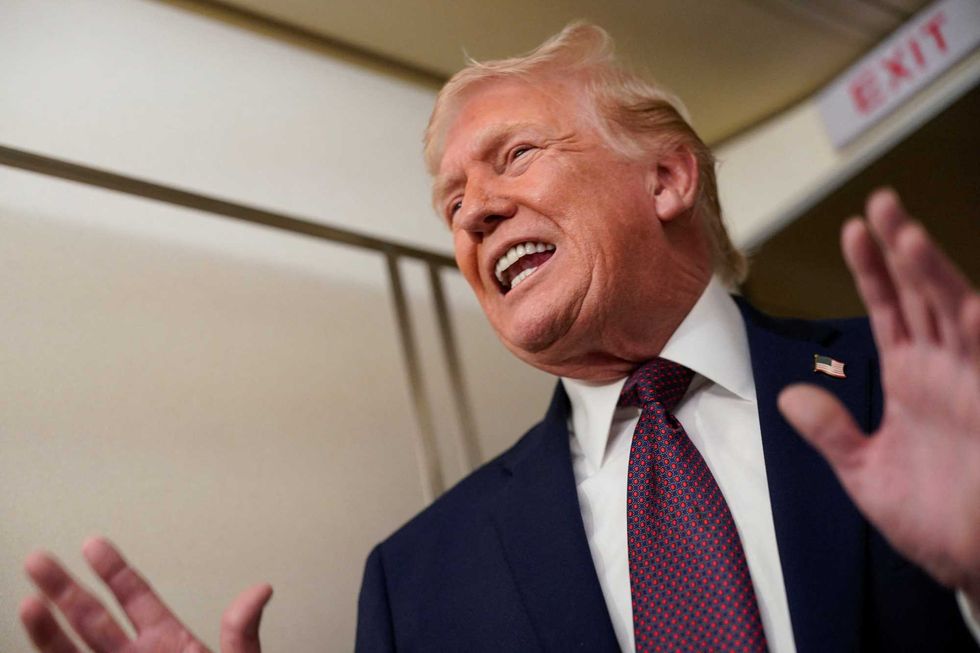
Trump caves on his own snubs as retaliation ploy against Dem governors backfires

Trump caves on his own snubs as retaliation ploy against Dem governors backfires

President Donald Trump on Wednesday walked back a snub he gave to two Democratic Governors. Last week, Trump notably did not invite Democratic governors Wes Moore
Share
Rawstory2026/02/12 10:29
Bitcoin devs cheer block reconstruction stats, ignore security budget concerns

Bitcoin devs cheer block reconstruction stats, ignore security budget concerns

The post Bitcoin devs cheer block reconstruction stats, ignore security budget concerns appeared on BitcoinEthereumNews.com. This morning, Bitcoin Core developers celebrated improved block reconstruction statistics for node operators while conveniently ignoring the reason for these statistics — the downward trend in fees for Bitcoin’s security budget. Reacting with heart emojis and thumbs up to a green chart showing over 80% “successful compact block reconstructions without any requested transactions,” they conveniently omitted red trend lines of the fees that Bitcoin users pay for mining security which powered those green statistics. Block reconstructions occur when a node requests additional information about transactions within a compact block. Although compact blocks allow nodes to quickly relay valid bundles of transactions across the internet, the more frequently that nodes can reconstruct without extra, cumbersome transaction requests from their peers is a positive trend. Because so many nodes switched over in August to relay transactions bidding 0.1 sat/vB across their mempools, nodes now have to request less transaction data to reconstruct blocks containing sub-1 sat/vB transactions. After nodes switched over in August to accept and relay pending transactions bidding less than 1 sat/vB, disparate mempools became harmonized as most nodes had a better view of which transactions would likely join upcoming blocks. As a result, block reconstruction times improved, as nodes needed less information about these sub-1 sat/vB transactions. In July, several miners admitted that user demand for Bitcoin blockspace had persisted at such a low that they were willing to accept transaction fees of just 0.1 satoshi per virtual byte — 90% lower than their prior 1 sat/vB minimum. With so many blocks partially empty, they succumbed to the temptation to accept at least something — even 1 billionth of one bitcoin (BTC) — rather than $0 to fill up some of the excess blockspace. Read more: Bitcoin’s transaction fees have fallen to a multi-year low Green stats for block reconstruction after transaction fees crash After…
Share
BitcoinEthereumNews2025/09/18 04:07