Will XRP hit $1000 a share? — Will XRP hit $1000 a share?
Use this as an educational starting point. The article explains where numbers come from, how to run the simple math yourself, and what signals to watch if fundamentals change. It is not financial advice but a practical toolkit for verifying dramatic price claims.
Short answer: is XRP likely to hit $1,000?
ripple shares price explained
Short version: a $1,000 price for XRP is extremely unlikely under current supply and market conditions, though it is not an absolute impossibility. The XRP Ledger’s issued supply is 100 billion XRP, and that number is the first constraint any price calculation must respect, because price times supply gives market capitalization XRPL documentation.
That arithmetic implies a market cap far larger than the entire crypto market today, and historical and institutional research does not model anywhere near that level of demand, so treat a $1,000 claim as a very low probability scenario under mainstream assumptions CoinMarketCap charts and see live XRP stats on CoinMarketCap’s XRP page.
Advertise responsibly with FinancePolice
Use the checklist later in this article to run the market-cap math yourself; it helps you verify headlines and claims without relying on social media.
Learn about advertising options
Quick reasons up front: the issued supply sets a hard upper bound on tokens available, moving tens or hundreds of trillions of dollars into a single token would require an unprecedented capital shift, and legal and regulatory outcomes still matter to listings and adoption CoinDesk analysis.
What XRP is and how its supply works
Issued supply vs circulating supply
The XRP Ledger issues a fixed total of 100 billion XRP, which is the protocol level issued supply and a key input for any market-cap calculation XRPL documentation.
Issued supply is the total number of tokens created on the ledger. Circulating supply is what market participants treat as available for trading. Analysts may use different supply figures depending on whether they count tokens held in escrow or otherwise locked, and that choice changes implied market-cap numbers.
Ripple historically placed large amounts of XRP into escrow contracts to control token release timing and improve predictability of supply, which affects perceived available supply for markets Ripple blog on escrow. See an escrow-focused analysis from Phemex for further context.
Escrows do not remove tokens from the issued supply total. They may slow releases but do not by themselves change the arithmetic that underlies a $1,000-per-token claim unless tokens are burned or reissued differently.
Market-cap math: what $1,000 per token actually implies
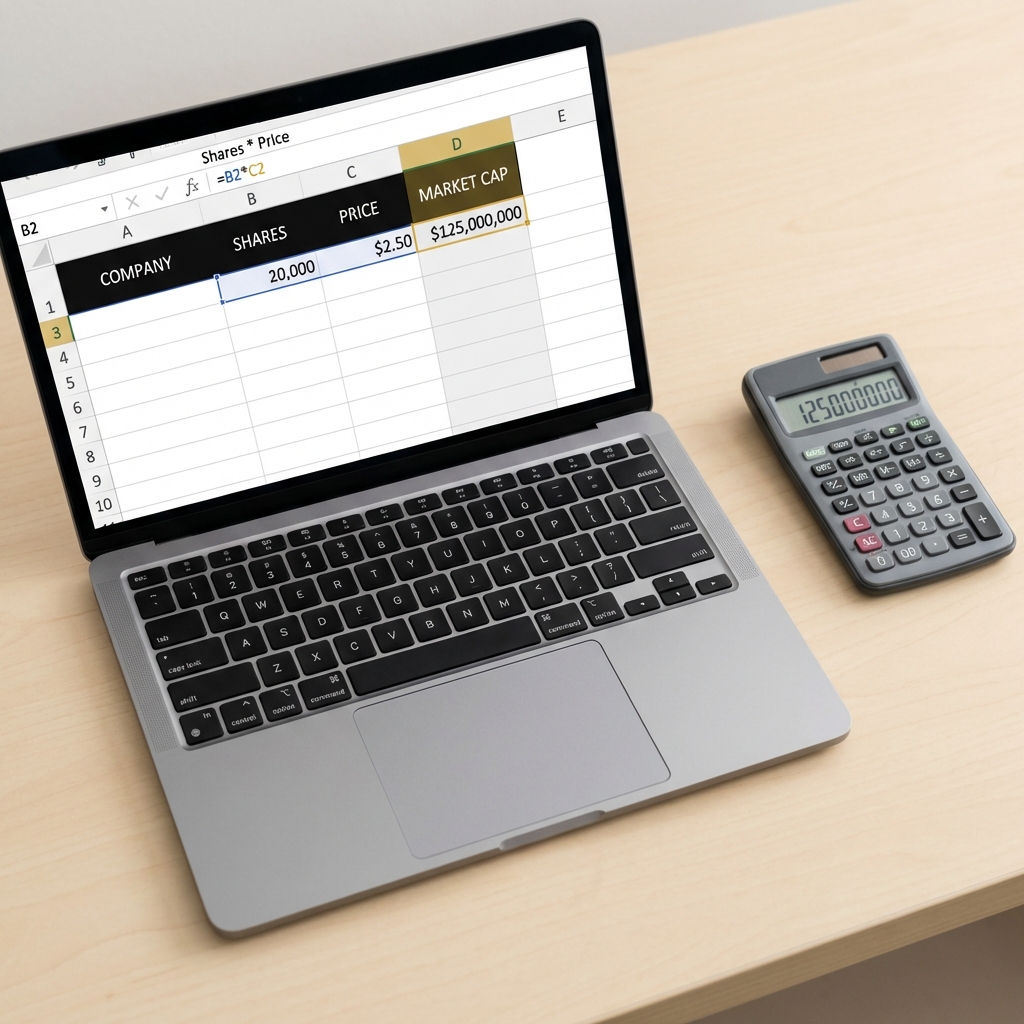
Simple formula: price × supply = market cap
The basic formula is simple: price times supply equals market capitalization. Using the issued supply of 100 billion XRP, 1,000 multiplied by 100,000,000,000 equals about 100 trillion dollars, which is the direct arithmetic result of that price assumption XRPL documentation.
Given the XRP Ledger’s issued supply and current market sizes, a $1,000 price is extremely unlikely under mainstream assumptions; only large supply changes or unprecedented global capital reallocation could make it remotely plausible.
Some analysts use circulating supply instead of issued supply. That lowers the nominal market-cap number if the circulating figure is smaller, but the issued supply remains the protocol ceiling and is the conservative starting point for feasibility checks XRPL documentation.
To make the math reproducible: implied market cap equals assumed price times the supply figure you choose. If you see a headline claiming a $1,000 target but the writer uses a much smaller supply number without stating it, the implied market cap can be misleading CoinMarketCap charts. You can also check live price and supply snapshots on Coinbase’s XRP page.
Where would the money have to come from: global asset context
Comparing the implied XRP market cap to major asset classes
A market capitalization on the order of 100 trillion dollars would be larger than the entire cryptocurrency market and larger than most major public equity markets. Current total crypto market caps are in the trillions, not the tens or hundreds of trillions, so a $1,000-per-XRP scenario requires a reallocation of capital on an unprecedented scale CoinMarketCap charts. For recent market context see our Bitcoin price analysis.
Putting it another way, market structure and global asset allocations matter. Large pools of capital, like pension funds and sovereign wealth funds, typically diversify across asset classes; moving tens of trillions into a single crypto token would face governance, regulatory and liquidity hurdles that make such a flow highly unlikely CoinDesk analysis.
Legal and regulatory factors that change the odds
What U.S. court rulings have and have not settled
U.S. litigation around XRP produced partial rulings that reduced some uncertainty for programmatic sales, but appeals and different jurisdictional rules mean legal risk remains a material factor for price and listings Reuters coverage.
Legal clarity can influence whether exchanges list a token, how institutional desks treat it, and how compliance teams evaluate custody. Those downstream effects can change demand, but they do not change the raw supply math that underpins a $1,000 claim Reuters coverage.
How mainstream research and exchange notes model XRP scenarios
Typical probabilistic outcomes from institutional notes
Institutional research and exchange notes published in 2024 and 2025 generally model modest upside for XRP, often single to low double digit multiples under plausible adoption and regulatory assumptions, rather than extreme prices such as $1,000 21Shares research note.
Professional forecasts rely on structured inputs: supply assumptions, adoption curves, liquidity, and regulatory risk. Those inputs tend to constrain modeled outcomes well below the scale implied by a $1,000 price target 21Shares research note.
What would have to change for $1,000 to become plausible
Supply and tokenomics changes that would matter
To make a $1,000 price path materially more plausible, the base math must change. That could include supply reductions like large token burns or re-denominations that effectively shrink the supply figure used in market-cap calculations XRPL documentation.
lets readers compute implied market cap from price and supply
–
USD
Enter price and supply to see implied market cap
Even with tokenomics changes, demand-side shifts would still be needed. A credible path to $1,000 also requires unprecedented global re-allocation of capital into one asset, plus legal clarity and deep liquidity to execute such flows without crushing slippage CoinMarketCap charts. Read more about execution and risk in strategies to reduce risk.
Finally, multi-jurisdictional regulatory settlements or sustained institutional adoption could raise probabilities relative to today, but those outcomes remain conditional and would have to be paired with supply changes to overcome the pure arithmetic constraint Reuters coverage.
Typical mistakes and pitfalls people make when estimating crypto prices
Mixing up supply figures
One common error is failing to state which supply figure is used for implied market-cap math. Using circulating supply rather than issued supply without disclosure can make huge price targets look easier than they are, because the denominator changes the result XRPL documentation.
Ignoring liquidity and execution costs
Another mistake is extrapolating percentage gains from small trading volumes without accounting for liquidity, slippage and market depth. Moving very large sums into a token will change the price and often make headline gains unachievable in practice CoinDesk analysis.
How to monitor credible signals and primary sources
Which primary sources to follow
For supply and protocol details, check the XRPL documentation and official ledger resources; they are the authoritative source for issued token counts and protocol rules XRPL documentation.
For market totals and live charts, use major market-cap aggregators and their charts to see how the total crypto market compares to any implied single-token market cap CoinMarketCap charts.
For market totals and live charts, use major market-cap aggregators and their charts to see how the total crypto market compares to any implied single-token market cap CoinMarketCap charts.
Watch institutional research notes and announcements for updated adoption or regulatory signals. Research notes can change probability estimates because they often adjust inputs like adoption curves and legal assumptions 21Shares research note. Also see our crypto coverage for related commentary.
A practical checklist readers can use before believing bold price claims
Five quick verification steps
1) Confirm which supply figure the claim uses. 2) Compute the implied market cap using price multiplied by that supply. 3) Compare that implied market cap to the total crypto market and major public markets. 4) Look for credible institutional research that supports the assumptions. 5) Verify legal and regulatory status in key jurisdictions XRPL documentation.
How to do the market-cap check yourself
One-line guide: implied market cap equals assumed price times the supply number you choose. If the resulting market cap is larger than major asset classes, treat the price claim with skepticism until you see a clear change in supply or demand fundamentals CoinMarketCap charts.
Worked examples: conservative, optimistic and extreme scenarios
Conservative example using current metrics
Conservative scenario: assume a modest multiple on current market prices and no major token burns. Institutional notes often model single to low double digit upside under this approach, which keeps implied market caps within plausible orders of magnitude for growth without wholesale reallocation of global assets 21Shares research note.
Optimistic professional scenarios
Optimistic but still mainstream scenarios raise adoption, improve on-ramps and see regulatory clarity. These can push prices substantially higher than today, but professional work typically stops short of extreme numbers because the supply math and market liquidity remain binding constraints 21Shares research note.
Why the extreme $1,000 example breaks the scale
Extreme example: using the full 100 billion issued supply, $1,000 per token implies roughly a 100 trillion dollar market cap, which is orders of magnitude beyond mainstream scenarios and the current crypto market, making it a different scale class entirely XRPL documentation.
Common reader questions and quick answers
What supply number should I use?
Use the issued supply as a conservative baseline for implied market-cap checks, and be explicit if you use a smaller circulating figure for scenario work XRPL documentation.
Does a court ruling change price tomorrow?
Court rulings can change market sentiment and exchange policy, but they rarely create immediate structural reallocation of global capital; legal clarity shifts probability but does not automatically overcome supply and market-cap constraints Reuters coverage.

Conclusion: the practical bottom line and next steps
One-paragraph summary
In practice, supply and implied market-cap math make a $1,000-per-XRP outcome highly implausible under current conditions. The XRPL’s 100 billion issued supply is the arithmetic ceiling, and current market sizes and institutional forecasts do not support the level of demand required to reach that price XRPL documentation.
What readers can do next
Run the checklist in this article, monitor XRPL documentation for supply updates, follow market-cap aggregators for totals and charts, and watch institutional research and legal developments to update probabilities. Use FinancePolice as an educational starting point, not financial advice CoinMarketCap charts.
Use the issued supply from the XRP Ledger as a conservative baseline and state explicitly if you use a smaller circulating figure for scenario checks.
A court ruling can change sentiment and listings, but it is unlikely to produce the vast capital reallocation needed to make $1,000 plausible immediately.
Check XRPL documentation for issued supply and major market-cap aggregators for live totals and charts to compare implied market caps.
References
- https://xrpl.org/xrp.html
- https://coinmarketcap.com/charts/
- https://coinmarketcap.com/currencies/xrp/
- https://www.coindesk.com/markets/2024/11/20/why-single-token-market-cap-assumptions-break-when-scaled/
- https://ripple.com/insights/introducing-xrp-escrow-to-improve-predictability-of-supply/
- https://phemex.com/blogs/xrp-escrow-analysis-price-prediction
- https://www.reuters.com/technology/us-judge-rules-some-xrp-sales-not-securities-partial-win-ripple-2023-07-13/
- https://financepolice.com/advertise/
- https://www.21shares.com/research/xrp-outlook-2025
- https://www.coinbase.com/price/xrp
- https://financepolice.com/bitcoin-price-analysis-btc-reclaims-92000-as-market-awaits-fed-decision/
- https://financepolice.com/strategies-to-reduce-risk-in-cryptocurrency-investments-through-diversification-in-2025/
- https://financepolice.com/category/crypto/
You May Also Like

LUNC Burns Spike 74%, But Technical Price Setup Dims Hope

Vivian Health Announces Leadership Changes; Appoints Bill Kong CEO