Ethereum’s Staking Boom Is Changing the Market, But Investors Are Increasingly Favoring ZKP’s Infrastructure-First Model
Ethereum is seeing a structural shift in how institutional exposure is built, with staking moving from a secondary feature into a core component of market design. Fully staked exchange-traded products are now live in Europe, and similar structures are expected in the U.S., as asset managers push for yield-generating exposure rather than passive price tracking. This evolution is reshaping how ETH is positioned, traded, and held across institutional portfolios.
Meanwhile, Zero Knowledge Proof (ZKP) is being evaluated through a different lens. Instead of yield mechanics or ETF design, attention is shifting toward the importance of ZKP as an infrastructure project and how its architecture supports real system-level use cases.
This contrast is shaping how participants define the best crypto to buy now, with ZKP increasingly drawing traders due to its execution quality, transparency, and real-world applicability.
Ethereum Staking Becomes Institutional Standard
Ethereum staking is no longer treated as an experimental feature. Institutional products are now being built around the assumption that ETH exposure should generate native yield.
Key developments include:
- Fully staked ETH ETPs already live in Europe
- U.S.-staked ETH ETFs expected to follow
- Institutional products using liquid staking tokens
- Staking yields around 3%, shaping return models
 Instead of holding idle ETH for liquidity, asset managers are increasingly deploying capital into fully staked structures that maintain redemption flexibility while maximising yield.
Staking Changes How ETH Trades
With withdrawals now functioning smoothly, ETH trades more like a yield-bearing asset than a locked-up speculative token. Investors can scale exposure dynamically while maintaining income through staking rewards.
This has three major implications:
- Selling pressure is structurally reduced
- ETH becomes closer to an income instrument
- Institutional conviction extends holding periods
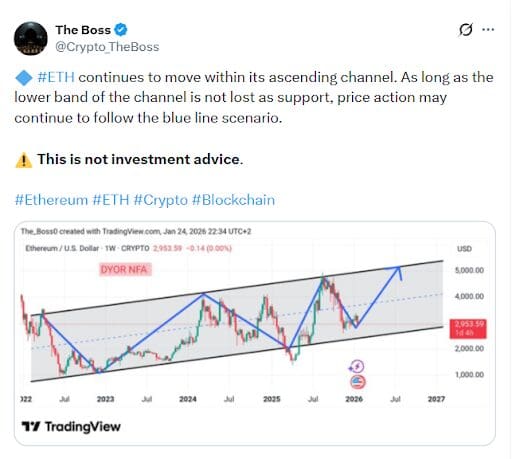 Rather than rotating in and out of positions, large allocators are increasingly committing ETH for multi-year horizons, treating staking as a long-term portfolio component.
What Is Zero Knowledge Proof (ZKP)?
ZKP operates as a verification-first blockchain system designed to enforce trust through cryptography rather than economic incentives. Its core function is to allow participants to prove outcomes without revealing internal data or execution logic.
In practical terms, ZKP supports systems that require:
- Mathematical verification instead of trust assumptions
- Privacy by default across computation layers
- Deterministic execution rules
- Cryptographic accountability
ZKP reframes blockchain from a financial ledger into a computational integrity layer.
ZKP’s Infrastructure Model and System Credibility
ZKP is increasingly being evaluated through its underlying architecture rather than short-term market behaviour. Its design is centred on provable system execution, where network operations are governed by cryptographic rules instead of discretionary control.
Key structural strengths of ZKP include:
- Transparent protocol design
- Cryptographic verification logic
- Infrastructure-first development focus
- Clear technical use cases across computation and privacy
Rather than positioning itself around narratives or speculative cycles, ZKP is structured as a foundational system for privacy-preserving computation and verifiable execution.
Why ZKP Stands Out as an Infrastructure Project
ZKP’s value proposition is directly linked to its technical function. The network is designed to support real system activity, where participation and validation are enforced through mathematical proofs.
ZKP stands out because:
- Its value is tied to cryptographic execution
- Adoption is driven by real system usage
- Execution logic is publicly auditable
- Utility exists independently of short-term price movements
 This positions ZKP as an infrastructure-layer project, built around system integrity, verification, and long-term applicability rather than market cycles.
The Bottom Line
Ethereum’s staking evolution shows how crypto markets are shifting toward yield-based, institutionally structured assets. Fully staked products and long-term positioning reflect growing confidence in blockchain as financial infrastructure rather than speculative trading.
But Zero Knowledge Proof reflects a parallel shift. Instead of financial yield, ZKP positions blockchain as a trust and verification layer for intelligent systems. Its legitimacy is grounded in cryptographic design, transparent mechanics, and real computational use cases.
As capital becomes more selective, projects built around verifiable infrastructure rather than marketing narratives are increasingly shaping what the best crypto presale to buy now looks like.
 Explore Zero Knowledge Proof:
Website: https://zkp.com/
Auction: http://buy.zkp.com/
X: https://x.com/ZKPofficial
Telegram: https://t.me/ZKPofficial
FAQs
- Why is Ethereum staking important for institutions?
It allows ETH exposure with built-in yield, better capital efficiency, and reduced reliance on passive price speculation.
- What problem does ZKP solve?
ZKP enables systems to verify computation and data correctness without exposing sensitive information.
- Why is ZKP considered a strong infrastructure project?
Because it is built around cryptographic verification, transparent execution rules, and real technical use cases.
You May Also Like

Institutions Now Control Nearly a Quarter of Available Bitcoin Supply

XRP bulls brace for key support retest as Bloomberg’s McGlone sounds alarm