Cryptocurrency’s traditional four-year cycle has collapsed, replaced by a new market structure where liquidity concentration and investor positioning now determineCryptocurrency’s traditional four-year cycle has collapsed, replaced by a new market structure where liquidity concentration and investor positioning now determine

Wintermute Says Crypto’s Bull Cycle Is Over – Three Forces Will Drive 2026

2026/01/20 19:24
4 min read

Cryptocurrency’s traditional four-year cycle has collapsed, replaced by a new market structure where liquidity concentration and investor positioning now determine price action, according to a comprehensive year-end analysis from leading OTC desk Wintermute.

The firm’s proprietary trading data reveals that 2025 marked a fundamental shift in how digital assets trade, with the year’s muted performance indicating crypto’s transition from speculation-driven rallies to a more institutionally anchored asset class.

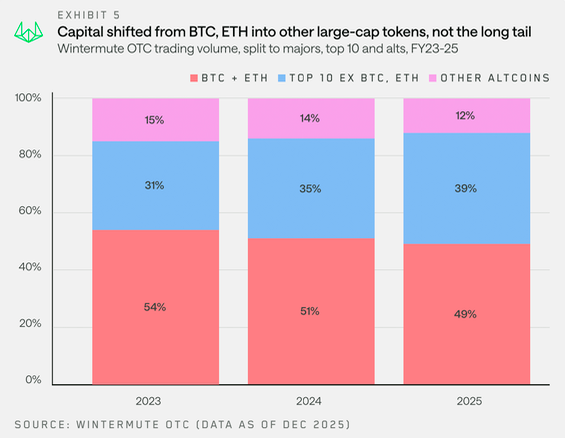
Wintermute’s OTC flow data shows the historic pattern of Bitcoin gains recycling into Ethereum, then blue chips, and finally altcoins has weakened dramatically.
2026 Crypto's Bull Cycle - Wintermute ChartSource: Wintermute

Exchange-traded funds and digital asset treasury companies evolved into what the firm describes as “walled gardens,” providing sustained demand for large-cap assets without naturally rotating capital into the broader market.

With retail interest diverted toward equities, 2025 became a year of extreme concentration where a handful of major tokens absorbed the vast majority of new capital while the rest of the market struggled.

2026 Crypto's Bull Cycle - Wintermute ChartSource: Wintermute

Traditional Seasonality Shattered by Structural Shifts

Trading activity in 2025 followed a distinctly different pattern than previous years, breaking what had felt like seasonal rhythms.

Early-year optimism around the pro-crypto U.S. administration quickly disappointed as risk sentiment deteriorated sharply through the first quarter when memecoin and AI-agent narratives faded.

Trump’s tariff announcement on April 2 further pressured markets, concentrating activity early in the year before broad softening through spring and summer.

The late-year pickup seen in 2023 and 2024 failed to materialize, shattering narratives around “Uptober“ and year-end rallies.

Wintermute’s data reveals these were never true seasonal patterns but rather rallies driven by idiosyncratic catalysts like ETF approvals in 2023 and the new U.S. administration in 2024.

Markets became increasingly choppy as macro forces took control, with flows turning reactive and episodic around headlines without sustained momentum.

Altcoin rallies shortened dramatically, averaging roughly 19 days in 2025, down from 61 days the prior year.

2026 Crypto's Bull Cycle - Wintermute ChartSource: Wintermute

Themes including memecoin launchpads, perpetual DEXs, and the x402 meta sparked brief activity bursts but failed to develop into durable market-wide rallies, largely due to choppy macro conditions and market fatigue after 2024’s excesses.

2026 Crypto's Bull Cycle - Wintermute ChartSource: Wintermute

Institutional Engagement Deepens Despite Muted Returns

Despite modest price activity, institutional counterparties showed staying power through 2025.

Wintermute saw 23% year-over-year growth among institutional participants, including crypto-native funds, asset managers, and traditional financial institutions.

Source: Wintermute

Engagement deepened materially, with activity becoming more sustained and focused on deliberate execution rather than exploratory positioning.

The firm’s derivatives data also reveals options activity more than doubled year-over-year, with systematic yield and risk management strategies dominating flow for the first time rather than one-off directional bets.

Source: Wintermute

By the fourth quarter, options notional reached 3.8 times first-quarter levels, while trade counts doubled, indicating sustained growth across both ticket size and frequency.

Both institutional and retail investors rotated back into majors by year-end following the October 10 deleveraging event that triggered roughly $19 billion in liquidations over 24 hours.

Source: Wintermute

Altcoin open interest also collapsed by 55%, from around $70 billion to $30 billion by mid-December, as forced unwinding flushed out excess leverage concentrated outside Bitcoin and Ethereum.

Three Catalysts Could Broaden 2026 Recovery

Wintermute identifies three scenarios that would need to materialize for market breadth to recover beyond large-cap concentration.

First, ETFs and DATs must broaden their mandates, with early signs emerging in the Solana and XRP ETF filings.

Second, strong rallies in Bitcoin or Ethereum could generate wealth effects that spill over into the broader market, similar to 2024’s pattern, though capital recycling remains uncertain.

Third and least likely, retail investor mindshare could rotate back from equities and AI themes toward crypto, bringing fresh capital inflows and stablecoin minting.

2025 fell short of the expected rally, but it may mark the beginning of crypto’s transition from speculative to an established asset class,” Wintermute’s analysis concludes.

Independent analysis from Adler Asset Management reinforces the ongoing deleveraging theme, extending into 2026.

Adler pointed out that the Bitcoin Advanced Sentiment Index collapsed from the High Bull zone around 80% to 44.9%, breaking below neutral 50% and signaling a market regime shift.

2026 Crypto's Bull Cycle - Advanced Sentiment Index ChartSource: Axel Adler Jr

The largest long liquidation cascade over their entire observation period occurred on January 19, with over $205 million liquidated in a single hour as the price dropped from $95,400 to $92,600 within 24 hours.

Whether concentration persists or liquidity broadens beyond a handful of large-cap assets will determine 2026 outcomes, with understanding where capital can flow and what structural changes are needed proving critical for navigating the post-cycle crypto market.

Disclaimer: The articles reposted on this site are sourced from public platforms and are provided for informational purposes only. They do not necessarily reflect the views of MEXC. All rights remain with the original authors. If you believe any content infringes on third-party rights, please contact service@support.mexc.com for removal. MEXC makes no guarantees regarding the accuracy, completeness, or timeliness of the content and is not responsible for any actions taken based on the information provided. The content does not constitute financial, legal, or other professional advice, nor should it be considered a recommendation or endorsement by MEXC.

You May Also Like

Cashing In On University Patents Means Giving Up On Our Innovation Future

Cashing In On University Patents Means Giving Up On Our Innovation Future

The post Cashing In On University Patents Means Giving Up On Our Innovation Future appeared on BitcoinEthereumNews.com. “It’s a raid on American innovation that would deliver pennies to the Treasury while kneecapping the very engine of our economic and medical progress,” writes Pipes. Getty Images Washington is addicted to taxing success. Now, Commerce Secretary Howard Lutnick is floating a plan to skim half the patent earnings from inventions developed at universities with federal funding. It’s being sold as a way to shore up programs like Social Security. In reality, it’s a raid on American innovation that would deliver pennies to the Treasury while kneecapping the very engine of our economic and medical progress. Yes, taxpayer dollars support early-stage research. But the real payoff comes later—in the jobs created, cures discovered, and industries launched when universities and private industry turn those discoveries into real products. By comparison, the sums at stake in patent licensing are trivial. Universities collectively earn only about $3.6 billion annually in patent income—less than the federal government spends on Social Security in a single day. Even confiscating half would barely register against a $6 trillion federal budget. And yet the damage from such a policy would be anything but trivial. The true return on taxpayer investment isn’t in licensing checks sent to Washington, but in the downstream economic activity that federally supported research unleashes. Thanks to the bipartisan Bayh-Dole Act of 1980, universities and private industry have powerful incentives to translate early-stage discoveries into real-world products. Before Bayh-Dole, the government hoarded patents from federally funded research, and fewer than 5% were ever licensed. Once universities could own and license their own inventions, innovation exploded. The result has been one of the best returns on investment in government history. Since 1996, university research has added nearly $2 trillion to U.S. industrial output, supported 6.5 million jobs, and launched more than 19,000 startups. Those companies pay…
Share
BitcoinEthereumNews2025/09/18 03:26
China Blocks Nvidia’s RTX Pro 6000D as Local Chips Rise
China Blocks Nvidia’s RTX Pro 6000D as Local Chips Rise

The post China Blocks Nvidia’s RTX Pro 6000D as Local Chips Rise appeared on BitcoinEthereumNews.com. China Blocks Nvidia’s RTX Pro 6000D as Local Chips Rise China’s internet regulator has ordered the country’s biggest technology firms, including Alibaba and ByteDance, to stop purchasing Nvidia’s RTX Pro 6000D GPUs. According to the Financial Times, the move shuts down the last major channel for mass supplies of American chips to the Chinese market. Why Beijing Halted Nvidia Purchases Chinese companies had planned to buy tens of thousands of RTX Pro 6000D accelerators and had already begun testing them in servers. But regulators intervened, halting the purchases and signaling stricter controls than earlier measures placed on Nvidia’s H20 chip. Image: Nvidia An audit compared Huawei and Cambricon processors, along with chips developed by Alibaba and Baidu, against Nvidia’s export-approved products. Regulators concluded that Chinese chips had reached performance levels comparable to the restricted U.S. models. This assessment pushed authorities to advise firms to rely more heavily on domestic processors, further tightening Nvidia’s already limited position in China. China’s Drive Toward Tech Independence The decision highlights Beijing’s focus on import substitution — developing self-sufficient chip production to reduce reliance on U.S. supplies. “The signal is now clear: all attention is focused on building a domestic ecosystem,” said a representative of a leading Chinese tech company. Nvidia had unveiled the RTX Pro 6000D in July 2025 during CEO Jensen Huang’s visit to Beijing, in an attempt to keep a foothold in China after Washington restricted exports of its most advanced chips. But momentum is shifting. Industry sources told the Financial Times that Chinese manufacturers plan to triple AI chip production next year to meet growing demand. They believe “domestic supply will now be sufficient without Nvidia.” What It Means for the Future With Huawei, Cambricon, Alibaba, and Baidu stepping up, China is positioning itself for long-term technological independence. Nvidia, meanwhile, faces…
Share
BitcoinEthereumNews2025/09/18 01:37
Silver Price Crash Is Over “For Real This Time,” Analyst Predicts a Surge Back Above $90

Silver Price Crash Is Over “For Real This Time,” Analyst Predicts a Surge Back Above $90

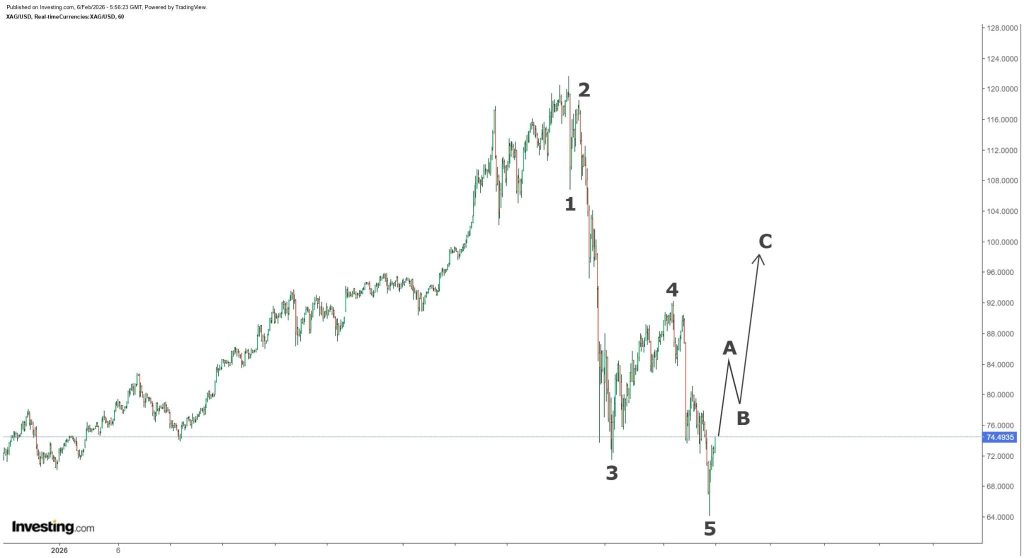
Silver has been taking a beating lately, and the Silver price hasn’t exactly been acting like a safe haven. After running up into the highs, the whole move reversed
Share
Captainaltcoin2026/02/07 03:15