U.S. Crypto Regulation Debate Heats Up as Hoskinson Criticises CLARITY Act Endorsement
- Cardano founder Charles Hoskinson attacked Ripple CEO Brad Garlinghouse for requesting that he publicly support the U.S. Digital Asset Market CLARITY Act, ” Terrible draft of legislation “.
- This case highlights the deep splits within the crypto industry over the best way to address federal crypto regulation and the balance between clarity and innovation.
Cardano founder Charles Hoskinson has attacked Ripple CEO Brad Garlinghouse for publicly supporting the Digital Asset Market CLARITY Act—the most important legislative effort currently in the United States to bring regulatory definition to the digital asset industry. Hoskinson’s comments came in a public broadcast on X and reflect building tensions among leading crypto figures over the direction and content of U.S. crypto policy.
The CLARITY Act, now under consideration by the United States Senate, is intended as a comprehensive guiding document clarifying the legal status of digital assets in general and the respective positions of the SEC and CFTC as regulatory agencies. Unfortunately, the draft now in circulation has been criticised by others like Hoskinson for having substantial gaps in policy formulation.
Hoskinson’s argumentative style is focused on the point made by Garlinghouse, that it is always better to have imperfect legislation than it is to have a regulatory environment of uncertainty. This is because Hoskinson relies heavily on Garlinghouse’s statements as evidence in support of his argument, and he uses them to question his logic regarding a bill which he feels does not provide sufficient support for smaller projects.
Industry Divide on Regulations and Innovations
Garlinghouse has been a rather vocal advocate for the CLARITY Act, presenting the legislation as a requirement to achieve a level of legal clarity for the overall cryptocurrency market. He has repeatedly pointed to the importance of having a clear set of rules to prevent capital and innovation from flowing to a more favourable jurisdiction for cryptocurrency activity.
Legislators and industry players are still engaged in talks aimed at fine tuning the language used in the bill as both sides seek a middle ground regarding this issue, as this will affect how digital assets are regulated.
The public sparring between Charles Hoskinson and Brad Garlinghouse regarding the CLARITY Act demonstrates the clear rift in the crypto community’s treatment of US regulations. While some executives are calling for incremental regulatory change to give greater clarity to markets, other executives have fears that current legislative structures might focus upon centralized regulation to the disadvantage of decentralised initiatives. As this legislative process continues to unfold, this split in the crypto community refers to underlying issues in US digital asset legislative structures.
Highlighted Crypto News:
K33 Taps Bitcoin Holdings to Launch Crypto-Backed Lending
You May Also Like
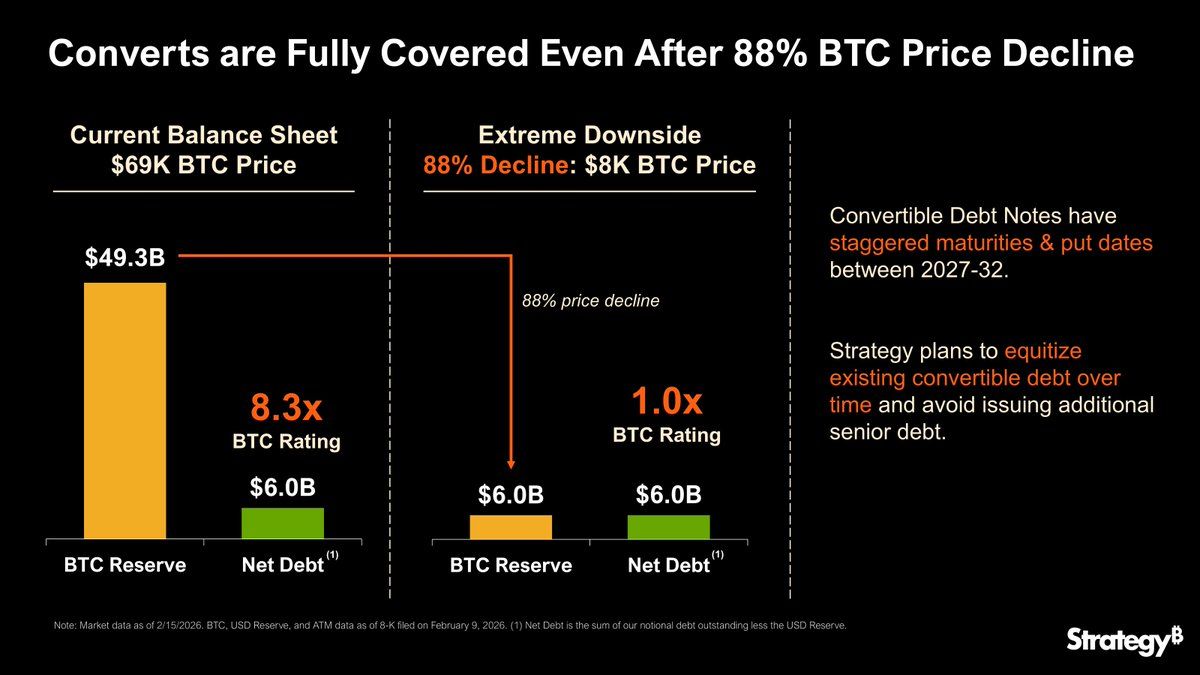
Strategy Can Fully Cover $6 Billion In Debt if Bitcoin Drops 90%, But What Happens Below That Line?

BitGo wins BaFIN nod to offer regulated crypto trading in Europe
BitGo’s move creates further competition in a burgeoning European crypto market that is expected to generate $26 billion revenue this year, according to one estimate. BitGo, a digital asset infrastructure company with more than $100 billion in assets under custody, has received an extension of its license from Germany’s Federal Financial Supervisory Authority (BaFin), enabling it to offer crypto services to European investors. The company said its local subsidiary, BitGo Europe, can now provide custody, staking, transfer, and trading services. Institutional clients will also have access to an over-the-counter (OTC) trading desk and multiple liquidity venues.The extension builds on BitGo’s previous Markets-in-Crypto-Assets (MiCA) license, also issued by BaFIN, and adds trading to the existing custody, transfer and staking services. BitGo acquired its initial MiCA license in May 2025, which allowed it to offer certain services to traditional institutions and crypto native companies in the European Union.Read more