How Stablecoins Can Expand Financial Access for the World’s Most Underserved Communities
TLDR:
- Circle’s USDC stablecoin recorded 108% year-over-year growth as the market reached $300 billion in circulation.
- More than one billion underbanked people can now access digital financial services using internet-connected devices.
- The UN Refugee Agency deployed USDC to deliver critical financial assistance to thousands displaced by war in Ukraine.
- Circle Foundation partners with Community Development Financial Institutions to expand affordable small-business lending.
Regulated stablecoins are reshaping financial services for underserved populations globally, according to Circle’s Chief Strategic Engagement Officer Elisabeth Carpenter.
The digital assets now support humanitarian aid distribution, small business financing, and cross-border commerce, while reducing transaction costs.
Circle shared these insights with the World Economic Forum, emphasizing the need for public-private collaboration to ensure the responsible development of these financial innovations.
Digital Currency Bridges Gap for Unbanked Populations
The stablecoin market has experienced remarkable growth over the past six years. The asset class expanded from near zero to over $300 billion in circulation.
Circle’s USDC stablecoin alone recorded 108% year-over-year growth in its third-quarter results. This surge reflects mounting global demand for digital financial solutions.
Circle highlighted these developments in a recent social media post, asking how stablecoins can expand financial access for the world’s most underserved.
Elisabeth Carpenter shared her perspective with the World Economic Forum on regulated stablecoins, which aim to widen access to financial services.
The post outlined three key areas: supporting humanitarian aid at scale, enabling small-business finance, and powering faster, lower-cost cross-border commerce.
More than one billion people worldwide remain underbanked despite having access to internet-connected devices.
Traditional banking infrastructure often fails to serve these populations effectively. Stablecoins offer an alternative by enabling users to send, spend, and save dollars digitally without physical bank branches.
The technology operates on open blockchain networks, moving money at internet scale with lower costs than conventional systems.
The United States and Europe have already established regulatory frameworks for stablecoins. These rules have accelerated mainstream adoption in cross-border commercial transactions.
Meanwhile, emerging markets have adopted stablecoins as essential financial tools. People and businesses seeking faster dollar access increasingly rely on these digital assets.
Humanitarian Organizations Leverage Stablecoins for Aid Distribution
The United Nations Refugee Agency has deployed USDC to assist thousands of people displaced by war in Ukraine.
The digital currency provides critical financial support during extreme crises. This application demonstrates how stablecoins can reach vulnerable populations quickly and efficiently.
Several startups have emerged to build financial resilience through stablecoin technology. Rahat in Nepal, Ensuro in Kenya, and ATEC Global in Cambodia participated in Circle’s Unlocking Impact Pitch Competition.
These organizations use USDC and open digital infrastructure to prepare communities for climate and economic shocks.
Circle Foundation was established to advance financial inclusion and resilience domestically and internationally.
The foundation supports Community Development Financial Institutions in the United States. These organizations serve small businesses struggling to access affordable capital through traditional channels. Grant funding aims to expand lending capacity and reduce friction for entrepreneurs.
The foundation also collaborates with United Nations agencies on humanitarian applications. Partnership efforts focus on compliance, recipient protection, and interoperability with local financial systems.
Digital disbursements are designed to complement existing relief infrastructure rather than replace established mechanisms. Stablecoins offer enhanced transparency and auditability compared to traditional aid distribution methods.
The post How Stablecoins Can Expand Financial Access for the World’s Most Underserved Communities appeared first on Blockonomi.
You May Also Like
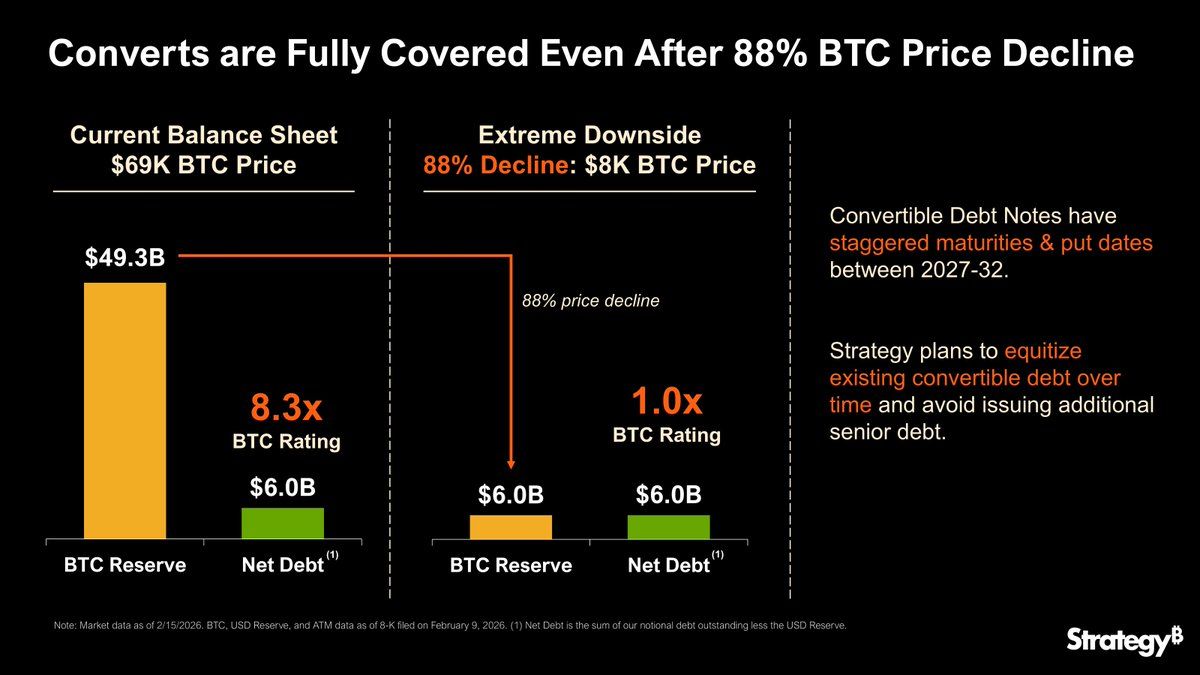
Strategy Can Fully Cover $6 Billion In Debt if Bitcoin Drops 90%, But What Happens Below That Line?
BitGo wins BaFIN nod to offer regulated crypto trading in Europe
BitGo’s move creates further competition in a burgeoning European crypto market that is expected to generate $26 billion revenue this year, according to one estimate. BitGo, a digital asset infrastructure company with more than $100 billion in assets under custody, has received an extension of its license from Germany’s Federal Financial Supervisory Authority (BaFin), enabling it to offer crypto services to European investors. The company said its local subsidiary, BitGo Europe, can now provide custody, staking, transfer, and trading services. Institutional clients will also have access to an over-the-counter (OTC) trading desk and multiple liquidity venues.The extension builds on BitGo’s previous Markets-in-Crypto-Assets (MiCA) license, also issued by BaFIN, and adds trading to the existing custody, transfer and staking services. BitGo acquired its initial MiCA license in May 2025, which allowed it to offer certain services to traditional institutions and crypto native companies in the European Union.Read more