

Masayoshi Son plans to join hands with stablecoin giant Tether to create a $3 billion crypto joint venture. Has the Bitcoin hoarding strategy entered the 2.0 era?
Author: Weilin, PANews
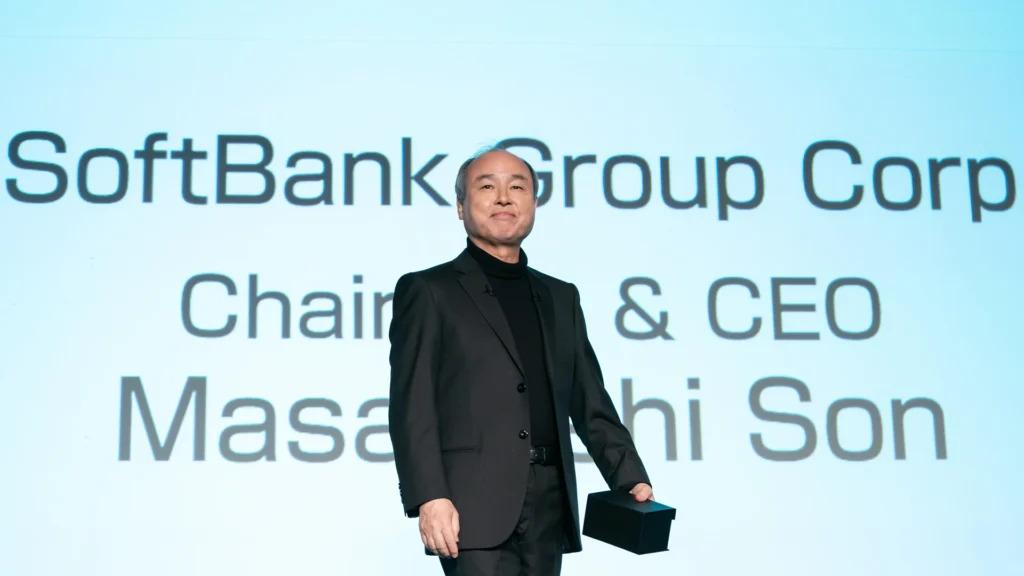
After investing heavily in AI, "investment madman" Masayoshi Son is also going to bet heavily on the crypto industry. Like the AI layout, SoftBank Group, which he heads, may establish a crypto joint venture with a total scale of up to $3 billion with a partner institution with close ties to the US government, traditional financial services company Cantor Fitzgerald, and the largest stablecoin issuer Tether.
The venture is seen as a re-invention of Strategy’s Bitcoin Financial Strategy under Michael Saylor, who is now led by his son Brandon Lutnick after U.S. Commerce Secretary Howard Lutnick stepped down as Cantor’s chairman and CEO.
Tether invests $1.5 billion in Bitcoin, which may usher in the era of "Bitcoin Financial Strategy" 2.0
The joint venture is in the form of a special purpose acquisition company (SPAC) called Cantor Equity Partners. In January of this year, the SPAC raised an initial $200 million in funding and plans to set up a new company "21 Capital" through this entity to absorb and manage billions of dollars in Bitcoin assets. Partners participating in this cooperation will be converted into shares of 21 Capital at a price of $10 per share, based on a valuation of $85,000 per Bitcoin.
According to reports, Tether will provide $1.5 billion worth of Bitcoin as capital, while its affiliated exchange Bitfinex and SoftBank Group will invest $600 million and $900 million in Bitcoin respectively. The deal is expected to be officially announced in the coming weeks, although there is still a possibility of abortion.
This SPAC is seen by the market as a replay of Strategy's "Bitcoin financial strategy". Strategy was originally an enterprise software provider. In recent years, it has transformed into a core advocate of "digital gold" by continuously purchasing Bitcoin assets. As of 12:00 on April 23, its Bitcoin holdings were 538,200, with a market value of more than US$50.1 billion. Its aggressive financial strategy has inspired the birth of many imitators around the world, such as Metaplanet Inc. in Japan. Their purchases are usually funded by issuing stocks and other financial instruments (including convertible notes).
Today, Cantor, Tether and SoftBank are trying to expand similar ideas to a more structured investment tool level, or to attract more funds into the Bitcoin market through new acquisition platforms.
At the same time, in recent years, Tether, as the issuer of the world's largest stablecoin USDT, has actively promoted a diversified investment strategy. In the past year, the company has frequently made investments in agriculture, AI, and even brain-computer interfaces.
A transfer of Tether and Cantor’s deep political and business ties?
Tether and Cantor have an increasingly close relationship. Cantor not only holds convertible bonds issued by Tether, but also helps manage Tether's more than $80 billion in U.S. Treasury reserves, which provide value anchoring for the USDT stablecoin with a market value of up to $142 billion. The asset management arrangement brings Cantor tens of millions of dollars in revenue each year. In 2023, Cantor acquired a 5% stake in Tether through a convertible debt investment, worth approximately $600 million.
Howard Lutnick, the former CEO of Cantor Fitzgerald, was appointed as the Secretary of Commerce of the Trump administration in February 2025, officially resigning from the company and entering politics. Behind this personnel change is the inheritance of the Cantor family's power.
Howard Lutnick led Cantor Fitzgerald for more than 30 years, rebuilding the firm after the loss of 658 employees in the September 11, 2001 terrorist attacks. His transition to Commerce Secretary required him to divest his business interests under U.S. government ethics rules, but his influence lives on through strategic and family institutions. The new appointment structure reflects Lutnick’s intent to maintain his vision through trusted insiders and family members.
Lutnick's son, Brandon Lutnick, 26, was appointed chairman of Cantor and became the main promoter of this SPAC project. He facilitated the contact between the two parties before Tether made a $775 million investment in video platform Rumble Inc. The Financial Times reported that now, the newly established SPAC is Brandon's attempt to put Cantor at the heart of the crypto investment boom.
Howard Lutnick's other son, Kyle Lutnick, was appointed executive vice chairman of Cantor Fitzgerald, LP. Although Lutnick divested his holdings in Cantor, BGC Group and Newmark Group in accordance with ethical requirements of the U.S. government, critics questioned whether this truly cut off his influence. Democratic Senator Elizabeth Warren publicly pointed out that Lutnick's deep involvement and support for Tether raised questions about his judgment and whether he could put the interests of the American people above his personal financial interests.
Another important layout of Cantor, SoftBank's Bitcoin attempt
Back in July 2024, at the Bitcoin 2024 conference in Nashville, Howard Lutnick publicly announced that Cantor Fitzgerald would launch a Bitcoin-collateralized lending business with a capital of up to $2 billion. In his speech, he recalled the impact of the 9/11 incident on himself and the company, and expressed his firm support for Bitcoin and the crypto community.
At the end of his speech, Lutnick added: “The moral of the story is this: We will welcome Bitcoin into the global financial market’s financing system, and Cantor Fitzgerald will be your supporter.”
This signal was interpreted by the market as a further push by traditional financial companies to invest in Bitcoin. Last November, Bloomberg cited people familiar with the matter as saying that Cantor Fitzgerald was in talks with Tether to support its proposed multi-billion dollar loan program. The program intends to provide US dollar loans to customers who use Bitcoin as collateral.
At the same time, SoftBank, another protagonist of this cooperation, had purchased $200 million worth of Bitcoin personally by its chairman Masayoshi Son as early as 2017. As a result, he bought at the market highs and sold at the lows, resulting in a loss of more than $130 million.
However, in recent years, SoftBank has reinvested in the digital infrastructure sector. Earlier this year, SoftBank invested $50 million in Cipher Mining, acquired approximately 10.4 million shares (3%) to support HPC data center development, and entered into exclusive negotiations for data center space for a month, but the negotiations were never completed.
In general, the cooperation plan with Cantor, Tether and SoftBank is seen as another major bet by SoftBank in the Bitcoin market, and it uses a structured framework to avoid risks. The three crypto joint ventures are not only of astonishing size, but also deeply integrate stablecoins, Bitcoin assets, policy forces and institutional custody in their strategic paths.
More importantly, as the Trump administration promotes the "Bitcoin Strategic Reserve" and builds a more relaxed crypto regulatory environment, Cantor, Tether, and SoftBank may be able to form a linkage with macro policies and open up more paths for traditional finance to fully embrace cryptocurrencies.

You May Also Like

The Next “Big Story” in Crypto: Crypto Credit and Borrowing, Says Bitwise CEO

SEC New Standards to Simplify Crypto ETF Listings
