

The Convergence of Communication and Capital: How Messaging Evolution Drives Crypto Adoption
Currently, the digital landscape is experiencing a huge consolidation of utilities. No longer are users satisfied with switching between dozens of Apps to manage their everyday lives; instead, we are witnessing the development of “Super Apps” – platforms where communication, social networks, and financial transactions coexist in an ecosystem. This evolution can be especially seen in the way that crypto enthusiasts approach the market. For those who are embedded in the blockchain space, speed of information is everything.
The demand for efficiency has seen some companies in the third-party industry reach out to address this need by having advanced third-party clients, such as Nicegram, which augment the standard messaging experience with features addressing the needs of power users and crypto communities alike. By fulfilling the demand for connecting secure chat with digital asset management, these platforms are emerging as the main interface for the decentralised world.
As we venture towards a Web3-centric reality, the lines between “talking about money” and “moving money” are blurring. This article explores the technological synergy between messaging protocols and blockchain technology, as well as some of the security issues associated with this new hybrid environment, and why the future of crypto adoption is dependent on making the user experience as social as possible.
Why Messaging is the Cryptocurrency Mother Tongue
Cryptocurrency was not built in a vacuum, but through chat rooms, forums, and encrypted messaging groups. From the early days of Bitcoins to the current dominance of the platform of choice, Telegram and Discord, the “alpha” (valuable insider information) has always been shared through peer-to-peer communication. The reason for this synergy is threefold:
- Real-time velocity. Crypto markets never sleep. A messaging App offers up the kind of instant notification layer that is needed to react to a sudden drop in the market or a high-stakes protocol upgrade.
- Community governance. Decentralised Autonomous Organizations (DAOs) are always up for debate. Messaging platforms are the “town square” where governance proposals are debated before being put to an on-chain vote.
- Trust and verification. In a world full of anonymity, social proof is a critical commodity. Long presence in a reputed group of cryptos acts as a kind of reputation score for the developers and investors.
The Emergence of the “Crypto-Native” Messaging Client
Traditional messaging Apps, while all good, were simply not created with private keys or wallet addresses in mind. This gap created a huge opportunity for third-party developers to create specialized clients that slice through the existing networks with a layer of crypto-centered utility. A crypto-native client is not a place to text; it is a dashboard. Some of the key integrations are often going to include:
- Built-in wallet functionality. Allowing users to send assets as easily as sending a photo.
- Token-gating. Automatically controlling group access, depending on whether a user owns a certain NFT or a certain amount of a project’s token.
- Price tickers and bots. Incorporating the real-time data of decentralised exchanges (DEXs) to let users monitor their portfolios without having to leave the conversation.
- AI summarization. Machine learning is used to summarise thousands of unread messages in a developer chat in a project and provide the gist of the latest tech developments.
Security in the Social Engineering Era
As messaging Apps become wallets, however, the stakes for security are at an all-time high. The crypto space is rife with phishing attacks, “dusting” scams, and advanced social engineering attacks. When your chat App is your gateway to your life savings, the “standard” security settings often aren’t enough. The movement to advanced clients is largely under the wing of a need for sovereign security. Users are looking for:
- Enhanced privacy modes. Capability to hide phone numbers, not display online status, and use secret chats that do not leave a trace on servers.
- Anti-scam filters. Advanced features that automatically mark and hide messages from unverified user accounts or those with known malicious links.
- Local encryption. Making sure that chat history and sensitive information are not stored on a vulnerable cloud backup, but instead on the device itself in an encrypted form, using user-controlled keys.
Decentralised Identity (DID) Social Graphs
One of the biggest hurdles in crypto is the “unreadable address” – the long string of alphanumeric characters that is used as a wallet ID. Messaging platforms are addressing this by equating these addresses to social identities. In the not-so-distant future, your “handle” on a messaging App is likely to be connected to your Decentralised Identity (DID). This allows for:
- Seamless reputation. Taking your reputation from community to community without having to re-verify your identity.
- Asset-linked profiles. Having proof of ownership of a given asset (such as an NFT) to earn social status within a group without disclosing your real-world name.
- Cross-platform portability. In a truly decentralised social graph, your contacts are yours. If you move from one App to another, your friends and history move with you.
Social Finance Revolution
We are currently observing the emergence of “Social Fi” – a marriage between social media and finance in which social influence may be commodified as tokens. Imagine a system where:
- Creators get rewarded in real-time. Fans pay using stablecoins for analysis published in a private group, by tips.
- Subscription models are frictionless. Managing access to exclusive groups is handled by smart contracts, while payments are handled automatically by the messaging client.
- Prediction markets. Friends can organize a bet on market events unofficially as part of a chat bubble, with all funds in escrow until the event actually takes place.
The messaging App has ceased to function as a side tool but has become the operating system for the digital economy.
The Infrastructure of the Future
The shift towards integrated messaging and crypto is part of an overall shift towards “unbundling” Big Tech. Users are moving away from platforms that sell their users’ data and towards those that offer tools for autonomy. Developers are now concentrating on:
- User-centric growth. Creating ecosystems that address specific problems for experts in the areas of finance, engineering, and digital assets.
- Organic adoption. Using the value of the community to stimulate growth instead of invasive advertising.
- Cross-platform consistency. In order to achieve cross-platform consistency, you must ensure that teachers deliver the same experience across different operating systems and devices.
The Strength of the Integrated Interface
The merging of crypto and communication is inevitable. Money is, at its core, a communication medium-a means of transmission of value and information through time and space. It just makes sense, then, that our most used communication tools should be our most powerful financial tools.
By selecting advanced interfaces with an eye towards user agency, privacy, and technical utility, crypto users are taking their digital lives back. Whether you are a developer working for a DAO or a trader looking for the next move on the market, the messaging client is your most important piece of software.
The future of the blockchain is not just to be written in the code of the smart contracts, but also in the quality of our conversations around them. As we continue to take down the barriers between social networking and global finance, the platforms that come out on top will be the ones that make this complicated world feel human, safe, and frictionlessly interconnected.
This is a Partner Sponsored Article
You May Also Like
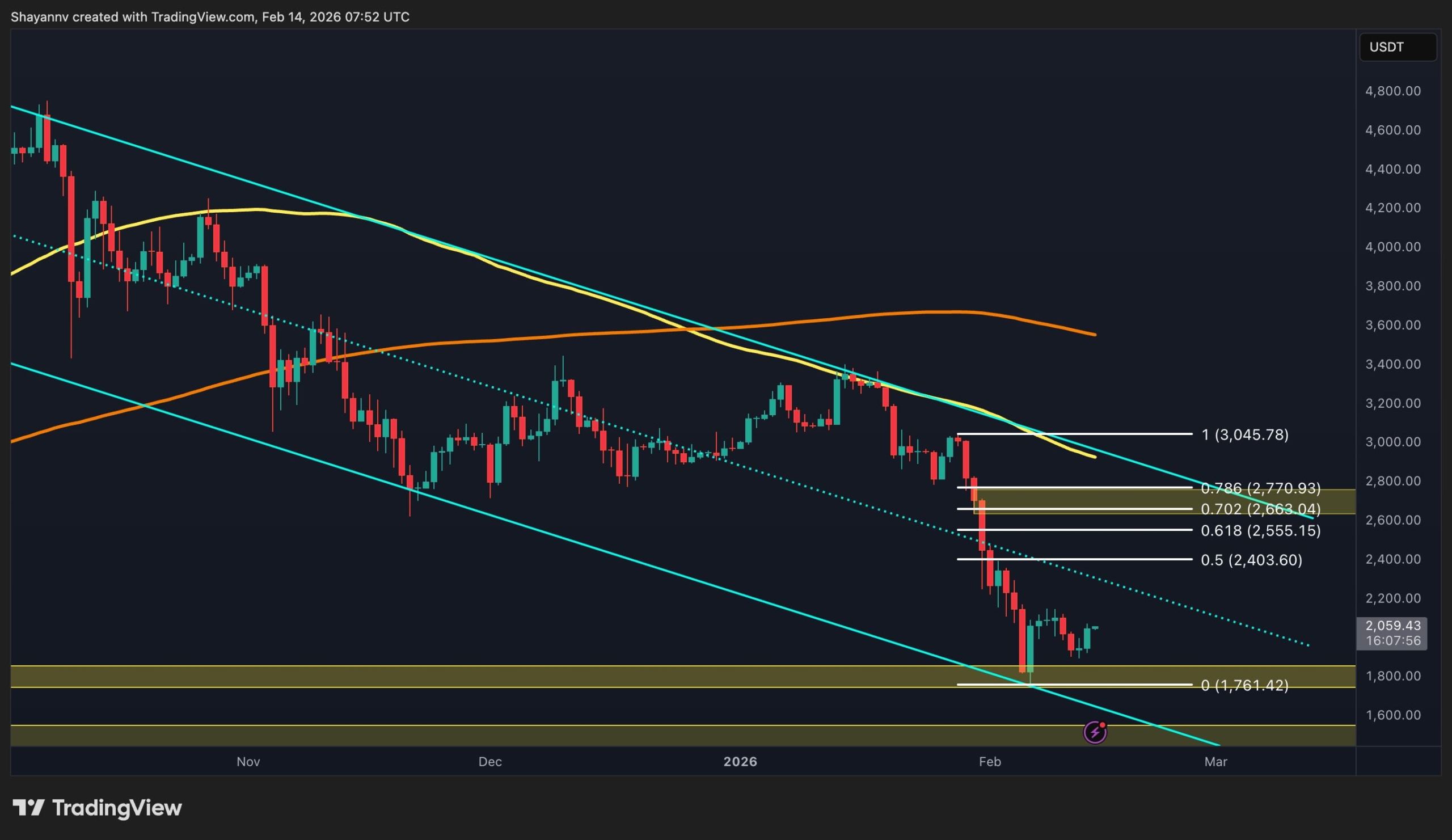
Ethereum Price Analysis: ETH Needs to Reclaim This Key Level to Flip the Script

Tron Inc Buys 179K TRX, Treasury Hits 680M+ Tokens
