The post Russia Rules Out Crypto Payments, Says Bitcoin Will Never Be Legal Money appeared first on Coinpedia Fintech News Russia’s stance on cryptocurrency paymentsThe post Russia Rules Out Crypto Payments, Says Bitcoin Will Never Be Legal Money appeared first on Coinpedia Fintech News Russia’s stance on cryptocurrency payments

Russia Rules Out Crypto Payments, Says Bitcoin Will Never Be Legal Money
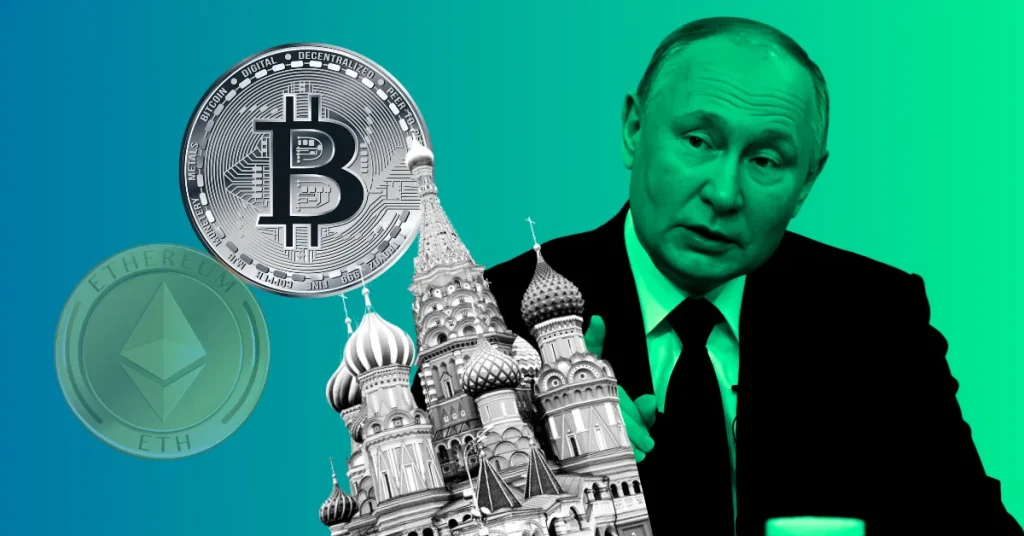
Russia bans Bitcoin payments

The post Russia Rules Out Crypto Payments, Says Bitcoin Will Never Be Legal Money appeared first on Coinpedia Fintech News

Russia’s stance on cryptocurrency payments is becoming increasingly clear. Despite growing adoption and interest in digital assets, senior lawmakers insist that Bitcoin and other cryptocurrencies will never be allowed as a means of payment for goods and services inside the country. According to top officials, crypto may have a place in Russia’s financial system, but strictly as an investment tool, not as money.

Crypto Regulations: “Only the Ruble Can Be Money”

Anatoly Aksakov, chairman of the State Duma’s Committee on Financial Markets and the key architect of Russia’s crypto legislation, made the position unmistakable. Speaking to the state news agency TASS, Aksakov stated that Russians will never be permitted to pay for goods or services using Bitcoin, Ethereum, or other cryptocurrencies. Any form of payment, he emphasized, must be made exclusively in rubles.

Aksakov reinforced that cryptocurrencies will not be recognized as legal money in Russia under any circumstances. Instead, lawmakers see digital assets as speculative instruments that can be held or traded, but not used for everyday transactions between individuals or businesses.

Central Bank’s Longstanding Resistance

The Bank of Russia has been the strongest and most consistent opponent of crypto payments. Governor Elvira Nabiullina has repeatedly pushed for sweeping restrictions, including bans on crypto transactions, exchanges, and even mining. This hardline view shaped Russia’s 2020 law that formally outlawed cryptocurrency payments within the country.

Since then, tensions have simmered between the central bank and the Ministry of Finance. While the bank favored a near-total ban similar to China’s approach, the finance ministry advocated regulation, oversight, and taxation instead. For years, competing bills stalled in parliament, leaving Russia’s crypto framework in limbo.

Russia’s Plan B for Crypto

Despite the firm ban on payments, Russia is making efforts towards crypto. Officials, including Aksakov himself, have acknowledged that Russian companies have already used cryptocurrencies to settle billions of dollars in cross-border trade. President Vladimir Putin has also spoken favorably about the growth of the country’s crypto mining sector, signaling a pragmatic shift driven by economic realities.

Major Russian banks have echoed this sentiment, noting rising demand for crypto exposure among customers, even as domestic payment use remains prohibited.

Moreover, the recent comments from policymakers suggest that regulation, not legalization of payments, is now the priority. Evgeny Masharov, a member of the Civic Chamber’s regulatory commission, argued that properly regulating crypto could boost federal revenues and help law enforcement combat financial crimes such as fraud and money laundering.

Market Opportunity
Everclear Logo
Everclear Price(CLEAR)
$0.00358
$0.00358$0.00358
-4.02%
USD
Everclear (CLEAR) Live Price Chart
Disclaimer: The articles reposted on this site are sourced from public platforms and are provided for informational purposes only. They do not necessarily reflect the views of MEXC. All rights remain with the original authors. If you believe any content infringes on third-party rights, please contact service@support.mexc.com for removal. MEXC makes no guarantees regarding the accuracy, completeness, or timeliness of the content and is not responsible for any actions taken based on the information provided. The content does not constitute financial, legal, or other professional advice, nor should it be considered a recommendation or endorsement by MEXC.

You May Also Like

Visa Expands USDC Stablecoin Settlement For US Banks

Visa Expands USDC Stablecoin Settlement For US Banks

The post Visa Expands USDC Stablecoin Settlement For US Banks appeared on BitcoinEthereumNews.com. Visa Expands USDC Stablecoin Settlement For US Banks
Share
BitcoinEthereumNews2025/12/17 15:23
Nasdaq Company Adds 7,500 BTC in Bold Treasury Move

Nasdaq Company Adds 7,500 BTC in Bold Treasury Move

The live-streaming and e-commerce company has struck a deal to acquire 7,500 BTC, instantly becoming one of the largest public […] The post Nasdaq Company Adds 7,500 BTC in Bold Treasury Move appeared first on Coindoo.
Share
Coindoo2025/09/18 02:15
Curve Finance votes on revenue-sharing model for CRV holders

Curve Finance votes on revenue-sharing model for CRV holders

The post Curve Finance votes on revenue-sharing model for CRV holders appeared on BitcoinEthereumNews.com. Curve Finance has proposed a new protocol called Yield Basis that would share revenue directly with CRV holders, marking a shift from one-off incentives to sustainable income. Summary Curve Finance has put forward a revenue-sharing protocol to give CRV holders sustainable income beyond emissions and fees. The plan would mint $60M in crvUSD to seed three Bitcoin liquidity pools (WBTC, cbBTC, tBTC), with 35–65% of revenue distributed to veCRV stakers. The DAO vote runs from up to Sept. 24, with the proposal seen as a major step to strengthen CRV tokenomics after past liquidity and governance challenges. Curve Finance founder Michael Egorov has introduced a proposal to give CRV token holders a more direct way to earn income, launching a system called Yield Basis that aims to turn the governance token into a sustainable, yield-bearing asset.  The proposal has been published on the Curve DAO (CRV) governance forum, with voting open until Sept. 24. A new model for CRV rewards Yield Basis is designed to distribute transparent and consistent returns to CRV holders who lock their tokens for veCRV governance rights. Unlike past incentive programs, which relied heavily on airdrops and emissions, the protocol channels income from Bitcoin-focused liquidity pools directly back to token holders. To start, Curve would mint $60 million worth of crvUSD, its over-collateralized stablecoin, with proceeds allocated across three pools — WBTC, cbBTC, and tBTC — each capped at $10 million. 25% of Yield Basis tokens would be reserved for the Curve ecosystem, and between 35% and 65% of Yield Basis’s revenue would be given to veCRV holders. By emphasizing Bitcoin (BTC) liquidity and offering yields without the short-term loss risks associated with automated market makers, the protocol hopes to draw in professional traders and institutions. Context and potential impact on Curve Finance The proposal comes as Curve continues to modify…
Share
BitcoinEthereumNews2025/09/18 14:37