Oracle is locked into heavy dependence on OpenAI, and that dependence is driving every problem the company is dealing with right now. The company spent five decadesOracle is locked into heavy dependence on OpenAI, and that dependence is driving every problem the company is dealing with right now. The company spent five decades

Oracle's exposure to OpenAI becomes sticking point for market watchers

2025/12/11 20:11
4 min read

Oracle is locked into heavy dependence on OpenAI, and that dependence is driving every problem the company is dealing with right now.

The company spent five decades building a huge base of enterprise clients, yet its fate has never been tied to a single customer the way it is today.

That shift happened after Oracle agreed to provide $300 billion in AI-computing services to OpenAI, alongside a list of other large deals OpenAI signed, even though it brings in less than $20 billion a year.

Three months later, every part of Larry El’s business is being judged through that one relationship.

The pressure grew after Google launched Gemini 3 last month. The model outperformed the latest version of ChatGPT, and it forced OpenAI leadership to issue what they called a “code red.”

Because OpenAI is a private company, investors have shown their concern by selling shares of companies most exposed to it. Oracle ended up being one of the biggest casualties. Its stock fell 32% over the last three months leading up to its fiscal second-quarter report.

That performance ranked as the third-worst on the S&P 500 at a time Oracle was nearing a $1 trillion valuation based on expectations that AI demand would double the company’s size.

Oracle absorbs rising costs as capex explodes

Oracle reported 14% revenue growth year over year in its latest quarter, its strongest rate in almost three years. The number still came in a bit below Wall Street expectations.

Oracle also added about $68 billion to its revenue backlog through new deals with Meta and Nvidia, though the company had already mentioned those deals during an October analyst meeting. The actual surprise came from spending. Oracle disclosed a record $12 billion in capital expenditures for the quarter ending in November, well above the $8.4 billion analysts expected.

The company raised its full-year capex forecast from $35 billion to $50 billion, which sent its stock down another 12% in after-hours trading.

A capex bill of that size represents 75% of Oracle’s projected revenue for the year. Over the past five years, the company averaged about 17%.

By comparison, Meta is expected to spend roughly 36% of its revenue on capex this year. The numbers show how much strain Oracle is taking on while trying to supply OpenAI and maintain the rest of its cloud clients.

Oracle carries massive obligations tied to OpenAI

Oracle’s spending is tied to more than data-center growth. OpenAI represents the majority of the company’s $523 billion in remaining performance obligations. These obligations are contracts for revenue that have not yet been recognized.

The total is nearly nine times the size of Oracle’s annual revenue. Cloud rivals like Microsoft, Amazon, and Google sit at far lower ratios. Microsoft, which is OpenAI’s primary computing partner, carries a backlog only about 1.4 times its revenue over the last four quarters.

Oracle’s future growth depends on OpenAI meeting those commitments. But few companies can take on deals at this scale, leaving Oracle with limited paths to diversify. The stability of those obligations also depends on the direction of AI demand and whether competitors like Google or Anthropic keep reducing OpenAI’s lead.

Gil Luria of D.A. Davidson said Oracle needed to use its quarterly report “to address concerns about the tricky balance of borrowing money to build out capacity for OpenAI, with the new understanding there is very low likelihood OpenAI will live up to its obligations.”

Oracle did not provide that clarity. The company burned a little more than $13 billion in cash over the last four quarters and now holds about $88 billion in net debt.

That stands in sharp contrast to rivals with large net-cash positions. Moody’s said last week that “Oracle has the highest exposure to OpenAI and has the weakest credit metrics among investment-grade hyperscalers.”

Oracle said Wednesday that it intends to protect its investment-grade rating as it finances its AI expansion, but investors are showing clear signs of frustration as the financial pressure keeps building.

Get up to $30,050 in trading rewards when you join Bybit today

Market Opportunity
Nowchain Logo
Nowchain Price(NOW)
$0.0091
$0.0091$0.0091
+471.53%
USD
Nowchain (NOW) Live Price Chart
Disclaimer: The articles reposted on this site are sourced from public platforms and are provided for informational purposes only. They do not necessarily reflect the views of MEXC. All rights remain with the original authors. If you believe any content infringes on third-party rights, please contact service@support.mexc.com for removal. MEXC makes no guarantees regarding the accuracy, completeness, or timeliness of the content and is not responsible for any actions taken based on the information provided. The content does not constitute financial, legal, or other professional advice, nor should it be considered a recommendation or endorsement by MEXC.
Tags:

You May Also Like

Cashing In On University Patents Means Giving Up On Our Innovation Future

Cashing In On University Patents Means Giving Up On Our Innovation Future

The post Cashing In On University Patents Means Giving Up On Our Innovation Future appeared on BitcoinEthereumNews.com. “It’s a raid on American innovation that would deliver pennies to the Treasury while kneecapping the very engine of our economic and medical progress,” writes Pipes. Getty Images Washington is addicted to taxing success. Now, Commerce Secretary Howard Lutnick is floating a plan to skim half the patent earnings from inventions developed at universities with federal funding. It’s being sold as a way to shore up programs like Social Security. In reality, it’s a raid on American innovation that would deliver pennies to the Treasury while kneecapping the very engine of our economic and medical progress. Yes, taxpayer dollars support early-stage research. But the real payoff comes later—in the jobs created, cures discovered, and industries launched when universities and private industry turn those discoveries into real products. By comparison, the sums at stake in patent licensing are trivial. Universities collectively earn only about $3.6 billion annually in patent income—less than the federal government spends on Social Security in a single day. Even confiscating half would barely register against a $6 trillion federal budget. And yet the damage from such a policy would be anything but trivial. The true return on taxpayer investment isn’t in licensing checks sent to Washington, but in the downstream economic activity that federally supported research unleashes. Thanks to the bipartisan Bayh-Dole Act of 1980, universities and private industry have powerful incentives to translate early-stage discoveries into real-world products. Before Bayh-Dole, the government hoarded patents from federally funded research, and fewer than 5% were ever licensed. Once universities could own and license their own inventions, innovation exploded. The result has been one of the best returns on investment in government history. Since 1996, university research has added nearly $2 trillion to U.S. industrial output, supported 6.5 million jobs, and launched more than 19,000 startups. Those companies pay…
Share
BitcoinEthereumNews2025/09/18 03:26
China Blocks Nvidia’s RTX Pro 6000D as Local Chips Rise
China Blocks Nvidia’s RTX Pro 6000D as Local Chips Rise

The post China Blocks Nvidia’s RTX Pro 6000D as Local Chips Rise appeared on BitcoinEthereumNews.com. China Blocks Nvidia’s RTX Pro 6000D as Local Chips Rise China’s internet regulator has ordered the country’s biggest technology firms, including Alibaba and ByteDance, to stop purchasing Nvidia’s RTX Pro 6000D GPUs. According to the Financial Times, the move shuts down the last major channel for mass supplies of American chips to the Chinese market. Why Beijing Halted Nvidia Purchases Chinese companies had planned to buy tens of thousands of RTX Pro 6000D accelerators and had already begun testing them in servers. But regulators intervened, halting the purchases and signaling stricter controls than earlier measures placed on Nvidia’s H20 chip. Image: Nvidia An audit compared Huawei and Cambricon processors, along with chips developed by Alibaba and Baidu, against Nvidia’s export-approved products. Regulators concluded that Chinese chips had reached performance levels comparable to the restricted U.S. models. This assessment pushed authorities to advise firms to rely more heavily on domestic processors, further tightening Nvidia’s already limited position in China. China’s Drive Toward Tech Independence The decision highlights Beijing’s focus on import substitution — developing self-sufficient chip production to reduce reliance on U.S. supplies. “The signal is now clear: all attention is focused on building a domestic ecosystem,” said a representative of a leading Chinese tech company. Nvidia had unveiled the RTX Pro 6000D in July 2025 during CEO Jensen Huang’s visit to Beijing, in an attempt to keep a foothold in China after Washington restricted exports of its most advanced chips. But momentum is shifting. Industry sources told the Financial Times that Chinese manufacturers plan to triple AI chip production next year to meet growing demand. They believe “domestic supply will now be sufficient without Nvidia.” What It Means for the Future With Huawei, Cambricon, Alibaba, and Baidu stepping up, China is positioning itself for long-term technological independence. Nvidia, meanwhile, faces…
Share
BitcoinEthereumNews2025/09/18 01:37
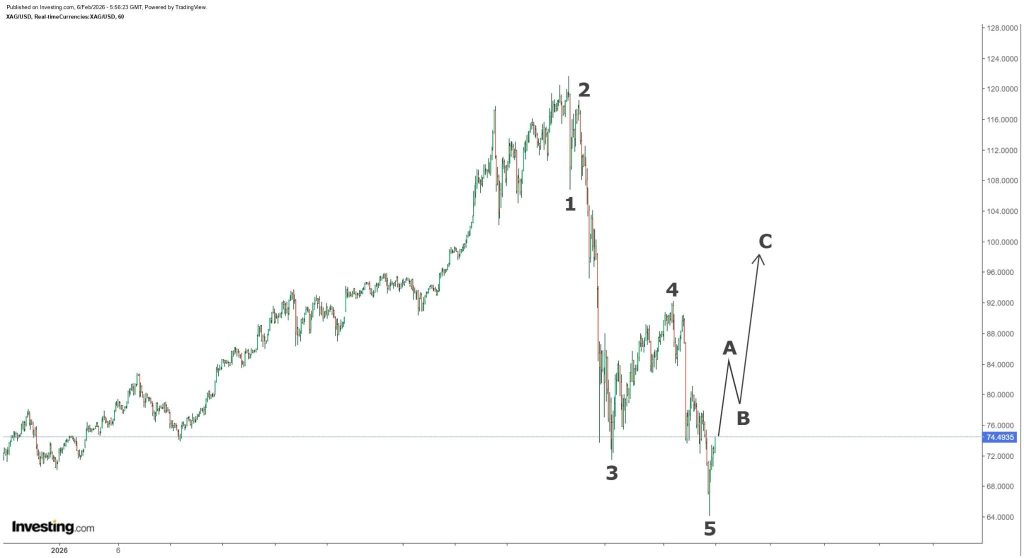
Silver Price Crash Is Over “For Real This Time,” Analyst Predicts a Surge Back Above $90

Silver Price Crash Is Over “For Real This Time,” Analyst Predicts a Surge Back Above $90

Silver has been taking a beating lately, and the Silver price hasn’t exactly been acting like a safe haven. After running up into the highs, the whole move reversed
Share
Captainaltcoin2026/02/07 03:15