The post NFTs are coming back but Blue Chip projects are on life support appeared on BitcoinEthereumNews.com. NFT trading activity showed signs of life in Q3 2025, breaking a long stretch of decline that defined the post-hype years. After two years of contraction and shifting narratives, on-chain markets found a new footing, not in blue-chip collectibles or speculative art, but in cheaper rails, loyalty programs, and sport-linked assets that traded more on utility than status. NFT trading volume rose in Q3 2025 and sales counts reached a high. The center of gravity shifted to cheaper rails and utilitarian use cases as Ethereum’s scaling upgrade pushed activity to L2s, Solana leaned on throughput and compression, and Bitcoin inscriptions matured into a collectibles culture that waxes and wanes with fee markets. Fees and distribution, not profile pictures, now set the boundary for growth. Post-Dencun economics reset the map. Ethereum’s EIP-4844 cut data costs for rollups, pushing L2 transaction fees toward cents and enabling gasless or sponsored flows for mainstream-facing mints. L2 fees fell by more than 90 percent in the wake of the upgrade, a shift already visible in mint behavior and the rise of Base as a distribution rail. On Solana, compression brought mass issuance into range for loyalty and access use cases, with provisioning costs for 10 million compressed NFTs around 7.7 SOL and median transaction fees near $0.003 even under load. Bitcoin inscriptions carved out a separate lane tied to mempool cycles and miner revenue, with more than 80 million inscriptions by February 2025 and a top-three position by lifetime NFT sales. The demand side shows a rebound with a caveat. DappRadar data shows that Q3 NFT trading volume almost doubled quarter over quarter to $1.58 billion as sales reached 18.1 million, an all-time quarterly high for transaction count. Sports NFTs stood out, with sales up 337 percent quarter over quarter to $71.1 million, a pocket… The post NFTs are coming back but Blue Chip projects are on life support appeared on BitcoinEthereumNews.com. NFT trading activity showed signs of life in Q3 2025, breaking a long stretch of decline that defined the post-hype years. After two years of contraction and shifting narratives, on-chain markets found a new footing, not in blue-chip collectibles or speculative art, but in cheaper rails, loyalty programs, and sport-linked assets that traded more on utility than status. NFT trading volume rose in Q3 2025 and sales counts reached a high. The center of gravity shifted to cheaper rails and utilitarian use cases as Ethereum’s scaling upgrade pushed activity to L2s, Solana leaned on throughput and compression, and Bitcoin inscriptions matured into a collectibles culture that waxes and wanes with fee markets. Fees and distribution, not profile pictures, now set the boundary for growth. Post-Dencun economics reset the map. Ethereum’s EIP-4844 cut data costs for rollups, pushing L2 transaction fees toward cents and enabling gasless or sponsored flows for mainstream-facing mints. L2 fees fell by more than 90 percent in the wake of the upgrade, a shift already visible in mint behavior and the rise of Base as a distribution rail. On Solana, compression brought mass issuance into range for loyalty and access use cases, with provisioning costs for 10 million compressed NFTs around 7.7 SOL and median transaction fees near $0.003 even under load. Bitcoin inscriptions carved out a separate lane tied to mempool cycles and miner revenue, with more than 80 million inscriptions by February 2025 and a top-three position by lifetime NFT sales. The demand side shows a rebound with a caveat. DappRadar data shows that Q3 NFT trading volume almost doubled quarter over quarter to $1.58 billion as sales reached 18.1 million, an all-time quarterly high for transaction count. Sports NFTs stood out, with sales up 337 percent quarter over quarter to $71.1 million, a pocket…

NFTs are coming back but Blue Chip projects are on life support

8 min read

NFT trading activity showed signs of life in Q3 2025, breaking a long stretch of decline that defined the post-hype years.

After two years of contraction and shifting narratives, on-chain markets found a new footing, not in blue-chip collectibles or speculative art, but in cheaper rails, loyalty programs, and sport-linked assets that traded more on utility than status.

NFT trading volume rose in Q3 2025 and sales counts reached a high.

The center of gravity shifted to cheaper rails and utilitarian use cases as Ethereum’s scaling upgrade pushed activity to L2s, Solana leaned on throughput and compression, and Bitcoin inscriptions matured into a collectibles culture that waxes and wanes with fee markets.

Fees and distribution, not profile pictures, now set the boundary for growth.

Post-Dencun economics reset the map. Ethereum’s EIP-4844 cut data costs for rollups, pushing L2 transaction fees toward cents and enabling gasless or sponsored flows for mainstream-facing mints.

L2 fees fell by more than 90 percent in the wake of the upgrade, a shift already visible in mint behavior and the rise of Base as a distribution rail.

On Solana, compression brought mass issuance into range for loyalty and access use cases, with provisioning costs for 10 million compressed NFTs around 7.7 SOL and median transaction fees near $0.003 even under load.

Bitcoin inscriptions carved out a separate lane tied to mempool cycles and miner revenue, with more than 80 million inscriptions by February 2025 and a top-three position by lifetime NFT sales.

The demand side shows a rebound with a caveat.

DappRadar data shows that Q3 NFT trading volume almost doubled quarter over quarter to $1.58 billion as sales reached 18.1 million, an all-time quarterly high for transaction count.

Sports NFTs stood out, with sales up 337 percent quarter over quarter to $71.1 million, a pocket where schedulable utility, access and loyalty benefits drive spend independent of floor prices. The summer delivered a snapback before a cooldown.

Monthly sales hit $574 million in July 2025, the second-highest month of the year, then fell roughly 25 percent month over month in September as broader crypto risk appetite eased, based on CryptoSlam tallies.

The pattern reinforces a lower average sale value regime and shows how GMV tracks crypto beta even as unique users and utility categories hold up.

Distribution, not just fees, is doing more of the work. Wallets with embedded passkeys and sponsored fees remove onboarding friction that stalled prior cycles. Coinbase Smart Wallet supports passkeys and gas sponsorship in supported apps, and Phantom reported 15 million monthly active users in January 2025, a base that routes into mobile and social mint funnels.

That reach matters on chains where culture and social flows compound. Base is a case in point.

Base overtook Solana by NFT volume on some measures this year as cheap mints, Zora’s mass-mint cadence and Farcaster-adjacent funnels stacked up. The tilt explains why creators weighing where to drop are starting with distribution math, then back-solving into fee profiles.

Royalties no longer anchor the revenue stack.

Creator fees collapsed from 2022 peaks after marketplace wars made royalties optional across much of the market. According to Nansen, royalty receipts hit two-year lows in 2023 and did not recover to prior levels.

The counter-trend is the rise of enforcement-aligned venues. Magic Eden and Yuga Labs launched an Ethereum marketplace in late 2023 that enforces creator royalties, building a protected lane for brands that can command it.

The equilibrium is a bifurcated market, with low take-rates and primary sales, IP deals and retail tie-ins carrying most creator margins, while walled gardens capture premium drops where enforcement is contractual.

Marketplace share remains fluid where incentives drive order flow. On Solana, Magic Eden and Tensor trade leadership in a duopoly that swings with rewards schedules and program design, often ranging between roughly 40 and 60 percent share for each across periods.

This is less a structural change than a function of incentive epochs, which can make share charts look like a regime shift that later mean-reverts. The takeaway for creators is to negotiate distribution as part of launch planning rather than defaulting to a single venue.

Where users actually went tells the near-term roadmap.

Sports, tickets and loyalty programs are scaling because the benefits are schedulable and recurring, and the on-chain primitive, token-gated access, is already embedded in existing ticketing and e-commerce flows.

DappRadar’s Q3 breakouts show sports volumes outpacing the market, and that is before full-season or league-wide programs land.

Gaming is compounding more quietly. Immutable’s zkEVM stack and live metrics show steady transaction growth and a security-on-ETH, UX-on-L2 design that aligns with asset custody and recurring secondary fees, according to Messari.

IP and licensing is the other bridge from JPEGs to consumer channels. Pudgy Penguins’ expansion into more than 3,000 Walmart stores created a live pipeline from NFTs to physical retail and licensing cashflows,.

For creators deciding where to ship next, cost and UX by chain are now legible. ETH L1 still holds provenance and high-value art, with variable gas and optional royalties in most venues.

ETH L2s offer cents-level fees after Dencun, plus sponsored or gasless flows and social funnels on Base and Farcaster.

Solana’s compression brings millions of mints into dollar-level budgets with mobile-first wallet reach. Bitcoin inscriptions line up with scarce collectibles, where fee spikes are a feature, not a bug. The table below summarizes the current journey from mint to trade.

StepETH L1ETH L2 (e.g., Base)SolanaBitcoin inscriptions
MintVariable gas under congestionCents to sub-cents after EIP-4844, apps can sponsorSub-penny typical, compression enables mass mintsTied to block fees and inscription size
List/TradeGas plus optional royalties in most venuesCheap execution, social funnels on Base and FramesCheap execution, high throughput, strong mobile UXFees rise with demand, suited to scarce collectibles
NotesHigh-value art and provenanceCulture and social distribution, gasless UX possible~7.7 SOL for 10M compressed slots, median fee ~ $0.003Collector beta relative to fee cycles

The macro mix is changing as well.

A $5–6.5 billion annualized run-rate in 2025, with average sale values in the $80–$100 range in the first half, sets the base from which next year’s scenarios extend.

Using CryptoSlam monthly sales as the spine and DappRadar category splits for color, a bear case lands at $4–5 billion GMV if crypto beta stalls and average sale values compress, with fee-sensitive use cases concentrated on Solana and ETH L2s, ETH L1 art steady, and inscriptions tracking Bitcoin fee cycles.

A base case in the $6–9 billion band requires embedded wallets and social mint rails to keep expanding, plus sports and live events scaling across seasons and brands testing royalty-enforced venues for new drops.

The bull case at $10–14 billion would need a step-change in mobile distribution, with Base and passkeys normalizing mint flows, Phantom monthly actives trending above 20 million, ticketing pilots moving into mainstream programs and gaming assets recurring.

In all three bands the share mix tilts toward ETH L2 and Solana, with ETH L1 narrower and Bitcoin stable as a collectibles lane.

Six toggles will decide how quickly that flow materializes.

  1. Wallet UX and distribution will be the lead indicator, measured by passkey adoption, sponsored fees and MAUs for Phantom and Coinbase Smart Wallet.
  2. The footprint of royalty enforcement matters for premium drops, including any OpenSea policy pivots and the health of creator-allied markets on Ethereum.
  3. Sports and ticketing partners that move from pilots to season-long programs convert one-off GMV into schedules.
  4. Base and Zora cadence, visible in monthly mints and Base’s share of NFT GMV alongside Farcaster Frames, shows whether social funnels sustain.
  5. Solana compression adoption, tracked by compressed mint counts and costs per million assets, signals whether loyalty and media programs go from experiments to defaults.
  6. Bitcoin fee cycles, and their link to inscriptions and Runes, will keep shaping collectibles pricing as mempool congestion ebbs and flows.

Two risks remain constant. Wash trading and spam minting still distort GMV and sales counts, which is why looking at average sale values and organic-filtered dashboards is the safer approach.

Marketplace incentives can make share charts look like regime change when they are just airdrop cycles, especially on Solana’s duopoly, so launch plans should price that churn in from the outset. The other operational constraint is revenue design.

With royalties mostly optional in open markets, primary sales, IP licensing and retail are carrying more of the load, while enforced venues create a premium lane that some brands can utilize and most cannot.

What looked like an end state in 2023 turned into a migration.

The JPEG boom is over, the rails got cheaper, the use cases now line up with tickets, sports, gaming and IP, and the wallet and distribution stack is starting to meet users where they already are.

The Blue Chip flagship NFT, Bored Ape Yacht Club remains in a perilous state for those who invested six figures into AWS hosted jpegs. The NFT below sold for over 74 ETH in 2021 but is now worth just 9 ETH, an 87 percent decline in three years.

Bored Ape Yacht Club NFTs (Source: OpenSea)

Speculation may be over for the non-fungible sector, but will this finally allow the underlying technology to gain traction in real world utility applications? Only time will tell, but the signs are promising, just not for the bag holders.

Q3 closed with $1.58 billion in trades and 18.1 million sales, and the mix is already moving in that direction.

Mentioned in this article

Source: https://cryptoslate.com/nfts-are-coming-back-but-blue-chip-projects-are-on-life-support/
Market Opportunity
Bluefin Logo
Bluefin Price(BLUE)
$0.02071
$0.02071$0.02071
+1.27%
USD
Bluefin (BLUE) Live Price Chart
Disclaimer: The articles reposted on this site are sourced from public platforms and are provided for informational purposes only. They do not necessarily reflect the views of MEXC. All rights remain with the original authors. If you believe any content infringes on third-party rights, please contact service@support.mexc.com for removal. MEXC makes no guarantees regarding the accuracy, completeness, or timeliness of the content and is not responsible for any actions taken based on the information provided. The content does not constitute financial, legal, or other professional advice, nor should it be considered a recommendation or endorsement by MEXC.

You May Also Like

Unleash Potential: Flare Network’s FXRP Revolutionizes DeFi Access for XRP

Unleash Potential: Flare Network’s FXRP Revolutionizes DeFi Access for XRP

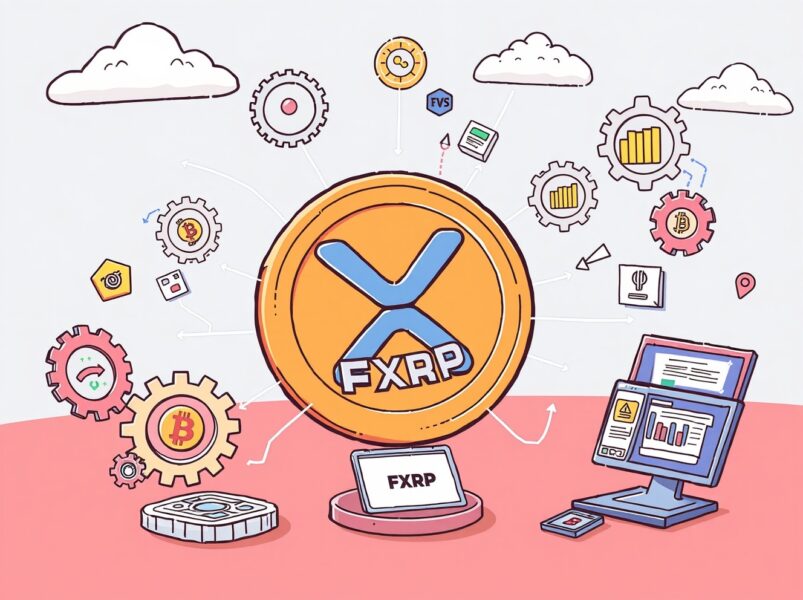
BitcoinWorld Unleash Potential: Flare Network’s FXRP Revolutionizes DeFi Access for XRP The world of decentralized finance (DeFi) is constantly evolving, and a major new development is set to excite XRP enthusiasts. Flare Network has just launched FXRP, an innovative solution designed to bring XRP directly into the heart of DeFi applications. This move opens up a wealth of new possibilities for XRP holders, allowing them to engage with lending, borrowing, and trading platforms like never before. It’s a significant step towards a more interconnected crypto ecosystem. What is FXRP and Why is it a Game-Changer for XRP? At its core, FXRP is an over-collateralized, wrapped version of XRP. Think of it as a digital twin of XRP, but one that lives on the Flare Network. This design is crucial because XRP itself doesn’t natively support smart contracts in the same way that Ethereum or other DeFi-centric blockchains do. Consequently, XRP has largely been excluded from the burgeoning DeFi sector. However, FXRP changes this narrative completely. By wrapping XRP, Flare Network creates a token that can interact with smart contracts on its own blockchain. This means XRP holders can now: Access a wider range of DeFi protocols. Participate in decentralized lending and borrowing. Engage in yield farming opportunities. Trade their XRP on decentralized exchanges. This initiative transforms XRP from a primarily transactional asset into a more versatile, programmable one within the DeFi landscape. How Can You Acquire and Utilize FXRP? Getting your hands on FXRP is straightforward, offering flexibility for users. You have two primary methods to acquire this wrapped token. First, users can mint FXRP directly on the Flare Network. This process typically involves locking up an equivalent amount of XRP as collateral, ensuring the wrapped token remains fully backed. Alternatively, if direct minting isn’t your preference, you can acquire FXRP on various decentralized exchanges (DEXs). Platforms like SparkDEX, BlazeSwap, and Enosys are among the initial venues where you can trade for FXRP. This accessibility makes it easy for existing DeFi users and new participants alike to join the Flare Network ecosystem and explore its offerings. The over-collateralization aspect adds an extra layer of security, providing confidence in the token’s backing. Expanding DeFi Horizons: The Broader Impact of FXRP The introduction of FXRP extends far beyond just enabling XRP holders to participate in DeFi. It has a much broader impact on the entire decentralized finance ecosystem. By integrating a widely adopted asset like XRP, Flare Network significantly boosts the total value locked (TVL) and liquidity available within DeFi. This influx of capital and users can lead to more robust and efficient markets. Moreover, FXRP positions Flare Network as a vital bridge between different blockchain ecosystems. It demonstrates how assets from one chain can gain new functionality and utility on another, fostering greater interoperability. This cross-chain capability is essential for the long-term growth and sustainability of decentralized finance, as it breaks down silos and encourages a more unified digital economy. The potential for future integrations with other tokens and protocols is immense, further solidifying Flare’s role. Navigating the Challenges and Future of FXRP While the launch of FXRP presents exciting opportunities, it’s also important to consider potential challenges. As with any new technology in the crypto space, security remains a paramount concern. The integrity of the wrapping mechanism and the underlying smart contracts must be rigorously maintained. Furthermore, user adoption and education will be key to the success of FXRP. New users need clear guidance on how to safely mint, acquire, and use the token in various DeFi applications. The competitive landscape also plays a role; other wrapped assets exist, and FXRP must demonstrate its unique value proposition. However, with its strong backing and the innovative approach of Flare Network, FXRP is well-positioned for growth. Its ability to unlock XRP’s potential for DeFi is a powerful differentiator, promising a vibrant future for both the token and the network. Actionable Insights: Getting Started with FXRP in DeFi If you’re an XRP holder looking to explore the new opportunities presented by FXRP, here are some actionable insights to help you get started: Do Your Research: Before engaging with any DeFi platform, thoroughly research its reputation, security audits, and user reviews. Understand how FXRP interacts with specific protocols. Understand the Risks: DeFi carries inherent risks, including smart contract vulnerabilities, impermanent loss, and market volatility. Familiarize yourself with these risks before committing funds. Start Small: Consider starting with a small amount of FXRP to familiarize yourself with the process of minting, acquiring, and using it in DeFi applications. Stay Informed: Follow official Flare Network channels and reputable crypto news sources to stay updated on new integrations, security announcements, and community developments related to FXRP. By taking these steps, you can confidently navigate the exciting new world that FXRP opens up for XRP within decentralized finance. In conclusion, the launch of FXRP by Flare Network is a monumental step forward for the XRP community and the broader DeFi ecosystem. It effectively bridges a gap, allowing one of the most widely held cryptocurrencies to participate actively in decentralized finance. This innovation not only expands the utility of XRP but also reinforces Flare Network’s commitment to building a more interconnected and functional blockchain world. As FXRP gains traction, we can expect to see a surge in innovative DeFi applications and a more vibrant, inclusive financial landscape for all. Frequently Asked Questions (FAQs) Q1: What exactly is FXRP? A1: FXRP is an over-collateralized, wrapped version of XRP, specifically designed to enable XRP holders to use their assets within decentralized finance (DeFi) applications on the Flare Network. Q2: How is FXRP different from standard XRP? A2: While FXRP is backed by XRP, its key difference is that it resides on the Flare Network and is compatible with smart contracts. This allows it to be used in DeFi protocols for lending, borrowing, and trading, which standard XRP cannot do natively. Q3: Where can I acquire FXRP? A3: You can acquire FXRP by minting it directly on the Flare Network by locking up XRP, or by purchasing it on decentralized exchanges such as SparkDEX, BlazeSwap, and Enosys. Q4: What are the main benefits of using FXRP in DeFi? A4: The primary benefits include gaining access to a wide array of DeFi services like lending, borrowing, and trading on DEXs, thereby increasing the utility and potential earning opportunities for XRP holders within the decentralized ecosystem. Q5: What is Flare Network’s role in the creation of FXRP? A5: Flare Network is the blockchain platform that hosts FXRP. It provides the smart contract functionality and infrastructure necessary to wrap XRP and enable its use in DeFi applications, acting as a bridge for XRP into the decentralized world. If you found this article insightful and believe in the potential of FXRP to revolutionize DeFi, please share it with your network! Help spread the word about how Flare Network is bridging the gap for XRP holders and expanding the possibilities within decentralized finance. Your support helps grow our community and keeps everyone informed about the latest crypto innovations. To learn more about the latest crypto market trends, explore our article on key developments shaping decentralized finance institutional adoption. This post Unleash Potential: Flare Network’s FXRP Revolutionizes DeFi Access for XRP first appeared on BitcoinWorld.
Share
Coinstats2025/09/24 22:45
Fed Lowers Rates By 25bps: How Bitcoin And Crypto Prices Responded And What’s Next

Fed Lowers Rates By 25bps: How Bitcoin And Crypto Prices Responded And What’s Next

The Federal Reserve (Fed) announced its first interest rate cut of the year, leading to an immediate reaction in the cryptocurrency market. Bitcoin (BTC) experienced a notable decline, dropping below the $115,000 threshold shortly after the announcement.  Expert Predicts Crypto Rally Fed Chair Jerome Powell addressed the current economic landscape, noting that while inflation has […]
Share
Bitcoinist2025/09/18 03:11
XRP Price Outlook As Peter Brandt Predicts BTC Price Might Crash to $42k

XRP Price Outlook As Peter Brandt Predicts BTC Price Might Crash to $42k

The post XRP Price Outlook As Peter Brandt Predicts BTC Price Might Crash to $42k appeared on BitcoinEthereumNews.com. XRP price led cryptocurrency losses on Friday
Share
BitcoinEthereumNews2026/02/06 19:06