Sony Bank has established BlockBloom Inc., a wholly owned subsidiary that will develop Web3 services, including digital assets, NFTs, and blockchain infrastructure. Announced on Thursday, the move follows plans disclosed in July. The subsidiary will operate under Japan’s regulated framework for digital assets and plans to integrate blockchain technology into the bank’s services. Sony Bank expects this move to limit near-term financial impact. Separate Entity Focuses on Blockchain Initiatives Sony Bank, a mid-sized digital-first bank under Sony Financial Group in Japan, created BlockBloom Inc. to manage digital asset management, NFT projects, and blockchain infrastructure. The subsidiary allows the bank to develop Web3 services safely. Compliance requirements and operational risks remain separate from core banking activities. Analysts note that forming a dedicated entity is a common strategy among financial institutions entering regulated digital asset markets. Plans for a Web3 subsidiary emerged in July 2025. The bank proposed providing digital wallets for crypto and NFTs and facilitating yen-to-digital-asset conversions. BlockBloom received $2 million in initial capital, with operations expected to begin in autumn 2025. By establishing a formal subsidiary, Sony Bank has created a structure to advance blockchain-based products without directly impacting traditional banking operations. Sony Bank expects BlockBloom to have little impact on earnings. This applies to both consolidated and non-consolidated figures for the fiscal year ending March 31, 2026. Japan’s regulators have updated rules for digital assets. Banks can now offer tokenized securities, NFT services, and blockchain payments within the regulated framework. BlockBloom will operate under these regulations, providing blockchain solutions that integrate with standard financial services. Japan’s digital asset market has grown steadily. NFT trading volumes have reached billions of yen, and retail adoption of cryptocurrencies continues to rise. Banks and fintech companies are exploring blockchain for tokenized securities, cross-border payments, and smart-contract-based lending. For example, several financial institutions have trialed tokenized bonds and blockchain settlement for digital yen. BlockBloom may develop services such as NFT custody, tokenized financial instruments, and blockchain settlement networks. The subsidiary may collaborate with fintech startups. The goal is to create interoperable solutions for digital wallets, NFT marketplaces, and decentralized finance platforms. Implications for Japan’s Banking Sector The creation of BlockBloom reflects a measured approach by Japanese banks entering the Web3 space. A dedicated subsidiary lets Sony Bank test blockchain products safely. It can assess user adoption and manage regulatory requirements without affecting core operations. BlockBloom can use Sony Bank’s technology and banking expertise to collaborate with fintech partners. The subsidiary may contribute to Japan’s growing digital finance ecosystem.Sony Bank has established BlockBloom Inc., a wholly owned subsidiary that will develop Web3 services, including digital assets, NFTs, and blockchain infrastructure. Announced on Thursday, the move follows plans disclosed in July. The subsidiary will operate under Japan’s regulated framework for digital assets and plans to integrate blockchain technology into the bank’s services. Sony Bank expects this move to limit near-term financial impact. Separate Entity Focuses on Blockchain Initiatives Sony Bank, a mid-sized digital-first bank under Sony Financial Group in Japan, created BlockBloom Inc. to manage digital asset management, NFT projects, and blockchain infrastructure. The subsidiary allows the bank to develop Web3 services safely. Compliance requirements and operational risks remain separate from core banking activities. Analysts note that forming a dedicated entity is a common strategy among financial institutions entering regulated digital asset markets. Plans for a Web3 subsidiary emerged in July 2025. The bank proposed providing digital wallets for crypto and NFTs and facilitating yen-to-digital-asset conversions. BlockBloom received $2 million in initial capital, with operations expected to begin in autumn 2025. By establishing a formal subsidiary, Sony Bank has created a structure to advance blockchain-based products without directly impacting traditional banking operations. Sony Bank expects BlockBloom to have little impact on earnings. This applies to both consolidated and non-consolidated figures for the fiscal year ending March 31, 2026. Japan’s regulators have updated rules for digital assets. Banks can now offer tokenized securities, NFT services, and blockchain payments within the regulated framework. BlockBloom will operate under these regulations, providing blockchain solutions that integrate with standard financial services. Japan’s digital asset market has grown steadily. NFT trading volumes have reached billions of yen, and retail adoption of cryptocurrencies continues to rise. Banks and fintech companies are exploring blockchain for tokenized securities, cross-border payments, and smart-contract-based lending. For example, several financial institutions have trialed tokenized bonds and blockchain settlement for digital yen. BlockBloom may develop services such as NFT custody, tokenized financial instruments, and blockchain settlement networks. The subsidiary may collaborate with fintech startups. The goal is to create interoperable solutions for digital wallets, NFT marketplaces, and decentralized finance platforms. Implications for Japan’s Banking Sector The creation of BlockBloom reflects a measured approach by Japanese banks entering the Web3 space. A dedicated subsidiary lets Sony Bank test blockchain products safely. It can assess user adoption and manage regulatory requirements without affecting core operations. BlockBloom can use Sony Bank’s technology and banking expertise to collaborate with fintech partners. The subsidiary may contribute to Japan’s growing digital finance ecosystem.

Sony Bank Spins Off Web3 Subsidiary to Deepen Digital Asset Services

2025/09/26 09:41
3 min read

Sony Bank has established BlockBloom Inc., a wholly owned subsidiary that will develop Web3 services, including digital assets, NFTs, and blockchain infrastructure. Announced on Thursday, the move follows plans disclosed in July.

The subsidiary will operate under Japan’s regulated framework for digital assets and plans to integrate blockchain technology into the bank’s services. Sony Bank expects this move to limit near-term financial impact.

Separate Entity Focuses on Blockchain Initiatives

Sony Bank, a mid-sized digital-first bank under Sony Financial Group in Japan, created BlockBloom Inc. to manage digital asset management, NFT projects, and blockchain infrastructure. The subsidiary allows the bank to develop Web3 services safely. Compliance requirements and operational risks remain separate from core banking activities. Analysts note that forming a dedicated entity is a common strategy among financial institutions entering regulated digital asset markets.

Plans for a Web3 subsidiary emerged in July 2025. The bank proposed providing digital wallets for crypto and NFTs and facilitating yen-to-digital-asset conversions. BlockBloom received $2 million in initial capital, with operations expected to begin in autumn 2025. By establishing a formal subsidiary, Sony Bank has created a structure to advance blockchain-based products without directly impacting traditional banking operations.

Sony Bank expects BlockBloom to have little impact on earnings. This applies to both consolidated and non-consolidated figures for the fiscal year ending March 31, 2026. Japan’s regulators have updated rules for digital assets. Banks can now offer tokenized securities, NFT services, and blockchain payments within the regulated framework. BlockBloom will operate under these regulations, providing blockchain solutions that integrate with standard financial services.

Japan’s digital asset market has grown steadily. NFT trading volumes have reached billions of yen, and retail adoption of cryptocurrencies continues to rise. Banks and fintech companies are exploring blockchain for tokenized securities, cross-border payments, and smart-contract-based lending. For example, several financial institutions have trialed tokenized bonds and blockchain settlement for digital yen.

BlockBloom may develop services such as NFT custody, tokenized financial instruments, and blockchain settlement networks. The subsidiary may collaborate with fintech startups. The goal is to create interoperable solutions for digital wallets, NFT marketplaces, and decentralized finance platforms.

Implications for Japan’s Banking Sector

The creation of BlockBloom reflects a measured approach by Japanese banks entering the Web3 space. A dedicated subsidiary lets Sony Bank test blockchain products safely. It can assess user adoption and manage regulatory requirements without affecting core operations. BlockBloom can use Sony Bank’s technology and banking expertise to collaborate with fintech partners. The subsidiary may contribute to Japan’s growing digital finance ecosystem.

Market Opportunity
Lorenzo Protocol Logo
Lorenzo Protocol Price(BANK)
$0.04276
$0.04276$0.04276
+5.81%
USD
Lorenzo Protocol (BANK) Live Price Chart
Disclaimer: The articles reposted on this site are sourced from public platforms and are provided for informational purposes only. They do not necessarily reflect the views of MEXC. All rights remain with the original authors. If you believe any content infringes on third-party rights, please contact service@support.mexc.com for removal. MEXC makes no guarantees regarding the accuracy, completeness, or timeliness of the content and is not responsible for any actions taken based on the information provided. The content does not constitute financial, legal, or other professional advice, nor should it be considered a recommendation or endorsement by MEXC.

You May Also Like

Fed rate decision September 2025

Fed rate decision September 2025

The post Fed rate decision September 2025 appeared on BitcoinEthereumNews.com. WASHINGTON – The Federal Reserve on Wednesday approved a widely anticipated rate cut and signaled that two more are on the way before the end of the year as concerns intensified over the U.S. labor market. In an 11-to-1 vote signaling less dissent than Wall Street had anticipated, the Federal Open Market Committee lowered its benchmark overnight lending rate by a quarter percentage point. The decision puts the overnight funds rate in a range between 4.00%-4.25%. Newly-installed Governor Stephen Miran was the only policymaker voting against the quarter-point move, instead advocating for a half-point cut. Governors Michelle Bowman and Christopher Waller, looked at for possible additional dissents, both voted for the 25-basis point reduction. All were appointed by President Donald Trump, who has badgered the Fed all summer to cut not merely in its traditional quarter-point moves but to lower the fed funds rate quickly and aggressively. In the post-meeting statement, the committee again characterized economic activity as having “moderated” but added language saying that “job gains have slowed” and noted that inflation “has moved up and remains somewhat elevated.” Lower job growth and higher inflation are in conflict with the Fed’s twin goals of stable prices and full employment.  “Uncertainty about the economic outlook remains elevated” the Fed statement said. “The Committee is attentive to the risks to both sides of its dual mandate and judges that downside risks to employment have risen.” Markets showed mixed reaction to the developments, with the Dow Jones Industrial Average up more than 300 points but the S&P 500 and Nasdaq Composite posting losses. Treasury yields were modestly lower. At his post-meeting news conference, Fed Chair Jerome Powell echoed the concerns about the labor market. “The marked slowing in both the supply of and demand for workers is unusual in this less dynamic…
Share
BitcoinEthereumNews2025/09/18 02:44
Glenn Hughes Scores His Greatest Chart Debut On His Own
Glenn Hughes Scores His Greatest Chart Debut On His Own

The post Glenn Hughes Scores His Greatest Chart Debut On His Own appeared on BitcoinEthereumNews.com. Nearly 10 years after Resonate, Glenn Hughes scores a new career high as Chosen opens at No. 4 on the Official Rock and Metal Albums chart. NEW YORK, NEW YORK – APRIL 08: Glenn Hughes of Deep Purple speaks onstage during the 31st Annual Rock And Roll Hall Of Fame Induction Ceremony at Barclays Center on April 8, 2016 in New York City. (Photo by Mike Coppola/Getty Images) Getty Images Almost a decade after his last solo album Resonate arrived, Glenn Hughes returns with Chosen. The rock superstar’s fifteenth project under his own name debuts on multiple charts in the United Kingdom, where he remains a legend in his chosen field. Chosen opens inside loftiest tiers on multiple tallies and even gives Hughes his first solo win on one roster. Glenn Hughes Scores First Hit on One Chart Chosen debuts on the Official Albums Downloads chart at No. 60. Hughes scores his first solo win on the list of the bestselling full-lengths and EPs on download platforms like iTunes and Amazon in the U.K., as his latest project arrives. Glenn Hughes Reaches a New Peak Chosen earns its loftiest starting point on the Official Rock and Metal Albums chart, where it kicks off at No. 4. Hughes reaches a new all-time high as the set arrives and collects his second top 10. Resonate peaked at No. 6, earning Hughes his first top 10 bestseller almost 10 years back, while Music for the Divine only spent one frame at No. 33 nearly 20 years ago. Glenn Hughes on the Albums Charts Chosen also brings Hughes to new all-time peak positions on both the Official Albums Sales and Official Physical Albums charts. The set debuts at Nos. 25 and 26 on those tallies, respectively. Only Resonate had previously landed on those lists,…
Share
BitcoinEthereumNews2025/09/18 02:41
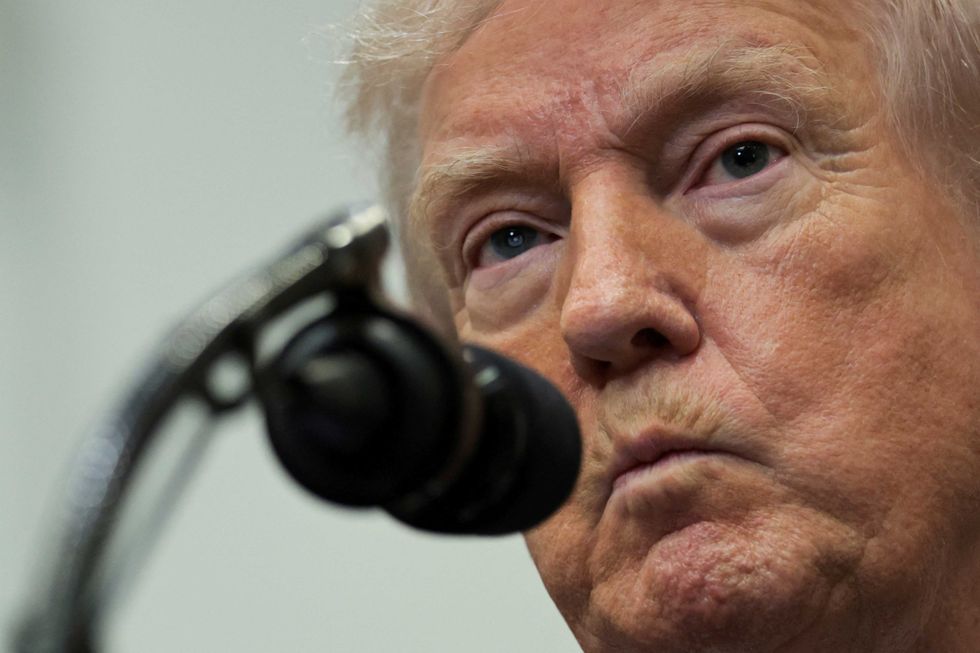
Trump is 'seen very little' and could be 'sicker than he let's on': ex-White House insider

Trump is 'seen very little' and could be 'sicker than he let's on': ex-White House insider

An analyst Friday pointed out that President Donald Trump has made fewer public appearances over the past several weeks as questions over his health have continued
Share
Rawstory2026/02/14 00:39