BitcoinWorld Solana-based DEX Lifinity Shuts Down: The Stunning End and $42M Payout In a surprising move for the Solana DeFi ecosystem, the Solana-based DEX LifinityBitcoinWorld Solana-based DEX Lifinity Shuts Down: The Stunning End and $42M Payout In a surprising move for the Solana DeFi ecosystem, the Solana-based DEX Lifinity

Solana-based DEX Lifinity Shuts Down: The Stunning End and $42M Payout

Solana-based DEX Lifinity shutting down as a rocket ship runs out of fuel next to a treasure for token holders.

BitcoinWorld

Solana-based DEX Lifinity Shuts Down: The Stunning End and $42M Payout

In a surprising move for the Solana DeFi ecosystem, the Solana-based DEX Lifinity has announced it is ceasing all operations. This decision, confirmed by reports from SolanaFloor, marks the end for a once-prominent automated market maker. The closure follows a community vote and triggers a significant wind-down process, including a multi-million dollar distribution to its token holders. Let’s unpack what happened and what it means for the people involved.

Why Did the Solana-based DEX Lifinity Decide to Shut Down?

The process began on December 10th when a formal proposal to cease operations was put before the Lifinity community. The core question was simple: should the project continue or wind down responsibly? The answer from the decentralized autonomous organization (DAO) was unanimous. Therefore, the community voted to shut down the exchange. While the proposal did not publicly detail every reason for the shutdown, such decisions in the competitive DeFi space often relate to challenges like:

  • Sustaining trading volume against larger competitors.
  • Managing operational costs and developer resources.
  • Evolving market conditions that make a project’s unique value proposition less viable.

This move highlights the dynamic and sometimes unforgiving nature of decentralized finance, even on robust networks like Solana.

What Does the $42 Million Distribution Mean for LFNTY Holders?

The most critical immediate effect of this shutdown is the fate of the project’s treasury. In line with the passed proposal, the Lifinity DAO will distribute its entire treasury of $42 million in assets directly to LFNTY token holders. This is a significant act of returning value to the community that supported the project.

Holders can expect to receive an estimated amount between $0.90 and $1.10 for each LFNTY token they own. This distribution plan serves as a responsible exit strategy, ensuring that the project’s remaining value benefits its users rather than vanishing. For investors, this payout provides a clear resolution, though the long-term vision for the Solana-based DEX Lifinity has concluded.

What Are the Broader Implications for Solana DeFi?

The shutdown of a project like Lifinity is a reminder of the inherent experimentation and risk in decentralized finance. However, it also demonstrates a maturing process. The fact that the shutdown was managed through a DAO vote and includes a structured asset distribution shows a move toward greater accountability and community-focused governance.

For the Solana ecosystem, the departure of one player does not define the whole network. Solana continues to host a vibrant and growing DeFi landscape with other major DEXs like Orca and Raydium. The closure of the Solana-based DEX Lifinity may even reallocate liquidity and user attention to other thriving protocols on the chain.

Key Takeaways from the Lifinity Shutdown

This event offers several important lessons for crypto participants:

  • DAO Governance in Action: The process showcased how a decentralized community can make a major, orderly decision.
  • Importance of Treasury Management: The project’s ability to return value hinges on responsible fund management during its operational life.
  • Dynamic Market Landscape: Innovation in crypto is fast-paced, and not all projects are built to last forever.

In conclusion, the story of the Solana-based DEX Lifinity is one of both an ending and a responsible conclusion. While the platform will no longer facilitate trades, its finale is structured to honor its community through a substantial financial return. This episode underscores the evolving nature of DeFi, where community governance and transparent wind-downs are becoming crucial aspects of project lifecycles.

Frequently Asked Questions (FAQs)

Q: Is my LFNTY token now worthless?
A: No. While the token will no longer have utility for trading on Lifinity, it is the key to receiving the distribution from the project’s $42 million treasury. Holders will receive a payout per token.

Q: How and when will I receive the distribution?
A: The Lifinity DAO will handle the distribution process. Specific instructions, timelines, and eligible wallets will be announced by the project. Holders should monitor official Lifinity communication channels for details.

Q: Why would a project vote to shut down?
A> Projects may shut down due to unsustainable economics, low user adoption, high competition, or a strategic decision by the community and developers to allocate resources elsewhere.

Q: Does this hurt Solana’s reputation?
A> Not necessarily. A healthy ecosystem involves both successes and failures. The responsible handling of a shutdown can actually reflect well on the maturity of the projects built on a blockchain.

Q: Can I still withdraw my assets from Lifinity?
A> As the platform ceases operations, you should remove any liquidity or assets immediately. The interface may remain accessible for a short wind-down period, but acting quickly is advised.

Q: Where should I trade on Solana now?
A> Solana has several other large and established DEXs, including Orca, Raydium, and Jupiter. It is recommended to research these alternatives for your trading needs.

Found this breakdown of the Solana-based DEX Lifinity shutdown helpful? The world of DeFi moves fast, and sharing knowledge helps everyone navigate it better. If this article gave you clarity, consider sharing it with your network on Twitter or Telegram to keep the conversation going!

To learn more about the latest Solana and DeFi trends, explore our article on key developments shaping the future of decentralized finance on high-performance blockchains.

This post Solana-based DEX Lifinity Shuts Down: The Stunning End and $42M Payout first appeared on BitcoinWorld.

Market Opportunity
Movement Logo
Movement Price(MOVE)
$0.03313
$0.03313$0.03313
0.00%
USD
Movement (MOVE) Live Price Chart
Disclaimer: The articles reposted on this site are sourced from public platforms and are provided for informational purposes only. They do not necessarily reflect the views of MEXC. All rights remain with the original authors. If you believe any content infringes on third-party rights, please contact service@support.mexc.com for removal. MEXC makes no guarantees regarding the accuracy, completeness, or timeliness of the content and is not responsible for any actions taken based on the information provided. The content does not constitute financial, legal, or other professional advice, nor should it be considered a recommendation or endorsement by MEXC.

You May Also Like

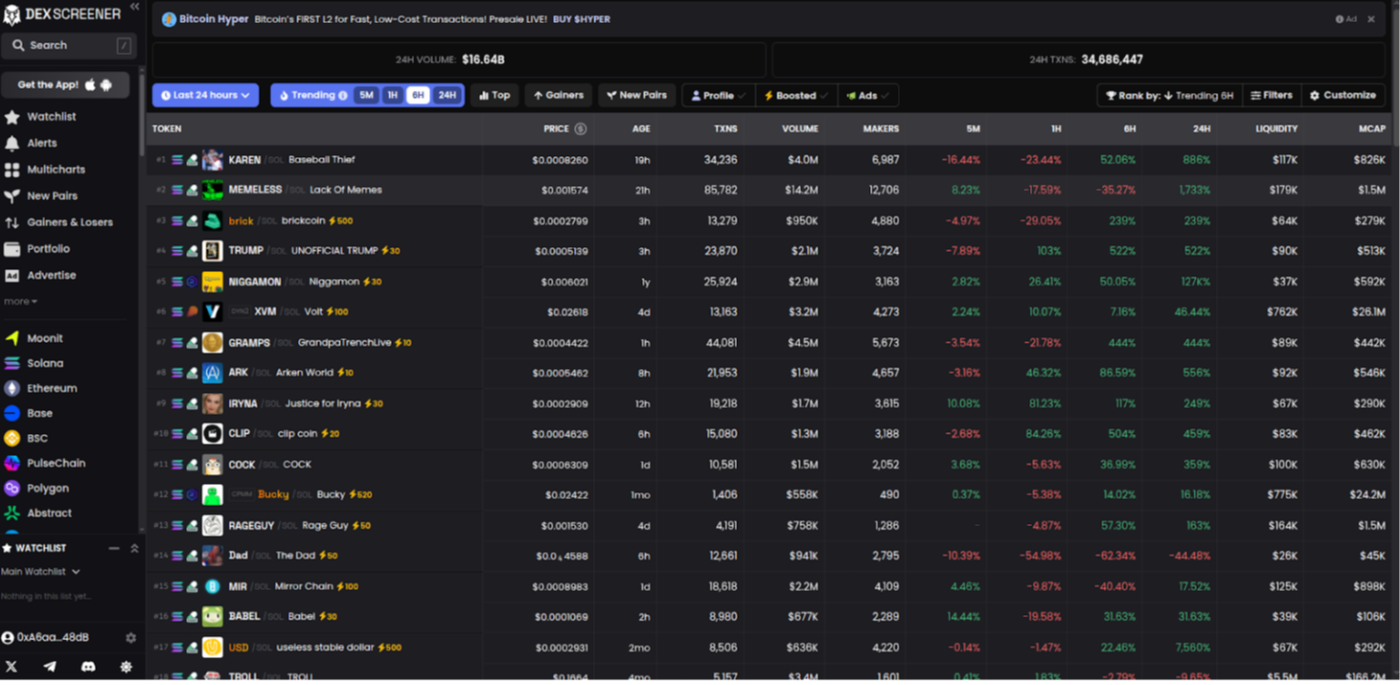
Building a DEXScreener Clone: A Step-by-Step Guide

Building a DEXScreener Clone: A Step-by-Step Guide

DEX Screener is used by crypto traders who need access to on-chain data like trading volumes, liquidity, and token prices. This information allows them to analyze trends, monitor new listings, and make informed investment decisions. In this tutorial, I will build a DEXScreener clone from scratch, covering everything from the initial design to a functional app. We will use Streamlit, a Python framework for building full-stack apps.
Share
Hackernoon2025/09/18 15:05
Which DOGE? Musk's Cryptic Post Explodes Confusion

Which DOGE? Musk's Cryptic Post Explodes Confusion

A viral chart documenting a sharp decline in U.S. federal employment during President Trump's second term has sparked unexpected confusion in cryptocurrency markets
Share
Coinstats2025/12/20 01:13
Google's AP2 protocol has been released. Does encrypted AI still have a chance?

Google's AP2 protocol has been released. Does encrypted AI still have a chance?

Following the MCP and A2A protocols, the AI Agent market has seen another blockbuster arrival: the Agent Payments Protocol (AP2), developed by Google. This will clearly further enhance AI Agents' autonomous multi-tasking capabilities, but the unfortunate reality is that it has little to do with web3AI. Let's take a closer look: What problem does AP2 solve? Simply put, the MCP protocol is like a universal hook, enabling AI agents to connect to various external tools and data sources; A2A is a team collaboration communication protocol that allows multiple AI agents to cooperate with each other to complete complex tasks; AP2 completes the last piece of the puzzle - payment capability. In other words, MCP opens up connectivity, A2A promotes collaboration efficiency, and AP2 achieves value exchange. The arrival of AP2 truly injects "soul" into the autonomous collaboration and task execution of Multi-Agents. Imagine AI Agents connecting Qunar, Meituan, and Didi to complete the booking of flights, hotels, and car rentals, but then getting stuck at the point of "self-payment." What's the point of all that multitasking? So, remember this: AP2 is an extension of MCP+A2A, solving the last mile problem of AI Agent automated execution. What are the technical highlights of AP2? The core innovation of AP2 is the Mandates mechanism, which is divided into real-time authorization mode and delegated authorization mode. Real-time authorization is easy to understand. The AI Agent finds the product and shows it to you. The operation can only be performed after the user signs. Delegated authorization requires the user to set rules in advance, such as only buying the iPhone 17 when the price drops to 5,000. The AI Agent monitors the trigger conditions and executes automatically. The implementation logic is cryptographically signed using Verifiable Credentials (VCs). Users can set complex commission conditions, including price ranges, time limits, and payment method priorities, forming a tamper-proof digital contract. Once signed, the AI Agent executes according to the conditions, with VCs ensuring auditability and security at every step. Of particular note is the "A2A x402" extension, a technical component developed by Google specifically for crypto payments, developed in collaboration with Coinbase and the Ethereum Foundation. This extension enables AI Agents to seamlessly process stablecoins, ETH, and other blockchain assets, supporting native payment scenarios within the Web3 ecosystem. What kind of imagination space can AP2 bring? After analyzing the technical principles, do you think that's it? Yes, in fact, the AP2 is boring when it is disassembled alone. Its real charm lies in connecting and opening up the "MCP+A2A+AP2" technology stack, completely opening up the complete link of AI Agent's autonomous analysis+execution+payment. From now on, AI Agents can open up many application scenarios. For example, AI Agents for stock investment and financial management can help us monitor the market 24/7 and conduct independent transactions. Enterprise procurement AI Agents can automatically replenish and renew without human intervention. AP2's complementary payment capabilities will further expand the penetration of the Agent-to-Agent economy into more scenarios. Google obviously understands that after the technical framework is established, the ecological implementation must be relied upon, so it has brought in more than 60 partners to develop it, almost covering the entire payment and business ecosystem. Interestingly, it also involves major Crypto players such as Ethereum, Coinbase, MetaMask, and Sui. Combined with the current trend of currency and stock integration, the imagination space has been doubled. Is web3 AI really dead? Not entirely. Google's AP2 looks complete, but it only achieves technical compatibility with Crypto payments. It can only be regarded as an extension of the traditional authorization framework and belongs to the category of automated execution. There is a "paradigm" difference between it and the autonomous asset management pursued by pure Crypto native solutions. The Crypto-native solutions under exploration are taking the "decentralized custody + on-chain verification" route, including AI Agent autonomous asset management, AI Agent autonomous transactions (DeFAI), AI Agent digital identity and on-chain reputation system (ERC-8004...), AI Agent on-chain governance DAO framework, AI Agent NPC and digital avatars, and many other interesting and fun directions. Ultimately, once users get used to AI Agent payments in traditional fields, their acceptance of AI Agents autonomously owning digital assets will also increase. And for those scenarios that AP2 cannot reach, such as anonymous transactions, censorship-resistant payments, and decentralized asset management, there will always be a time for crypto-native solutions to show their strength? The two are more likely to be complementary rather than competitive, but to be honest, the key technological advancements behind AI Agents currently all come from web2AI, and web3AI still needs to keep up the good work!
Share
PANews2025/09/18 07:00