The L1 blockchain Quai Network, which was officially launched on its mainnet not long ago, has created a cryptographic infrastructure driven by both technology and applications, which can help unlock more potential for PayFi. Its innovative design can break the efficiency bottleneck of traditional payments and the scalability problem of blockchain, thus paving the way for seamless connection between the crypto economy and the real world.The L1 blockchain Quai Network, which was officially launched on its mainnet not long ago, has created a cryptographic infrastructure driven by both technology and applications, which can help unlock more potential for PayFi. Its innovative design can break the efficiency bottleneck of traditional payments and the scalability problem of blockchain, thus paving the way for seamless connection between the crypto economy and the real world.

Crypto infrastructure that drives both technology and applications, how does Quai Network open up the PayFi highway?

2025/03/12 16:30

Author: Nancy, PANews

Crypto assets are accelerating their penetration into the real world. As a new financial paradigm that integrates traditional payments and DeFi, PayFi can free payment flows from the lengthy paths of financial institutions and reshape the way of financial interaction in the real world. In response to this market trend, L1 blockchain Quai Network, which officially launched its mainnet not long ago, has created a crypto infrastructure driven by both technology and applications, which can help unlock more potential for PayFi. Its innovative design can break the efficiency bottleneck of traditional payments and the scalability problem of blockchain, thus paving the way for seamless connection between the crypto economy and the real world.

Challenging the “Impossible Triangle” and paving a technological highway for PayFi

Bitcoin has evolved from a niche consensus among geeks to a global mainstream asset, marking the gradual maturity of crypto technology and its integration into traditional finance. As an emerging crypto narrative, PayFi challenges the traditional financial framework with the innovative model of "Buy Now Pay Never". It should be noted that the traditional payment system is limited by high fees, long settlement cycles and geographical restrictions, while the existing crypto payment solutions face problems such as cost fluctuations, insufficient throughput and narrow application scenarios, making it difficult to meet large-scale commercial needs.

PayFi aims to achieve instant settlement, low-cost cross-border payment and seamless linkage with RWA through blockchain, solve the pain points of traditional finance and give practical value to crypto assets. However, its large-scale application needs to find a balance between transaction efficiency, cost control and ecological compatibility, which places extremely high demands on infrastructure. As a scalable and programmable L1 blockchain, Quai Network provides support for PayFi with its technological advantages.

PoEM and Dynamic Sharding: Quai Network combines the innovative consensus mechanism PoEM with dynamic sharding architecture to provide an efficient, scalable and secure blockchain solution.

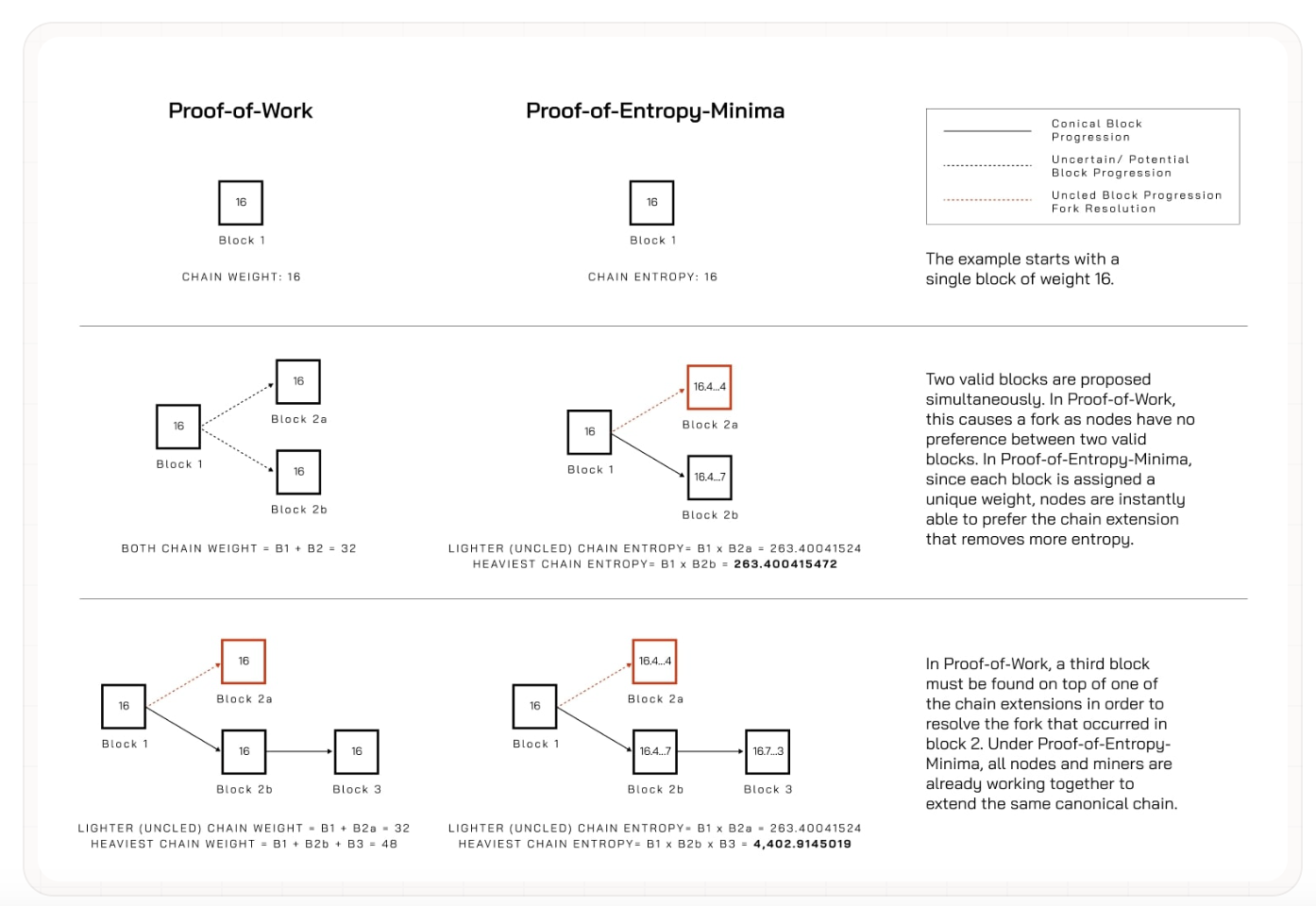
Specifically, Quai Network's sharding architecture uses a dynamic sharding algorithm that can process transactions in parallel based on transaction needs, increasing throughput without sacrificing security. Unlike the single-chain recording method of traditional blockchains (such as Bitcoin or Ethereum), Quai Network processes transactions concurrently through multiple independently executed shards to achieve higher performance. However, as the number of shards increases, cross-shard coordination and consensus speed become expansion bottlenecks. PoEM optimizes PoW consensus and introduces entropy (i.e. randomness) removed from blocks to give block weights. Nodes prioritize blocks with the most entropy removed as chain heads, thereby eliminating fork disputes, quickly reaching consensus, and reducing the impact of network delays.
Crypto infrastructure that drives both technology and applications, how does Quai Network open up the PayFi highway?

It can also be understood that dynamic sharding is a multi-lane highway, which can dynamically adjust lanes according to transaction volume, allowing transactions to be processed in parallel to avoid congestion; PoEM is like an intelligent navigation system, giving priority to "least troublesome" transactions to pass first, ensuring smooth cross-shard transactions without conflicts. This allows Quai Network to maintain high throughput and security in high-load scenarios, becoming a super highway designed for future payments.
Crypto infrastructure that drives both technology and applications, how does Quai Network open up the PayFi highway?

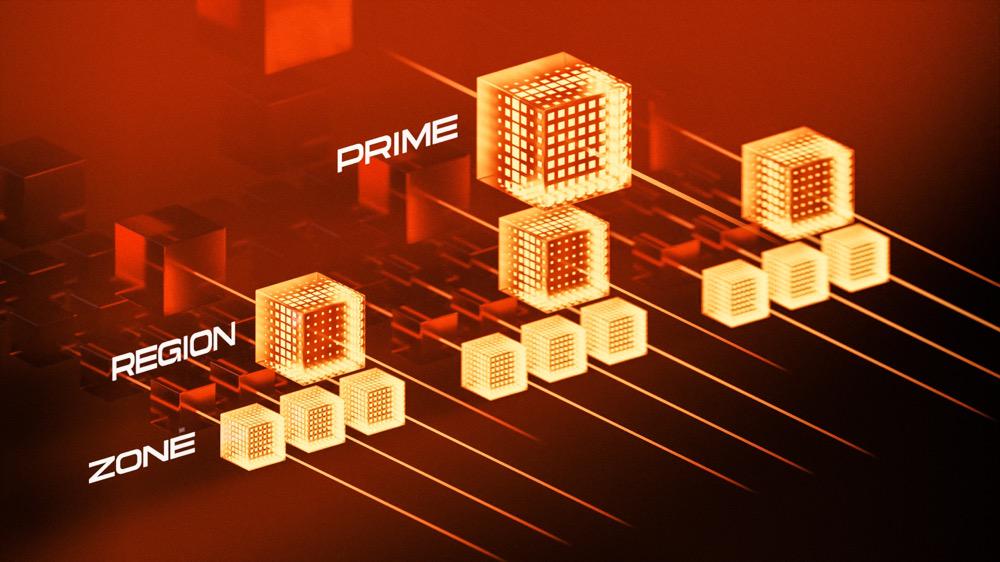
· Cross-chain interoperability: Quai Network adopts a hierarchical multi-chain architecture, dividing the network into multiple interoperable blockchains (execution shards): Prime Chain, Region Chains, and Zone Chains. This design can achieve a throughput of up to 50,000 TPS. To improve the efficiency of cross-shard transactions, Quai Network integrates seamless cross-chain transactions (ETXs), multi-chain contracts, atomicity guarantees, and dynamic sharding to ensure efficient and secure interoperability.

Imagine that using Quai Network to transfer money is like swiping a universal credit card. Whether you are sending money from the United States to a friend in Europe or buying a cup of coffee on the street corner, the money will arrive in a few seconds, the fee is less than 1 cent, and it is safe and tamper-proof. In this process, the main chain is responsible for coordination, the sub-chain is responsible for clearing the bill, and the partition chain is like a cash register that settles instantly, making cross-border payments as fast and efficient as local transactions.

More importantly, Quai Network is compatible with the Ethereum Virtual Machine (EVM). Developers can directly use Ethereum tools to develop and deploy smart contracts without having to learn a new technology stack, which greatly reduces the entry barrier. At the same time, Quai Network can also seamlessly connect with the Ethereum ecosystem (such as DApps, wallets, and infrastructure). In addition, Quai Network also adopts an anti-MEV (maximum extractable value) transaction sorting mechanism to ensure fairer and more efficient execution in the DeFi market.

Merged Mining: Quai Network significantly improves the scalability, security, and energy efficiency of blockchains through a merged mining mechanism. Miners can hash and protect multiple blockchains at the same time. This concept was first proposed by Satoshi Nakamoto, and Quai Network has further developed it into a multi-chain shared protocol network, which ensures network security and efficient collaboration through multi-chain parallelism, shared computing power, and overlapping blocks. In the Quai Network system, miners can mine three chains at the same time, improving computing power utilization and network throughput. Overlapping blocks (generated when miners find a nonce that meets the multi-chain difficulty) realize cross-chain state transfer through hash links, reducing reliance on trust and enhancing system stability.

For example, Xiao Pai buys coffee at a global coffee chain. Traditional blockchain is like using independent cash registers in stores in each country, which makes checkout slow and error-prone. However, Quai's merged mining is like an accountant using smart devices to process bills from multiple stores at the same time, making payment fast and secure. The overlapping block is a payment voucher that can be used in multiple countries. No matter which chain is used for payment, the system can quickly identify and complete the settlement.

In addition, Quai Network adopts the ASIC-resistant ProgPoW algorithm to encourage GPU mining, lower the hardware threshold, and strengthen decentralization. Of course, any blockchain that supports ProgPoW can join Quai Network for merged mining to further expand the ecological influence.

From this point of view, as the global demand for high-performance blockchain continues to grow, Quai Network attempts to break the "impossible triangle" problem through technical innovations such as PoEM consensus, dynamic sharding, cross-chain interoperability and merged mining, and builds an efficient, secure and scalable blockchain network. It can inject more possibilities into high-load application scenarios such as PayFi, and lay a technical foundation for the popularization of encrypted assets.

Create a dual-wheel driven token model, the mainnet has been officially launched

In addition to providing strong technical support for PayFi's diverse application scenarios, Quai Network's dual-token economic model can balance stability and flexibility in different financial market environments, bringing a dual-wheel drive of value storage and transaction medium to PayFi's application scenarios.
Crypto infrastructure that drives both technology and applications, how does Quai Network open up the PayFi highway?

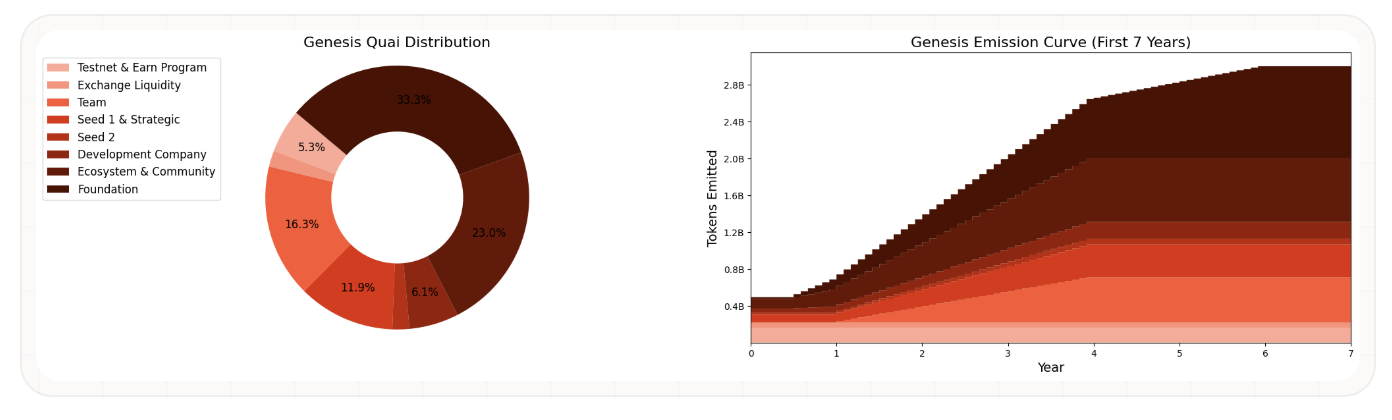
Among them, Quai is an EVM-compatible deflationary token that performs the function of storing value. The supply of Quai consists of two parts: the pre-allocation of the genesis block and the miner reward. It is designed with scarcity and deflation mechanisms to ensure that the growth rate of token supply is always lower than the network expansion rate. In other words, as the network scale and participation increase, the supply of Quai will gradually decrease. This mechanism effectively avoids the cyclical boom and bust model in the traditional economy, allowing Quai to not only meet the decentralized economy's demand for value storage, but also maintain the potential for value-added in the long run. In the PayFi scenario, Quai's value storage function provides users and financial institutions with a stable asset anchor point, such as savings products, DeFi collateral or settlement assets, cross-border asset management, and many other practical applications.

Qi is another core token in Quai Network. As an energy-backed "flatcoin", its value is directly linked to the energy cost consumed by mining. This allows the supply of Qi to flexibly respond to changes in market demand and mining costs: when mining difficulty increases, Qi supply increases; when difficulty decreases, supply decreases accordingly. Quai Network has also designed a two-way conversion mechanism between Qi and Quai, which users and miners can exchange according to the current block reward ratio.

Qi also has cash-like privacy characteristics and low volatility, and can be used as a unit of account and medium of exchange, suitable for daily payments and dynamic financial activities. Its efficiency and stability provide support for PayFiPayFi's daily payments and dynamic financial activities, including instant payments, incentives for ecological participation, etc., allowing users to enjoy the convenience of blockchain in daily transactions while avoiding drastic price fluctuations.

It can be said that Quai Network's dual-token model provides PayFi with dual guarantees of stability and flexibility in different market environments. It can not only meet the diversified financial needs of wealth preservation and efficient payment, but also lay a solid foundation for the diversified application scenarios of decentralized finance.

The innovation of Quai Network has also been recognized by capital and the market. So far, Quai Network has received $15 million through multiple rounds of financing, with participating institutions including Polychain, Alumni Ventures, MH Ventures, Cogitent Ventures and TPC Ventures. At the same time, Quai Network actively builds and expands its cooperation ecosystem, covering DeFi, AI, DAO, infrastructure, wallets and other fields, including Kaito AI, IO.NET, Entangle, Akash Network, MarginEx, IceCream Swap, Penomo, Portal DeFi, Butterfly Protocol and UTXO Alliance.

In general, Quai Network has built a high-speed road for the crypto economy and business scenarios, which is a combination of technology and applications, and especially provides an ideal infrastructure for high-load, low-latency payment applications such as PayFi. Through technological innovations that challenge the "impossible triangle" and dual-wheel-driven token design, Quai Network not only helps to resolve the contradiction between traditional payments and blockchain scalability, but also accelerates the deep integration of crypto assets with the real world, bringing more room for the decentralized economy.

Market Opportunity
RealLink Logo
RealLink Price(REAL)
$0.06106
$0.06106$0.06106
-3.99%
USD
RealLink (REAL) Live Price Chart
Disclaimer: The articles reposted on this site are sourced from public platforms and are provided for informational purposes only. They do not necessarily reflect the views of MEXC. All rights remain with the original authors. If you believe any content infringes on third-party rights, please contact service@support.mexc.com for removal. MEXC makes no guarantees regarding the accuracy, completeness, or timeliness of the content and is not responsible for any actions taken based on the information provided. The content does not constitute financial, legal, or other professional advice, nor should it be considered a recommendation or endorsement by MEXC.

You May Also Like

Crucial: Australia’s Digital Asset Licensing Mandate Set to Transform Crypto Landscape

Crucial: Australia’s Digital Asset Licensing Mandate Set to Transform Crypto Landscape

BitcoinWorld Crucial: Australia’s Digital Asset Licensing Mandate Set to Transform Crypto Landscape Australia is taking a significant step towards a more regulated cryptocurrency environment. Recent proposals suggest that digital asset platforms operating in the country will soon face mandatory Australia’s Digital Asset Licensing requirements. This move signals a growing global trend towards establishing clear rules for the rapidly evolving digital finance sector. Why is Australia Embracing Mandatory Digital Asset Licensing? The Australian government’s draft regulation, as reported by Yahoo Finance, aims to bring much-needed clarity and protection to the digital asset space. The primary goal is to safeguard consumers and foster market integrity. Without proper oversight, the risks of fraud, scams, and market manipulation can be higher, eroding public trust in digital assets. This initiative seeks to level the playing field, ensuring that all platforms adhere to a baseline of operational excellence and accountability. It’s about creating a secure environment where innovation can still thrive, but not at the expense of user safety. Key Requirements for Digital Asset Platforms The proposed framework outlines several crucial obligations for platforms dealing with digital assets. These are designed to ensure transparency, security, and consumer recourse: Financial Services License: Platforms will need to obtain a specific financial services license, aligning them with traditional financial institutions. This ensures they meet stringent regulatory standards. Dispute Resolution System: A robust system for resolving customer complaints and disputes will be mandatory. This gives users a clear path to address issues, enhancing consumer protection. Minimum Standards for Custody: Platforms holding customer digital assets must meet specific standards for secure custody. This protects users’ funds from hacks, theft, and mismanagement. Payment Standards: Requirements for payment processes will be introduced, aiming to ensure efficient and secure transactions. This builds confidence in the operational reliability of these platforms. What are the Benefits of Robust Australia’s Digital Asset Licensing? While some in the crypto community might view regulation with skepticism, there are significant advantages to a well-structured regulatory framework. Firstly, it can dramatically boost investor confidence. Knowing that platforms are licensed and subject to oversight can encourage more mainstream adoption and institutional investment. Moreover, it helps in combating illicit activities. By requiring platforms to identify their clients and monitor transactions, the new rules can make it harder for bad actors to use digital assets for money laundering or terrorist financing. This ultimately strengthens the reputation of the entire digital asset industry. Navigating the Challenges of Digital Asset Licensing Of course, implementing such comprehensive regulations is not without its challenges. Smaller platforms and startups might face increased compliance costs, potentially hindering their ability to compete. There’s also the delicate balance of fostering innovation versus imposing overly restrictive rules. Regulators must work closely with the industry to ensure the framework is practical and forward-looking. Another challenge is the dynamic nature of digital assets themselves. The technology evolves rapidly, and regulations must be flexible enough to adapt without becoming outdated too quickly. The success of Australia’s Digital Asset Licensing will depend on its ability to strike this balance. What Does This Mean for You, the Crypto User? For individuals trading or holding digital assets in Australia, these proposed changes are generally positive. They promise a safer and more transparent environment. You can expect platforms to be more accountable, with clearer avenues for support and dispute resolution. This shift could lead to a more stable and trustworthy market, encouraging broader participation. It’s an exciting time as Australia moves to solidify its position in the global digital economy, demonstrating a commitment to responsible growth in the crypto space. The framework for Australia’s Digital Asset Licensing is a pivotal step. Conclusion: Australia’s proposal for mandatory digital asset licensing marks a pivotal moment for its crypto industry. By introducing clear regulatory standards, the nation aims to enhance consumer protection, foster market integrity, and build greater trust in digital assets. While challenges in implementation will exist, this proactive approach positions Australia as a leader in creating a secure and responsible environment for the future of finance. It’s a move that promises a more mature and reliable ecosystem for all participants. Frequently Asked Questions (FAQs) Q1: What is the main goal of Australia’s proposed digital asset licensing? A1: The primary goal is to enhance consumer protection, ensure market integrity, and prevent illicit activities within the digital asset sector by requiring platforms to meet specific regulatory standards. Q2: Which platforms will be affected by these new regulations? A2: The regulations will primarily affect digital asset platforms operating in Australia that facilitate the exchange, custody, or payment services involving cryptocurrencies and other digital assets. Q3: What are some key requirements for platforms under the new licensing? A3: Key requirements include obtaining a financial services license, establishing a robust dispute resolution system, and meeting minimum standards for the custody and payment processing of digital assets. Q4: How will these changes benefit crypto users in Australia? A4: Crypto users can expect a safer, more transparent, and trustworthy environment. Platforms will be more accountable, with clearer processes for dispute resolution and enhanced security for their digital assets. Q5: When are these new regulations expected to come into effect? A5: The proposal is currently in a draft stage. After public consultation and parliamentary processes, a final timeline for implementation will be announced. Users should stay informed via official government and financial news channels. Found this article insightful? Share it with your friends, colleagues, and anyone interested in the evolving world of cryptocurrency regulation! Your shares help us spread crucial information and foster a more informed digital asset community. To learn more about the latest crypto market trends, explore our article on key developments shaping Bitcoin institutional adoption. This post Crucial: Australia’s Digital Asset Licensing Mandate Set to Transform Crypto Landscape first appeared on BitcoinWorld.
Share
Coinstats2025/09/25 08:10
Atlassian’s Monumental DX Acquisition: Revolutionizing Developer Productivity for a Billion-Dollar Future

Atlassian’s Monumental DX Acquisition: Revolutionizing Developer Productivity for a Billion-Dollar Future

BitcoinWorld Atlassian’s Monumental DX Acquisition: Revolutionizing Developer Productivity for a Billion-Dollar Future In a move that sends ripples across the tech industry, impacting everything from foundational infrastructure to the cutting-edge innovations seen in blockchain and cryptocurrency development, productivity software giant Atlassian has made its largest acquisition to date. This isn’t just another corporate buyout; it’s a strategic investment in the very fabric of how software is built. The Atlassian acquisition of DX, a pioneering developer productivity platform, for a staggering $1 billion, signals a profound commitment to optimizing engineering workflows and understanding the true pulse of development teams. For those invested in the efficiency and scalability of digital ecosystems, this development underscores the growing importance of robust tooling at every layer. Unpacking the Monumental Atlassian Acquisition: A Billion-Dollar Bet on Developer Efficiency On a recent Thursday, Atlassian officially announced its agreement to acquire DX for $1 billion, a sum comprising both cash and restricted stock. This substantial investment highlights Atlassian’s belief in the critical role of developer insights in today’s fast-paced tech landscape. For years, Atlassian has been synonymous with collaboration and project management tools, powering teams worldwide with products like Jira, Confluence, and Trello. However, recognizing a growing need, the company has now decisively moved to integrate a dedicated developer productivity insight platform into its formidable product suite. This acquisition isn’t merely about expanding market share; it’s about deepening Atlassian’s value proposition by providing comprehensive visibility into the health and efficiency of engineering operations. The strategic rationale behind this billion-dollar move is multifaceted. Atlassian co-founder and CEO Mike Cannon-Brookes shared with Bitcoin World that after a three-year attempt to build an in-house developer productivity insight tool, his Sydney-based company realized the immense value of an external, existing solution. This candid admission speaks volumes about the complexity and specialized nature of developer productivity measurement. DX emerged as the natural choice, not least because an impressive 90% of DX’s existing customers were already leveraging Atlassian’s project management and collaboration tools. This pre-existing synergy promises a smoother integration and immediate value for a significant portion of the combined customer base. What is the DX Platform and Why is it a Game-Changer? At its core, DX is designed to empower enterprises by providing deep analytics into how productive their engineering teams truly are. More importantly, it helps identify and unblock bottlenecks that can significantly slow down development cycles. Launched five years ago by Abi Noda and Greyson Junggren, DX emerged from a fundamental challenge: the lack of accurate and non-intrusive metrics to understand developer friction. Abi Noda, in a 2022 interview with Bitcoin World, articulated his founding vision: to move beyond superficial metrics that often failed to capture the full picture of engineering challenges. His experience as a product manager at GitHub revealed that traditional measures often felt like surveillance rather than support, leading to skewed perceptions of productivity. DX was built on a different philosophy, focusing on qualitative and quantitative insights that truly reflect what hinders teams, without making developers feel scrutinized. Noda noted, “The assumptions we had about what we needed to help ship products faster were quite different than what the teams and developers were saying was getting in their way.” Since emerging from stealth in 2022, the DX platform has demonstrated remarkable growth, tripling its customer base every year. It now serves over 350 enterprise customers, including industry giants like ADP, Adyen, and GitHub. What makes DX’s success even more impressive is its lean operational model; the company achieved this rapid expansion while raising less than $5 million in venture funding. This efficiency underscores the inherent value and strong market demand for its solution, making it an exceptionally attractive target for Atlassian. Boosting Developer Productivity: Atlassian’s Strategic Vision The acquisition of DX is a clear signal of Atlassian’s strategic intent to not just manage tasks, but to optimize the entire software development lifecycle. By integrating DX’s capabilities, Atlassian aims to offer an end-to-end “flywheel” for engineering teams. This means providing tools that not only facilitate collaboration and project tracking but also offer actionable insights into where processes are breaking down and how they can be improved. Mike Cannon-Brookes elaborated on this synergy, stating, “DX has done an amazing job [of] understanding the qualitative and quantitative aspects of developer productivity and turning that into actions that can improve those companies and give them insights and comparisons to others in their industry, others at their size, etc.” This capability to benchmark and identify specific areas for improvement is invaluable for organizations striving for continuous enhancement. Abi Noda echoed this sentiment, telling Bitcoin World that the combined entities are “better together than apart.” He emphasized how Atlassian’s extensive suite of tools complements the data and information gathered by DX. “We are able to provide customers with that full flywheel to get the data and understand where we are unhealthy,” Noda explained. “They can plug in Atlassian’s tools and solutions to go address those bottlenecks. An end-to-end flywheel that is ultimately what customers want.” This integration promises to create a seamless experience, allowing teams to move from identifying an issue to implementing a solution within a unified ecosystem. The Intersection of Enterprise Software and Emerging Tech Trends This landmark acquisition also highlights a significant trend in the broader enterprise software landscape: a shift towards more intelligent, data-driven solutions that directly impact operational efficiency and competitive advantage. As companies continue to invest heavily in digital transformation, the ability to measure and optimize the output of their most valuable asset — their engineering talent — becomes paramount. DX’s impressive roster of over 350 enterprise customers, including some of the largest and most technologically advanced organizations, is a testament to the universal need for such a platform. These companies recognize that merely tracking tasks isn’t enough; they need to understand the underlying dynamics of their engineering teams to truly unlock their potential. The integration of DX into Atlassian’s ecosystem will likely set a new standard for what enterprise software can offer, pushing competitors to enhance their own productivity insights. Moreover, this move by Atlassian, a global leader in enterprise collaboration, underscores a broader investment thesis in foundational tooling. Just as robust blockchain infrastructure is critical for the future of decentralized finance, powerful and insightful developer tools are essential for the evolution of all software, including the complex applications underpinning Web3. The success of companies like DX, which scale without massive external funding, also resonates with the lean, efficient ethos often celebrated in the crypto space. Navigating the Era of AI Tools: Measuring Impact and ROI Perhaps one of the most compelling aspects of this acquisition, as highlighted by Atlassian’s CEO, is its timely relevance in the era of rapidly advancing AI tools. Mike Cannon-Brookes noted that the rise of AI has created a new imperative for companies to measure its usage and effectiveness. “You suddenly have these budgets that are going up. Is that a good thing? Is that not a good thing? Am I spending the money in the right ways? It’s really, really important and critical.” With AI-powered coding assistants and other generative AI solutions becoming increasingly prevalent in development workflows, organizations are grappling with how to quantify the return on investment (ROI) of these new technologies. DX’s platform can provide the necessary insights to understand if AI tools are genuinely boosting productivity, reducing bottlenecks, or simply adding to complexity. By offering clear data on how AI impacts developer efficiency, DX will help enterprises make smarter, data-driven decisions about their AI investments. This foresight positions Atlassian not just as a provider of developer tools, but as a strategic partner in navigating the complexities of modern software development, particularly as AI integrates more deeply into every facet of the engineering process. It’s about empowering organizations to leverage AI effectively, ensuring that these powerful new tools translate into tangible improvements in output and innovation. The Atlassian acquisition of DX represents a significant milestone for both companies and the broader tech industry. It’s a testament to the growing recognition that developer productivity is not just a buzzword, but a measurable and critical factor in an organization’s success. By combining DX’s powerful insights with Atlassian’s extensive suite of collaboration and project management tools, the merged entity is poised to offer an unparalleled, end-to-end solution for optimizing software development. This strategic move, valued at a billion dollars, underscores Atlassian’s commitment to innovation and its vision for a future where engineering teams are not only efficient but also deeply understood and supported, paving the way for a more productive and insightful era in enterprise software. To learn more about the latest AI market trends, explore our article on key developments shaping AI features. This post Atlassian’s Monumental DX Acquisition: Revolutionizing Developer Productivity for a Billion-Dollar Future first appeared on BitcoinWorld.
Share
Coinstats2025/09/18 21:40
OUSG (OUSG) - Complete Fundamental Analysis

OUSG (OUSG) - Complete Fundamental Analysis

OUSG (OUSG) Cryptocurrency Overview ## Core Technology and Blockchain Architecture OUSG is a tokenized short-term U.S. Treasury bills ETF managed by Ondo Finance

Share
Coinstats2026/02/01 09:01