Following the recent launch of multiple crypto ETFs, Bitwise Asset Manager’s CIO has forecasted a bright future for the firm’s Solana Staking Exchange-Traded Fund (ETF), as investors show strong initial interest in the investment product. Related Reading: November Preview: Will Bitcoin Break The Cycle Or Repeat It? Bitwise Solana Staking ETF Sees Strong Start On Tuesday, Bitwise CIO Matt Hougan predicted that the Bitwise Solana Staking ETF (BSOL) could attract significant institutional interest and become one of the leading investment products based on digital assets. Hougan argued that Solana is “one of the most exciting crypto investment opportunities that exists today,” as it records “the most revenue of any blockchain.” He explained that institutional investors “love” both ETFs and revenue, which suggests that these investors will “love Solana ETFs.” Bitwise’s CIO previously pointed out that there must be fundamental reasons for investors’ interest in investment vehicles such as ETFs and Digital Asset Treasuries (DATs), signaling that Solana has them. Therefore, he has “a feeling the Bitwise Solana Staking ETF, BSOL, is gonna be huge.” Ahead of the launch, ETF Expert Eric Balchunas predicted that the first day volume for Bitwise’s Solana ETF could surpass the $50 million mark. Notably, the firm’s spot Bitcoin ETF (BITB) and spot Ethereum ETH (ETHW) recorded $237.9 million and $204 million on their first day, respectively. Hougan has highlighted that Solana’s market capitalization is 1/20th the size of BTC and less than 1/4th the size of ETH. Based on this, the volume for an SOL ETF is expected to be smaller than that of ETFs based on the two leading crypto assets. According to data shared by Balchunas, BSOL recorded an impressive volume of $10 million in the first 30 minutes of trading, hinting at initial demand. This amount surged to approximately $33 million by the half-day mark and hit $56 million by the end of its first trading day. According to the analyst, BSOL had a strong start, noting that its “$56m is the MOST of any launch this year.. More than XRPR, SSK, Ives and BMNU.” Crypto ETFs Launch Amid Government Shutdown BSOL was among the crypto ETFs launched on October 28 despite the US government shutdown. As reported by NewsBTC, Bitwise, for its Solana Staking ETF, and Canary Capital, for its spot Litecoin (LTC) and Hedera (HBAR) ETFs, filed 8-A forms on Monday to launch the investment products this week despite the government shutdown. Notably, the Securities and Exchange Commission (SEC) was set to approve over a dozen altcoin ETFs between October and November after delaying the decision deadline and releasing new generic listing standards for the products. Related Reading: Bitcoin Obsession Costs Saylor — S&P Tags Strategy As ‘Junk’ However, investors expected that the long-awaited green light would be delayed until the end of the government shutdown. Journalist Eleanor Terret explained that the launch was possible because an open government isn’t required and the 8-A filings are “just as important” as the S-1 forms, as they formally register ETF shares under the Securities Exchange Act of 1934. As a result, after the NYSE certified all the filings for the ETFs, they could start trading on Tuesday. Meanwhile, Grayscale’s Solana Trust (GSOL) will convert into an ETF on Wednesday. Featured Image from Unsplash.com, Chart from TradingView.comFollowing the recent launch of multiple crypto ETFs, Bitwise Asset Manager’s CIO has forecasted a bright future for the firm’s Solana Staking Exchange-Traded Fund (ETF), as investors show strong initial interest in the investment product. Related Reading: November Preview: Will Bitcoin Break The Cycle Or Repeat It? Bitwise Solana Staking ETF Sees Strong Start On Tuesday, Bitwise CIO Matt Hougan predicted that the Bitwise Solana Staking ETF (BSOL) could attract significant institutional interest and become one of the leading investment products based on digital assets. Hougan argued that Solana is “one of the most exciting crypto investment opportunities that exists today,” as it records “the most revenue of any blockchain.” He explained that institutional investors “love” both ETFs and revenue, which suggests that these investors will “love Solana ETFs.” Bitwise’s CIO previously pointed out that there must be fundamental reasons for investors’ interest in investment vehicles such as ETFs and Digital Asset Treasuries (DATs), signaling that Solana has them. Therefore, he has “a feeling the Bitwise Solana Staking ETF, BSOL, is gonna be huge.” Ahead of the launch, ETF Expert Eric Balchunas predicted that the first day volume for Bitwise’s Solana ETF could surpass the $50 million mark. Notably, the firm’s spot Bitcoin ETF (BITB) and spot Ethereum ETH (ETHW) recorded $237.9 million and $204 million on their first day, respectively. Hougan has highlighted that Solana’s market capitalization is 1/20th the size of BTC and less than 1/4th the size of ETH. Based on this, the volume for an SOL ETF is expected to be smaller than that of ETFs based on the two leading crypto assets. According to data shared by Balchunas, BSOL recorded an impressive volume of $10 million in the first 30 minutes of trading, hinting at initial demand. This amount surged to approximately $33 million by the half-day mark and hit $56 million by the end of its first trading day. According to the analyst, BSOL had a strong start, noting that its “$56m is the MOST of any launch this year.. More than XRPR, SSK, Ives and BMNU.” Crypto ETFs Launch Amid Government Shutdown BSOL was among the crypto ETFs launched on October 28 despite the US government shutdown. As reported by NewsBTC, Bitwise, for its Solana Staking ETF, and Canary Capital, for its spot Litecoin (LTC) and Hedera (HBAR) ETFs, filed 8-A forms on Monday to launch the investment products this week despite the government shutdown. Notably, the Securities and Exchange Commission (SEC) was set to approve over a dozen altcoin ETFs between October and November after delaying the decision deadline and releasing new generic listing standards for the products. Related Reading: Bitcoin Obsession Costs Saylor — S&P Tags Strategy As ‘Junk’ However, investors expected that the long-awaited green light would be delayed until the end of the government shutdown. Journalist Eleanor Terret explained that the launch was possible because an open government isn’t required and the 8-A filings are “just as important” as the S-1 forms, as they formally register ETF shares under the Securities Exchange Act of 1934. As a result, after the NYSE certified all the filings for the ETFs, they could start trading on Tuesday. Meanwhile, Grayscale’s Solana Trust (GSOL) will convert into an ETF on Wednesday. Featured Image from Unsplash.com, Chart from TradingView.com

Bitwise CIO Predicts Solana Staking ETF Will Be ‘Huge’ As First Day Volume Hits $56M

2025/10/29 17:00

Following the recent launch of multiple crypto ETFs, Bitwise Asset Manager’s CIO has forecasted a bright future for the firm’s Solana Staking Exchange-Traded Fund (ETF), as investors show strong initial interest in the investment product.

Bitwise Solana Staking ETF Sees Strong Start

On Tuesday, Bitwise CIO Matt Hougan predicted that the Bitwise Solana Staking ETF (BSOL) could attract significant institutional interest and become one of the leading investment products based on digital assets.

Hougan argued that Solana is “one of the most exciting crypto investment opportunities that exists today,” as it records “the most revenue of any blockchain.” He explained that institutional investors “love” both ETFs and revenue, which suggests that these investors will “love Solana ETFs.”

Bitwise’s CIO previously pointed out that there must be fundamental reasons for investors’ interest in investment vehicles such as ETFs and Digital Asset Treasuries (DATs), signaling that Solana has them. Therefore, he has “a feeling the Bitwise Solana Staking ETF, BSOL, is gonna be huge.”

Ahead of the launch, ETF Expert Eric Balchunas predicted that the first day volume for Bitwise’s Solana ETF could surpass the $50 million mark. Notably, the firm’s spot Bitcoin ETF (BITB) and spot Ethereum ETH (ETHW) recorded $237.9 million and $204 million on their first day, respectively.

Hougan has highlighted that Solana’s market capitalization is 1/20th the size of BTC and less than 1/4th the size of ETH. Based on this, the volume for an SOL ETF is expected to be smaller than that of ETFs based on the two leading crypto assets.

According to data shared by Balchunas, BSOL recorded an impressive volume of $10 million in the first 30 minutes of trading, hinting at initial demand. This amount surged to approximately $33 million by the half-day mark and hit $56 million by the end of its first trading day.

According to the analyst, BSOL had a strong start, noting that its “$56m is the MOST of any launch this year.. More than XRPR, SSK, Ives and BMNU.”

Crypto ETFs Launch Amid Government Shutdown

BSOL was among the crypto ETFs launched on October 28 despite the US government shutdown. As reported by NewsBTC, Bitwise, for its Solana Staking ETF, and Canary Capital, for its spot Litecoin (LTC) and Hedera (HBAR) ETFs, filed 8-A forms on Monday to launch the investment products this week despite the government shutdown.

Notably, the Securities and Exchange Commission (SEC) was set to approve over a dozen altcoin ETFs between October and November after delaying the decision deadline and releasing new generic listing standards for the products.

However, investors expected that the long-awaited green light would be delayed until the end of the government shutdown. Journalist Eleanor Terret explained that the launch was possible because an open government isn’t required and the 8-A filings are “just as important” as the S-1 forms, as they formally register ETF shares under the Securities Exchange Act of 1934.

As a result, after the NYSE certified all the filings for the ETFs, they could start trading on Tuesday. Meanwhile, Grayscale’s Solana Trust (GSOL) will convert into an ETF on Wednesday.
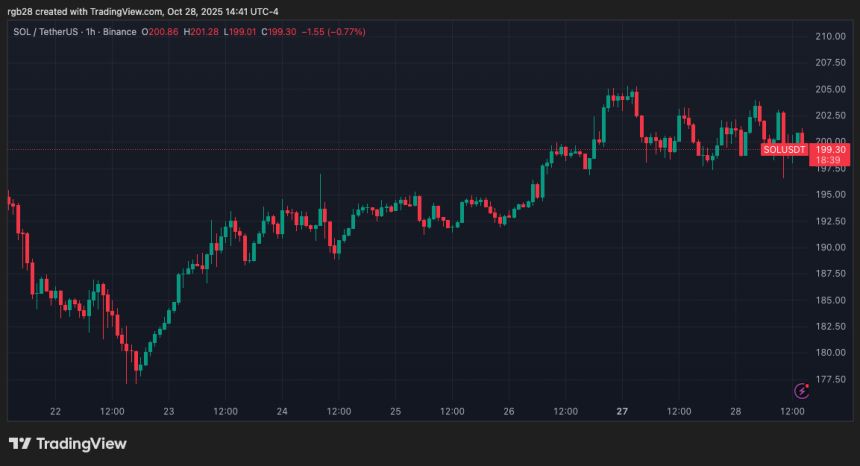
Solana, sol, solusdt
Market Opportunity
FUTURECOIN Logo
FUTURECOIN Price(FUTURE)
$0.11857
$0.11857$0.11857
0.00%
USD
FUTURECOIN (FUTURE) Live Price Chart
Disclaimer: The articles reposted on this site are sourced from public platforms and are provided for informational purposes only. They do not necessarily reflect the views of MEXC. All rights remain with the original authors. If you believe any content infringes on third-party rights, please contact service@support.mexc.com for removal. MEXC makes no guarantees regarding the accuracy, completeness, or timeliness of the content and is not responsible for any actions taken based on the information provided. The content does not constitute financial, legal, or other professional advice, nor should it be considered a recommendation or endorsement by MEXC.

You May Also Like

Cashing In On University Patents Means Giving Up On Our Innovation Future

Cashing In On University Patents Means Giving Up On Our Innovation Future

The post Cashing In On University Patents Means Giving Up On Our Innovation Future appeared on BitcoinEthereumNews.com. “It’s a raid on American innovation that would deliver pennies to the Treasury while kneecapping the very engine of our economic and medical progress,” writes Pipes. Getty Images Washington is addicted to taxing success. Now, Commerce Secretary Howard Lutnick is floating a plan to skim half the patent earnings from inventions developed at universities with federal funding. It’s being sold as a way to shore up programs like Social Security. In reality, it’s a raid on American innovation that would deliver pennies to the Treasury while kneecapping the very engine of our economic and medical progress. Yes, taxpayer dollars support early-stage research. But the real payoff comes later—in the jobs created, cures discovered, and industries launched when universities and private industry turn those discoveries into real products. By comparison, the sums at stake in patent licensing are trivial. Universities collectively earn only about $3.6 billion annually in patent income—less than the federal government spends on Social Security in a single day. Even confiscating half would barely register against a $6 trillion federal budget. And yet the damage from such a policy would be anything but trivial. The true return on taxpayer investment isn’t in licensing checks sent to Washington, but in the downstream economic activity that federally supported research unleashes. Thanks to the bipartisan Bayh-Dole Act of 1980, universities and private industry have powerful incentives to translate early-stage discoveries into real-world products. Before Bayh-Dole, the government hoarded patents from federally funded research, and fewer than 5% were ever licensed. Once universities could own and license their own inventions, innovation exploded. The result has been one of the best returns on investment in government history. Since 1996, university research has added nearly $2 trillion to U.S. industrial output, supported 6.5 million jobs, and launched more than 19,000 startups. Those companies pay…
Share
BitcoinEthereumNews2025/09/18 03:26
Trump Reviews Candidates to Succeed Fed Chair Powell

Trump Reviews Candidates to Succeed Fed Chair Powell

The post Trump Reviews Candidates to Succeed Fed Chair Powell appeared on BitcoinEthereumNews.com. Key Points: Trump evaluates Fed Chair candidates, considering
Share
BitcoinEthereumNews2025/12/19 08:34
Will XRP Price Increase In September 2025?

Will XRP Price Increase In September 2025?

Ripple XRP is a cryptocurrency that primarily focuses on building a decentralised payments network to facilitate low-cost and cross-border transactions. It’s a native digital currency of the Ripple network, which works as a blockchain called the XRP Ledger (XRPL). It utilised a shared, distributed ledger to track account balances and transactions. What Do XRP Charts Reveal? […]
Share
Tronweekly2025/09/18 00:00