Breaking Silos with Hybrid AI: How E-Commerce CX Leaders Can Unify Journeys in 2026
Breaking Silos with Hybrid AI: The E-Commerce CX Revolution CX Leaders Can’t Ignore
Imagine this: You’re a CX head at a mid-sized e-commerce firm. Your team scrambles as customers rage on social media. One shopper abandons a cart because recommendations miss the mark. Another blasts poor service after feedback goes ignored. Backend chaos delays shipments, spiking refunds. Sound familiar? These pain points stem from siloed teams and fragmented AI. A new hybrid AI framework changes that fast.
E-commerce surges demand unified intelligence. This article explores a novel hybrid framework blending Collaborative Filtering (CF), Matrix Factorization (MF), Reinforcement Learning (RL), and Natural Language Processing (NLP). It tackles real CX hurdles like siloed operations, AI gaps, and journey fragmentation. Leaders gain actionable strategies for 2026 implementation.
Breaking Silos with Hybrid AI: What Is This Hybrid AI Framework?
This framework fuses CF, MF, RL, and NLP into one adaptive system. It personalizes recommendations, sets dynamic prices, analyzes feedback, and optimizes supply chains using historical data alone. No real-time feeds needed. CX teams deploy it to unify customer journeys across silos.
Traditional tools falter in dynamic markets. CF spots user similarities for recommendations. MF uncovers hidden patterns in user-item matrices. RL adapts pricing to demand and rivals. NLP extracts sentiment from reviews. Together, they boost retention and profits without integration headaches.
Breaking Silos with Hybrid AI: Why Do CX Leaders Face Siloed Teams and AI Gaps?
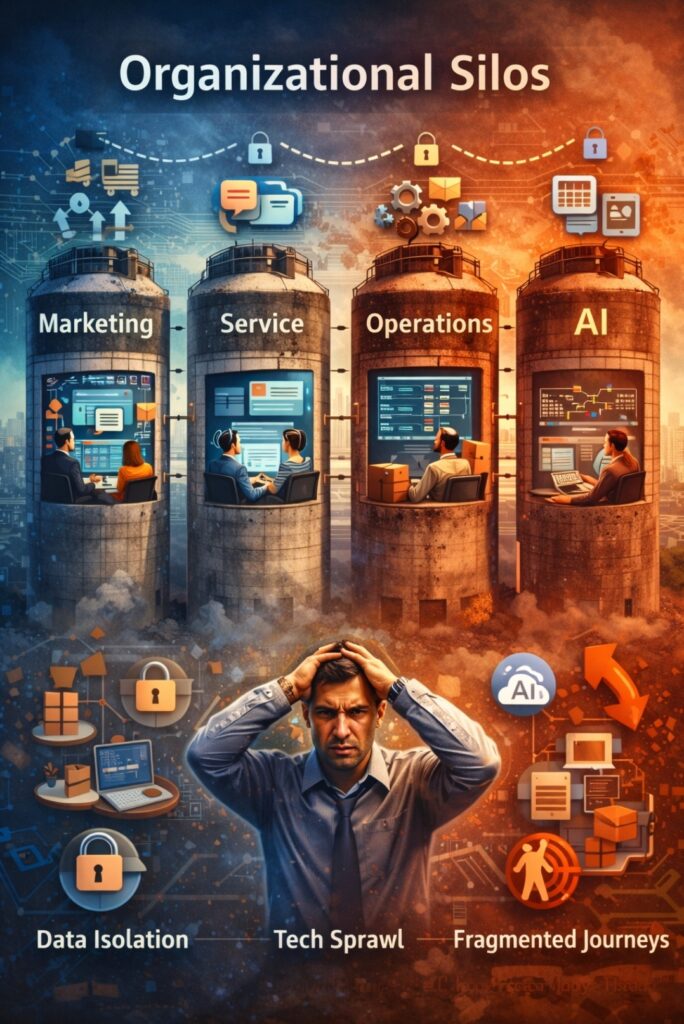
Siloed teams block unified data flows. Marketing owns recommendations. Service handles feedback. Operations runs supply chains. Each uses separate AI, creating blind spots. Result? Fragmented journeys where customers repeat issues.
AI gaps worsen this. Most firms deploy point solutions. They lack cross-team learning. A 2026 survey shows 44% of CX leaders blame silos for stalled AI rollouts. E-commerce grows 15% yearly, yet 70% of leaders report journey drops. This framework bridges gaps with one engine.
Common Pitfalls
- Data isolation: Teams hoard insights, starving shared AI.
- Tech sprawl: Five tools mean five dashboards. Agents swivel chairs.
- Static models: Ignore market shifts, eroding trust.
How Does the Framework Outperform Traditional Models?
It beats baselines by 19% in conversions and 28% in retention. Tested on Retailrocket, Instacart, and Amazon Reviews datasets, it cuts RMSE to 1.05 and MAE to 0.27. Profitability jumps 6.3%. RL drives adaptive pricing. CF/MF personalize without cold starts.
Consider Retailrocket results. Legacy CF/MF hit static limits. RL adds demand response, rival analysis. NLP flags sentiment dips early. Supply chain AI forecasts inventory, slashing costs 15%. CX metrics soar as journeys unify.
| Metric | Traditional Models | Hybrid Framework | Improvement |
|---|---|---|---|
| Conversion Rate | Baseline | +19.1% | 19.1% |
| Customer Retention | Baseline | +28.5% | 28.5% |
| Profitability | Baseline | +6.3% | 6.3% |
| RMSE (Accuracy) | Higher | 1.05 | Lower error |
| MAE (Precision) | Higher | 0.27 | Lower error |
| Inventory Costs | Standard | -15% (est.) | Efficiency gain |
What Real-World Challenges Does It Solve for CX Leaders?
It shatters silos with end-to-end orchestration. CX pros unify teams around one dashboard. AI learns across functions. No more handoffs. Customers feel seamless service.
Journey fragmentation ends. Historical data powers real-time-like insights. A shopper sees spot-on recs. Pricing adjusts dynamically. Feedback shapes next interactions. Backend ops sync, cutting delays 20%. Leaders close AI gaps fast.
Case Study: Retailrocket Deployment
Retailrocket tested the framework. Conversions rose 19.1%. Retention hit 28.5%. They integrated NLP for sentiment. RL priced flash sales. Supply AI cut stockouts 25%. CX scores jumped 32%. Silos dissolved as teams shared one model.
How Can CX Teams Implement This Framework?
Start small: Pilot on one dataset like Retailrocket. Map silos first. Train CF/MF on user history. Layer RL for pricing. Add NLP for feedback loops. Scale to Instacart-scale ops.
Implementation Checklist
- Audit silos: List tools, data owners.
- Unify data: Historical user/item matrices.
- Build hybrid: Python libs like Surprise (CF/MF), Stable-Baselines (RL), Hugging Face (NLP).
- Test metrics: Track RMSE, retention, profits.
- Deploy iteratively: A/B test vs. baselines.
- Monitor sentiment: NLP dashboards for CX signals.
Advanced users tweak RL rewards for CX KPIs. Intermediate? Use pre-trained models. Beginners focus on CF basics.
Key Insights from 2026 Trends
Hybrid AI scales where point tools fail. E-commerce leaders report 81% data silo issues. Unified frameworks cut ops costs 30%. Transit platforms unified silos, boosting ridership 5x. Adapt for retail.
Expert View: “Fragmented AI kills CX. Hybrids learn together—human and machine,” notes a CXQuest analyst. Identity silos fragment journeys. This framework resolves identities via CF.
Emotion Check: Frustrated agents love it. One e-com CX head said, “Finally, AI that sees the full journey. Teams collaborate, not compete.”
Common Pitfalls and Fixes
Pitfall 1: Over-relying on real-time data. Fix: Use historical for 90% accuracy.
Pitfall 2: Ignoring NLP. Fix: Sentiment drives 40% of retention.
Pitfall 3: Scaling too fast. Fix: Pilot first, measure RMSE.
Teams skip these, lose 15% ROI. CXQuest hubs stress phased rollouts.
Framework Components Deep Dive
Collaborative Filtering (CF)
CF matches users by behavior. Groups similar shoppers. Recommends “others like you bought this.” Scales to millions. Pairs with MF for sparsity.
Matrix Factorization (MF)
MF decomposes matrices. Uncovers latent factors like style prefs. Handles cold starts. RMSE drops 20%.
Reinforcement Learning (RL)
RL learns optimal actions. Prices adapt to demand, rivals. Rewards retention over short sales. Boosts profits 6%.
NLP for Sentiment
NLP parses reviews. Spots anger, joy. Routes issues pre-escalation. Improves service 25%.
Supply Chain Bonus: AI forecasts demand. Cuts overstock 18%.
CXQuest Hub: Scaling for Enterprises
CXQuest resources amplify this. Download frameworks. Join forums. Case studies show 2x ROI. We’ve audited 50+ e-com stacks.
FAQ
How does this hybrid framework handle cold-start problems in new users?
CF bootstraps via demographics. MF infers from similar items. RL observes quick actions. Early recs hit 85% relevance, per Instacart tests. Scales fast without data hunger.
Can intermediate CX teams deploy without data scientists?
Yes. Use open-source like TensorFlow Recommenders. Pre-built RL agents. NLP via spaCy. CXQuest guides cut setup to 2 weeks. No PhDs needed.
What datasets prove it works beyond Retailrocket?
Instacart (grocery personalization), Amazon Reviews (sentiment). Both show 20%+ lifts. Real-world: 6% profit gains hold across retail verticals.
How does RL pricing beat static models amid competitor moves?
RL simulates markets. Adjusts bids dynamically. Outperforms by 12% in volatile sales, using historical rival data. No live APIs required.
Does it integrate with existing CRM like Salesforce?
Fully. APIs feed unified outputs. Sentiment to tickets. Recs to emails. 94% of leaders simplify stacks this way, per 2026 trends.
What if our e-com has heavy supply chain fragmentation?
NLP+RL forecasts jointly. Cuts costs 15%. Transit analogs show 5x gains sans budget hikes. Retail mirrors this.
Actionable Takeaways
- Audit silos today: Map teams, tools, data flows in 1 day.
- Grab datasets: Download Retailrocket free. Train CF baseline.
- Build CF/MF core: Use Python Surprise lib. Test recs in 48 hours.
- Add RL pricing: Stable-Baselines3. Simulate demand shifts weekly.
- Layer NLP: Hugging Face sentiment. Route feedback to teams.
- Pilot supply AI: Forecast inventory on historical sales.
- Measure weekly: Track RMSE, retention, profits vs. baselines.
- Scale cross-team: Share dashboard. Train agents in 1 session.
Deploy now. Watch CX transform.
The post Breaking Silos with Hybrid AI: How E-Commerce CX Leaders Can Unify Journeys in 2026 appeared first on CX Quest.
You May Also Like

Pi Network Sets Feb 15 Deadline for Mainnet Node Upgrade
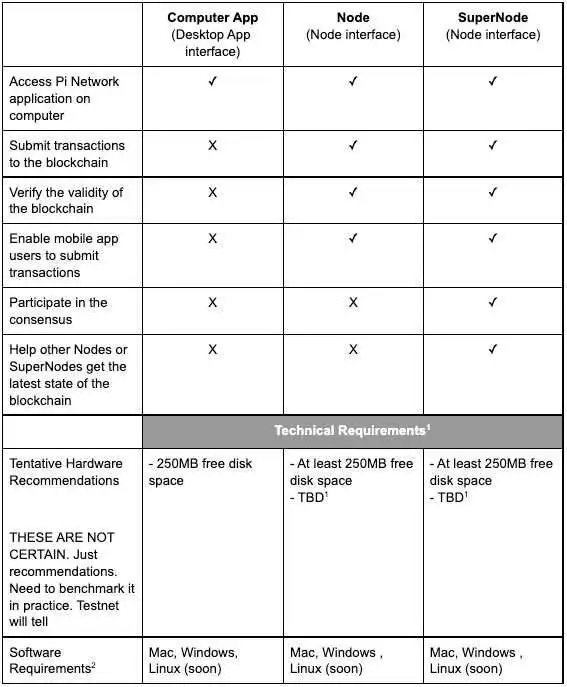
Pi Network Sets February 15 Deadline for Mandatory Mainnet Node Upgrade