

Must Read
PROTEST. Various organizations march to protest and ask the Senate to push through with the impeachment hearing against Vice President Sara Duterte, in Pasay CityPROTEST. Various organizations march to protest and ask the Senate to push through with the impeachment hearing against Vice President Sara Duterte, in Pasay City
It’s final, Sara Duterte impeachment is ‘unconstitutional.’ Here’s why.
The Supreme Court (SC) has ended the 2025 impeachment saga of Vice President Sara Duterte.
SC spokesperson Camille Sue Mae Ting told reporters in a press conference on Thursday, January 29, that the High Court has upheld, with finality, its 2025 ruling that found the impeachment complaint against the Vice President unconstitutional.
At past 2 pm on Thursday, Ting said the SC en banc was unanimous — at least among those who participated in the voting— in denying the House of Representatives’ motion for reconsideration (MR). As in 2025, Associate Justice Alfredo Benjamin Caguioa did not take part in the voting, while Associate Justice Maria Filomena Singh was on leave.
“The Resolution is immediately executory upon digital service on all parties…No further pleadings will be allowed,” Ting said.
Play Video 
Senior Associate Justice Marvic Leonen, as in the previous year, penned the SC decision.
In the said ruling, the SC reiterated why the impeachment was unconstitutional, based on the “one-year bar rule” and due process. The High Court also explained rules on initiating impeachment complaints.
On one-year bar rule
The Vice President, in her SC petition, argued that by not taking action on the first three complaints, the House “deliberately [froze] the entire initiation and impeachment process,” rendering the one-year bar rule of the Constitution “futile and meaningless.” The SC favored this argument in its 2025 decision.
Under article XI, section 3(5) of the 1987 Constitution, the one-year bar rule disallows any impeachment proceedings against the same official for more than once in a year.
The 1987 Constitution also provides for two modes to initiate an impeachment. The “long way” mode (passing through the House committee of justice) as provided by article XI, section 3(2), and the “faster way” or the other impeachment mode specified by article XI, section 3(4).
In the “faster way,” a complaint must be backed by at least a third of the House for it to become articles of impeachment. The Senate then starts the trial.
Duterte faced four complaints in total, with the first three supposedly taking the “long way,” but nothing materialized. The Vice President was later impeached through the fourth complaint, a resolution backed by more than two-thirds of the House, in February 2025.
In its ruling on the appeal, the SC clarified that when an impeachment complaint is filed through the “long way” mode, it must be put in the Order of Business within 10 session days from its endorsement. The SC said a session day, in the context of impeachment proceedings, means a calendar day on which the House of Representatives holds a plenary session.
“Neither the secretary general nor the speaker of the House is granted by the Constitution any discretion to determine when this period commences. Neither does the House of Representatives have any discretion except to refer these matters to the proper committee within three session days. The House may opt to consolidate all properly commenced and endorsed impeachment complaints,” the SC said.
With this, the SC reiterated that the House failed to comply with the requirements under the “long way” for the first three complaints. Therefore, the fourth impeachment complaint, even if it went through the “faster way,” was barred by the one-year bar rule.
For Senate President Vicente “Tito” Sotto III, the SC decision made the impeachment “an impossible dream.”
“The decision is a clear judicial legislation. The SC, as written in their decision, admitted of introducing a rule for Congress to follow in the conduct of impeachment. A clear encroachment on the power of the Legislative branch, as provided for by the Constitution,” Sotto said in a statement.
Expanded rules on initiation
In Duterte’s impeachment, the issue of whether the complaints had been initiated or not became a major point of contention. This was because initiation is a vital factor in determining whether the one-year bar rule had been triggered or not.
The Gutierrez vs. House of Representatives ruling clarified that an impeachment complaint is considered initiated when an impeachment is filed and referred to the House committee on justice. This was also the principle under the Francisco vs. House case penned by former SC associate justice and Ombudsman Conchita Carpio Morales.
“The court [not only] followed [the] Gutierrez [ruling], but it [also] expounded on it,” SC spokesperson Camille Sue Mae Ting said.
The SC further expanded the said ruling, saying that a complaint is considered initiated via the “long way” mode when:
- It is referred to the committee on justice
- It is properly verified and endorsed by a member of the House of Representatives, and it is not put in the Order of Business or referred to the proper committee within the constitutional periods
- It is properly verified and endorsed, or it has been properly referred to the proper committee but has not been acted upon by the House upon its adjournment sine die (indefinitely)
Meanwhile, in the “faster way” mode, a complaint is considered initiated when at least a third of the House endorses it, according to the High Court. The SC said a valid endorsement includes valid certifications from the endorsing House members that they had also seen the supporting evidence for the allegations included in the complaint.
The SC also clarified that there is no priority between the “long way” and the “faster way” modes, adding that the gathering of support for the “faster way” mode is not prohibited even when the House is considering complaints through the other mode.
“However, the second mode of impeachment will be barred under Article XI, Section 3(5) if there are pending complaints under the first mode that violate the periods mandated in the Constitution,” the ruling said.
Play Video 
Due process rule still present
Apart from violating the one-year bar rule, the SC earlier said the articles of impeachment against the Vice President were also null and void for violating due process. Leonen explained that even the “faster way” mode is subject to due process.
In its 2025 decision, the SC listed at least seven requirements to ensure that due process is present even in the “faster way” mode of impeachment.
These include the draft Articles of Impeachment being made available to all members of the House, and the respondent having the opportunity to be heard even during the initiation stage. A copy of the draft must also be given to the respondents to give them the chance to respond to the allegations.
Some legal experts raised concerns over these requirements stipulated in the 2025 decision because according to them, respondents in impeachment complaints are accorded due process regardless of the mode. Under the “long way,” a committee conducts a hearing as part of the process; while in the “faster way,” the opportunity to respond to the allegations is provided during the Senate trial itself.
In the 2026 ruling on the MR, the SC shortened the list of requirements. It removed the requirements for the respondent to be given a copy of the articles of impeachment, and be given the opportunity to respond to the allegations.
But for the Makabayan bloc in the House, the SC ruling still rendered the “faster way” mode “disabled” because of the additional requirements on the supposed faster way to impeach an official.
“The means of holding the highest officials of the land accountable, through a one-third vote of the House of Representatives, will now be even more difficult for citizens to pursue. The SC has rewritten the rules on impeachment in favor of impeachable officials such as the President and the Vice President,” the bloc said.
Doctrine of operative fact not applicable
The Free Legal Assistance Group (FLAG) said in 2025 that it is “grossly unfair” to bind the House of Representatives to the new impeachment rules when it was just relying on precedent, which was the case of Francisco.
In its appeal, the House held the same position and argued that the doctrine of operative fact should apply to the case. It is a doctrine which states that actions are considered valid if they are done prior to them being declared illegal or unconstitutional.
But the SC did not accept this argument, explaining that this doctrine is not a tool to legitimize non-compliance with the rules or validate unconstitutional acts.
“The operative fact doctrine cannot be invoked by the party directly responsible in the commission of an unconstitutional act. Thus, it does not apply in this case,” the SC said.
What now?
The SC ruling barred the impeachment proceeding initiated in 2025, so groups may file new impeachment complaints against the Vice President this year.
In its 2025 decision, the SC said new complaints may only be filed by February 6 or upon the expiration of the one-year bar rule. However, in the 2026 ruling, the High Court clarified that the one-year bar rule in the case of the Vice President was triggered on January 14, 2025, or when the 10 session days were breached by the first complaint.
In other words, complainants need not wait for February 6 to lodge their complaints. The January 14 one-year bar for Duterte has passed.
These new rules on impeachment will be followed in the current and upcoming impeachment complaints, said Ting.
“This resolution of the Supreme Court is its latest, and it clarified a number of things when it comes to the two modes of impeachment, the due process requirements required for each mode, as well as when each mode is deemed initiated for purposes of the one-year bar. So, yes, it will be this one that should be followed,” the SC spokesperson explained.
Although some lawmakers disagreed with the ruling, the House leadership said it respects and will abide by the new impeachment rules.
“The House leadership acknowledges the decision of the Supreme Court on the Articles of Impeachment against Vice President Sara Duterte,” House Speaker Bojie Dy said. – Rappler.com
Disclaimer: The articles reposted on this site are sourced from public platforms and are provided for informational purposes only. They do not necessarily reflect the views of MEXC. All rights remain with the original authors. If you believe any content infringes on third-party rights, please contact service@support.mexc.com for removal. MEXC makes no guarantees regarding the accuracy, completeness, or timeliness of the content and is not responsible for any actions taken based on the information provided. The content does not constitute financial, legal, or other professional advice, nor should it be considered a recommendation or endorsement by MEXC.
You May Also Like

Will Huge $8.3B Bitcoin Options Expiry Trigger Another Dump?
The post Will Huge $8.3B Bitcoin Options Expiry Trigger Another Dump? appeared on BitcoinEthereumNews.com. Home » Crypto News The end of another week is here again
Share
BitcoinEthereumNews2026/01/30 14:01

Why Staffing Agencies Need Hot Desk Booking Software to Scale Smarter
Your headcount doubled this year. Congratulations – you’re killing it. But now you’re staring at a lease renewal and wondering: do you really need 40 desks when
Share
Fintechzoom2026/01/30 14:26
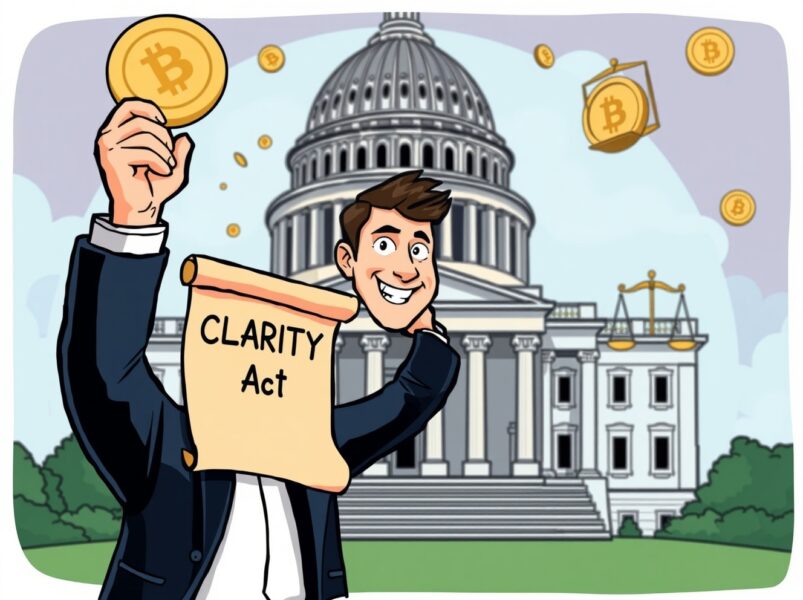
Urgent: Coinbase CEO Pushes for Crucial Crypto Market Structure Bill
BitcoinWorld Urgent: Coinbase CEO Pushes for Crucial Crypto Market Structure Bill The cryptocurrency world is buzzing with significant developments as Coinbase CEO Brian Armstrong recently took to Washington, D.C., advocating passionately for a clearer regulatory path. His mission? To champion the passage of a vital crypto market structure bill, specifically the Digital Asset Market Clarity (CLARITY) Act. This legislative push is not just about policy; it’s about safeguarding investor rights and fostering innovation in the digital asset space. Why a Clear Crypto Market Structure Bill is Essential Brian Armstrong’s visit underscores a growing sentiment within the crypto industry: the urgent need for regulatory clarity. Without clear guidelines, the market operates in a gray area, leaving both innovators and investors vulnerable. The proposed crypto market structure bill aims to bring much-needed definition to this dynamic sector. Armstrong explicitly stated on X that this legislation is crucial to prevent a recurrence of actions that infringe on investor rights, citing past issues with former U.S. Securities and Exchange Commission (SEC) Chair Gary Gensler. This proactive approach seeks to establish a stable and predictable environment for digital assets. Understanding the CLARITY Act: A Blueprint for Digital Assets The Digital Asset Market Clarity (CLARITY) Act is designed to establish a robust regulatory framework for the cryptocurrency industry. It seeks to delineate the responsibilities of key regulatory bodies, primarily the SEC and the Commodity Futures Trading Commission (CFTC). Here are some key provisions: Clear Jurisdiction: The bill aims to specify which digital assets fall under the purview of the SEC as securities and which are considered commodities under the CFTC. Investor Protection: By defining these roles, the act intends to provide clearer rules for market participants, thereby enhancing investor protection. Exemption Conditions: A significant aspect of the bill would exempt certain cryptocurrencies from the stringent registration requirements of the Securities Act of 1933, provided they meet specific criteria. This could reduce regulatory burdens for legitimate projects. This comprehensive approach promises to bring structure to a rapidly evolving market. The Urgency Behind the Crypto Market Structure Bill The call for a dedicated crypto market structure bill is not new, but Armstrong’s direct engagement highlights the increasing pressure for legislative action. The lack of a clear framework has led to regulatory uncertainty, stifling innovation and sometimes leading to enforcement actions that many in the industry view as arbitrary. Passing this legislation would: Foster Innovation: Provide a clear roadmap for developers and entrepreneurs, encouraging new projects and technologies. Boost Investor Confidence: Offer greater certainty and protection for individuals investing in digital assets. Prevent Future Conflicts: Reduce the likelihood of disputes between regulatory bodies and crypto firms, creating a more harmonious ecosystem. The industry believes that a well-defined regulatory landscape is essential for the long-term health and growth of the digital economy. What a Passed Crypto Market Structure Bill Could Mean for You If the CLARITY Act or a similar crypto market structure bill passes, its impact could be profound for everyone involved in the crypto space. For investors, it could mean a more secure and transparent market. For businesses, it offers a predictable environment to build and scale. Conversely, continued regulatory ambiguity could: Stifle Growth: Drive innovation overseas and deter new entrants. Increase Risks: Leave investors exposed to unregulated practices. Create Uncertainty: Lead to ongoing legal battles and market instability. The stakes are incredibly high, making the advocacy efforts of leaders like Brian Armstrong all the more critical. The push for a clear crypto market structure bill is a pivotal moment for the digital asset industry. Coinbase CEO Brian Armstrong’s efforts in Washington, D.C., reflect a widespread desire for regulatory clarity that protects investors, fosters innovation, and ensures the long-term viability of cryptocurrencies. The CLARITY Act offers a potential blueprint for this future, aiming to define jurisdictional boundaries and streamline regulatory requirements. Its passage could unlock significant growth and stability, cementing the U.S. as a leader in the global digital economy. Frequently Asked Questions (FAQs) What is the Digital Asset Market Clarity (CLARITY) Act? The CLARITY Act is a proposed crypto market structure bill aimed at establishing a clear regulatory framework for digital assets in the U.S. It seeks to define the roles of the SEC and CFTC and exempt certain cryptocurrencies from securities registration requirements under specific conditions. Why is Coinbase CEO Brian Armstrong advocating for this bill? Brian Armstrong is advocating for the CLARITY Act to bring regulatory certainty to the crypto industry, protect investor rights from unclear enforcement actions, and foster innovation within the digital asset space. He believes it’s crucial for the industry’s sustainable growth. How would this bill impact crypto investors? For crypto investors, the passage of this crypto market structure bill would mean greater clarity on which assets are regulated by whom, potentially leading to enhanced consumer protections, reduced market uncertainty, and a more stable investment environment. What are the primary roles of the SEC and CFTC concerning this bill? The bill aims to delineate the responsibilities of the SEC (Securities and Exchange Commission) and the CFTC (Commodity Futures Trading Commission) regarding digital assets. It seeks to clarify which assets fall under securities regulation and which are considered commodities, reducing jurisdictional ambiguity. What could happen if a crypto market structure bill like CLARITY Act does not pass? If a clear crypto market structure bill does not pass, the industry may continue to face regulatory uncertainty, potentially leading to stifled innovation, increased legal challenges for crypto companies, and a less secure environment for investors due to inconsistent enforcement and unclear rules. Did you find this article insightful? Share it with your network to help spread awareness about the crucial discussions shaping the future of digital assets! To learn more about the latest crypto market trends, explore our article on key developments shaping crypto regulation and institutional adoption. This post Urgent: Coinbase CEO Pushes for Crucial Crypto Market Structure Bill first appeared on BitcoinWorld.
Share
Coinstats2025/09/18 20:35