The post The P2E Apocalypse Is Gaming’s Best News appeared on BitcoinEthereumNews.com. Opinion by: Tobin Kuo, founder and CEO of Seraph Play-to-earn (P2E) had a moment — “had” its moment — but that’s the problem. Its time has passed. The thrill was the payout, not the play, not the result, which looked less like a game and more like shift work with a user interface.  To be fair, the experiments weren’t worthless. They proved that wallets can be controllers, assets can be portable, and communities can co-own the worlds they love. But it shouldn’t — and can’t — be denied that subsidies bent every design choice toward leeching mechanics. Everything was extraction: recruit, inflate, cash out and repeat.  With the audience shrinking with the faucet drip rate, reasons to keep playing fall, and so, let us now let P2E die without soft parting words or a eulogy. The slowdown shouldn’t be feared or loathed; it’s just a natural process of exploration, and now, it should be considered a filter — one that forces teams to build games someone will play even if its native token goes to zero. Gaming finance (GameFi) needs to purge traditional thinking and mechanics, learn from the past and take three simple steps: grow the play element, shrink the earn and give the genre a chance to thrive. The painful truth P2E primed GameFi to chase the yield of tokens instead of the true purpose of play: fun. The end results are economies that crumble under design choices that extract enjoyment at every turn. It’s a painful reality where incentives are paid more than the gameplay ever delivered.  As retention collapsed, new money flows slowed, tokens spiraled, and projects folded under the weight. The numbers don’t lie. Funding for blockchain gaming dipped 93% year-over-year in Q2 this year, while daily unique active wallets fell by double digits. Related:… The post The P2E Apocalypse Is Gaming’s Best News appeared on BitcoinEthereumNews.com. Opinion by: Tobin Kuo, founder and CEO of Seraph Play-to-earn (P2E) had a moment — “had” its moment — but that’s the problem. Its time has passed. The thrill was the payout, not the play, not the result, which looked less like a game and more like shift work with a user interface.  To be fair, the experiments weren’t worthless. They proved that wallets can be controllers, assets can be portable, and communities can co-own the worlds they love. But it shouldn’t — and can’t — be denied that subsidies bent every design choice toward leeching mechanics. Everything was extraction: recruit, inflate, cash out and repeat.  With the audience shrinking with the faucet drip rate, reasons to keep playing fall, and so, let us now let P2E die without soft parting words or a eulogy. The slowdown shouldn’t be feared or loathed; it’s just a natural process of exploration, and now, it should be considered a filter — one that forces teams to build games someone will play even if its native token goes to zero. Gaming finance (GameFi) needs to purge traditional thinking and mechanics, learn from the past and take three simple steps: grow the play element, shrink the earn and give the genre a chance to thrive. The painful truth P2E primed GameFi to chase the yield of tokens instead of the true purpose of play: fun. The end results are economies that crumble under design choices that extract enjoyment at every turn. It’s a painful reality where incentives are paid more than the gameplay ever delivered.  As retention collapsed, new money flows slowed, tokens spiraled, and projects folded under the weight. The numbers don’t lie. Funding for blockchain gaming dipped 93% year-over-year in Q2 this year, while daily unique active wallets fell by double digits. Related:…

The P2E Apocalypse Is Gaming’s Best News

Opinion by: Tobin Kuo, founder and CEO of Seraph

Play-to-earn (P2E) had a moment — “had” its moment — but that’s the problem. Its time has passed. The thrill was the payout, not the play, not the result, which looked less like a game and more like shift work with a user interface. 

To be fair, the experiments weren’t worthless. They proved that wallets can be controllers, assets can be portable, and communities can co-own the worlds they love. But it shouldn’t — and can’t — be denied that subsidies bent every design choice toward leeching mechanics. Everything was extraction: recruit, inflate, cash out and repeat. 

With the audience shrinking with the faucet drip rate, reasons to keep playing fall, and so, let us now let P2E die without soft parting words or a eulogy. The slowdown shouldn’t be feared or loathed; it’s just a natural process of exploration, and now, it should be considered a filter — one that forces teams to build games someone will play even if its native token goes to zero.

Gaming finance (GameFi) needs to purge traditional thinking and mechanics, learn from the past and take three simple steps: grow the play element, shrink the earn and give the genre a chance to thrive.

The painful truth

P2E primed GameFi to chase the yield of tokens instead of the true purpose of play: fun. The end results are economies that crumble under design choices that extract enjoyment at every turn. It’s a painful reality where incentives are paid more than the gameplay ever delivered. 

As retention collapsed, new money flows slowed, tokens spiraled, and projects folded under the weight. The numbers don’t lie. Funding for blockchain gaming dipped 93% year-over-year in Q2 this year, while daily unique active wallets fell by double digits.

Related: Burn the tokens, keep the loot: Play-to-own games come next

More than 300 Web3 games went inactive, exposing how shallow the engagement was when rewards no longer covered the grind. It was a painful and bitter pill to swallow, but it brought clarity.

Games that had nothing to offer beyond emissions are dead or dying, and now builders have been left with the rubble of P2E in which to rebuild from the ground up. It’s time to ship systems that actually entertain people.

Regulation cracks the door open further to amplify the reality check: a healthy step for the GameFi scene. As bright lines are drawn around the plague of money-first, fun-second game loops, the P2E games, simply functioning as extraction machines, get treated like gambling. 

Consider India’s legislation banning money-based online games, slapping “earn-first” mechanics with scrutiny they can’t hide from whenever they blur into consumer harm or wagering. It doesn’t spell the end of onchain gaming; it’s just forcing the games to be created fit for purpose (rather than turning into gambling engines to be milked dry).

Teams building P2E games now must address the T. Rex in the room: no more building to bleed dry, no more hype. No more extracting from the fun of games in exchange for inflationary tokens and feigned “play.” The time for actual play is now. Get building.

Ownership without extraction

The correction is already outlined in the Q2 data. Funding is drying up, and the retention gimmicks aren’t fooling anyone. Games built on spreadsheets and emissions schedules were never built with genuine long-term consideration.

The way forward is expression, not extraction. It’s about creating worlds where seasonal resets recycle value in fresh ways, where items feel genuinely earned through effort, skill and persistence rather than bought through shortcuts. 

A healthy system respects scarcity as a design principle — moments, achievements and artifacts matter precisely because they cannot be infinitely duplicated. The idea that players primarily want another income stream must be cast out. Games are not financial instruments first; they are spaces of creativity, competition and community.

It is time to sunset play-to-earn without regret and to recognize it as a detour rather than a destiny. The industry’s real momentum will come from returning to the values that have always sustained great games: joy, mastery and meaningful play.

The resolve to build the next great generation of games will not come from token mechanics or speculative loops, but from honoring the player-first spirit that has always driven this medium forward.

Opinion by: Tobin Kuo, founder and CEO of Seraph.

This article is for general information purposes and is not intended to be and should not be taken as legal or investment advice. The views, thoughts, and opinions expressed here are the author’s alone and do not necessarily reflect or represent the views and opinions of Cointelegraph.

Source: https://cointelegraph.com/news/p2e-gaming-apocalypse?utm_source=rss_feed&utm_medium=feed&utm_campaign=rss_partner_inbound

Market Opportunity
Seraph Logo
Seraph Price(SERAPH)
$0.00521
$0.00521$0.00521
-3.87%
USD
Seraph (SERAPH) Live Price Chart
Disclaimer: The articles reposted on this site are sourced from public platforms and are provided for informational purposes only. They do not necessarily reflect the views of MEXC. All rights remain with the original authors. If you believe any content infringes on third-party rights, please contact service@support.mexc.com for removal. MEXC makes no guarantees regarding the accuracy, completeness, or timeliness of the content and is not responsible for any actions taken based on the information provided. The content does not constitute financial, legal, or other professional advice, nor should it be considered a recommendation or endorsement by MEXC.

You May Also Like

Will Huge $8.3B Bitcoin Options Expiry Trigger Another Dump?

Will Huge $8.3B Bitcoin Options Expiry Trigger Another Dump?

The post Will Huge $8.3B Bitcoin Options Expiry Trigger Another Dump? appeared on BitcoinEthereumNews.com. Home » Crypto News The end of another week is here again
Share
BitcoinEthereumNews2026/01/30 14:01
Why Staffing Agencies Need Hot Desk Booking Software to Scale Smarter

Why Staffing Agencies Need Hot Desk Booking Software to Scale Smarter

Your headcount doubled this year. Congratulations – you’re killing it.  But now you’re staring at a lease renewal and wondering: do you really need 40 desks when
Share
Fintechzoom2026/01/30 14:26
Urgent: Coinbase CEO Pushes for Crucial Crypto Market Structure Bill

Urgent: Coinbase CEO Pushes for Crucial Crypto Market Structure Bill

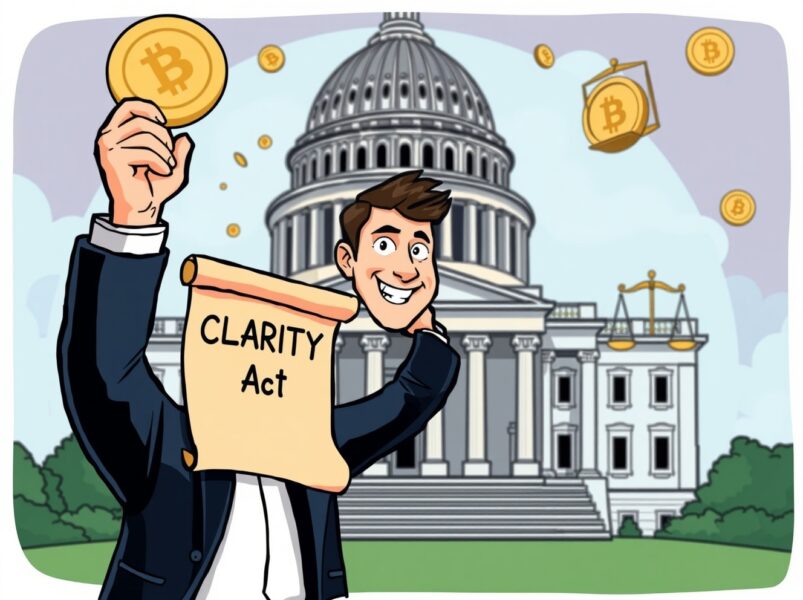
BitcoinWorld Urgent: Coinbase CEO Pushes for Crucial Crypto Market Structure Bill The cryptocurrency world is buzzing with significant developments as Coinbase CEO Brian Armstrong recently took to Washington, D.C., advocating passionately for a clearer regulatory path. His mission? To champion the passage of a vital crypto market structure bill, specifically the Digital Asset Market Clarity (CLARITY) Act. This legislative push is not just about policy; it’s about safeguarding investor rights and fostering innovation in the digital asset space. Why a Clear Crypto Market Structure Bill is Essential Brian Armstrong’s visit underscores a growing sentiment within the crypto industry: the urgent need for regulatory clarity. Without clear guidelines, the market operates in a gray area, leaving both innovators and investors vulnerable. The proposed crypto market structure bill aims to bring much-needed definition to this dynamic sector. Armstrong explicitly stated on X that this legislation is crucial to prevent a recurrence of actions that infringe on investor rights, citing past issues with former U.S. Securities and Exchange Commission (SEC) Chair Gary Gensler. This proactive approach seeks to establish a stable and predictable environment for digital assets. Understanding the CLARITY Act: A Blueprint for Digital Assets The Digital Asset Market Clarity (CLARITY) Act is designed to establish a robust regulatory framework for the cryptocurrency industry. It seeks to delineate the responsibilities of key regulatory bodies, primarily the SEC and the Commodity Futures Trading Commission (CFTC). Here are some key provisions: Clear Jurisdiction: The bill aims to specify which digital assets fall under the purview of the SEC as securities and which are considered commodities under the CFTC. Investor Protection: By defining these roles, the act intends to provide clearer rules for market participants, thereby enhancing investor protection. Exemption Conditions: A significant aspect of the bill would exempt certain cryptocurrencies from the stringent registration requirements of the Securities Act of 1933, provided they meet specific criteria. This could reduce regulatory burdens for legitimate projects. This comprehensive approach promises to bring structure to a rapidly evolving market. The Urgency Behind the Crypto Market Structure Bill The call for a dedicated crypto market structure bill is not new, but Armstrong’s direct engagement highlights the increasing pressure for legislative action. The lack of a clear framework has led to regulatory uncertainty, stifling innovation and sometimes leading to enforcement actions that many in the industry view as arbitrary. Passing this legislation would: Foster Innovation: Provide a clear roadmap for developers and entrepreneurs, encouraging new projects and technologies. Boost Investor Confidence: Offer greater certainty and protection for individuals investing in digital assets. Prevent Future Conflicts: Reduce the likelihood of disputes between regulatory bodies and crypto firms, creating a more harmonious ecosystem. The industry believes that a well-defined regulatory landscape is essential for the long-term health and growth of the digital economy. What a Passed Crypto Market Structure Bill Could Mean for You If the CLARITY Act or a similar crypto market structure bill passes, its impact could be profound for everyone involved in the crypto space. For investors, it could mean a more secure and transparent market. For businesses, it offers a predictable environment to build and scale. Conversely, continued regulatory ambiguity could: Stifle Growth: Drive innovation overseas and deter new entrants. Increase Risks: Leave investors exposed to unregulated practices. Create Uncertainty: Lead to ongoing legal battles and market instability. The stakes are incredibly high, making the advocacy efforts of leaders like Brian Armstrong all the more critical. The push for a clear crypto market structure bill is a pivotal moment for the digital asset industry. Coinbase CEO Brian Armstrong’s efforts in Washington, D.C., reflect a widespread desire for regulatory clarity that protects investors, fosters innovation, and ensures the long-term viability of cryptocurrencies. The CLARITY Act offers a potential blueprint for this future, aiming to define jurisdictional boundaries and streamline regulatory requirements. Its passage could unlock significant growth and stability, cementing the U.S. as a leader in the global digital economy. Frequently Asked Questions (FAQs) What is the Digital Asset Market Clarity (CLARITY) Act? The CLARITY Act is a proposed crypto market structure bill aimed at establishing a clear regulatory framework for digital assets in the U.S. It seeks to define the roles of the SEC and CFTC and exempt certain cryptocurrencies from securities registration requirements under specific conditions. Why is Coinbase CEO Brian Armstrong advocating for this bill? Brian Armstrong is advocating for the CLARITY Act to bring regulatory certainty to the crypto industry, protect investor rights from unclear enforcement actions, and foster innovation within the digital asset space. He believes it’s crucial for the industry’s sustainable growth. How would this bill impact crypto investors? For crypto investors, the passage of this crypto market structure bill would mean greater clarity on which assets are regulated by whom, potentially leading to enhanced consumer protections, reduced market uncertainty, and a more stable investment environment. What are the primary roles of the SEC and CFTC concerning this bill? The bill aims to delineate the responsibilities of the SEC (Securities and Exchange Commission) and the CFTC (Commodity Futures Trading Commission) regarding digital assets. It seeks to clarify which assets fall under securities regulation and which are considered commodities, reducing jurisdictional ambiguity. What could happen if a crypto market structure bill like CLARITY Act does not pass? If a clear crypto market structure bill does not pass, the industry may continue to face regulatory uncertainty, potentially leading to stifled innovation, increased legal challenges for crypto companies, and a less secure environment for investors due to inconsistent enforcement and unclear rules. Did you find this article insightful? Share it with your network to help spread awareness about the crucial discussions shaping the future of digital assets! To learn more about the latest crypto market trends, explore our article on key developments shaping crypto regulation and institutional adoption. This post Urgent: Coinbase CEO Pushes for Crucial Crypto Market Structure Bill first appeared on BitcoinWorld.
Share
Coinstats2025/09/18 20:35