

Flare (FLR) Price Prediction 2026-2030: Unveiling the Critical Data for a Potential Long-Term Surge

BitcoinWorld
Flare (FLR) Price Prediction 2026-2030: Unveiling the Critical Data for a Potential Long-Term Surge
As blockchain interoperability becomes increasingly vital in 2025, the Flare Network and its native token, FLR, attract significant analytical scrutiny regarding their long-term valuation trajectory through 2030. This analysis examines technical foundations, market adoption metrics, and comparative blockchain data to assess FLR’s potential path.
Flare (FLR) Price Prediction: Analyzing the 2026-2030 Horizon
The Flare Network positions itself as a blockchain for data, integrating the Ethereum Virtual Machine to enable smart contracts using data from other chains and the internet. Consequently, any FLR price prediction must first consider its fundamental utility. Network adoption metrics, such as monthly active addresses and total value secured in its F-Asset system, provide concrete starting points. Furthermore, the successful deployment of its LayerCake scaling solution will directly impact transaction throughput and cost, two critical factors for developer adoption. Market analysts consistently reference these operational milestones when modeling future token economics.
Technical Foundations and Market Context for FLR
Flare’s unique value proposition centers on decentralized data acquisition. Unlike oracles that act as third-party bridges, Flare aims to make every node a data provider. This technical approach could reduce reliance on external services. However, its success depends on network security and participation. The tokenomics of FLR involve its use for transaction fees, governance, and collateralizing F-Assets. A report from a major blockchain analytics firm in Q1 2025 noted a steady increase in FLR being staked for network security, indicating growing holder commitment. Meanwhile, broader market cycles and regulatory developments for interoperable networks will inevitably influence FLR’s price action alongside these internal factors.
Expert Perspectives on Adoption and Valuation Models
Financial technology researchers often apply discounted cash flow models to layer-1 tokens, estimating future fee revenue accruing to the network. For Flare, analysts project potential fee generation based on forecasted data relay volumes. A 2024 paper from the Cambridge Centre for Alternative Finance highlighted the growing market size for secure, decentralized data feeds, a tailwind for Flare’s core business. However, experts caution that valuation remains highly sensitive to execution risk and competitive pressure from other data-focused chains. The following table summarizes key variables influencing long-term FLR price models.
| Variable | Bull Case Scenario | Base Case Scenario |
|---|---|---|
| Network Adoption (TVS) | >$5B by 2027 | $1-2B by 2027 |
| Daily Transactions | 1M+ sustained | 200K-500K |
| Developer Activity | Top 20 ecosystem | Steady niche growth |
Market sentiment, often measured through social dominance and exchange netflows, provides another data layer. Periods of high development activity, like the mainnet launch of the Flare Time Series Oracle upgrade, have historically correlated with increased investor attention. Nonetheless, long-term price sustainability will rely on tangible use cases generating recurring demand for FLR tokens, not merely speculative interest.
Comparative Analysis and Risk Assessment
Evaluating Flare requires comparison with other projects in the interoperability and data space. Chains like Chainlink (LINK), which provides oracle services, and Cosmos (ATOM), focused on general interoperability, serve as benchmarks. Flare’s differentiation is its native integration of data protocols at the consensus layer. This technical integration could lead to lower costs and higher security for data calls. Key risks identified in analyst reports include:
- Execution Risk: Delays or flaws in core protocol upgrades.
- Competitive Risk: Rapid innovation by established oracle or layer-1 networks.
- Regulatory Risk: Evolving global stance on data provision and cross-chain assets.
- Market Risk: Correlation with broader crypto asset volatility.
These factors are quantitatively weighted in sophisticated price prediction models spanning 2026 to 2030.
Conclusion
The Flare (FLR) price prediction for 2026 through 2030 hinges on the network’s ability to execute its technical roadmap and capture meaningful market share in the blockchain data economy. While models project a range of outcomes based on adoption variables, the fundamental analysis centers on utility-driven demand. Monitoring key performance indicators like total value secured and developer activity will provide the earliest signals for any sustained, long-term breakout in FLR valuation.
FAQs
Q1: What is the primary use case of the Flare (FLR) token?
FLR is used to pay for transaction fees and computation on the Flare Network, participate in governance, and as collateral to mint F-Assets, which are representations of tokens from other chains.
Q2: How does Flare’s approach to data differ from traditional oracles?
Flare integrates data acquisition directly into its network consensus, aiming for every node to participate, whereas traditional oracles typically rely on a separate network of nodes to fetch and deliver data to a blockchain.
Q3: What are the most critical milestones to watch for Flare’s development?
Key milestones include the scaling of its LayerCake technology, growth in Total Value Secured (TVS) for F-Assets, and the expansion of its ecosystem of decentralized applications using its native data protocols.
Q4: How do broader cryptocurrency market cycles affect FLR price predictions?
FLR, like most crypto assets, exhibits correlation with major market cycles. Long-term predictions often separate this beta (market) exposure from alpha (project-specific) growth based on network adoption metrics.
Q5: Where can investors find verifiable data on Flare Network’s usage?
Investors can consult blockchain explorers for Flare, network dashboards published by the Flare Foundation, and independent analytics platforms that track metrics like daily transactions, active addresses, and staking participation.
This post Flare (FLR) Price Prediction 2026-2030: Unveiling the Critical Data for a Potential Long-Term Surge first appeared on BitcoinWorld.
You May Also Like

Polygon Tops RWA Rankings With $1.1B in Tokenized Assets
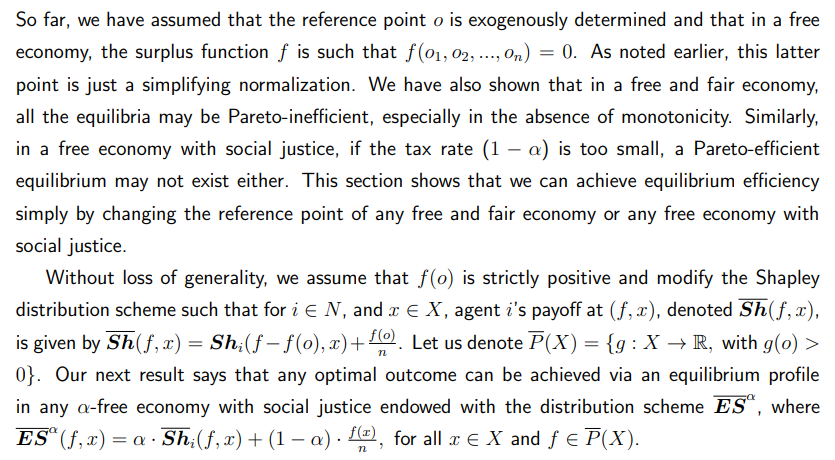
The Role of Reference Points in Achieving Equilibrium Efficiency in Fair and Socially Just Economies
![Top Crypto Saving Accounts in Europe 2026 [Regulated and Trusted]](https://images.cryptodaily.co.uk/space/755img.png)