The post Why Vitalik Buterin Just Pulled 16,384 ETH From His Holdings appeared first on Coinpedia Fintech News Ethereum co-founder Vitalik Buterin just withdrewThe post Why Vitalik Buterin Just Pulled 16,384 ETH From His Holdings appeared first on Coinpedia Fintech News Ethereum co-founder Vitalik Buterin just withdrew

Why Vitalik Buterin Just Pulled 16,384 ETH From His Holdings
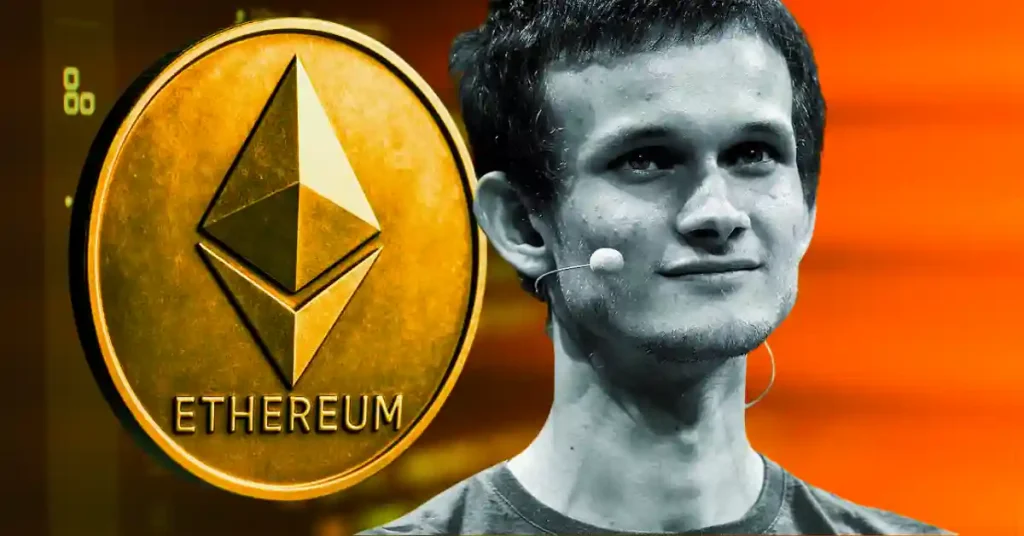
Ethereum’s Vitalik Buterin Says DAOs Are Broken, Proposes Major Redesign

The post Why Vitalik Buterin Just Pulled 16,384 ETH From His Holdings appeared first on Coinpedia Fintech News

Ethereum co-founder Vitalik Buterin just withdrew 16,384 ETH from his personal holdings. The funds will go toward projects the Ethereum Foundation can no longer take on.

Buterin announced that the EF is entering a “period of mild austerity” over the next five years. The foundation is trying to hit two goals at once: push forward an aggressive development roadmap while making sure it can survive financially long-term.

What the 16,384 ETH Will Fund

The ETH will support open-source projects focused on privacy, security, and decentralization.

Buterin named Vensa, a project working to make open silicon viable for security-critical applications. He also mentioned ucritter, which now includes ZK, FHE, and differential-privacy features.

Donations to encrypted messaging apps and privacy-preserving software are also part of the plan.

Buterin added that he is looking into decentralized staking options. This would let him put staking rewards toward these same goals over time.

‘Ethereum for People Who Need It’

Buterin made his priorities clear. Mass adoption is not the main focus anymore.

He described the goal as giving people and communities tools for autonomy and safety “as a basic right that belongs to everyone.”

Also Read: Vitalik Buterin Wants Ethereum to Survive Without Him, Reveals 7-Step Plan

Ethereum Foundation’s Next Steps

The EF will keep its focus on core Ethereum development. Performance, scalability, and decentralization remain top priorities.

Buterin called Ethereum “an indispensable part of the full-stack openness and verifiability vision.”

Developers on X responded positively. One highlighted excitement around “auditable trust from hardware to UI,” calling the approach ambitious but necessary.

Disclaimer: The articles reposted on this site are sourced from public platforms and are provided for informational purposes only. They do not necessarily reflect the views of MEXC. All rights remain with the original authors. If you believe any content infringes on third-party rights, please contact service@support.mexc.com for removal. MEXC makes no guarantees regarding the accuracy, completeness, or timeliness of the content and is not responsible for any actions taken based on the information provided. The content does not constitute financial, legal, or other professional advice, nor should it be considered a recommendation or endorsement by MEXC.

You May Also Like

The Channel Factories We’ve Been Waiting For

The Channel Factories We’ve Been Waiting For

The post The Channel Factories We’ve Been Waiting For appeared on BitcoinEthereumNews.com. Visions of future technology are often prescient about the broad strokes while flubbing the details. The tablets in “2001: A Space Odyssey” do indeed look like iPads, but you never see the astronauts paying for subscriptions or wasting hours on Candy Crush.  Channel factories are one vision that arose early in the history of the Lightning Network to address some challenges that Lightning has faced from the beginning. Despite having grown to become Bitcoin’s most successful layer-2 scaling solution, with instant and low-fee payments, Lightning’s scale is limited by its reliance on payment channels. Although Lightning shifts most transactions off-chain, each payment channel still requires an on-chain transaction to open and (usually) another to close. As adoption grows, pressure on the blockchain grows with it. The need for a more scalable approach to managing channels is clear. Channel factories were supposed to meet this need, but where are they? In 2025, subnetworks are emerging that revive the impetus of channel factories with some new details that vastly increase their potential. They are natively interoperable with Lightning and achieve greater scale by allowing a group of participants to open a shared multisig UTXO and create multiple bilateral channels, which reduces the number of on-chain transactions and improves capital efficiency. Achieving greater scale by reducing complexity, Ark and Spark perform the same function as traditional channel factories with new designs and additional capabilities based on shared UTXOs.  Channel Factories 101 Channel factories have been around since the inception of Lightning. A factory is a multiparty contract where multiple users (not just two, as in a Dryja-Poon channel) cooperatively lock funds in a single multisig UTXO. They can open, close and update channels off-chain without updating the blockchain for each operation. Only when participants leave or the factory dissolves is an on-chain transaction…
Share
BitcoinEthereumNews2025/09/18 00:09
XRP Escrow Amendment Gains Momentum, Set for February 2026 Activation

XRP Escrow Amendment Gains Momentum, Set for February 2026 Activation

TLDR The XRP Ledger’s Token Escrow amendment has gained 82.35% consensus and is set for activation on February 12, 2026. This amendment allows users to escrow a
Share
Coincentral2026/01/31 01:00
ZKP’s 300x Potential Takes Center Stage as XRP Price Shifts and Algorand News Turns Cautious

ZKP’s 300x Potential Takes Center Stage as XRP Price Shifts and Algorand News Turns Cautious

ZKP takes focus as XRP price tests a macro shift and Algorand news signals caution, reshaping views on structure and the best crypto to buy.
Share
Blockchainreporter2026/01/31 01:00