The post Copy-Paste Wallet Error Triggers One of Crypto’s Costliest Address Scams appeared on BitcoinEthereumNews.com. Key Takeaways: A crypto user lost nearly $The post Copy-Paste Wallet Error Triggers One of Crypto’s Costliest Address Scams appeared on BitcoinEthereumNews.com. Key Takeaways: A crypto user lost nearly $

Copy-Paste Wallet Error Triggers One of Crypto’s Costliest Address Scams

Key Takeaways:

  • A crypto user lost nearly $50 million in USDT after copying a spoofed wallet address from transaction history.
  • The attack used address poisoning, exploiting wallet interfaces that hide the middle of addresses.
  • Funds were quickly swapped and routed through multiple wallets, with portions sent to Tornado Cash, limiting recovery options.

A single copy-paste mistake has resulted in one of the most expensive user errors ever recorded on-chain. The incident highlights how simple interface habits can override otherwise cautious behavior and lead to irreversible losses.

How a Routine Test Transfer Turned Into a $50M Loss

According to on-chain investigators, including Lookonchain, the victim began with a step many experienced users consider best practice: a small test transaction. The user sent 50 USDT to a familiar personal wallet address to confirm accuracy before moving a much larger amount.

That test transfer, however, became the trigger.

Within moments, a scammer deployed an address poisoning tactic. The attacker created a wallet address, which had the same first, and last four digits as the genuine address of the victim. A small transaction was then sent to the victim on this address which looked as the real one, making sure that it would be recorded in the wallet of the transaction history.

When the victim returned to complete the main transfer: 49,999,950 USDT, they copied the address from transaction history rather than the original saved source. Because many wallet interfaces truncate addresses with “…”, the fake address appeared legitimate at a glance. The money was transferred at once and permanently to the hacker.

Read More: Pi Network Flags Scam Wallet Amid $346M Token Risks as 60M Users Await Unlock

Address Poisoning: A Low-Tech Attack With High Impact

There is no need to hack personal keys or to make the use of smart contracts. It is dependent on human interface and behavior.

Why This Attack Still Works at Scale

Most wallets abbreviate addresses in order to enhance readability. Transfers are frequently checked by the user by checking the first and the last address. This is abused by attackers who generate addresses that reflect such visible characters.

In this instance, the scammer did this immediately after the test transaction and it signifies automatic monitoring. The attacker made convenience hide a better reason to take caution by placing a near-identical address in the history of transactions of the victim.

This method is considered basic compared with complex DeFi exploits. Yet the outcome shows that even “simple” scams can produce catastrophic losses when large sums are involved.

On-Chain Movements After the Theft

Blockchain records show that the stolen USDT did not remain idle. The attacker very swiftly exchanged the part of the funds to ETH and sent them to several wallets, which is typical to diminish the traceability.

The assets were later transferred to Tornado Cash, a privacy mixer that hides the trails of transfers. As soon as the money is invested in such services, recovery is extremely unlikely without an immediate action of the exchanges or validators.

The chain of wallets was described by analysts who claimed it was efficient and preplanned meaning the scammer was all set to make an action as soon as the big transfer was made.

Why This Case Shocked Analysts

Address poisoning is widely known and often discussed as a nuisance scam involving small amounts. What makes this case stand out is the scale and the profile of the mistake.

The victim followed a common safety step by testing with a small transfer. Ironically, that action gave the attacker the signal needed to deploy the spoofed address at exactly the right moment.

On-chain observers noted that just seconds spent copying the address from the original source, rather than transaction history would have prevented the loss entirely. The speed of blockchain finality left no window for reversal.

Read More: Shenzhen Issues Crypto Fraud Alert as Stablecoin Scams Multiply Across China

Wallet Design and the Human Factor

This incident raises questions about wallet UX choices. Truncated addresses improve visual clarity but reduce security for users handling large sums.

Some wallets now warn users about address poisoning or flag addresses that closely resemble known ones. Others offer address whitelisting, where transfers are restricted to pre-approved addresses. Adoption of these features, however, remains inconsistent.

For high-value transfers, reliance on visual checks alone has proven insufficient. The case shows how even experienced users can fall into predictable patterns under time pressure.

Source: https://www.cryptoninjas.net/news/50m-vanishes-in-seconds-copy-paste-wallet-error-triggers-one-of-cryptos-costliest-address-scams/
Market Opportunity
Ambire Wallet Logo
Ambire Wallet Price(WALLET)
$0.01467
$0.01467$0.01467
+0.13%
USD
Ambire Wallet (WALLET) Live Price Chart
Disclaimer: The articles reposted on this site are sourced from public platforms and are provided for informational purposes only. They do not necessarily reflect the views of MEXC. All rights remain with the original authors. If you believe any content infringes on third-party rights, please contact service@support.mexc.com for removal. MEXC makes no guarantees regarding the accuracy, completeness, or timeliness of the content and is not responsible for any actions taken based on the information provided. The content does not constitute financial, legal, or other professional advice, nor should it be considered a recommendation or endorsement by MEXC.

You May Also Like

Santander’s Openbank Sparks Crypto Frenzy in Germany

Santander’s Openbank Sparks Crypto Frenzy in Germany

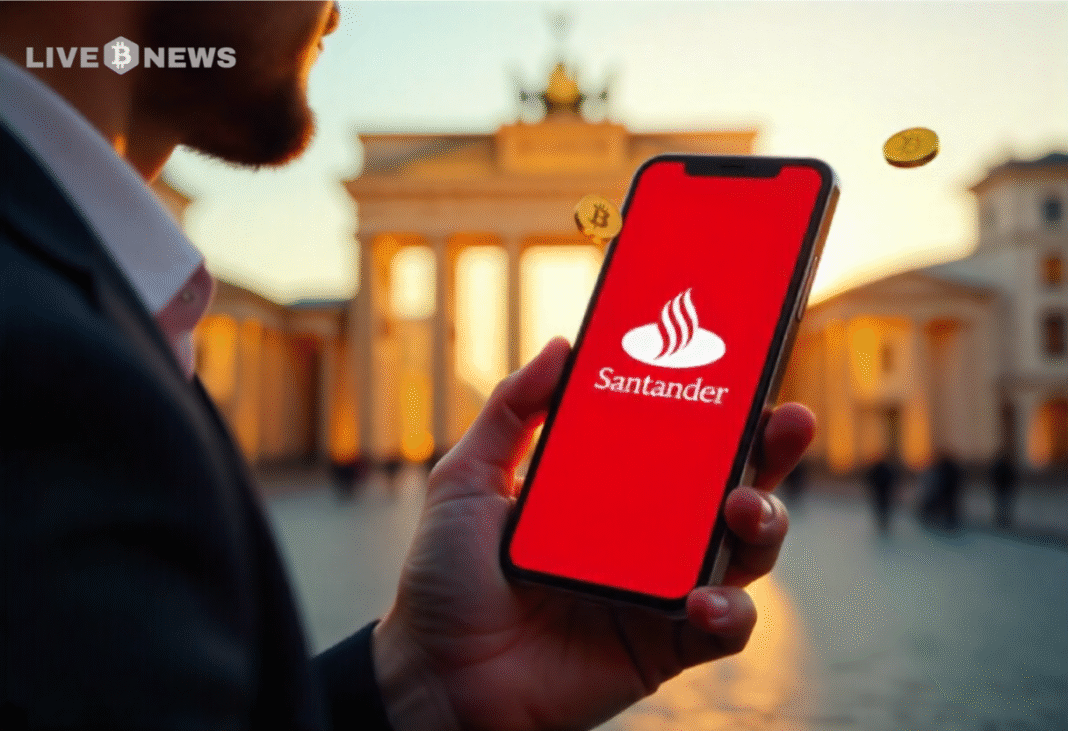
 In Germany, the digital bank Santander Openbank introduces trading in crypto, which offers BTC, ETH, LTC, POL, and ADA in the MiCA framework of the EU. Santander, the largest bank in Spain, has officially introduced cryptocurrency trading to its clients in Germany, using its digital division, Openbank.  With this new service, users can purchase, sell, […] The post Santander’s Openbank Sparks Crypto Frenzy in Germany appeared first on Live Bitcoin News.
Share
LiveBitcoinNews2025/09/18 04:30
The GENIUS Act Is Already Law. Banks Shouldn’t Try to Rewrite It Now

The GENIUS Act Is Already Law. Banks Shouldn’t Try to Rewrite It Now

The post The GENIUS Act Is Already Law. Banks Shouldn’t Try to Rewrite It Now appeared on BitcoinEthereumNews.com. Healthy competition drives innovation and better products for consumers; it is at the center of American economic leadership. Unfortunately, now that the bipartisan GENIUS Act has been signed into law, major legacy financial institutions seem to be having second thoughts about the innovations that stablecoins can bring to financial markets. Bank lobbying groups and public affairs teams have been peppering Congress with complaints about the law, urging members to reopen debate and introduce changes to the legislation that will ensure the stablecoin market doesn’t grow too quickly, protecting banks’ profits and stifling consumer choice. This reactionary response is both overblown and unnecessary. What legacy financial firms should do instead is embrace competition and offer exciting new products and services that consumers want, not try to kneecap emerging players through anti-innovation rules and regulations. The GENIUS Act was carefully designed with a thorough bipartisan process to strengthen consumer safeguards, ensure regulatory oversight, and preserve financial stability. Efforts to roll back its provisions are less about protecting families and more about protecting entrenched banking interests from the competition that helps ensure the U.S. banking system stays the strongest and most innovative in the world. Critics warn that allowing stablecoins to provide rewards could lead to massive deposit outflows from community banks, with figures as high as $6.6 trillion cited. But closer examination shows this fear is unfounded. A July 2025 analysis by consulting firm Charles River Associates found no statistically significant relationship between stablecoin adoption and community bank deposit outflows. In fact, the overwhelming majority of stablecoin reserves remain in the traditional financial system — either in commercial bank accounts or in short-term Treasuries — where they continue to support liquidity and credit in the broader U.S. economy. The dire estimates rely on unrealistic assumptions that every dollar of stablecoin issuance permanently…
Share
BitcoinEthereumNews2025/09/18 09:39
Grayscale’s GDLC Fund, Holding SOL and ADA, Receives SEC Approval for NYSE Listing

Grayscale’s GDLC Fund, Holding SOL and ADA, Receives SEC Approval for NYSE Listing

Grayscale’s GDLC Fund, holding BTC, ETH, XRP, SOL, and ADA, receives SEC approval to list on NYSE Arca, offering crypto exposure.   Grayscale’s Digital Large Cap Fund (GDLC) holds major cryptocurrencies like Bitcoin, Ethereum, XRP, Solana, and Cardano. The U.S. SEC has approved GDLC to list on NYSE Arca. This gives investors regulated access to […] The post Grayscale’s GDLC Fund, Holding SOL and ADA, Receives SEC Approval for NYSE Listing appeared first on Live Bitcoin News.
Share
LiveBitcoinNews2025/09/18 19:30