BitcoinWorld Critical Alert: Coinone Places MASA on Delisting Watchlist – What Investors Must Know In a decisive move highlighting increased regulatory scrutiny, South Korean cryptocurrency exchange Coinone has placed the MASA token on its delisting watchlist. This action sends a stark warning to the project and its investors, emphasizing that compliance and transparency are non-negotiable in today’s crypto landscape. The MASA delisting watchlist placement is not a final verdict […] This post Critical Alert: Coinone Places MASA on Delisting Watchlist – What Investors Must Know first appeared on BitcoinWorld.BitcoinWorld Critical Alert: Coinone Places MASA on Delisting Watchlist – What Investors Must Know In a decisive move highlighting increased regulatory scrutiny, South Korean cryptocurrency exchange Coinone has placed the MASA token on its delisting watchlist. This action sends a stark warning to the project and its investors, emphasizing that compliance and transparency are non-negotiable in today’s crypto landscape. The MASA delisting watchlist placement is not a final verdict […] This post Critical Alert: Coinone Places MASA on Delisting Watchlist – What Investors Must Know first appeared on BitcoinWorld.

Critical Alert: Coinone Places MASA on Delisting Watchlist – What Investors Must Know
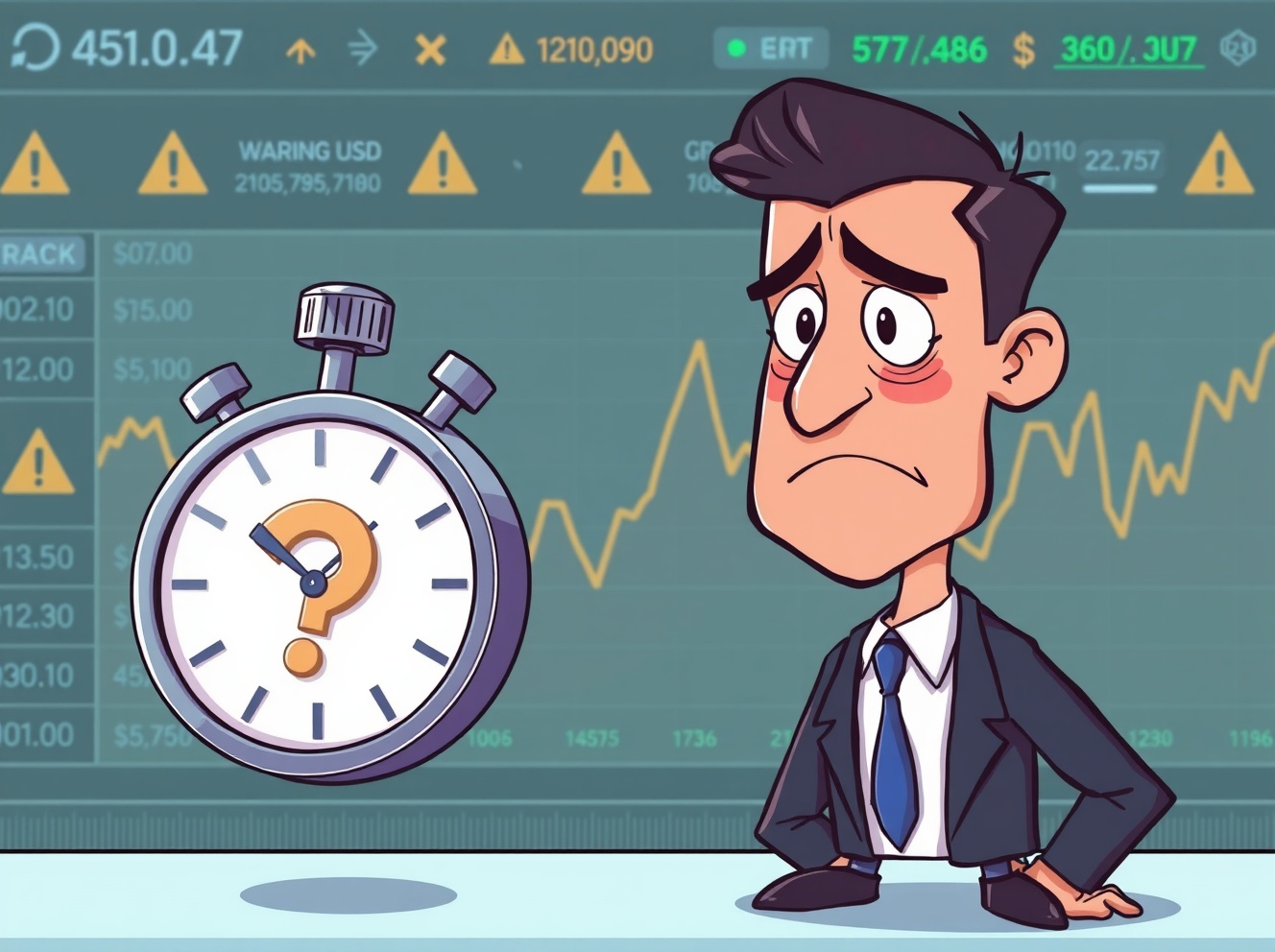
Cartoon illustration of the MASA delisting watchlist warning on Coinone exchange, showing urgency and concern for investors.

BitcoinWorld

Critical Alert: Coinone Places MASA on Delisting Watchlist – What Investors Must Know

In a decisive move highlighting increased regulatory scrutiny, South Korean cryptocurrency exchange Coinone has placed the MASA token on its delisting watchlist. This action sends a stark warning to the project and its investors, emphasizing that compliance and transparency are non-negotiable in today’s crypto landscape. The MASA delisting watchlist placement is not a final verdict but a critical probation period that could determine the token’s future on a major trading platform.

Why Did Coinone Place MASA on the Delisting Watchlist?

Coinone’s decision stems from a series of unresolved issues that raised red flags for the exchange’s compliance team. The primary reasons for the MASA delisting watchlist action are clear and focused on investor protection. The exchange stated it will monitor the project for approximately one month to verify if these significant concerns are adequately addressed.

The core issues cited by Coinone include:

  • Incomplete Security Follow-Up: Evidence suggests that corrective measures from a past security incident have not been fully implemented, leaving potential vulnerabilities unpatched.
  • Opaque Governance: A lack of transparency and rationality in the project’s procedures for making major changes, leaving the community in the dark about key decisions.
  • Insufficient Disclosure: Failure to properly disclose important matters to investors and the exchange, violating fundamental principles of trust and communication.

What Does a Delisting Watchlist Mean for MASA Holders?

For current investors, the MASA delisting watchlist status creates immediate uncertainty. However, it is crucial to understand the process. A watchlist is a precursor to potential delisting, not the event itself. This period is a final chance for the MASA project team to demonstrate concrete improvements and satisfy Coinone’s requirements.

During this watch period, trading of MASA on Coinone typically continues. However, the announcement often triggers market volatility. Investors should monitor official communications from both Coinone and the MASA project team closely. The key question is: Can the MASA team provide verifiable proof that they have resolved the cited issues within the given timeframe?

How Can the MASA Project Respond to This Warning?

The path forward for MASA is challenging but defined. To avoid a full delisting, the project leadership must take swift, transparent, and verifiable action. First, they must publicly address each of Coinone’s concerns with detailed plans and evidence. Second, they need to enhance their communication channels, ensuring all stakeholders are informed about significant changes. Finally, implementing and documenting robust security protocols is non-negotiable.

This situation serves as a powerful case study for other crypto projects. Exchanges like Coinone are increasingly acting as gatekeepers, enforcing standards that protect users. The era of operating without clear governance and security is rapidly closing. Projects that prioritize these elements will build stronger, more resilient communities.

Key Takeaways from the MASA Delisting Watchlist Announcement

Coinone’s action reinforces several critical lessons for the broader cryptocurrency market. It highlights the growing importance of exchange oversight in an industry maturing beyond its wild west phase. For investors, it underscores the necessity of due diligence, looking beyond price charts to assess a project’s operational integrity and compliance posture.

The MASA delisting watchlist event is ultimately a story about accountability. Whether MASA survives this probation period will depend entirely on its team’s ability to deliver transparency and security—the very foundations of trust in decentralized finance.

Frequently Asked Questions (FAQs)

What is a delisting watchlist?
A delisting watchlist is a probationary status where an exchange flags a cryptocurrency for potential removal due to compliance, security, or operational issues. The project is given a set period to address these concerns before a final delisting decision is made.

Can I still trade MASA on Coinone during the watchlist period?
Yes, trading usually continues during the watchlist period unless Coinone issues a specific trading suspension notice. However, investors should be aware of potentially high volatility and monitor official announcements.

How long will MASA be on the watchlist?
Coinone stated the watch period will last “about a month.” The exact timeline should be confirmed via Coinone’s official公告.

What happens if MASA gets delisted from Coinone?
If delisted, MASA trading pairs would be removed from Coinone. Investors would need to withdraw their MASA tokens to a private wallet or another supporting exchange before the withdrawal deadline closes.

Does this affect MASA trading on other exchanges?
Not directly. Coinone’s decision is specific to its platform. However, other exchanges may review their own listings based on the issues Coinone identified, making this a pivotal moment for the project’s reputation.

What should MASA holders do now?
Holders should closely follow official updates from both Coinone and the MASA project team. Assess the project’s response to the cited issues and make informed decisions based on the transparency and speed of their corrective actions.

Found this breakdown of the MASA delisting watchlist situation helpful? The crypto landscape moves fast, and knowledge is your best asset. Share this article with fellow investors on Twitter or Telegram to help them stay informed and navigate market changes with confidence.

To learn more about the latest cryptocurrency exchange trends, explore our article on key developments shaping global regulatory compliance and investor protection standards.

This post Critical Alert: Coinone Places MASA on Delisting Watchlist – What Investors Must Know first appeared on BitcoinWorld.

Market Opportunity
Masa Logo
Masa Price(MASA)
$0.00341
$0.00341$0.00341
-4.74%
USD
Masa (MASA) Live Price Chart
Disclaimer: The articles reposted on this site are sourced from public platforms and are provided for informational purposes only. They do not necessarily reflect the views of MEXC. All rights remain with the original authors. If you believe any content infringes on third-party rights, please contact service@support.mexc.com for removal. MEXC makes no guarantees regarding the accuracy, completeness, or timeliness of the content and is not responsible for any actions taken based on the information provided. The content does not constitute financial, legal, or other professional advice, nor should it be considered a recommendation or endorsement by MEXC.

You May Also Like

U.S. Court Finds Pastor Found Guilty in $3M Crypto Scam

U.S. Court Finds Pastor Found Guilty in $3M Crypto Scam

The post U.S. Court Finds Pastor Found Guilty in $3M Crypto Scam appeared on BitcoinEthereumNews.com. Crime 18 September 2025 | 04:05 A Colorado judge has brought closure to one of the state’s most unusual cryptocurrency scandals, declaring INDXcoin to be a fraudulent operation and ordering its founders, Denver pastor Eli Regalado and his wife Kaitlyn, to repay $3.34 million. The ruling, issued by District Court Judge Heidi L. Kutcher, came nearly two years after the couple persuaded hundreds of people to invest in their token, promising safety and abundance through a Christian-branded platform called the Kingdom Wealth Exchange. The scheme ran between June 2022 and April 2023 and drew in more than 300 participants, many of them members of local church networks. Marketing materials portrayed INDXcoin as a low-risk gateway to prosperity, yet the project unraveled almost immediately. The exchange itself collapsed within 24 hours of launch, wiping out investors’ money. Despite this failure—and despite an auditor’s damning review that gave the system a “0 out of 10” for security—the Regalados kept presenting it as a solid opportunity. Colorado regulators argued that the couple’s faith-based appeal was central to the fraud. Securities Commissioner Tung Chan said the Regalados “dressed an old scam in new technology” and used their standing within the Christian community to convince people who had little knowledge of crypto. For him, the case illustrates how modern digital assets can be exploited to replicate classic Ponzi-style tactics under a different name. Court filings revealed where much of the money ended up: luxury goods, vacations, jewelry, a Range Rover, high-end clothing, and even dental procedures. In a video that drew worldwide attention earlier this year, Eli Regalado admitted the funds had been spent, explaining that a portion went to taxes while the remainder was used for a home renovation he claimed was divinely inspired. The judgment not only confirms that INDXcoin qualifies as a…
Share
BitcoinEthereumNews2025/09/18 09:14
MSCI’s Proposal May Trigger $15B Crypto Outflows

MSCI’s Proposal May Trigger $15B Crypto Outflows

MSCI's plan to exclude crypto-treasury companies could cause $15B outflows, impacting major firms.
Share
CoinLive2025/12/19 13:17
This U.S. politician’s suspicious stock trade just returned over 200% in weeks

This U.S. politician’s suspicious stock trade just returned over 200% in weeks

The post This U.S. politician’s suspicious stock trade just returned over 200% in weeks appeared on BitcoinEthereumNews.com. United States Representative Cloe Fields has seen his stake in Opendoor Technologies (NASDAQ: OPEN) stock return over 200% in just a matter of weeks. According to congressional trade filings, the lawmaker purchased a stake in the online real estate company on July 21, 2025, investing between $1,001 and $15,000. At the time, the stock was trading around $2 and had been largely stagnant for months. Receive Signals on US Congress Members’ Stock Trades Stocks Stay up-to-date on the trading activity of US Congress members. The signal triggers based on updates from the House disclosure reports, notifying you of their latest stock transactions. Enable signal The trade has since paid off, with Opendoor surging to $10, a gain of nearly 220% in under two months. By comparison, the broader S&P 500 index rose less than 5% during the same period. OPEN one-week stock price chart. Source: Finbold Assuming he invested a minimum of $1,001, the purchase would now be worth about $3,200, while a $15,000 stake would have grown to nearly $48,000, generating profits of roughly $2,200 and $33,000, respectively. OPEN’s stock rally Notably, Opendoor’s rally has been fueled by major corporate shifts and market speculation. For instance, in August, the company named former Shopify COO Kaz Nejatian as CEO, while co-founders Keith Rabois and Eric Wu rejoined the board, moves seen as a return to the company’s early innovative spirit.  Outgoing CEO Carrie Wheeler’s resignation and sale of millions in stock reinforced the sense of a new chapter. Beyond leadership changes, Opendoor’s surge has taken on meme-stock characteristics. In this case, retail investors piled in as shares climbed, while short sellers scrambled to cover, pushing prices higher.  However, the stock is still not without challenges, where its iBuying model is untested at scale, margins are thin, and debt tied to…
Share
BitcoinEthereumNews2025/09/18 04:02