


1. Market Standing and Infrastructure Evolution
XRP holds a commanding position in the cryptocurrency market with a market capitalization of approximately $18.8 billion, ranking it as the third-largest digital asset by value. This robust standing underscores its evolution from a niche token to a cornerstone of global finance, particularly in cross-border payments. Unlike traditional networks like SWIFT, which have dominated international transfers for over four decades with slow processing times averaging days and high fees around 6.7%, XRP leverages the XRP Ledger (XRPL) for superior efficiency. The XRPL processes over 1.8 million daily transactions, with settlement finality in just 3-5 seconds at sub-cent costs, enabling real-time business-to-business (B2B) payments and slashing remittance expenses to near-zero. Ripple's On-Demand Liquidity (ODL) service, powered by XRP, bridges fiat currencies seamlessly, having facilitated over $15 billion in monthly cross-border volume across more than 55 countries via RippleNet, where 40% of its 300+ financial institutions actively use XRP. This infrastructure positions XRP as a direct SWIFT alternative, validated by its capacity for 1,500 transactions per second, scalable for the $320 trillion cross-border market's demands. Recent regulatory clarity from the 2025 SEC settlement has spurred $3.69 billion in ETF inflows, outpacing Bitcoin and fueling institutional adoption focused on utility rather than speculation. As of early 2026, XRP's price surge, including a 190% trading volume spike post-escrow release, signals sustained momentum, with analysts projecting $4-$5 targets amid broader market bullishness. This evolution highlights XRP's strategic bet on solving real-world payment pain points through purpose-built technology.
2. Performance Metrics and Technical Architecture Analysis
The XRP Ledger excels with 3-5 second settlement times and costs under a penny per transaction, making it ideal for high-volume payment systems. This efficiency stems from its consensus protocol, which avoids energy-intensive mining, enabling 1,500 transactions per second (TPS) throughput—far surpassing traditional finance while aligning with modern blockchain demands. In comparison, Solana boasts up to 4,000 TPS via its Proof-of-History mechanism, prioritizing raw speed for DeFi and NFTs, but it faces occasional network outages due to its high-performance focus. Cardano's Hydra layer-2 scaling aims for similar velocities through state channels, yet its base layer processes around 250 TPS with longer finality, emphasizing research-driven security over immediate payment utility. XRP's architecture, however, is optimized for payments: its native liquidity provision via ODL eliminates pre-funding needs, reducing trapped capital in nostro/vostro accounts that plague legacy systems. Transaction handling on XRPL uses a federated Byzantine agreement, where validators—many run by enterprises—confirm blocks every 3-5 seconds without forks, ensuring deterministic finality critical for financial rails. Solana's Gulf Stream and Turbine enhance pipelining for speed, but its validator centralization risks contrast XRPL's decentralized validator set of over 150 nodes. Cardano's Ouroboros proof-of-stake prioritizes academic rigor, with Hydra promising 1,000+ TPS per head, but real-world deployment lags behind XRP's battle-tested volume of 1.8 million daily transactions. These choices reflect payment-specific alignments: XRP favors low-latency liquidity bridging, Solana raw scalability for volatile apps, and Cardano secure, upgradable modularity. As cross-border volumes grow, XRP's sub-cent fees and speed provide a clear edge for institutional use.
3. Governance Structure and Financial Institution Integration
Ripple's governance, holding about 60% of XRP's total supply, drives enterprise adoption by prioritizing regulatory compliance and efficiency over pure decentralization. This structure enables focused development, as seen in RippleNet's expansion to 300+ institutions across 55+ countries, with 40% using XRP for ODL. Financial providers value this predictability: post-2025 SEC settlement, XRP gained non-security status, attracting $1.4 billion in ETF inflows and partnerships like those with Japan's Mizuho Bank, SMBC Nikko, and Securitize Japan to boost XRPL adoption. Institutions prioritize operational reliability—XRP's 3-5 second finality and low fees—over Bitcoin-style decentralization, which suits store-of-value but not payments. Ripple's escrow releases, like the 1 billion XRP in January 2026, maintain liquidity without flooding markets, supporting price stability amid a 190% volume surge. This model fosters integration: ODL has processed billions monthly, reducing remittance costs from 6.7% and freeing capital. Critics note centralization risks, but enterprise validators enhance compliance, aligning with banks' KYC/AML needs. David Schwartz's 2025 transition to CTO Emeritus signals maturity, with 2026 roadmaps adding privacy and DeFi to XRPL without compromising core payment strengths. Standard Chartered forecasts $8 by year-end, driven by $4-8 billion ETF inflows and policy wins like the CLARITY Act. XRP's footprint in institutional payments grows, evidenced by collaborations accelerating real-world utility in ecosystems like Japan. This governance balances control with innovation, positioning XRP for sustained financial sector penetration.
4. International Payment Adoption Q&A
Q: How is XRP integrating with financial institutions for cross-border payments? A: XRP powers Ripple's ODL, used by 40% of RippleNet's 300+ institutions across 55+ countries, processing $15 billion monthly to bridge currencies instantly. Partnerships like Mizuho Bank in Japan exemplify this.
Q: How does XRP's performance compare to Solana and Cardano? A: XRP settles in 3-5 seconds at sub-cent fees with 1,500 TPS; Solana hits 4,000 TPS but risks downtime; Cardano's Hydra scales similarly but deploys slower, suiting payments less optimally.
Q: What distinguishes XRP's transaction velocity and fees? A: 3-5 second finality and <1¢ fees vs. SWIFT's days and 6.7% costs, enabling real-time B2B transfers.
Q: What are XRP's key ecosystem collaborations? A: RippleNet spans global banks, with new Japan ties via Mizuho and SMBC Nikko accelerating XRPL use.
Q: What are current market penetration stats? A: XRP leads at 8-12% in payments, vs. Solana's 3-5% (DeFi-focused) and Cardano's 2-4% (research-oriented), per adoption metrics. Regulatory wins boost this, with ETF inflows signaling growth.
These answers highlight XRP's edge in practical deployment.
5. Essential XRP Knowledge Base
XRP serves as the native token of the XRPL, designed for fast, low-cost international money transfers within the Ripple network. Unlike Bitcoin's proof-of-work for digital gold or Ethereum's smart contract platform, XRP focuses on payment rails, settling in 3-5 seconds at sub-cent fees. Token economics feature a 100 billion maximum supply, with 60.676 billion circulating; Ripple escrows the rest for controlled release. To acquire XRP, users can trade on platforms like MEXC, which offers secure, compliant access—simply create an account, deposit funds, buy XRP, and store in a compatible wallet like XUMM or Ledger for self-custody. Investment considerations include its utility-driven value in the $320 trillion market, post-SEC clarity boosting ETFs, though volatility persists—analysts eye $4-$8 by 2026. Key partnerships with worldwide banks via RippleNet, including recent Japan expansions with Mizuho, drive adoption. XRPL's 2026 upgrades add privacy and DeFi, enhancing versatility. Risks involve regulatory shifts and competition, but XRP's 1.8 million daily transactions affirm reliability. Secure via hardware wallets, enable 2FA, and monitor via explorers like XRPL.org. For investors, focus on long-term utility over speculation.
Description:Crypto Pulse is powered by AI and public sources to bring you the hottest token trends instantly. For expert insights and in-depth analysis, visit MEXC Learn.
The articles shared on this page are sourced from public platforms and are provided for informational purposes only. They do not necessarily represent the views of MEXC. All rights remain with the original authors. If you believe any content infringes upon third-party rights, please contact service@support.mexc.com for prompt removal.
MEXC does not guarantee the accuracy, completeness, or timeliness of any content and is not responsible for any actions taken based on the information provided. The content does not constitute financial, legal, or other professional advice, nor should it be interpreted as a recommendation or endorsement by MEXC.
Learn More About XRP
View More
Cardano (ADA) vs. Ripple (XRP): Decentralization vs. Banking Utility
Ethereum vs Bitcoin, Solana, Cardano, Polkadot, XRP, Litecoin, WETH : Complete Cryptocurrency Comparison Guide
XRP vs Ethereum Comparison: Price, Speed, and Investment Potential
Latest Updates on XRP
View More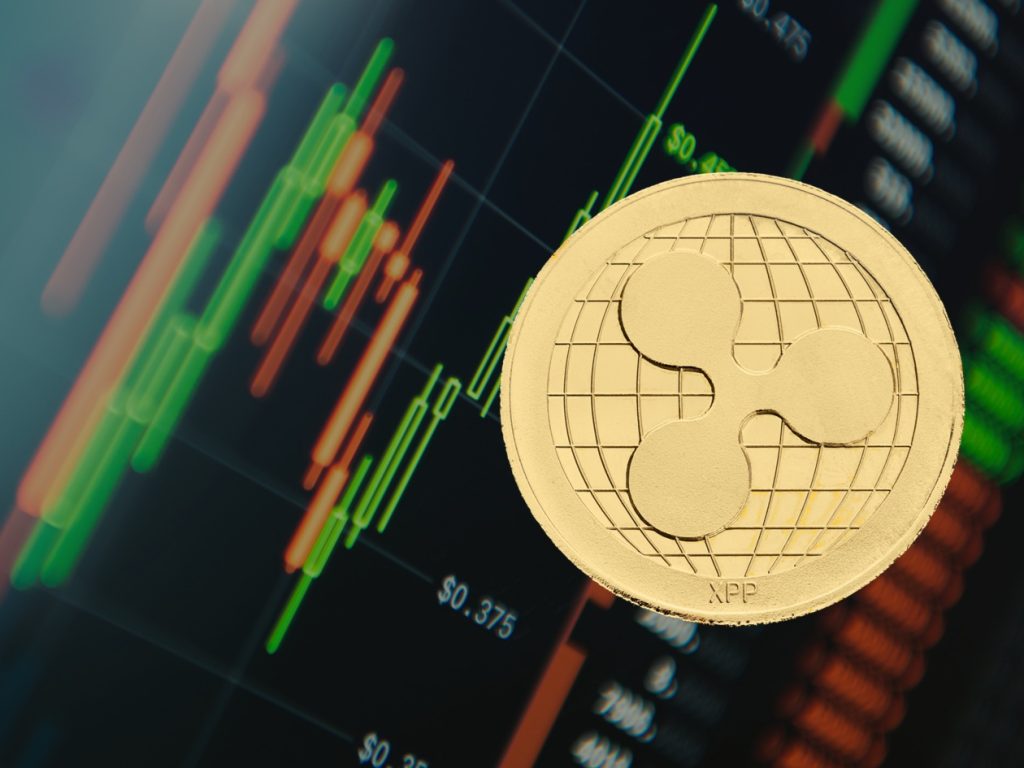
Slowdown in Whale Movements, Specifically XRP, in the Cryptocurrency Market! Is a Sell-Off Coming? Here Are the Details

Ripple’s Schwartz Question if Bitcoin Tech Matters

Ripple (XRP) Price Nears $1.50 Resistance After 4% Rise
HOT
Currently trending cryptocurrencies that are gaining significant market attention
Crypto Prices
The cryptocurrencies with the highest trading volume
Newly Added
Recently listed cryptocurrencies that are available for trading